
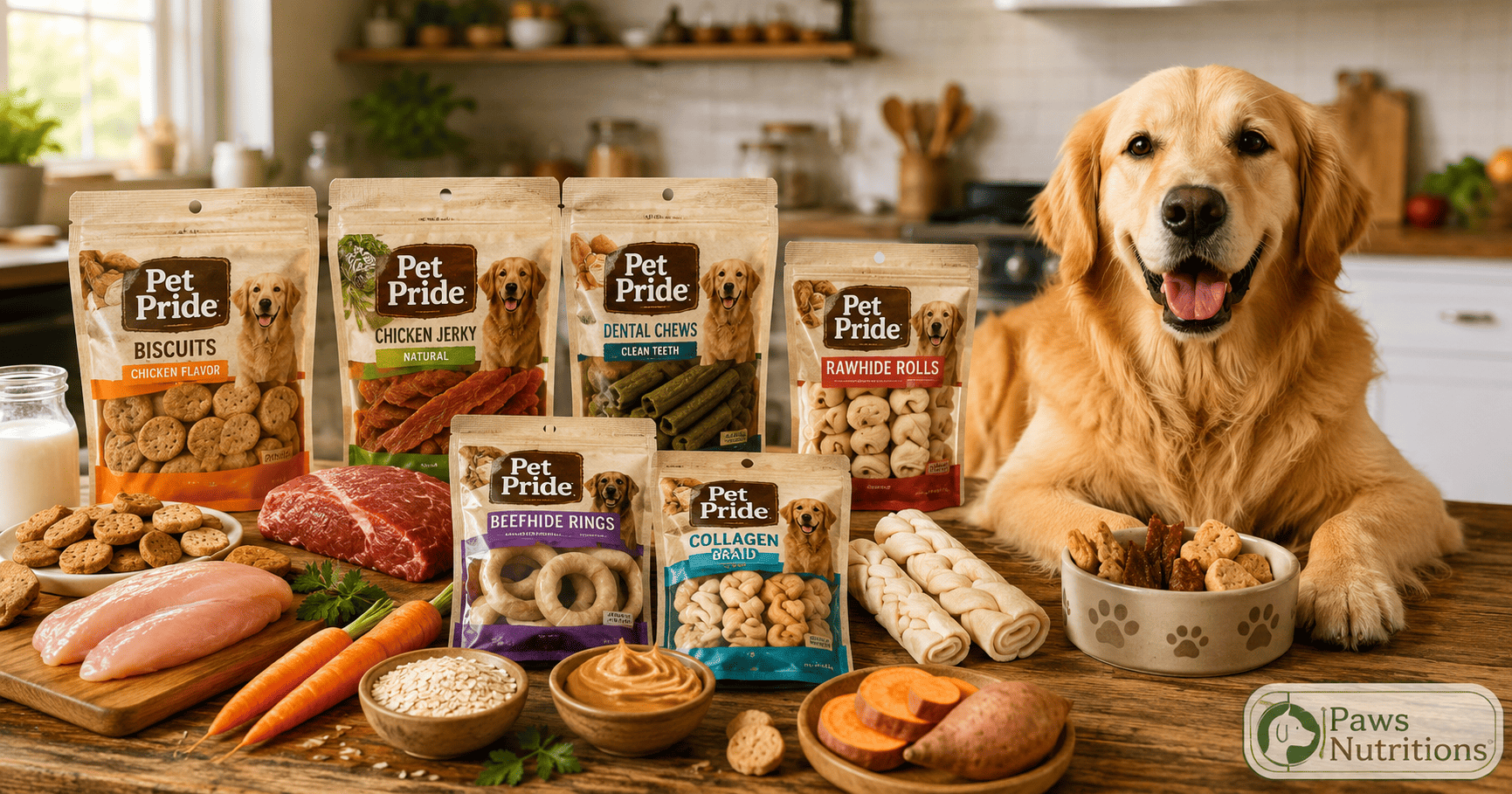
Walking down the pet aisle at Kroger, you’ve probably picked up a bag of Pet Pride dog treats and wondered if that low price tag means low quality. You’re not alone. Thousands of budget-conscious dog owners search for honest answers about this store-brand line every month, and the reviews scattered across the internet are surprisingly mixed.
This guide breaks down everything you need to know about Pet Pride dog treats — real ingredient quality, dry matter basis nutrition, full recall history, price-per-ounce comparisons across every Kroger banner, and what actual dog owners say after feeding them. By the end, you’ll know exactly whether these treats deserve a spot in your dog’s treat jar.
What Is Pet Pride? (Brand Overview)
Pet Pride dog treats aren’t made by a standalone pet food company — they’re Kroger’s own private-label pet care line. That matters because it changes how you should shop for them. You won’t find Pet Pride at Chewy, Petco, or Amazon’s official storefront; it’s a grocery-store exclusive, which is part of why pricing and availability can feel confusing.
The line covers both pet food and treats, and it’s built around one core promise: solid, no-frills nutrition at a price well below national brands. Whether that promise holds up is exactly what this review digs into.
It’s worth noting upfront that private-label pet brands occupy a unique space in the market. They don’t need to spend heavily on advertising or celebrity endorsements, and that savings is passed on through shelf price rather than through premium ingredients — which is exactly the trade-off you’re weighing when you consider Pet Pride.
Who Owns Pet Pride?
Pet Pride is owned and distributed by The Kroger Co., one of the largest grocery retailers in the United States. It isn’t manufactured in-house — like most private-label pet brands, Kroger contracts a third-party pet food manufacturer to produce it, then sells it exclusively under its own banners.
This ownership structure is worth understanding before you buy, because it shapes almost everything else in this review. Private-label brands like Pet Pride don’t invest in the kind of research, veterinary nutritionist teams, or marketing budgets that national brands do — their whole value proposition is keeping costs low by skipping those extras, not by cutting corners on basic safety.
Where Pet Pride Treats Are Sold
You’ll find Pet Pride treats at Kroger, King Soopers, Ralphs, Smith’s, Fred Meyer, Baker’s, Food 4 Less, Fry’s, Mariano’s, Pick ‘n Save, QFC, City Market, and Metro Market. If your local grocery store belongs to the Kroger Family of Stores, there’s a good chance it carries at least a few Pet Pride SKUs.
Availability isn’t perfectly consistent across every banner, though. Some smaller-format stores only stock the biscuit line, while larger supercenters carry the full range including dental chews and jerky. If you’re hunting for a specific SKU, it’s worth calling ahead or checking your store’s app before making a special trip.
Pet Pride vs. Oma’s Pride vs. Abound — Don’t Confuse These Brands
| Quick clarity check: Pet Pride, Oma’s Pride, and Abound are three completely separate brands. Pet Pride is Kroger’s budget private label. Oma’s Pride is an unrelated premium raw-food brand founded in Connecticut, sold direct-to-consumer. Abound is Kroger’s other, more premium in-house pet food line. Mixing these up in your research can lead you to the wrong recall records or reviews. |
Who Manufactures Pet Pride Dog Food?
Kroger doesn’t operate its own pet food manufacturing plants, so Pet Pride is very likely produced by a third-party co-packer on Kroger’s behalf — a common practice across nearly every grocery-chain private label. Kroger’s own packaging states the treats are made in the USA, but the specific manufacturing facility isn’t publicly disclosed.
This is actually the norm rather than the exception in the pet industry. Even some well-known national brands don’t own every plant that produces their products, so the presence of a co-packer isn’t itself a red flag — the concern only comes up when a brand won’t answer direct questions about quality control at that facility.
For a budget-tier grocery brand like Pet Pride, this level of manufacturing opacity is fairly standard across the category, and it’s one of the trade-offs you’re implicitly accepting in exchange for the lower shelf price.
Is Pet Pride Made in the USA?
Yes — packaging and Kroger’s product listings confirm domestic manufacturing. That said, “made in the USA” refers to where the treats are produced, not necessarily where every raw ingredient is sourced, so it’s not a complete guarantee of ingredient origin.
Third-Party Manufacturing — What We Know
This lack of manufacturer transparency is fairly typical for store brands, but it’s worth flagging as a limitation. If full ingredient traceability matters a lot to you, that’s a legitimate reason to look elsewhere, and it’s the kind of detail most competitor reviews gloss over entirely.
If you want more clarity than the label provides, your best move is contacting Kroger’s customer service line directly and asking which facility produces a specific SKU. Some grocery chains will share this information on request even when it isn’t printed on the bag.
Full Pet Pride Dog Treats Product Lineup
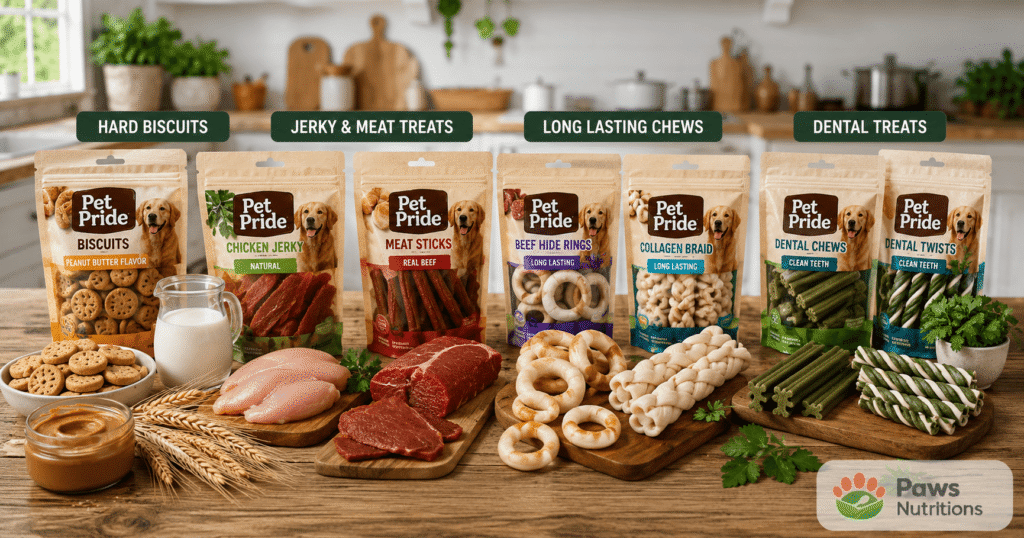
Before judging whether Pet Pride dog treats are worth buying, it helps to see the full range. This isn’t a one-product brand — it spans biscuits, chews, jerky, and dental treats, each with its own flavor and size variations.
Seeing the complete lineup side by side also makes it easier to spot which products are genuinely differentiated (like the dental line) versus which are simply flavor variations on the same basic biscuit formula — useful context when you’re deciding where to spend your money within the brand itself.
Biscuits (Small, Medium, Large — 5 Flavors, Peanut Butter, Milk, Gravy)
The biscuit line is Pet Pride’s bread and butter. You’ll see Small, Medium, and Large Biscuits in a “5 Meaty Flavors” variety, plus dedicated Peanut Butter, Milk, and Gravy flavor bags, typically sold in 5-pound and 10-pound sizes.
These biscuits are hard-textured rather than soft or chewy, which makes them reasonably good for light dental abrasion as your dog crunches through them, similar to how most mainstream biscuit brands are formulated.
Chews (Beefhide Rings, Twist Chews, Rawhide Rolls, Collagen Braids)
For dogs that need something to gnaw on, Pet Pride offers Beefhide Ring Chews, Beefhide Twist Chews, a 10-inch Rawhide Roll Chew, and Collagen Braid Chews. These are aimed at longer chewing sessions rather than quick training rewards.
Collagen braid chews stand out slightly from the rest of the lineup, since collagen tends to digest a bit more easily than traditional rawhide, making it a reasonable middle-ground option if you want a longer-lasting chew without the full digestibility concerns of beefhide.
Jerky & Meat-Based Treats
The Chicken Jerky, Wag’n Strips (Bacon Cheese flavor), Wag’n Sticks (Real Beef), Triple Flavor Kabobs, and Pizzle Braids round out the meat-forward options. A Natural Smokey Beef Rib Bone is also part of the lineup for dogs that handle harder chews well.
These meat-based treats work well as higher-value training rewards since they tend to be more aromatic and appealing than plain biscuits, though portion control matters more here since they’re calorie-dense per piece.
Dental Treats (Chews & Sticks)
Pet Pride’s dental range includes Small Dental Chews (Original flavor) and Small Dental Sticks (Fresh Mint), designed to support breath freshness and light tartar control alongside regular brushing — not as a replacement for it.
Neither product carries a Veterinary Oral Health Council (VOHC) seal, which is worth knowing if you’re specifically shopping for a dental product with clinically verified plaque-reduction claims rather than a general freshening treat.
Table 1: Complete Pet Pride Dog Treats Product Lineup
| Product | Category | Common Sizes |
| Biscuits (5 Meaty Flavors) | Biscuit | 5 lb, 10 lb |
| Peanut Butter Biscuits | Biscuit | 5 lb |
| Milk Flavor Biscuits | Biscuit | 24 oz |
| Beefhide Ring Chews | Chew | Single unit |
| Beefhide Twist Chews | Chew | 20 ct |
| 10″ Rawhide Roll Chew | Chew | Single unit |
| Collagen Braid Chews | Chew | 5 ct |
| Chicken Jerky | Jerky | Varies |
| Wag’n Strips (Bacon Cheese) | Jerky-style | Varies |
| Natural Smokey Beef Rib Bone | Meat chew | 3 ct |
| Small Dental Chews | Dental | 45 ct |
| Small Dental Sticks (Fresh Mint) | Dental | 5.08 oz |
Is Pet Pride Long Lasting Chews Good for Dogs?
Yes, with caveats — Pet Pride’s Long Lasting Chews (the rawhide rolls, beefhide rings, and rib bones) genuinely occupy dogs for extended chewing sessions, but they carry the same digestibility concerns as any rawhide or beefhide product, and supervision is strongly recommended.
This particular product line gets searched often enough on its own that it deserves a dedicated breakdown, separate from the general biscuit and jerky lineup covered elsewhere in this review.
Ingredient Breakdown of the Long Lasting Chews Line
These chews are primarily made from processed beefhide, which is compressed and shaped rather than left as a natural rawhide strip. That processing makes them more uniform in texture, but it doesn’t change the underlying digestibility profile that rawhide products are known for.
Compressed rawhide tends to soften faster than traditional rawhide once your dog starts working on it, which some owners actually prefer because it reduces the risk of large, hard-to-digest chunks breaking off unexpectedly.
How Long They Actually Last (Real Feedback)
Owner feedback suggests the chews genuinely deliver on “long lasting” for moderate chewers, often stretching a single chew across several sessions. Aggressive chewers, however, can work through them much faster, which shortens the value proposition significantly.
If your dog tends to demolish chews in minutes rather than hours, you’ll likely get better value from a denser, single-ingredient chew rather than Pet Pride’s rawhide-based options — no brand’s “long lasting” claim holds up against a truly powerful chewer.
Choking & Digestibility Considerations
Like all rawhide-based chews, there’s a real risk if large pieces are swallowed rather than chewed down gradually. Always supervise your dog with these chews, remove them once they get small enough to swallow whole, and avoid giving them to dogs with a history of gulping food.
A good practical rule: once the chew has shrunk to roughly the size your dog could swallow whole in one gulp, take it away. This single habit prevents the vast majority of rawhide-related choking incidents reported by veterinarians.
Pet Pride Ingredient Analysis (Dry Matter Basis)
Understanding a treat’s nutrition means looking past the marketing and into the dry matter basis (DMB) — the nutrient percentages once moisture is removed from the equation. This is the only fair way to compare products with different water content.
Protein, Fat & Carbohydrate Breakdown
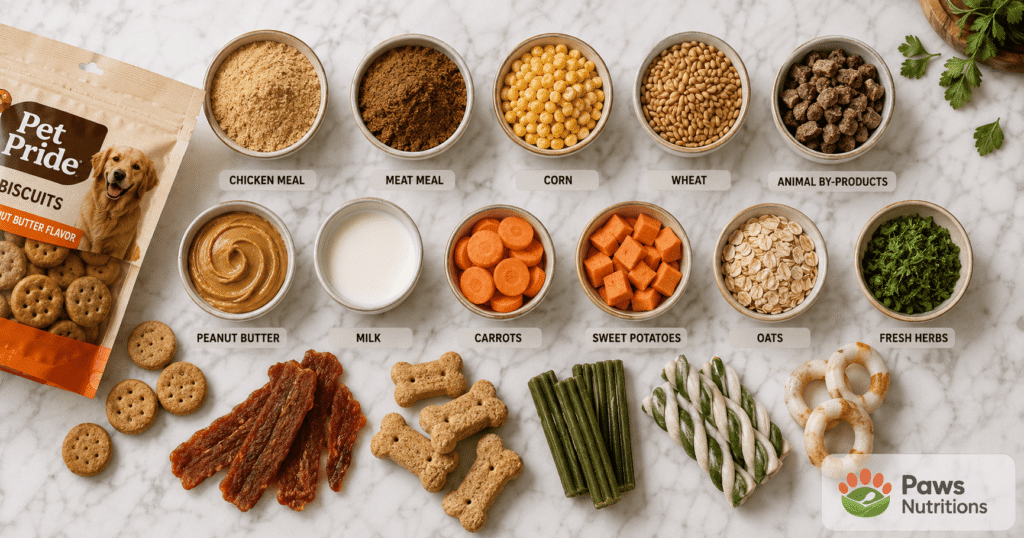
Independent nutrient analysis of Pet Pride’s dog food formulas (which shares ingredient philosophy with the treat line) shows a composition leaning toward higher carbohydrate content, largely from corn and wheat, compared to premium competitors that prioritize animal protein first.
For context, premium treat brands often push crude protein above 35% DMB with named single-source meats. Pet Pride’s roughly 29% sits in a middle tier — not nutritionally deficient for occasional treating, but noticeably behind brands built around a protein-first formulation strategy.
What “Meat Meal” and By-Products Actually Mean
Many Pet Pride treats list meat meal or animal by-products rather than a named whole meat like “chicken” or “beef” as the first ingredient. Meat meal isn’t inherently unsafe — it’s a concentrated protein source — but when the specific animal source isn’t disclosed, it becomes harder to rule out for dogs with food sensitivities.
If your dog has a confirmed protein allergy — say, to chicken or beef — undisclosed meat meal is a genuine obstacle, since you can’t verify what’s actually in the bag. For dogs without known allergies, this is more of a transparency gap than a safety concern.
Table 2: Pet Pride Dry Matter Basis Nutrition Estimate
| Nutrient | Approximate DMB % | Category Standard |
| Crude Protein | ~29% | Moderate |
| Crude Fat | ~20% | Moderate |
| Estimated Carbohydrates | ~43% | Above average |
| Fiber | Varies by SKU | Standard |
Is Pet Pride Good for Dogs?
For most healthy adult dogs eating these as occasional treats rather than meal replacements, Pet Pride dog treats are reasonably safe — but they’re not a premium-tier product, and that distinction matters for how you should use them.
Nutritional Pros
On the plus side, Pet Pride treats are affordable, widely available if you shop at Kroger-family stores, and haven’t shown any treat-specific safety issues in over a decade. For dogs without allergies or sensitivities, moderate feeding poses low risk.
The brand also benefits from simplicity — you’re not paying for elaborate marketing claims, exotic superfood add-ins, or premium packaging, which keeps the price genuinely low rather than inflated by branding costs.
Ingredient-Quality Cons
On the downside, the reliance on corn, wheat, and undisclosed meat sources puts this brand behind premium competitors on ingredient transparency. If your dog has a grain sensitivity or a known protein allergy, Pet Pride’s labels won’t give you enough information to feed confidently.
There’s also less third-party quality testing information available compared to brands that publish batch testing results or work with veterinary nutritionists — something increasingly common among mid-tier and premium competitors.
Best-Suited Dog Types
Pet Pride treats tend to work best for budget-conscious owners with healthy, non-allergic adult dogs, and for larger breeds that can handle bigger biscuit sizes. Small dogs and dogs with dietary sensitivities are better served by a more targeted, ingredient-transparent brand.
Multi-dog households on a budget are another good fit, since treat costs add up fast with two or more dogs, and Pet Pride’s per-ounce pricing on biscuits stays competitive even when you’re going through bags quickly.
AAFCO & WSAVA Compliance Check
AAFCO (Association of American Feed Control Officials) sets nutrient adequacy standards for pet food, while WSAVA (World Small Animal Veterinary Association) offers additional, stricter guidelines many vets recommend looking for.
What Compliance Means for Treats vs. Complete Diets
Here’s an important distinction competitors often skip: treats are not required to meet full AAFCO nutritional adequacy statements the way complete diets are, because they’re meant to make up a small fraction of daily calories (generally under 10%). So a treat lacking a full nutrient profile isn’t automatically a red flag — that’s just how treats are regulated.
This is genuinely useful context for shoppers who see “this treat isn’t AAFCO complete and balanced” and assume it means something is wrong. In almost every case, it just means the product was formulated and labeled as a treat, not a meal, which is exactly what you’d want.
Where Pet Pride Meets — and Falls Short of — Guidelines
Pet Pride’s complete dog food formulas do carry AAFCO adequacy statements, but the brand doesn’t publicly meet the more rigorous WSAVA manufacturing and research disclosure standards that premium brands often highlight. That’s not unique to Pet Pride — most budget and mid-tier brands share this gap.
If WSAVA-level transparency is a priority for you, that’s a reasonable reason to pay more for a different brand. But it’s worth noting that plenty of dogs live long, healthy lives on food and treats that meet AAFCO standards without WSAVA certification — the two aren’t a strict safety cutoff, just different tiers of disclosure.
Grain-Free & DCM Safety Discussion
DCM (Dilated Cardiomyopathy) has been a major topic in pet nutrition after the FDA investigated a potential link between certain grain-free diets and heart disease in dogs.
Does Pet Pride Use Grain-Free Formulas?
Pet Pride’s core lineup is not marketed as grain-free — most formulas include corn and wheat rather than avoiding grains entirely. This actually works in the brand’s favor regarding the DCM concern, since the FDA’s investigation centered specifically on grain-free formulations using high levels of legumes like peas and lentils.
In a strange twist, one of the ingredients often criticized for being a cheap filler — corn — is also the reason Pet Pride sidesteps the grain-free DCM controversy entirely. It’s a good example of why ingredient quality isn’t a single, simple scale.
Treats vs. Complete-Diet DCM Risk (Important Distinction)
Even if a formula were grain-free, the DCM concern applies almost entirely to complete, daily diets — not occasional treats making up a small percentage of caloric intake. This is a nuance worth understanding: don’t let DCM headlines scare you away from an occasional treat purely based on grain-free labeling.
The research connecting grain-free diets to DCM specifically looked at dogs eating those formulas as their primary, daily nutrition source over extended periods — a very different exposure level than a biscuit or two a day.
Pet Pride Recall History — Full Timeline
Recall history is one of the most important — and most searched — factors before buying any pet product, so here’s the complete, dual-verified picture.
The 2010 Aflatoxin Recall (What Happened, Which Products)
Pet Pride was named in a 2010 recall tied to aflatoxin, a toxic mold byproduct, which primarily affected Pet Pride Cat Food and a kitten formula. The same recall wave also covered Old Yeller and Kroger Value branded pet food sold across 19 states.
Aflatoxin contamination typically stems from mold growth in corn used as a grain source, which is exactly why this recall matters for context — it’s a manufacturing-and-storage issue rather than a formulation defect, and it affected an entire category of budget corn-based pet foods at the time, not just Pet Pride specifically.
Were Any Treats Ever Recalled? (Spoiler: No)
This is the detail most competitor articles miss entirely: no Pet Pride dog treats — biscuits, chews, or jerky — have ever appeared in any FDA recall record. The 2010 recall was limited to dry kibble and canned food formulas, not the treat line covered in this review.
That’s a genuinely reassuring data point for anyone specifically shopping for treats rather than a full daily diet, and it’s the single most important piece of safety context this review can offer.
Kroger Parent Company Recall Check
Checking Kroger as the parent company separately, the most relevant recent pet-related recall involved Abound Chicken and Brown Rice Dog Food — a different Kroger private-label brand — due to elevated Vitamin D levels. That recall has since been completed and closed by the FDA, and it did not involve Pet Pride products.
Running this second, parent-company search matters because it’s easy to conflate sibling brands under the same retailer. Confirming that Abound’s recall stayed isolated to that specific product line gives you a clearer, more accurate safety picture of Pet Pride specifically.
Table 3: Pet Pride & Kroger Recall Timeline
| Year | Product/Brand | Issue | Treats Involved? |
| 2010 | Pet Pride Cat/Kitten Food, Old Yeller, Kroger Value | Aflatoxin contamination | No |
| Recent (completed) | Abound Dog Food (separate Kroger brand) | Elevated Vitamin D | No |
What Are Signs of a Bad Dog Treat?
This is a genuinely useful question to ask about any treat, not just Pet Pride, so it’s worth covering as its own standalone checklist you can apply the next time you’re standing in the pet aisle comparing bags. A quick mental checklist here can save you from an expensive mistake or an unpleasant vet visit down the line.
Red Flags in Ingredient Lists
Watch for vague terms like “animal digest,” undisclosed meat sources, artificial colors with no functional purpose, and excessive use of sugar or corn syrup. A long list of preservatives with unpronounceable names is also worth scrutinizing.
Beyond the ingredient panel itself, pay attention to physical warning signs too — an unusual smell straight out of the bag, visible mold spots, or a texture that feels off compared to previous purchases are all reasons to stop feeding and contact the retailer.
How Pet Pride Measures Up Against These Warning Signs
Pet Pride avoids the worst offenders — no artificial coloring controversies, no sugar-heavy formulas — but it does use undisclosed meat meal and animal by-products in several SKUs, which lands it in a middle-ground category rather than a clear pass or fail.
In practical terms, this means Pet Pride isn’t a treat you need to be alarmed about, but it also isn’t one you should assume is held to the highest possible ingredient-sourcing standard. It sits squarely where you’d expect a mainstream, budget-tier grocery brand to sit.
What Dog Treats Should I Avoid?
Beyond spotting individual red flags, it helps to know the specific categories of treats that consistently cause problems across brands, private-label or otherwise, so you can shop with confidence no matter which store aisle you’re standing in.
Common Problem Ingredients
Generally, steer clear of treats loaded with propylene glycol, artificial preservatives like BHA/BHT in high amounts, added sugars, and any product with a history of repeated safety recalls within the last few years.
It’s also worth avoiding treats imported from regions with weaker manufacturing oversight and no clear country-of-origin labeling — this has historically been where some of the more serious pet treat safety scandals originated.
Does Pet Pride Contain Any of These?
Pet Pride’s formulas don’t rely on propylene glycol or heavy added sugars, and the brand has no recent recall activity tied to its treats specifically. It’s not ingredient-list perfect, but it doesn’t fall into the “actively avoid” category either.
Given the clean country-of-origin labeling (domestically produced) and the absence of the more dangerous additives on this list, Pet Pride reasonably clears the bar for a brand you wouldn’t need to actively avoid, even if it isn’t your top pick for ingredient quality.
What Is the Safest Brand of Dog Treats?
There’s no single universally “safest” brand — safety depends on ingredient sourcing, manufacturing transparency, and recall history combined. Brands with named meat sources, WSAVA-aligned manufacturing disclosure, and clean multi-year recall records generally score highest on safety.
Instead of chasing a single “safest brand” label, it’s more useful to build a personal checklist: named protein sources, a recall history you’ve actually verified yourself, clear feeding guidelines, and a manufacturer willing to answer direct questions. Pet Pride passes some of these checks and falls short on others, which is exactly why it lands in a middle tier rather than at either extreme.
It’s also worth remembering that safety and premium pricing aren’t perfectly correlated — some expensive treats have had serious recalls, while some budget brands, Pet Pride included, have gone over a decade without a single treat-related safety issue.
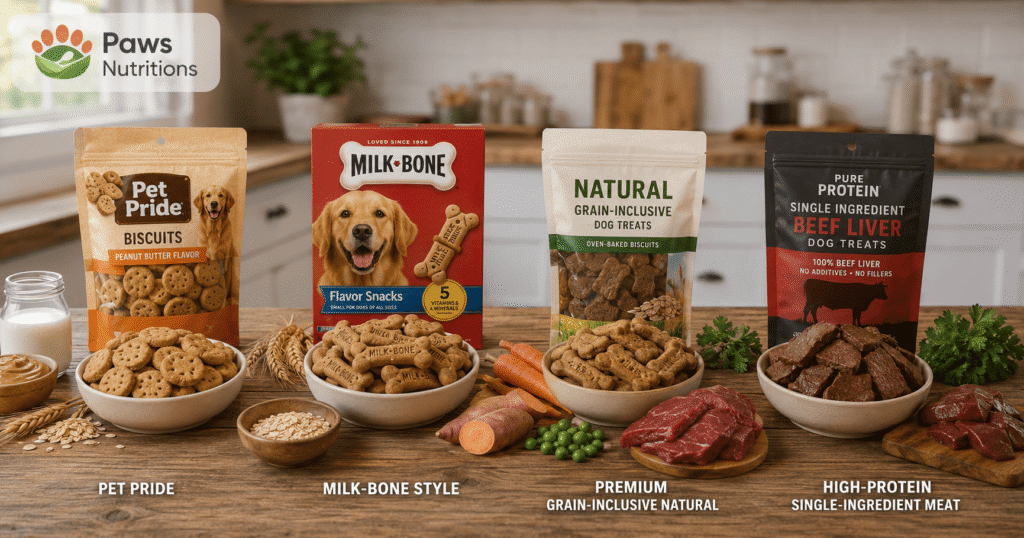
How Pet Pride Compares to Milk-Bone
Pet Pride’s own packaging invites the comparison, marketing itself as “compare to Milk-Bone® Flavor Snacks.” In practice, the two are similarly positioned as mainstream, moderately priced biscuit brands — neither is a premium, ingredient-forward product, and both rely on grain-based fillers.
Where they differ slightly is brand recognition and dog palatability testing — Milk-Bone has decades of consumer feedback and reformulation behind it, while Pet Pride is a newer, less-tested private-label entry riding on the coattails of that established format.
How Pet Pride Compares to Other Budget Brands
Against other grocery-store private labels, Pet Pride holds up reasonably well on price and lands roughly in the middle on ingredient quality — neither the cheapest, lowest-quality option on the shelf, nor a standout among budget brands.
Table 4: Pet Pride vs. Competitor Brands
| Brand | Protein Source | Recall History (Recent) | Price Tier | Best For |
| Pet Pride | Meat meal (undisclosed source) | None (treats) | Budget | Healthy adult dogs, larger breeds |
| Milk-Bone | Named meat by-products | Occasional, historical | Budget-mid | Everyday training rewards |
| Premium grain-inclusive brands | Named whole meat | Rare | Mid-premium | Allergy-sensitive dogs |
Pet Pride Pricing — Is It Actually Cheaper?
Price is the main reason shoppers consider Pet Pride in the first place, so here’s what the numbers actually show across different Kroger banners.
Compared to name-brand biscuits of similar size, Pet Pride generally comes in noticeably cheaper per ounce, which is the core reason budget-focused owners choose it in the first place. Whether that discount is worth the ingredient-quality trade-off depends entirely on your dog’s individual needs.
Price-Per-Ounce Across Kroger Banners
Pricing varies more than you’d expect for a single private-label brand — the same Small Biscuits (5 lb) bag ranged from $12.29 at Kroger to $16.99 at Mariano’s, a meaningful difference for a supposedly standardized product line.
This kind of regional pricing variation is common with grocery private labels, since each banner sets its own margins. If you shop across multiple nearby stores, it’s genuinely worth price-checking before committing to one location for pet supplies.
Amazon Third-Party Pricing Warning
Because Pet Pride is a Kroger-exclusive private label, any listing you see on Amazon is coming from a third-party reseller, not an official retail channel. Pricing there tends to run higher and less reliable — your best bet for accurate pricing is always checking your local Kroger-family store directly.
Third-party resellers also mean you lose some quality-control assurance, since you can’t verify how the product was stored or how long it sat in a reseller’s inventory before shipping to you.
Table 5: Pet Pride Price-Per-Ounce Comparison
| Product | Size | Price Range | Approx. $/oz |
| Small Biscuits (5 Flavors) | 5 lb | $12.29–$16.99 | $0.15–$0.21 |
| Medium Biscuits (Peanut Butter) | 5 lb | $7.99 | $0.10 |
| Large Biscuits (Milk Flavor) | 24 oz | $3.19 | $0.13 |
| Small Dental Sticks (Fresh Mint) | 5.08 oz | $10.99 | $0.87 |
| Small Dental Chews | 45 ct | $7.99 | ~$0.10 |
| Beefhide Ring Chew | Single | $6.99–$16.99 | Varies widely |
Weight-Based Feeding Guide for Pet Pride Treats
Because Pet Pride’s biscuits and chews come in different sizes, calorie content varies quite a bit across the lineup. This table gives you a practical starting point based on your dog’s weight, though you should always adjust based on activity level and any other treats or table scraps your dog gets during the day.
As a general rule, treats should never exceed 10% of your dog’s daily caloric intake — a good habit regardless of which brand you’re feeding.
Table 6: General Weight-Based Feeding Guide
| Dog Weight | Suggested Daily Treat Portion | Notes |
| Under 15 lbs | 1 small biscuit or ¼ dental chew | Watch calorie intake closely |
| 15–35 lbs | 1–2 small/medium biscuits | Fine for most healthy adults |
| 35–70 lbs | 2 medium biscuits or 1 large | Ideal weight range for the brand |
| Over 70 lbs | 1–2 large biscuits or 1 chew | Larger breeds handle chew size best |
Real Owner Reviews — What People Are Actually Saying
Independent nutrient breakdowns only tell part of the story, so it’s worth pairing that data with what real dog owners report after actually feeding these products at home over weeks or months.
Positive Feedback
Several long-term feeders report no sketchy fillers causing issues, a visible improvement in coat glossiness, and appreciation for the reasonable price point compared to name-brand treats.
Owners of larger breeds in particular tend to report the most satisfaction, since the biscuit sizing and chew durability line up well with bigger dogs’ chewing habits and calorie needs.
Common Complaints (Size, Palatability)
On the other side, some owners — particularly with larger or pickier breeds — noted the biscuits ran large and were harder for smaller dogs to chew comfortably, and a few dogs simply weren’t as enthusiastic about the flavor compared to competing treats.
A smaller number of reviews mentioned inconsistent texture between batches, which can happen with private-label manufacturing when production runs shift between suppliers or facilities over time.
How to Store Pet Pride Treats Properly
Even a safe, well-made treat can turn into a problem if it isn’t stored correctly, so this is a section most competitor reviews skip entirely despite it being genuinely useful. Given that the 2010 recall on the food side was directly tied to mold growth, proper storage isn’t just about freshness — it’s a real safety habit worth building.
Biscuits & Dental Chews
Keep biscuit bags sealed tightly between servings, ideally transferred to an airtight container once opened. Corn and wheat-based biscuits can pick up moisture and go stale faster than single-ingredient treats, which affects both texture and shelf life.
Rawhide & Beefhide Chews
Store rawhide-based chews in a cool, dry spot away from direct sunlight. Humidity is the main enemy here — it can make the chew go soft prematurely or, in rare cases, encourage mold growth if the packaging has already been opened for a while.
If you live somewhere especially humid, consider refrigerating opened chews in a sealed container between uses rather than leaving them out in a pantry, since this noticeably slows down any moisture-related degradation.
Common Mistakes Owners Make When Feeding Store-Brand Treats
Treating This as a Meal Replacement
Some owners lean on biscuits or chews too heavily on busy days, effectively replacing part of a meal. Treats — Pet Pride included — aren’t formulated as nutritionally complete, so this habit can create imbalances over time even if each individual treat seems harmless.
This mistake tends to happen gradually rather than all at once, which makes it easy to miss. If you notice yourself reaching for treats specifically because you’re short on time to prepare a real meal, that’s worth addressing directly rather than letting it become a routine.
Ignoring Portion Size for Small Breeds
A Large Biscuit sized for a 70-pound dog delivers a lot more calories than a 10-pound dog needs. Breaking larger treats into smaller pieces for small-breed dogs is a simple fix that prevents accidental overfeeding.
Skipping the Supervision Step With Chews
It’s tempting to hand over a rawhide chew and walk away, but that’s exactly when choking incidents happen. A few minutes of supervision, especially the first few times you introduce a new chew, tells you a lot about how your specific dog handles it.
Alternatives to Consider If Pet Pride Isn’t Right for Your Dog
Pet Pride won’t be the right fit for every dog, and that’s okay — knowing your alternatives helps you make a confident decision either way. No single treat brand, budget or premium, is universally correct for every dog’s health profile, and recognizing that early saves you money and frustration.
For Dogs With Grain Sensitivities
Look for treats explicitly formulated without corn or wheat and with a single named protein source. These tend to cost more, but they remove the guesswork that comes with Pet Pride’s undisclosed meat meal.
If your dog has never shown any grain sensitivity symptoms, this alternative may not be necessary at all — it’s really only worth the added cost for dogs with a confirmed or strongly suspected reaction.
For Aggressive Chewers
Skip rawhide-based chews altogether and look at denser, single-ingredient options built specifically for power chewers. These typically last longer and carry a lower digestibility risk than compressed beefhide.
It’s worth accepting that power chewers are simply harder to satisfy with any budget treat, regardless of brand, and that spending a bit more here is often the more cost-effective choice long term.
For Owners Who Want Full Ingredient Transparency
If knowing the exact manufacturing facility and sourcing chain matters to you, a brand that publishes this information openly — rather than a private label that doesn’t disclose it — will likely be a better long-term match.
Many mid-tier and premium brands now publish sourcing maps, third-party lab testing summaries, or direct manufacturer contact information on their websites, which gives you a level of verification that store-brand labels simply don’t offer.
Final Verdict — Should You Buy Pet Pride Dog Treats?
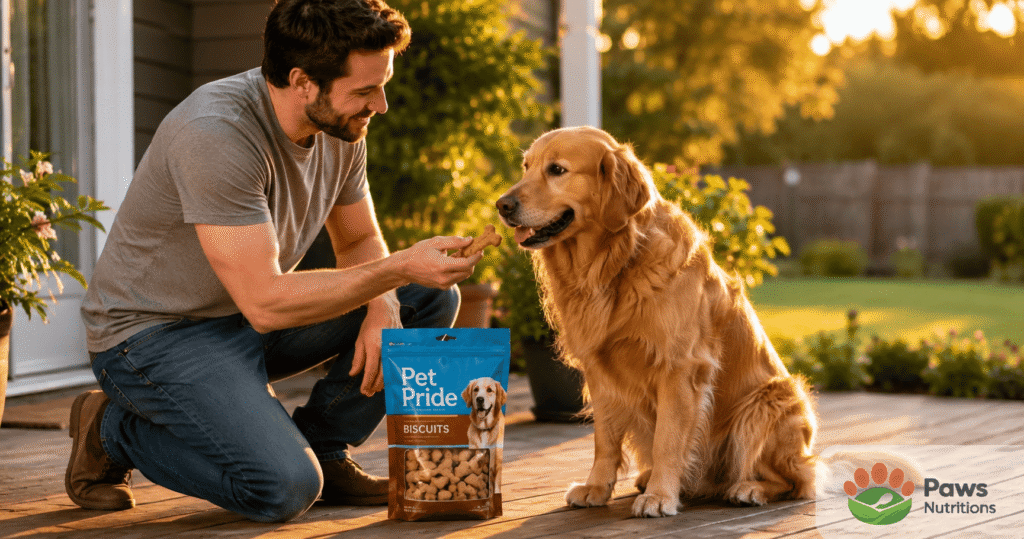
Pet Pride dog treats are a reasonable, budget-friendly pick for healthy adult dogs without food sensitivities — especially if you’re already shopping at a Kroger-family store and want an affordable treat option with a clean safety record. They’re not a premium, ingredient-forward brand, and owners of small breeds or allergy-prone dogs should look elsewhere. But for straightforward, moderate treating, this brand does what it promises without cutting corners on safety.
If you take one thing away from this review, let it be this: judge Pet Pride by what it’s actually trying to be — an affordable, widely available, treat-only option — rather than comparing it directly to premium, ingredient-forward brands with entirely different price points and target customers. Measured against that realistic standard, it’s a solid, low-risk choice for the right dog.
Frequently Asked Questions
Is Pet Pride good for dogs?
Yes, for most healthy adult dogs given as occasional treats — it’s not premium quality, but it’s safe with no treat-specific recall history.
Who manufactures Pet Pride dog food?
Kroger owns the brand but outsources manufacturing to a third-party co-packer, as is standard for most grocery private labels.
Is Pet Pride Long Lasting Chews good for dogs?
Yes for moderate chewers, but supervise closely — like all rawhide-based chews, they carry choking and digestibility risks if swallowed in large pieces.
What is the safest brand of dog treats?
No single brand is universally safest; look for named meat sources, transparent manufacturing, and a clean recent recall history.
What are signs of a bad dog treat?
Watch for vague terms like “animal digest,” undisclosed meat sources, artificial coloring, and heavy added sugars.
What dog treats should I avoid?
Avoid treats with propylene glycol, high artificial preservative levels, added sugars, or a recent history of repeated recalls.
Disclaimer:This article is not sponsored, affiliated, or a paid advertisement in any way. It is written strictly for educational and informational purposes. Any brand names or links mentioned are included only for your reference and convenience — we have no partnership, endorsement, or business relationship with any brand named above.

A dedicated writer and digital enthusiast committed to creating high-quality, informative, and reader-focused content. Through thoughtful research and clear communication, he aims to deliver valuable insights that help readers navigate the ever-changing digital landscape.