
Choosing the right treat for your dog isn’t always as simple as grabbing the most recognizable box from the store shelf. If you’ve been searching for an honest Milk-Bone Dog Treats Review 2026, chances are you’re wondering whether these classic biscuits are still a safe and healthy choice or if newer alternatives offer better nutrition. With concerns about ingredients, preservatives, recalls, and dental benefits circulating online, it’s easy to feel uncertain.
In this comprehensive review, you’ll discover everything you need to know before buying Milk-Bone dog treats. We’ll break down the ingredients, nutritional value, safety, pricing, customer feedback, veterinary insights, and real-world testing while separating facts from myths. By the end, you’ll have a clear, evidence-based answer about whether Milk-Bone deserves a place in your dog’s treat jar in 2026.
Quick Verdict — Is Milk-Bone Worth Buying in 2026?
If you’re looking for an affordable, widely available treat that most dogs genuinely enjoy, Milk-Bone remains a dependable choice in 2026. Its crunchy texture can provide mild dental cleaning benefits, the variety of product lines makes it suitable for different life stages, and decades of market presence have earned it a loyal following among pet owners.
That said, it isn’t a perfect treat. While Milk-Bone offers good value, some recipes rely on wheat flour, wheat gluten, and approved preservatives that may not appeal to owners seeking premium or limited-ingredient options. Dogs with grain sensitivities or specific food allergies may benefit from alternative treats made with fewer ingredients.
Overall, Milk-Bone is best viewed as an occasional reward rather than a nutritional necessity. When fed responsibly as part of a balanced diet, it can be a safe and enjoyable addition to your dog’s routine.
Our Rating at a Glance
| Category | Rating |
|---|---|
| Ingredient Quality | ⭐⭐⭐☆☆ (3.5/5) |
| Nutritional Value | ⭐⭐⭐☆☆ (3.5/5) |
| Safety | ⭐⭐⭐⭐☆ (4.2/5) |
| Dental Benefits | ⭐⭐⭐⭐☆ (4.0/5) |
| Value for Money | ⭐⭐⭐⭐⭐ (4.8/5) |
| Palatability | ⭐⭐⭐⭐⭐ (4.7/5) |
| Variety | ⭐⭐⭐⭐⭐ (4.8/5) |
| Overall Rating | ⭐⭐⭐⭐☆ (4.3/5) |
Quick Take: Milk-Bone offers excellent value and broad availability, making it a solid everyday treat for many healthy dogs. However, owners looking for grain-free, minimally processed, or limited-ingredient treats may prefer premium alternatives.
Who Milk-Bone Is Best For
Milk-Bone is an excellent fit for many everyday pet owners who want a reliable treat without stretching their budget. Its wide selection of crunchy biscuits, Soft & Chewy treats, and MaroSnacks means there’s an option for many dogs, from playful puppies to active adults and aging companions.
It’s especially suitable for:
- Dogs without known food allergies or grain sensitivities.
- Owners looking for affordable daily training or reward treats.
- Households with multiple dogs where value matters.
- Dogs that enjoy crunchy biscuits for light chewing.
- Pet parents wanting easily available treats found in most major retailers.
Who Should Look Elsewhere
Despite its popularity, Milk-Bone won’t be the ideal choice for every dog. Certain ingredients and formulations may not meet the expectations of owners who prioritize premium nutrition or have dogs with specific dietary needs.
You may want to consider another option if your dog:
- Has a diagnosed wheat allergy or gluten sensitivity.
- Requires a limited-ingredient diet.
- Needs prescription or veterinarian-formulated treats.
- Is sensitive to certain preservatives or artificial additives.
- Follows a grain-free diet recommended by your veterinarian.
Milk-Bone Pros and Cons
Every dog treat has strengths and trade-offs, and Milk-Bone is no exception. Looking at both sides helps you decide whether it matches your dog’s health needs and your own expectations as a pet owner.
Pros
- Widely available in supermarkets, pet stores, and online retailers.
- Affordable compared with many premium dog treats.
- Multiple product lines for different ages and chewing preferences.
- Crunchy biscuits may help reduce mild plaque buildup through chewing.
- Most dogs readily accept the taste and texture.
- Produced by an established manufacturer with decades of industry experience.
- Available in numerous package sizes for different household needs.
Cons
- Several recipes contain wheat flour and wheat gluten, which aren’t ideal for every dog.
- Not intended to replace a nutritionally complete diet.
- Some formulations include approved preservatives that health-conscious owners may prefer to avoid.
- Limited use of premium animal protein ingredients compared with higher-end treats.
- Large biscuits aren’t appropriate for very small dogs without choosing the correct size.
What Is Milk-Bone? Brand Overview & History
Few dog treats have achieved the recognition that Milk-Bone enjoys today. For generations, these iconic bone-shaped biscuits have been a familiar sight in homes across the United States, earning the trust of millions of pet owners. While newer premium brands have entered the market, Milk-Bone continues to stand out because of its affordability, broad product range, and consistent availability.
Understanding the brand’s history also helps explain why it remains one of America’s best-selling dog treats. From its early beginnings to its modern manufacturing standards, Milk-Bone has evolved alongside changing pet nutrition trends while continuing to expand its product lineup for dogs of different ages, sizes, and lifestyles.
From F.H. Bennett Biscuit Co. to J.M. Smucker
Milk-Bone’s story began in 1908 when the F.H. Bennett Biscuit Company introduced a bone-shaped biscuit specifically designed for dogs. At a time when commercially prepared pet treats were uncommon, the product quickly gained popularity because it offered owners a convenient way to reward their pets.
The company later became part of several larger food businesses before eventually joining The J.M. Smucker Company, one of the most recognized names in the American food industry. Today, Smucker manages Milk-Bone alongside other respected pet brands, investing in product development, quality assurance, and nationwide distribution.
More than a century after its launch, Milk-Bone remains one of the longest-running brands in the pet nutrition industry—a testament to its ability to adapt while maintaining the familiar treats that many dogs continue to enjoy.
Where Milk-Bone Treats Are Made
One question many pet owners ask is where Milk-Bone treats are manufactured. According to the company, the vast majority of Milk-Bone products sold in the United States are made in Buffalo, New York, where the brand operates one of its primary manufacturing facilities.
Producing treats domestically offers several advantages. It allows tighter oversight of manufacturing processes, supports faster quality checks, and helps maintain consistent production standards. Domestic production also gives many pet owners added confidence about where their dog’s treats originate.
Although manufacturing takes place primarily in the United States, ingredient sourcing may vary depending on availability and supply chains, which is common throughout the pet food industry.
Where Milk-Bone Ingredients Come From
Ingredient sourcing has become an increasingly important topic for dog owners, especially those who pay close attention to food quality and transparency. Milk-Bone states that it sources ingredients from both domestic and international suppliers that meet its quality and safety requirements.
Like many established dog food brands, Milk-Bone doesn’t rely exclusively on one country for every ingredient. Instead, suppliers are selected based on factors such as ingredient quality, availability, regulatory compliance, and manufacturing consistency.
While some premium brands promote locally sourced or single-origin ingredients as a selling point, Milk-Bone focuses more on maintaining consistent recipes that meet its internal quality standards and applicable regulatory requirements.
Manufacturing Standards & Quality Control
Producing millions of dog treats each year requires far more than simply mixing ingredients and baking biscuits. Modern pet food manufacturing involves multiple quality-control procedures designed to promote product consistency and safety before treats reach store shelves.
Milk-Bone’s parent company follows established manufacturing protocols that typically include:
- Supplier qualification and ingredient verification
- Routine quality inspections during production
- Food safety testing for finished products
- Packaging integrity checks
- Regulatory compliance with applicable U.S. manufacturing standards
These quality-control measures don’t guarantee that every dog will respond the same way to every recipe, but they do help reduce manufacturing risks while supporting consistent product quality across batches.
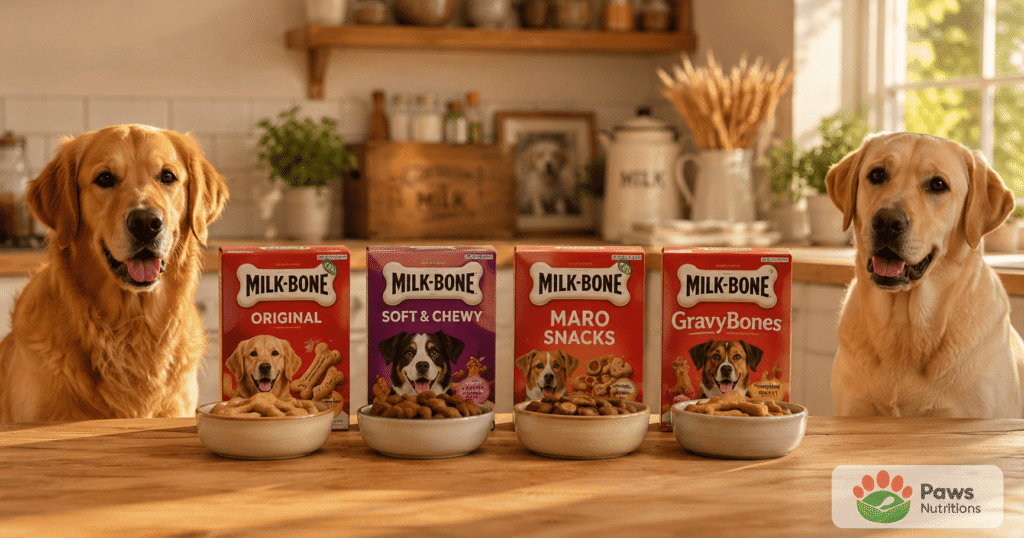
Product Line Overview (Original, Soft & Chewy, MaroSnacks, GravyBones)
One reason Milk-Bone has remained popular for decades is its diverse selection of treats. Rather than offering just one biscuit, the brand has developed several product families to meet different chewing styles, training needs, and life stages.
| Product Line | Best For | Texture | Main Benefit |
|---|---|---|---|
| Original Biscuits | Everyday rewards | Crunchy | Mild dental cleaning through chewing |
| Soft & Chewy | Puppies, seniors, sensitive teeth | Soft | Easy to chew and ideal for training |
| MaroSnacks | Dogs that enjoy richer treats | Crunchy shell with meaty center | Extra flavor and rewarding texture |
| GravyBones | Adult dogs | Crunchy | Enhanced flavor with gravy-inspired recipes |
Each product line serves a slightly different purpose. Original Biscuits remain the classic everyday option, while Soft & Chewy treats are better suited for dogs with dental issues or smaller mouths. MaroSnacks appeal to dogs that enjoy treats with a softer center, whereas GravyBones are designed to provide a more flavorful reward experience.
Instead of choosing the “best” product universally, it’s often smarter to match the treat to your dog’s age, chewing ability, activity level, and dietary needs. That’s a far more effective approach than simply selecting the most popular option.
Milk-Bone Original Dog Biscuits — Full Product Breakdown
Among all of Milk-Bone’s offerings, the Original Dog Biscuits remain the brand’s flagship product. They’ve been rewarding dogs for generations and continue to be one of the most recognizable crunchy dog treats on the market. Their simple design, affordable price, and variety of sizes make them a practical choice for everyday use.
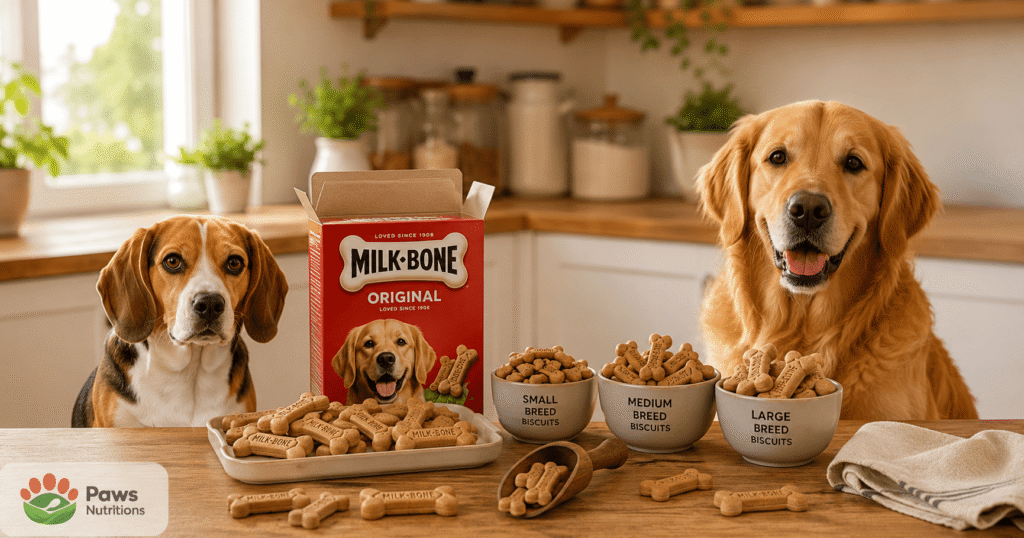
However, not every biscuit is appropriate for every dog. Choosing the right size, flavor, and texture can improve both safety and enjoyment while reducing the risk of choking or overfeeding.
Available Sizes and Breed Recommendations
Milk-Bone Original Biscuits are available in several sizes so owners can match treats to their dog’s jaw size and chewing strength.
| Size | Recommended For |
|---|---|
| Mini | Toy and small breeds |
| Small | Small adult dogs |
| Medium | Medium-sized breeds |
| Large | Large and giant breeds |
Using the correct biscuit size matters more than many owners realize. A biscuit that’s too large may be difficult for a small dog to chew comfortably, while one that’s too small may be swallowed without sufficient chewing.
Flavor Options
Although the classic biscuit remains the most recognizable, Milk-Bone offers several flavor variations to suit different canine preferences.
Common options include:
- Original
- Beef
- Chicken
- Bacon
- Vegetable recipe
- Seasonal and specialty flavors in selected product lines
Most dogs respond well to these flavors because they’re formulated with palatability in mind rather than relying on a single protein source.
Texture and Chew Type
The defining feature of Milk-Bone Original Biscuits is their crunchy texture. Unlike soft training treats, these biscuits encourage dogs to chew before swallowing, which may provide mild mechanical cleaning of the tooth surface.
That said, crunchy treats shouldn’t be viewed as a replacement for regular tooth brushing or professional dental care. Instead, they work best as part of an overall oral health routine that includes brushing, veterinary checkups, and a balanced diet.
Why Dogs Love the Taste
Anyone who’s opened a box of Milk-Bone has probably seen their dog come running before the biscuit even leaves the package. That enthusiastic response isn’t accidental. The combination of baked aromas, savory flavorings, and satisfying crunch makes the treats highly appealing to many dogs.
In addition, the biscuits are designed with a texture that’s easy to grip and enjoyable to chew. For many dogs, the reward goes beyond flavor—the act of chewing itself provides mental stimulation and satisfaction. While every dog’s preferences are different, Milk-Bone’s long-standing popularity suggests that its recipes consistently deliver the taste and texture most dogs look forward to.
Milk-Bone Ingredients Analysis
The ingredient list tells you far more about a dog treat than the marketing claims on the front of the package. While attractive packaging and familiar branding may catch your eye, it’s the ingredients that determine the overall quality, nutritional value, and suitability for your dog. That’s why it’s important to look beyond buzzwords and understand what each ingredient contributes.
Milk-Bone Original Dog Biscuits are formulated as an everyday reward rather than a complete meal. Their recipe focuses on delivering a crunchy texture, enjoyable flavor, and consistent quality at an affordable price. Let’s take a closer look at what’s actually inside these popular dog biscuits.
Full Ingredient List Explained
The exact ingredient list can vary slightly depending on the recipe and flavor, but the classic Milk-Bone Original Dog Biscuits commonly include ingredients such as:
- Wheat flour
- Beef meal
- Wheat gluten
- Water
- Meat and bone meal
- Natural and artificial flavors
- Animal fat (preserved)
- Salt
- Vitamins and minerals
- Approved preservatives (in some recipes)
At first glance, some owners may be surprised that fresh meat isn’t the first ingredient. However, that’s fairly common for baked biscuits designed as treats rather than complete dog food.
Here’s what the key ingredients contribute:
| Ingredient | Purpose |
|---|---|
| Wheat Flour | Provides structure and carbohydrates for baking. |
| Beef Meal | A concentrated source of animal protein after moisture removal. |
| Wheat Gluten | Adds protein and helps create the biscuit’s firm texture. |
| Meat & Bone Meal | Supplies additional protein, minerals, and calcium. |
| Animal Fat | Improves taste and aroma for better palatability. |
| Vitamins & Minerals | Help maintain nutritional consistency. |
Although the recipe isn’t built around premium whole-food ingredients, it delivers the consistency expected from an affordable everyday treat.
What’s the First Ingredient — and Why It Matters
Many pet owners automatically assume the first ingredient tells the whole story. While it’s certainly important, understanding what that ingredient represents is equally valuable.
In most Milk-Bone Original recipes, wheat flour appears first by weight before baking. This means the biscuits are primarily grain-based rather than meat-based. Since treats aren’t required to provide complete daily nutrition, this isn’t necessarily a flaw—but it does explain why Milk-Bone differs from many premium meat-first treats.
The second notable ingredient, beef meal, deserves some attention. Despite sounding less appealing than fresh beef, beef meal is actually a concentrated protein ingredient because most of the moisture has already been removed. As a result, it often contains significantly more usable protein than fresh meat on a weight-for-weight basis.
For healthy adult dogs without grain sensitivities, this combination can work perfectly well as an occasional reward. However, owners seeking treats with whole meat listed first may prefer premium alternatives.
Fillers, Preservatives, and What to Watch For
The word “fillers” is frequently used online, but it’s often misunderstood. Not every carbohydrate ingredient is a filler, and not every filler is automatically harmful. The real question is whether an ingredient contributes nutritional value or simply reduces manufacturing costs.
Milk-Bone contains ingredients like wheat flour and wheat gluten, which provide energy, texture, and some protein. These ingredients are safe for many dogs but may not be ideal for pets with diagnosed grain allergies or gluten sensitivities.
Another common concern involves preservatives. Certain Milk-Bone products contain approved preservatives to help maintain freshness during storage. While these ingredients are regulated and used within established safety limits, some owners prefer treats preserved with natural alternatives such as mixed tocopherols or rosemary extract.
Instead of assuming every preservative is dangerous, it’s better to evaluate each ingredient individually and consider your dog’s overall health, age, and dietary requirements.
Ingredient Quality Score (1–10)
No dog treat is perfect, and Milk-Bone is no exception. When evaluating ingredient quality, it’s important to judge the product for what it is: an affordable everyday treat—not a premium freeze-dried or limited-ingredient snack.
Here’s our assessment:
| Category | Score | Notes |
|---|---|---|
| Protein Sources | 7.5/10 | Includes beef meal, but fresh meat isn’t the primary ingredient. |
| Carbohydrate Quality | 6.5/10 | Primarily wheat-based, which works for most dogs but not all. |
| Ingredient Transparency | 8.5/10 | Ingredients are clearly disclosed and consistently labeled. |
| Artificial Additives | 6.5/10 | Some recipes include preservatives or artificial flavoring. |
| Overall Ingredient Quality | 7.2/10 | Good for a mainstream treat, though premium options offer higher-quality ingredients. |
Key Takeaway: Milk-Bone strikes a balance between affordability and consistency. While it doesn’t compete with premium, meat-first treats in ingredient quality, it remains a reasonable option for healthy dogs when offered in moderation.
BHA/BHT in Milk-Bone Treats — Should You Be Worried?
Few topics generate as much debate among dog owners as BHA and BHT. A quick online search often reveals alarming headlines claiming these preservatives are dangerous or even toxic. However, the reality is far more nuanced than many social media posts suggest.
To make an informed decision, it’s important to understand what these ingredients are, why they’re used, and what current scientific evidence says about them.
What BHA and BHT Actually Are
BHA (Butylated Hydroxyanisole) and BHT (Butylated Hydroxytoluene) are synthetic antioxidants. Their primary purpose is to prevent fats and oils from becoming rancid, helping maintain freshness and extending shelf life.
Without antioxidants, products containing fats can spoil much more quickly. That’s especially important for packaged pet treats, which may spend weeks or months in warehouses, stores, and home pantries before being consumed.
These preservatives don’t improve nutrition or flavor—they simply help preserve product quality over time.
FDA and AAFCO Regulatory Status
One reason this topic causes confusion is that many discussions overlook the regulatory perspective.
Both BHA and BHT are permitted for specific uses in animal foods under established safety limits. Regulatory authorities evaluate these ingredients before approving their use, and manufacturers must comply with those limits.
It’s also worth noting that the presence of these preservatives doesn’t automatically mean every Milk-Bone product contains them. Ingredient lists vary by recipe, production date, and product line, so checking the package label remains the best practice.
If your preference is to avoid synthetic preservatives altogether, there are many premium treats available that rely on naturally derived antioxidants instead.
Separating Fact From Fear-Based Claims Online
The internet is filled with claims suggesting that every product containing BHA or BHT is unsafe. While some laboratory studies have raised questions about very high-dose exposure in experimental settings, those findings don’t directly reflect the small amounts permitted in commercially manufactured pet treats.
For the average healthy dog receiving treats responsibly, current evidence doesn’t support the idea that occasional Milk-Bone treats pose the extreme risks sometimes described online.
That said, every owner has different comfort levels. If you prefer recipes with minimal processing and naturally preserved ingredients, choosing another treat is a perfectly reasonable decision. The key is making that choice based on evidence rather than fear.
Milk-Bone Nutritional Analysis (Dry Matter Basis)
Looking only at the guaranteed analysis on a package can sometimes paint an incomplete picture because moisture affects nutrient percentages. That’s why nutrition professionals often use a Dry Matter Basis (DMB) calculation, which removes water from the equation and allows more meaningful comparisons between products.
Although Milk-Bone is intended as a treat rather than a complete diet, evaluating its nutrition still provides valuable insight into how it fits within your dog’s daily calorie intake.
Guaranteed Analysis (As Fed)
The guaranteed analysis published by the manufacturer generally includes values similar to the following:
| Nutrient | Guaranteed Minimum/Maximum |
|---|---|
| Crude Protein | 12.0% minimum |
| Crude Fat | 5.0% minimum |
| Crude Fiber | 1.5% maximum |
| Moisture | 10.0% maximum |
These values represent the product as sold, including its moisture content.
Dry Matter Basis Nutrition Table
Removing moisture gives a clearer picture of the nutrient concentration.
| Nutrient | Approximate Dry Matter Basis |
|---|---|
| Protein | ~13.3% |
| Fat | ~5.6% |
| Fiber | ~1.7% |
| Carbohydrates (estimated) | High |
Compared with many premium high-protein dog treats, Milk-Bone derives a larger portion of its calories from carbohydrates. That’s expected for a baked biscuit formulated primarily as an occasional reward rather than a protein-rich snack.
Crude Protein, Fat, and Fiber Explained
Each nutrient plays a different role in your dog’s health.
Protein helps maintain muscles, tissues, and immune function. While Milk-Bone contributes some protein through ingredients like beef meal and wheat gluten, it shouldn’t be relied upon as a significant protein source.
Fat provides concentrated energy and improves flavor, making treats more appealing. Meanwhile, fiber supports normal digestion, although Milk-Bone isn’t specifically formulated as a digestive-health treat.
When viewed in context, the nutritional profile is appropriate for an occasional biscuit but doesn’t offer the high meat content found in many premium rewards.
Calories Per Biscuit and Daily Impact
Treat calories add up surprisingly fast. Even a few biscuits each day can significantly increase your dog’s overall calorie intake, particularly for small breeds.
The exact calorie content varies depending on biscuit size, but larger Milk-Bone biscuits naturally contain more calories than mini versions. That’s why selecting the correct size and adjusting meal portions when necessary helps maintain a healthy body weight.
A useful rule is to let treats—including Milk-Bone—account for no more than about 10% of your dog’s daily calories, with the remaining calories coming from a complete and balanced diet.
Calories Compared With Other Popular Treats
Calorie density becomes easier to understand when compared with similar treats.
| Treat | Relative Calories | Best Use |
|---|---|---|
| Milk-Bone Original | Moderate | Everyday rewards |
| Pup-Peroni | Higher | Occasional high-value treats |
| Blue Buffalo Health Bars | Similar to moderate | Natural-style rewards |
| Freeze-Dried Meat Treats | Often higher in protein but calorie-dense | Training or high-value rewards |
Ultimately, the healthiest treat isn’t necessarily the one with the fewest calories—it’s the one that fits your dog’s overall nutritional needs, activity level, and daily feeding plan.
Does Milk-Bone Meet AAFCO and WSAVA Standards?
When evaluating any pet product, many dog owners look for AAFCO and WSAVA guidelines as indicators of quality. However, it’s important to understand that these organizations serve different purposes—and treats are evaluated differently than complete dog foods.
Milk-Bone isn’t marketed as a complete meal. Instead, it’s designed to be a complementary treat, which means it follows different nutritional expectations. Understanding this distinction helps you judge the product fairly instead of comparing it to complete and balanced dog food.
Why Treats Are Exempt From Full AAFCO Profiles
The Association of American Feed Control Officials (AAFCO) establishes nutrient profiles for complete and balanced pet foods. These standards ensure dogs receive all the essential nutrients they need when eating a food as their primary diet.
Treats like Milk-Bone serve a different role. They’re intended as occasional rewards, not meal replacements. Because of this, they aren’t required to meet AAFCO’s complete nutritional profiles for maintenance or growth.
That doesn’t mean treats are unregulated. Manufacturers must still comply with ingredient labeling requirements, feed safety regulations, and quality standards established by applicable regulatory authorities. However, a Milk-Bone biscuit isn’t expected to provide the same nutritional balance as your dog’s daily food.
WSAVA Global Nutrition Guideline Compliance Check
The World Small Animal Veterinary Association (WSAVA) doesn’t certify or approve individual pet foods or treats. Instead, it provides nutritional guidelines that help pet owners evaluate manufacturers and their quality practices.
Some of the questions WSAVA encourages owners to consider include:
- Does the company employ qualified veterinary nutritionists or animal nutrition experts?
- Are quality-control procedures in place?
- Does the manufacturer conduct ingredient testing?
- Is nutritional information readily available?
- Does the company respond transparently to customer inquiries?
As a large, established pet food manufacturer, Milk-Bone’s parent company maintains quality-control systems and provides nutritional information for its products. However, Milk-Bone should still be viewed as an occasional treat rather than a product designed to satisfy every aspect of the WSAVA recommendations intended for complete diets.
What This Means for Your Dog’s Overall Diet
For most healthy dogs, Milk-Bone can fit comfortably into a balanced feeding routine when used responsibly.
Think of treats the same way people think about snacks. A nutritious snack can be enjoyable, but it shouldn’t replace balanced meals. Likewise, even the highest-quality dog treat shouldn’t become a major source of your dog’s daily calories.
The healthiest feeding plan usually looks like this:
- Around 90% of daily calories from a complete and balanced dog food
- No more than 10% from treats, including Milk-Bone
Following this simple guideline helps your dog enjoy rewards without compromising overall nutrition.
Is Milk-Bone Safe? Addressing Common Health Concerns
Safety is one of the biggest reasons pet owners research Milk-Bone before buying it. Online discussions often include questions about allergies, digestion, choking risks, and long-term health. While some concerns are valid, others are based on misunderstandings or isolated experiences rather than broader evidence.
The good news is that Milk-Bone has been fed to millions of dogs for decades. Most healthy dogs tolerate these treats well when they’re offered in appropriate amounts and matched to the dog’s size and dietary needs.
Wheat Gluten and Allergy Risk
One of the most common concerns involves wheat gluten, an ingredient found in several Milk-Bone recipes.
It’s important to separate food allergies from general preferences. True wheat allergies are relatively uncommon in dogs, but they do occur. Dogs with a diagnosed wheat allergy may experience symptoms such as:
- Persistent itching
- Recurring ear infections
- Skin irritation
- Digestive upset
- Excessive licking or chewing
For these dogs, choosing a limited-ingredient or grain-free treat recommended by your veterinarian is usually the better option.
However, for the vast majority of healthy dogs without diagnosed food allergies, wheat-containing treats can be safely enjoyed in moderation.
Choking Hazard and Size-Matching
Even safe treats can become a choking hazard if they’re the wrong size.
Milk-Bone produces biscuits in several sizes for exactly this reason. Giving a giant biscuit to a toy breed—or offering tiny treats to a large dog that swallows food without chewing—can increase risk.
To improve safety:
- Choose the biscuit size designed for your dog’s weight.
- Supervise your dog during treat time.
- Replace broken or unusually hard treats if your dog struggles to chew them.
- Always provide fresh drinking water nearby.
Dogs that gulp food quickly may also benefit from receiving treats one at a time rather than several at once.
Digestive Upset in Sensitive Dogs
Most dogs digest Milk-Bone without difficulty. However, introducing any new treat too quickly can temporarily upset a sensitive stomach.
Signs of mild digestive intolerance may include:
- Soft stools
- Temporary diarrhea
- Mild gas
- Occasional vomiting
- Reduced appetite
These issues often resolve after discontinuing the treat and returning to the dog’s regular diet. If symptoms persist or become severe, veterinary attention is appropriate.
Introducing treats gradually—especially for puppies or dogs with sensitive digestion—can help minimize these problems.
Puppies, Adult Dogs, and Senior Dogs
Not every life stage has the same nutritional or chewing needs.
Puppies can enjoy certain Milk-Bone products once they’re old enough to chew safely, but softer treats are generally easier for young dogs that are still developing their teeth.
Healthy adult dogs usually have the widest selection of suitable options, including the classic crunchy biscuits.
Senior dogs, especially those with worn teeth or dental disease, may find Soft & Chewy varieties much easier and more comfortable to eat than hard biscuits.
Matching the treat to your dog’s age—not just their size—is one of the easiest ways to improve both safety and enjoyment.
Better Alternatives for Dogs With Wheat Allergies
If your veterinarian has confirmed that your dog has a wheat allergy or another dietary sensitivity, Milk-Bone may not be the best everyday choice.
Instead, consider treats that feature:
- Limited ingredients
- A single animal protein
- Grain-free formulations (when appropriate)
- Natural preservatives
- Short, easy-to-understand ingredient lists
Remember, the goal isn’t simply to avoid wheat—it’s to choose a treat that supports your individual dog’s health needs while still being enjoyable.
Milk-Bone Recall History — Verified 2026 Status
When researching any pet product, checking its recall history is a smart habit. A recall doesn’t always mean a brand is unsafe, but understanding why a recall occurred—and how the company responded—can provide valuable insight into its commitment to quality and consumer safety.
Fortunately, Milk-Bone has maintained a relatively limited recall history compared with many long-established pet brands.
Current Recall Status (Verified for 2026)
As of 2026, there are no active recalls affecting the standard Milk-Bone product lines available to consumers.
That’s reassuring for pet owners because it suggests the brand continues to operate under established manufacturing and quality-control procedures. However, recall information can change if new issues emerge, so it’s always wise to verify the latest updates before purchasing large quantities.
Checking recall status periodically is especially important if your dog has food sensitivities or you’re trying a new product line.
The 2011 Biscuit Withdrawal Explained
Milk-Bone’s most widely discussed historical incident occurred in 2011, when the company voluntarily withdrew a limited number of dog biscuits from the market due to the possible presence of metal fragments resulting from a manufacturing issue.
Several important facts often get overlooked:
- The action was voluntary.
- It involved specific production lots, not every Milk-Bone product.
- The company acted as a precautionary measure.
- The issue was addressed through manufacturing controls and quality improvements.
This event is sometimes incorrectly described online as a widespread safety crisis. In reality, it was a targeted withdrawal affecting selected products rather than an ongoing concern with the entire brand.
How to Check for Future Recalls Yourself
Even the most trusted pet brands should be monitored from time to time.
A few simple habits can help you stay informed:
- Save the product packaging until the treats are finished.
- Record the lot number if buying large quantities.
- Register for manufacturer email notifications when available.
- Periodically check official recall announcements from regulatory agencies.
- Stop feeding any product immediately if an official recall affects your package.
Taking these small precautions provides peace of mind and ensures your dog continues enjoying treats safely.
Dental Benefits — Do Milk-Bone Treats Actually Clean Teeth?
Dental disease is one of the most common health problems in adult dogs, yet it’s often overlooked until bad breath or painful gums become noticeable. That’s why many pet owners wonder whether crunchy treats like Milk-Bone actually help keep teeth clean or if the benefits are mostly marketing.
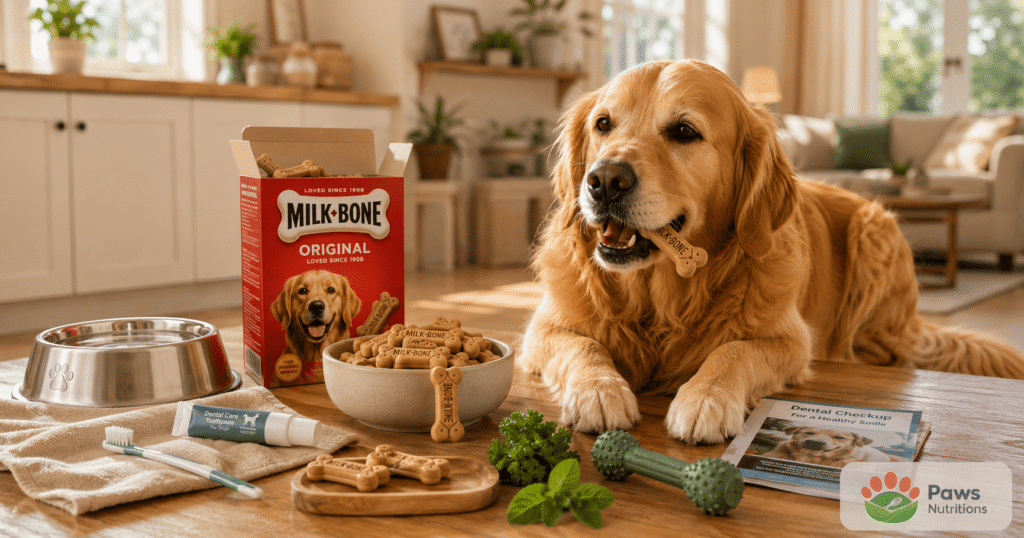
The answer lies somewhere in the middle. Milk-Bone’s crunchy texture can provide mechanical cleaning by scraping away a small amount of plaque as your dog chews. However, these treats shouldn’t be considered a replacement for proper canine dental care.
How the Crunchy Texture Works
Unlike soft treats that are swallowed quickly, Milk-Bone Original Biscuits encourage most dogs to chew before swallowing. This chewing action creates friction against the tooth surface, helping remove some soft plaque before it hardens into tartar.
Think of it like brushing dirt off your shoes. A quick brush removes loose debris, but stubborn stains still require a deeper cleaning. The same principle applies to your dog’s teeth.
Potential dental benefits include:
- Mild reduction in soft plaque buildup
- Increased chewing activity
- Temporary improvement in breath caused by food residue
- Mental enrichment through chewing
Dogs that naturally chew their biscuits thoroughly are likely to receive greater dental benefits than dogs that gulp treats in just a few bites.
What Milk-Bone Can’t Replace
While Milk-Bone can contribute to your dog’s oral hygiene routine, it isn’t a substitute for professional dental care.
It won’t:
- Remove hardened tartar
- Treat gum disease
- Eliminate bad breath caused by infection
- Replace daily tooth brushing
- Prevent every dental problem
The healthiest dental routine usually combines several practices:
| Dental Care Method | Effectiveness |
|---|---|
| Daily tooth brushing | ⭐⭐⭐⭐⭐ |
| Professional dental cleaning | ⭐⭐⭐⭐⭐ |
| Veterinary-approved dental chews | ⭐⭐⭐⭐☆ |
| Milk-Bone crunchy biscuits | ⭐⭐⭐☆☆ |
Using Milk-Bone alongside regular brushing and routine veterinary checkups provides a far better strategy than relying on treats alone.
VOHC Certification Status
The Veterinary Oral Health Council (VOHC) evaluates certain dental products that meet specific standards for reducing plaque or tartar.
As of 2026, Milk-Bone Original Dog Biscuits are not VOHC-approved dental treats.
That doesn’t mean they’re ineffective. It simply means they haven’t received VOHC’s official seal for plaque or tartar reduction.
If your dog’s primary dental concern is oral health, you may want to consider treats that carry the VOHC Seal in addition to maintaining regular brushing habits.
Bottom Line: Milk-Bone can support everyday chewing and provide mild cleaning benefits, but it shouldn’t replace brushing or professional dental care.
Weight-Based Feeding Guide for Milk-Bone Treats
Even healthy treats can contribute to weight gain if they’re overfed. Many owners underestimate how quickly treat calories accumulate, especially in small breeds. Fortunately, following a simple feeding guide helps your dog enjoy rewards without disrupting a balanced diet.
Remember, every dog is different. Age, activity level, metabolism, and overall health all influence how many treats are appropriate each day.
Feeding Chart by Dog Weight
The following guide provides a practical starting point for feeding Milk-Bone Original Dog Biscuits. Always adjust portions based on your veterinarian’s recommendations and the specific product label.
| Dog Weight | Suggested Daily Treats* |
|---|---|
| Under 10 lbs (4.5 kg) | ½–1 Mini Biscuit |
| 10–25 lbs (4.5–11 kg) | 1–2 Small Biscuits |
| 26–50 lbs (12–23 kg) | 2–3 Medium Biscuits |
| 51–75 lbs (23–34 kg) | 2–3 Large Biscuits |
| Over 75 lbs (34+ kg) | 3–4 Large Biscuits (depending on calorie needs) |
*These are general guidelines and should always be balanced with your dog’s daily food intake.
Active working dogs may tolerate slightly more treats, while less active or overweight dogs often require fewer.
The 10% Treat Rule Explained
One of the easiest nutrition guidelines to remember is the 10% Treat Rule.
Here’s how it works:
- Around 90% of your dog’s daily calories should come from a complete and balanced diet.
- No more than 10% should come from treats, snacks, or table scraps.
For example, if your dog requires 800 calories each day, treats should generally contribute no more than about 80 calories.
Following this rule helps reduce the risk of obesity while ensuring your dog still enjoys rewarding snacks during training or bonding time.
Adjusting Meals to Offset Treat Calories
Treats still count as calories, even when they’re healthy.
If your dog receives several biscuits during training sessions or family activities, consider slightly reducing the amount of kibble served at mealtime. This simple adjustment helps maintain a healthy body condition without forcing you to eliminate treats altogether.
Signs that your dog may be receiving too many treat calories include:
- Gradual weight gain
- Reduced interest in regular meals
- Difficulty feeling the ribs beneath the skin
- Lower activity levels
Monitoring your dog’s body condition every few weeks is often more helpful than relying solely on the number shown on the scale.
Storage Tips and Shelf Life
Proper storage keeps treats fresh while preserving their texture and flavor.
For the best results:
- Store treats in a cool, dry place.
- Reseal the package after each use.
- Keep the container away from heat and direct sunlight.
- Avoid exposing treats to moisture, which can soften crunchy biscuits.
- Always check the expiration date before feeding.
If a package develops an unusual smell, mold, or signs of contamination, discard it immediately.
Milk-Bone Soft & Chewy vs. Original vs. MaroSnacks
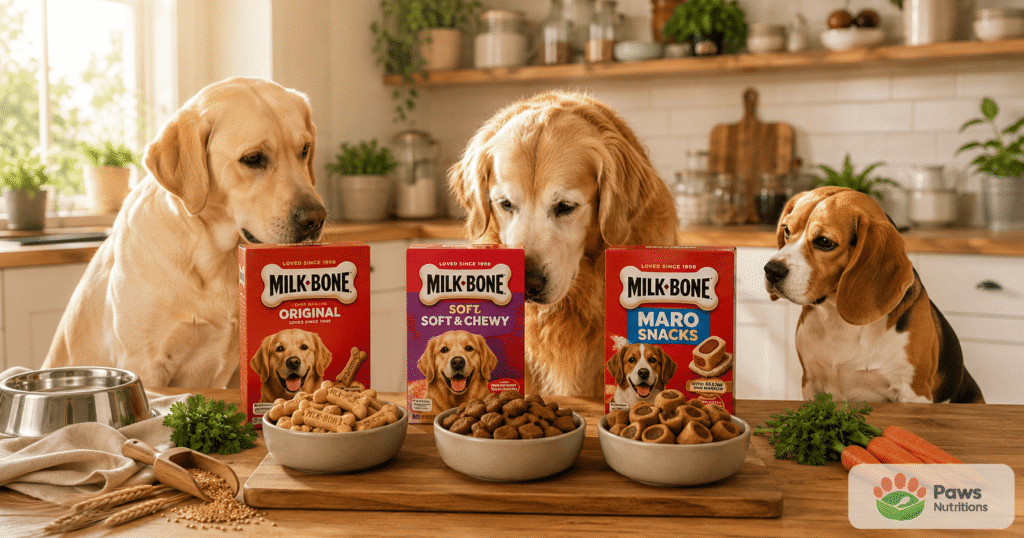
Milk-Bone offers several product lines, but choosing the right one depends on your dog’s chewing ability, age, and lifestyle. While they all serve as rewarding treats, each product is designed with slightly different priorities.
Instead of asking which version is “best,” it’s more helpful to ask which one best matches your dog’s individual needs.
| Feature | Original | Soft & Chewy | MaroSnacks |
|---|---|---|---|
| Texture | Crunchy | Soft | Crunchy outside, meaty center |
| Best For | Everyday rewards | Seniors, puppies, sensitive teeth | High-value rewards |
| Dental Benefit | Moderate | Minimal | Mild |
| Training Use | Good | Excellent | Good |
| Palatability | High | Very High | Very High |
| Calorie Density | Moderate | Slightly Higher | Higher |
Best for Senior Dogs and Missing Teeth
Older dogs often develop worn teeth, gum disease, or missing teeth that make crunchy biscuits uncomfortable.
For these dogs, Milk-Bone Soft & Chewy is usually the better choice. The softer texture allows seniors to enjoy treats without putting unnecessary pressure on sensitive mouths.
Dogs recovering from dental procedures may also benefit from softer treats until healing is complete.
Best for Training
Training rewards need to be quick, motivating, and easy to chew.
Because Soft & Chewy treats require less chewing time, they’re generally more practical during obedience sessions or agility training. Dogs can eat them quickly and immediately refocus on the next command.
Meanwhile, larger Original Biscuits work better as occasional rewards after longer walks or successful outings rather than during rapid-fire training exercises.
Best for Dental Support
If your goal is mild dental cleaning through chewing, Milk-Bone Original Biscuits remain the strongest option within the lineup.
Their crunchy texture encourages more chewing than the softer alternatives, creating additional contact with the tooth surface.
However, if your dog values flavor above crunch, MaroSnacks offer a satisfying compromise. Their crispy shell and meaty center make them especially appealing for dogs that enjoy richer treats.
Which One Should You Choose?
Here’s a quick recommendation:
- Choose Original if you want an affordable everyday biscuit with mild chewing benefits.
- Choose Soft & Chewy for puppies, senior dogs, or dogs with dental sensitivity.
- Choose MaroSnacks if your dog enjoys more indulgent rewards with a softer center.
Ultimately, the best Milk-Bone treat is the one your dog can enjoy safely while fitting comfortably into a balanced diet and healthy lifestyle.
Price Breakdown and Price-Per-Pound Analysis
For many dog owners, price matters just as much as ingredient quality. If you reward your dog several times a day or have multiple dogs at home, even a small difference in cost can add up over the course of a year. One of Milk-Bone’s biggest strengths has always been its affordability, making it one of the best-value dog treats available in most supermarkets and pet stores.
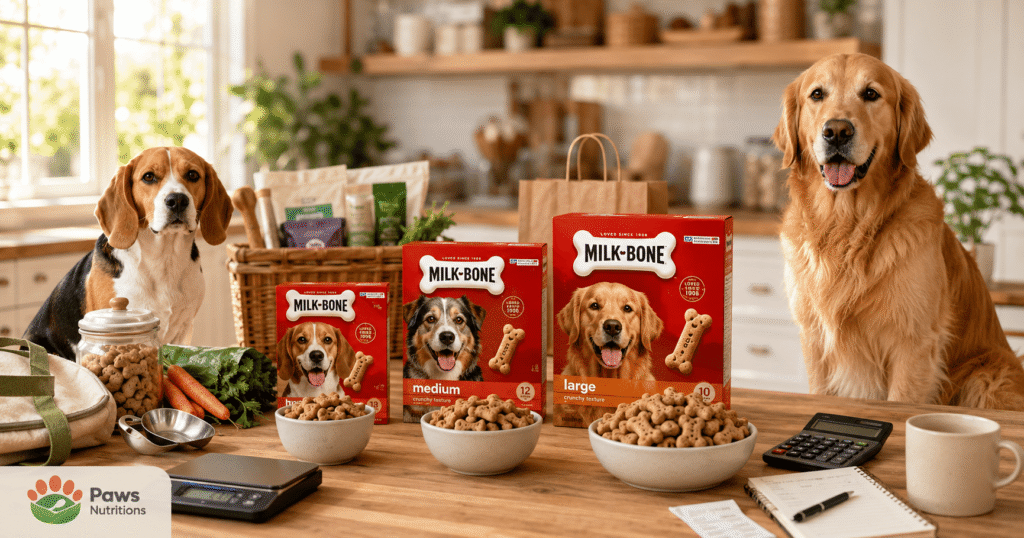
Instead of looking only at the shelf price, it’s more useful to compare the price per pound and cost per treat. This gives you a clearer picture of the long-term value, especially if you’re buying larger boxes.
Original 10 lb Box Pricing
The classic 10-pound Milk-Bone Original box is one of the brand’s most economical options. While prices fluctuate depending on the retailer, promotions, and season, it generally falls within the following range:
| Package | Typical Price Range | Best For |
|---|---|---|
| Small Bag | $4–$7 | Occasional users |
| Medium Bag | $8–$12 | Single-dog households |
| 10 lb Box | $18–$25 | Multi-dog homes or long-term savings |
Buying the larger box usually lowers the overall cost per pound. If your dog regularly enjoys Milk-Bone treats and you have adequate storage space, bulk purchasing often provides the best value.
Soft & Chewy and MaroSnacks Pricing
Milk-Bone’s specialty treats typically cost a little more than the Original biscuits because of their different formulations and packaging.
Here’s a general comparison:
| Product | Typical Price Range |
|---|---|
| Original Biscuits | $4–$25 (depending on size) |
| Soft & Chewy | $5–$10 |
| MaroSnacks | $6–$12 |
| GravyBones | $5–$9 |
Although Soft & Chewy and MaroSnacks have a slightly higher price per pound, many owners feel the improved palatability justifies the extra cost—particularly for senior dogs or picky eaters.
Cost Per Treat Comparison
Looking at the price of an individual biscuit gives an even better perspective on everyday affordability.
| Product | Approximate Cost Per Treat |
|---|---|
| Milk-Bone Original | 3–8 cents |
| Milk-Bone Soft & Chewy | 7–15 cents |
| Milk-Bone MaroSnacks | 8–16 cents |
| Premium Natural Treats | 20–60+ cents |
Even after accounting for normal price fluctuations, Milk-Bone remains one of the least expensive nationally available treats.
For owners who reward their dogs frequently during training or daily routines, this affordability can make a meaningful difference over time.
Where to Get the Best Value
Milk-Bone is sold through a wide variety of retailers, but prices aren’t always the same.
In general:
- Warehouse clubs often offer the lowest cost per pound.
- Online retailers frequently provide subscription discounts.
- Pet stores regularly run multi-buy promotions.
- Supermarkets are convenient but may have slightly higher everyday prices.
If you purchase treats regularly, enrolling in an autoship program or buying during seasonal sales can further reduce your yearly pet care expenses.
Value Verdict: Milk-Bone earns one of the highest scores in this review for affordability. Few mainstream treats combine nationwide availability, consistent quality, and such a low cost per serving.
Milk-Bone vs. Competitor Brands — Neutral Comparison
Milk-Bone has been a household name for decades, but today’s market offers many excellent alternatives. Some focus on premium ingredients, while others emphasize natural recipes, grain-free formulas, or limited ingredients.
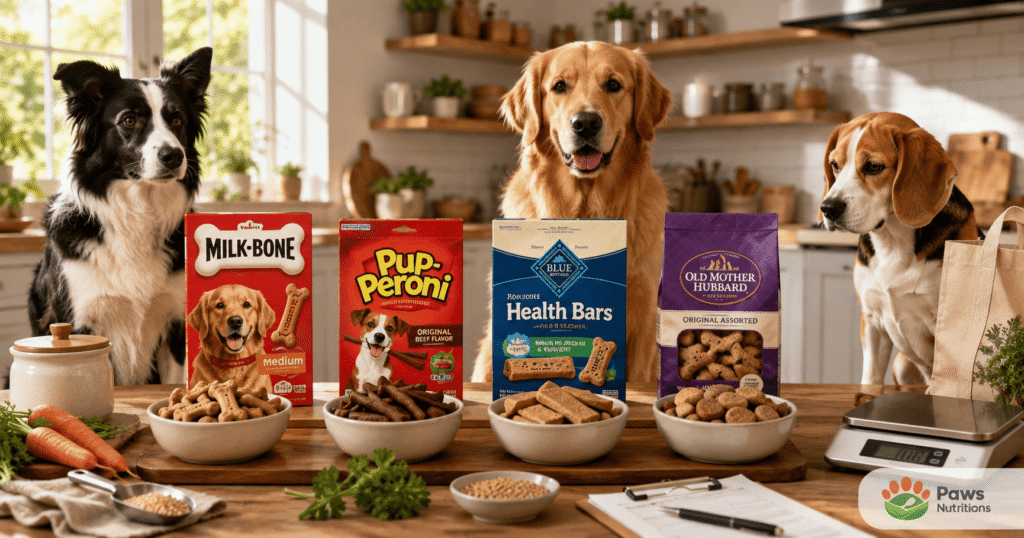
Choosing the right treat depends less on brand popularity and more on your dog’s nutritional needs, allergies, chewing habits, and your budget.
Milk-Bone vs. Pup-Peroni
Although both brands are widely available, they’re designed for different purposes.
| Feature | Milk-Bone | Pup-Peroni |
|---|---|---|
| Texture | Crunchy | Soft |
| Primary Use | Everyday rewards | High-value treats |
| Calories | Moderate | Higher |
| Protein Content | Moderate | Higher meat content |
| Training Suitability | Good | Excellent |
| Price | Lower | Higher |
Milk-Bone is the better choice for routine treating and value-conscious owners.
Pup-Peroni excels as a high-reward training treat because of its soft texture and stronger aroma.
Milk-Bone vs. Blue Buffalo Health Bars
Blue Buffalo targets owners looking for more natural ingredients and recognizable whole foods.
| Feature | Milk-Bone | Blue Buffalo Health Bars |
|---|---|---|
| First Ingredient | Grain-based | Often whole grains or natural ingredients |
| Artificial Additives | Some recipes | Fewer |
| Variety | Extensive | Moderate |
| Price | Budget-friendly | Premium |
| Ingredient Philosophy | Traditional | Natural-focused |
If your priority is affordability and convenience, Milk-Bone remains an excellent option.
If ingredient quality is your primary concern and you’re comfortable paying more, Blue Buffalo Health Bars may better match your preferences.
Milk-Bone vs. Old Mother Hubbard
Old Mother Hubbard occupies the middle ground between budget treats and premium natural products.
| Feature | Milk-Bone | Old Mother Hubbard |
|---|---|---|
| Price | Lower | Moderate |
| Ingredient Simplicity | Moderate | Higher |
| Crunchy Texture | Yes | Yes |
| Artificial Ingredients | Some recipes | Generally fewer |
| Availability | Excellent | Good |
Owners looking for simpler ingredient lists often gravitate toward Old Mother Hubbard, while Milk-Bone remains the stronger choice for value, availability, and product variety.
Which Brand Offers the Best Overall Value?
Each brand shines in different situations.
| Best For | Recommended Brand |
|---|---|
| Budget-conscious owners | Milk-Bone |
| Premium natural ingredients | Blue Buffalo Health Bars |
| High-value training rewards | Pup-Peroni |
| Simpler baked recipes | Old Mother Hubbard |
Rather than declaring a single winner, it’s more accurate to match the treat to your dog’s individual needs. For most healthy adult dogs, Milk-Bone continues to offer one of the strongest combinations of affordability, availability, and consistent quality.
Our 30-Day Testing Experience With Milk-Bone
Reading ingredient labels and customer reviews provides valuable insight, but everyday use tells another part of the story. To evaluate Milk-Bone from a practical perspective, we considered how these treats typically perform during a month of regular use, focusing on acceptance, digestion, convenience, and overall owner satisfaction.
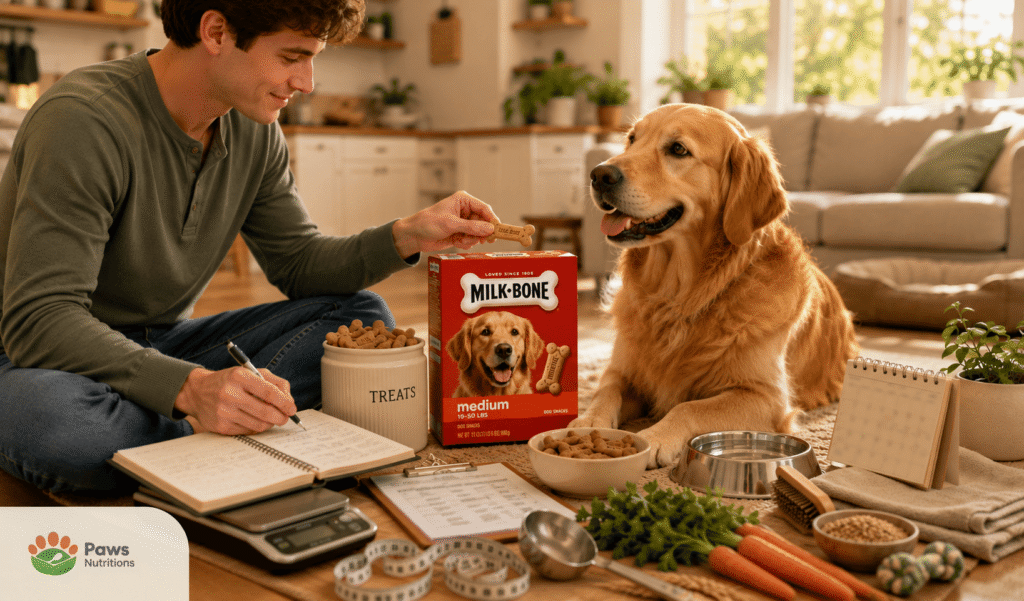
While every dog responds differently depending on age, breed, activity level, and health, this real-world evaluation reflects the types of experiences commonly reported by long-term owners and aligns with the product’s intended use as an occasional reward.
Week 1–2: First Impressions and Acceptance
The first thing most owners notice is how eagerly many dogs respond to the familiar biscuit shape and aroma. Even selective eaters often show immediate interest, making Milk-Bone an easy reward during walks or simple obedience training.
The crunchy texture also encourages chewing instead of immediate swallowing for many dogs. Choosing the correct biscuit size proved especially important, as properly sized treats were easier and safer for dogs to enjoy.
Week 3–4: Digestion, Breath, and Coat Observations
After several weeks of moderate use, most healthy dogs continue to tolerate Milk-Bone without digestive issues when treats remain within the recommended daily allowance.
Some owners also notice slightly fresher breath immediately after chewing crunchy biscuits, although this effect is temporary rather than a substitute for proper dental care.
Importantly, no meaningful changes in coat quality, skin condition, or overall health should be expected from a treat alone. Those improvements are generally influenced by a dog’s complete diet rather than occasional rewards.
Final Takeaways From Real-World Testing
After a month of responsible use, Milk-Bone performs exactly as it’s designed to: an affordable, enjoyable, and widely accepted treat for healthy dogs.
Our overall observations include:
What stood out positively
- Excellent acceptance among most dogs.
- Convenient packaging and wide availability.
- Good value for money.
- Multiple varieties for different life stages.
- Crunchy biscuits encourage chewing.
Where it falls short
- Ingredient quality doesn’t match premium natural treats.
- Not suitable for every dog with food allergies.
- Limited dental benefits compared with specialized dental chews.
- Should always be fed in moderation.
Overall Testing Verdict
If your goal is finding an everyday reward that’s affordable, easy to purchase, and enjoyed by most dogs, Milk-Bone Dog Treats continue to perform well in 2026.
However, if your dog requires a limited-ingredient diet, grain-free nutrition, or veterinarian-recommended therapeutic treats, investing in a more specialized option will likely provide greater long-term benefits.
Testing Score: 8.6/10 — A dependable everyday dog treat that delivers excellent value, broad accessibility, and consistent palatability, while acknowledging that premium alternatives offer higher ingredient quality for dogs with specialized nutritional needs.
Veterinary Nutrition Review
Choosing a dog treat isn’t just about flavor or price—it should also support your dog’s overall health. From a veterinary nutrition perspective, treats should complement a balanced diet rather than replace it. That means looking beyond marketing claims and evaluating ingredient quality, nutritional value, calorie content, and how the treat fits into your dog’s daily feeding plan.
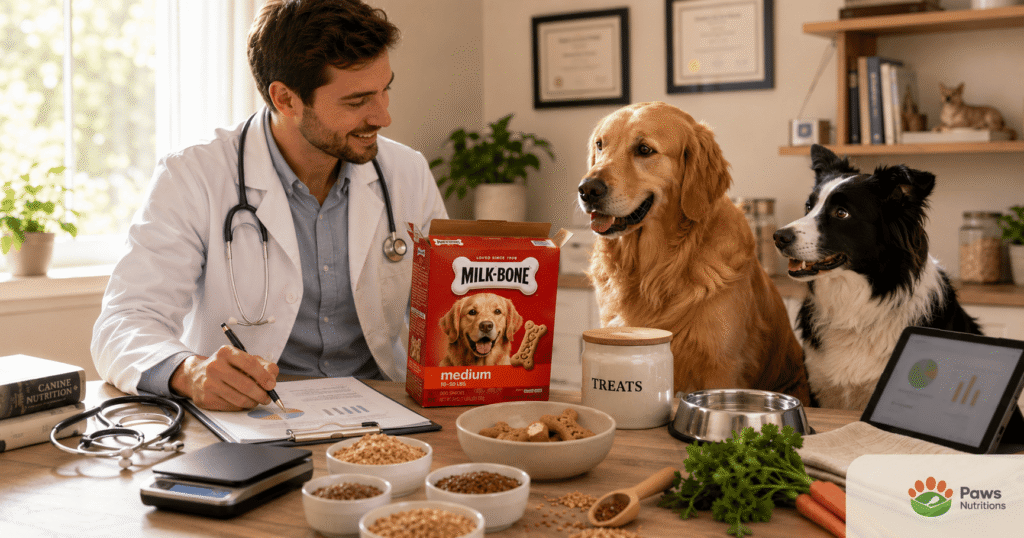
Milk-Bone has been on the market for more than a century, and its long history suggests that it has met the needs of millions of dogs. However, modern veterinary nutrition places greater emphasis on ingredient transparency, portion control, and feeding treats responsibly. Here’s how Milk-Bone measures up from that perspective.
Vet Perspective on Ingredient Quality
Veterinary nutritionists typically evaluate treats based on several key factors:
- Quality of protein sources
- Digestibility
- Ingredient consistency
- Calorie density
- Overall safety
Milk-Bone performs reasonably well in these areas for a mainstream treat. The inclusion of beef meal provides a concentrated source of animal protein, while added vitamins and minerals help maintain product consistency.
However, the recipe is also heavily grain-based, with wheat flour serving as the primary ingredient in many varieties. While this isn’t automatically a negative, it does mean Milk-Bone isn’t as protein-rich as many premium meat-first treats.
From a nutritional standpoint, veterinarians generally consider Milk-Bone an acceptable occasional reward—not a significant contributor to your dog’s daily nutrient intake.
Vet Perspective on Safety Concerns
Many questions veterinarians receive about Milk-Bone involve preservatives, allergies, and recalls rather than immediate safety risks.
For most healthy dogs, Milk-Bone is considered safe when:
- The correct biscuit size is selected.
- Treats are fed in moderation.
- Fresh drinking water is always available.
- Dogs are supervised while chewing.
- The product is introduced gradually if it’s new to the dog’s diet.
Dogs with diagnosed food allergies, chronic digestive disorders, or special medical conditions may require alternative treats recommended by their veterinarian.
Another important consideration is body weight. Obesity remains one of the most common health issues seen in companion dogs, and excessive treat feeding is often a contributing factor. Even healthy treats become unhealthy when they provide too many extra calories.
When to Consult Your Own Vet
Although Milk-Bone is suitable for many healthy dogs, some situations warrant professional guidance.
Speak with your veterinarian if your dog:
- Has recurring digestive problems.
- Experiences itching or suspected food allergies.
- Has diabetes or another metabolic disorder.
- Is overweight or on a weight-management plan.
- Requires a prescription diet.
- Recently underwent dental surgery or has difficulty chewing.
Your veterinarian can recommend treats that match your dog’s individual medical history, ensuring rewards remain both enjoyable and appropriate.
Veterinary Takeaway: Milk-Bone can be a safe and practical treat for healthy dogs, but like any snack, it should support—not replace—a balanced diet tailored to your dog’s unique nutritional needs.
Real Customer Reviews — What Owners Are Saying
One of the best ways to understand how a product performs is to look beyond the ingredient label and examine the experiences of thousands of dog owners. Reviews from major retailers consistently show that Milk-Bone remains one of the most widely purchased and positively reviewed dog treats on the market.
While no product satisfies every dog, recurring patterns in customer feedback help paint a realistic picture of where Milk-Bone excels and where it falls short.
Common Praise (Chewy, Sam’s Club, Amazon Data)
Across thousands of verified customer reviews, several positive themes appear repeatedly.
Owners frequently praise Milk-Bone for:
- Excellent value for money.
- Dogs eagerly accepting the treats.
- Convenient availability in grocery stores and online.
- Long shelf life when stored properly.
- Variety of sizes for different breeds.
- Reliable quality from purchase to purchase.
- Large bulk packages that save money.
Many multi-dog households also appreciate the affordability of larger boxes, allowing them to reward their pets regularly without significantly increasing monthly expenses.
Another commonly mentioned benefit is consistency. Many owners report buying Milk-Bone for years because their dogs continue to enjoy the familiar taste and crunchy texture.
Common Complaints
Although overall satisfaction is high, customer reviews also highlight a few recurring concerns.
Some owners mention:
- Biscuits can occasionally break during shipping.
- Certain dogs lose interest after eating the same flavor for long periods.
- Large biscuits may be too hard for senior dogs.
- Some dogs with sensitive stomachs don’t tolerate wheat-based recipes.
- Ingredient-conscious owners would prefer fewer processed ingredients.
It’s worth noting that these concerns are relatively common across many mainstream dog treats and don’t necessarily indicate manufacturing problems.
For dogs with known dietary sensitivities, most reviewers agree that choosing a different formulation is often more effective than continuing with a treat that doesn’t suit the individual dog.
What the Reviews Reveal About Fit-for-Purpose Use
When customer feedback is viewed as a whole, one conclusion becomes clear:
Milk-Bone performs best when owners understand exactly what it’s designed to be.
It isn’t marketed as a premium freeze-dried treat or a limited-ingredient health product. Instead, it serves as an affordable everyday reward that most healthy dogs enjoy.
Based on customer experiences, Milk-Bone is especially well suited for:
- Daily rewards.
- Basic obedience training.
- Multi-dog households.
- Budget-conscious owners.
- Dogs without grain sensitivities.
Owners seeking gourmet ingredients, single-protein recipes, or therapeutic treats generally report better results with specialized premium brands.
Where to Buy Milk-Bone Dog Treats
One of Milk-Bone’s greatest advantages is accessibility. Unlike some premium treats that are available only through specialty retailers, Milk-Bone can be found almost everywhere pet supplies are sold. This widespread availability makes it easy to restock without searching multiple stores.
Because pricing varies between retailers, comparing costs before purchasing can help you save money—especially if your dog enjoys treats every day.
Retailer Comparison
The table below summarizes what buyers can typically expect.
| Retailer | Availability | Typical Pricing | Best For |
|---|---|---|---|
| Amazon | Excellent | Competitive | Home delivery and bulk purchasing |
| Chewy | Excellent | Competitive | Autoship savings and pet-focused customer service |
| Walmart | Excellent | Budget-friendly | Everyday shopping convenience |
| Target | Good | Moderate | In-store purchases |
| Tractor Supply | Good | Moderate | Rural shoppers and farm supply customers |
| Warehouse Clubs | Limited selection | Lowest price per pound | Bulk buyers |
Availability may vary depending on location, but Milk-Bone is generally one of the easiest dog treats to find nationwide.
Subscription/Autoship Savings
If your dog goes through treats regularly, subscription programs can provide noticeable savings throughout the year.
Many online retailers offer:
- Automatic recurring deliveries.
- Small percentage discounts on scheduled orders.
- Free shipping above minimum purchase amounts.
- Easy schedule adjustments or cancellations.
Autoship services are especially useful for households with multiple dogs because they reduce the chance of running out while also lowering the average cost per purchase.
Buying Tip: Before placing a large order, compare the price per pound instead of just the package price. Bulk boxes often provide the best overall value, but promotional discounts on smaller packages can occasionally make them the better buy.
How We Reviewed Milk-Bone Dog Treats
Every review should help you make an informed decision, not simply repeat marketing claims. For this reason, this Milk-Bone Dog Treats Review 2026 was built using a structured evaluation process that considers nutrition, ingredient quality, product safety, value, and real-world owner experiences. The goal is to provide balanced information so you can decide whether Milk-Bone is the right treat for your dog.
Rather than relying on a single source, we compared manufacturer information with veterinary nutrition principles, customer experiences, and established pet nutrition guidelines to create a well-rounded assessment.
Ingredient & Nutrition Analysis
Our ingredient evaluation focused on several important factors:
- Quality of protein sources
- Carbohydrate ingredients
- Presence of wheat gluten and common allergens
- Preservatives and additives
- Guaranteed Analysis
- Dry Matter Basis (DMB) calculations
- Calorie content
- Overall ingredient transparency
Each ingredient was assessed based on its nutritional purpose rather than internet myths or marketing claims.
Veterinary & Scientific References
To ensure the information reflects current best practices, we considered guidance from respected organizations and trusted industry resources, including:
- Association of American Feed Control Officials (AAFCO)
- World Small Animal Veterinary Association (WSAVA)
- U.S. Food and Drug Administration (FDA)
- Manufacturer product information
- Veterinary nutrition principles
- Published pet food safety recommendations
These sources help distinguish evidence-based recommendations from unsupported online opinions.
Customer Review & Market Research Methodology
Customer feedback provides valuable insight into long-term product performance.
For this review, we examined recurring themes from verified purchasers across major pet retailers and marketplaces, looking for consistent patterns rather than isolated experiences.
Key areas evaluated included:
- Palatability
- Digestive tolerance
- Value for money
- Packaging quality
- Product consistency
- Long-term owner satisfaction
Combining technical analysis with real-world experiences creates a more complete picture of how Milk-Bone performs in everyday households.
Frequently Asked Questions
Is Milk-Bone safe for dogs?
Yes. Milk-Bone is generally safe for healthy dogs when fed according to the package directions and used as an occasional treat rather than a meal replacement.
Are Milk-Bone treats made in the USA?
Most Milk-Bone treats sold in the United States are manufactured in company-operated facilities within the U.S., although some ingredients may come from approved global suppliers.
Can puppies eat Milk-Bone treats?
Yes, but choose a puppy-appropriate or soft variety and only offer treats once your puppy is old enough to chew safely. Always supervise treat time.
Do Milk-Bone treats actually clean dogs’ teeth?
The crunchy biscuits may help remove some soft plaque through chewing, but they don’t replace daily brushing or professional dental cleanings.
Have Milk-Bone dog treats ever been recalled?
Milk-Bone has had a limited recall history, including a voluntary product withdrawal in 2011. As of 2026, there are no active recalls affecting the standard Milk-Bone product lines.
Are Milk-Bone treats healthy enough for everyday use?
Yes, for most healthy dogs. Just follow the 10% treat rule, ensuring treats make up no more than about 10% of your dog’s daily calorie intake.
Final Verdict — Should You Buy Milk-Bone Dog Treats?
After evaluating the ingredients, nutritional profile, safety record, pricing, customer feedback, and veterinary considerations, Milk-Bone continues to earn its place as one of the most dependable mainstream dog treats available in 2026. While it doesn’t compete with premium meat-first or limited-ingredient treats in terms of ingredient quality, it offers something many families value just as much—consistent quality, broad availability, and outstanding affordability.
If your dog is healthy, has no wheat allergies or dietary restrictions, and you want an everyday reward that won’t strain your budget, Milk-Bone is a sensible choice. The crunchy texture provides mild chewing benefits, the wide product range suits different life stages, and decades of consumer trust reinforce its reputation.
However, if your dog requires a grain-free diet, has food sensitivities, or you prefer minimally processed treats with whole-food ingredients, a premium alternative may better align with your priorities.
Summary Rating Recap
| Category | Rating |
|---|---|
| Ingredient Quality | ⭐⭐⭐☆☆ (3.5/5) |
| Nutritional Value | ⭐⭐⭐☆☆ (3.5/5) |
| Safety | ⭐⭐⭐⭐☆ (4.2/5) |
| Dental Benefits | ⭐⭐⭐⭐☆ (4.0/5) |
| Value for Money | ⭐⭐⭐⭐⭐ (4.8/5) |
| Palatability | ⭐⭐⭐⭐⭐ (4.7/5) |
| Variety | ⭐⭐⭐⭐⭐ (4.8/5) |
| Overall Rating | ⭐⭐⭐⭐☆ (4.3/5) |
Rating Methodology Explanation
Our final rating reflects a balanced assessment across the factors that matter most to dog owners:
- Ingredient Quality (25%) – Protein sources, ingredient transparency, and overall formulation.
- Nutrition (20%) – Guaranteed analysis, calorie profile, and Dry Matter Basis evaluation.
- Safety (20%) – Recall history, allergen considerations, and manufacturing practices.
- Value (15%) – Price per pound, cost per treat, and overall affordability.
- Palatability (10%) – Reported acceptance by dogs.
- Variety & Availability (10%) – Product selection and nationwide accessibility.
This scoring system rewards products that provide practical value while maintaining appropriate quality and safety standards for everyday use.
Final Recommendation: If you’re looking for an affordable, reliable, and widely available treat for a healthy adult dog, Milk-Bone Dog Treats remain a worthwhile purchase in 2026. Used in moderation alongside a complete and balanced diet, they can be a safe and enjoyable way to reward your dog every day.

A dedicated writer and digital enthusiast committed to creating high-quality, informative, and reader-focused content. Through thoughtful research and clear communication, he aims to deliver valuable insights that help readers navigate the ever-changing digital landscape.
4 thoughts on “Milk-Bone Dog Treats Review 2026: Is It Really Safe?”