

Finding dog treats that are tasty, reasonably priced, and made with ingredients you can trust isn’t always easy. One package promises joint support, while another claims natural nutrition, leaving many pet owners wondering what’s actually worth buying. In this Howl’s Kitchen Dog Treats Review, you’ll discover whether these popular treats truly deliver on their promises or simply rely on clever marketing.
This in-depth guide explores the brand’s history, product quality, nutritional value, ingredient transparency, pricing, safety, and real customer experiences. You’ll also learn how Howl’s Kitchen compares with competing brands, whether the joint-support formula offers real value, and which dogs are most likely to benefit. By the end, you’ll have the information needed to choose confidently for your four-legged companion.
What Is Howl’s Kitchen? Brand Overview & History
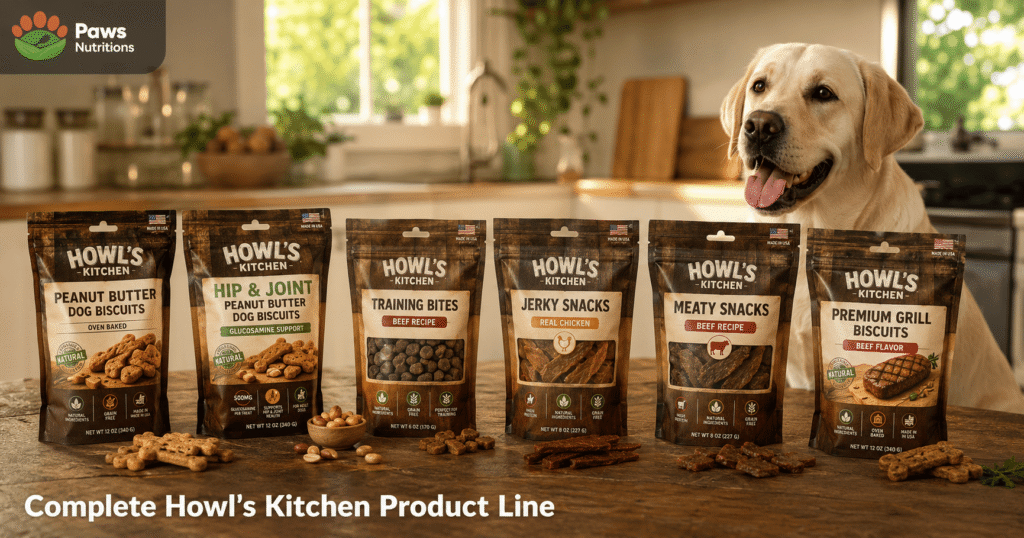
If you’ve been shopping for affordable dog treats recently, you’ve probably come across Howl’s Kitchen. The brand offers a wide variety of crunchy biscuits, chewy snacks, jerky treats, and training rewards designed for dogs of different ages and sizes. While it may not have the same name recognition as some larger pet food brands, Howl’s Kitchen has steadily gained attention through major retailers thanks to its budget-friendly prices and broad product selection.
Unlike many boutique treat brands that focus on premium ingredients or limited recipes, Howl’s Kitchen aims to provide everyday treats for pet owners looking for convenience and value. Its lineup includes hip and joint biscuits, training bites, premium grill biscuits, jerky treats, and meaty snacks, giving owners several options based on their dog’s preferences and lifestyle.
One feature that attracts many buyers is the availability of functional formulas. For example, the Hip & Joint Biscuits contain glucosamine, an ingredient commonly used to support healthy joints in active and senior dogs. However, ingredient quality varies between products, making it important to evaluate each recipe rather than judging the entire brand by a single treat.
Overall, Howl’s Kitchen positions itself as an accessible, everyday treat brand rather than a premium nutrition-focused company. Understanding who makes these treats and how they’re manufactured provides valuable context before looking more closely at their ingredients and nutritional quality.
Who Owns Howl’s Kitchen? (Scott Pet Products)
Howl’s Kitchen is owned by Scott Pet Products, an American pet treat manufacturer with a long history in the industry. Founded in 1975 and headquartered in Rockville, Indiana, Scott Pet has grown from a small family business into one of the larger producers of dog treats in the United States.
Today, the company manufactures thousands of pet products across several brands, supplying retailers throughout North America. Its manufacturing facilities cover hundreds of thousands of square feet, allowing it to produce a wide range of biscuits, jerky, chew treats, and specialty snacks for dogs.
This long operating history gives the company an established presence in the pet treat market. However, longevity alone doesn’t guarantee superior ingredient quality, which is why evaluating the product label remains just as important as considering the company’s background.
Where Are Howl’s Kitchen Treats Made?
One reassuring aspect of Howl’s Kitchen is that its treats are made in the USA, a detail highlighted across retailer listings and brand materials. Domestic manufacturing is often viewed positively because it generally means production follows U.S. food manufacturing regulations and quality standards.
That said, “Made in USA” doesn’t automatically mean every ingredient is sourced domestically. Like many pet food manufacturers, ingredient sourcing may involve both domestic and imported components depending on availability and formulation. For buyers who prioritize country of manufacture, however, USA production remains a meaningful advantage over products manufactured overseas.
Product Line-Up: Biscuits, Jerky, Soft Bites & Training Treats
Rather than focusing on one flagship product, Howl’s Kitchen offers several treat categories designed for different purposes.
The product range typically includes:
- Hip & Joint Biscuits with added glucosamine
- Premium Grill Biscuits in multiple flavors
- Training Bites for reward-based learning
- Jerky Snacks
- Meaty Snacks
- Crunchy everyday biscuits in different package sizes
This variety allows owners to choose treats based on their dog’s age, activity level, chewing habits, or training needs. However, it’s also important to remember that ingredient lists differ between recipes. Some formulas include more artificial additives than others, so each product deserves individual evaluation instead of assuming the entire lineup shares the same nutritional profile.
Howl’s Kitchen Quick Verdict Box (Scored Rubric)
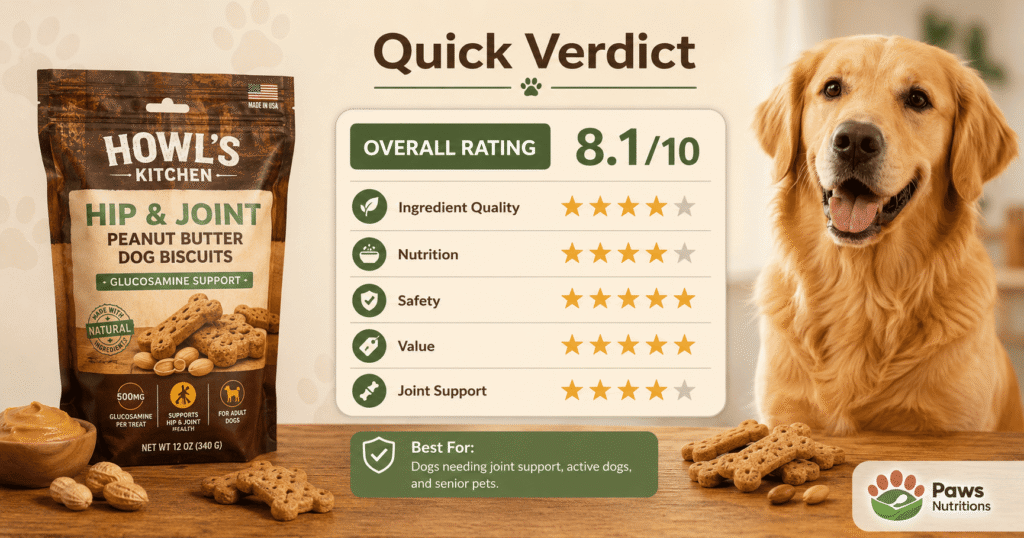
Before diving into the finer details, here’s a quick snapshot of how Howl’s Kitchen performs across the areas that matter most to dog owners. These scores reflect the brand’s ingredient profile, nutritional value, safety record, affordability, and overall buying experience rather than marketing claims alone.
| Category | Rating (10) | Summary |
|---|---|---|
| Ingredient Quality | 7.0 | Functional ingredients are a plus, but some recipes contain artificial colors, preservatives, and lower-cost fillers. |
| Nutritional Value | 7.5 | Adequate for an occasional treat, though not designed as a complete food. |
| Joint Support | 8.5 | Hip & Joint Biscuits provide glucosamine, offering added value for many adult and senior dogs. |
| Safety & Recall History | 9.0 | No publicly reported recalls identified at the time of research, supporting a positive safety record. |
| Variety | 9.0 | Wide selection of biscuits, jerky, soft treats, and training rewards. |
| Affordability | 9.0 | Competitive pricing makes the brand attractive for budget-conscious households. |
| Ingredient Transparency | 6.5 | Ingredient labels are available, but some marketing claims may raise questions when compared with the actual formulations. |
| Overall Rating | 8.1 / 10 | A solid everyday treat brand offering good value, especially if you choose recipes that match your dog’s dietary needs. |
Key Takeaway: Howl’s Kitchen offers a compelling balance of affordability, variety, and functional options like joint-support treats. Still, ingredient quality varies across recipes, making it worth checking the label before choosing a specific product.
Howl’s Kitchen Product Specifications
Before comparing nutrition, ingredients, or pricing, it’s helpful to understand the basic product details. These specifications give you a quick overview of what to expect from the popular Hip & Joint Biscuits and provide a useful reference while reading the rest of this review.
Product Information Table
| Specification | Details |
|---|---|
| Brand | Howl’s Kitchen |
| Manufacturer | Scott Pet Products |
| Country of Manufacture | United States |
| Product Type | Dog Treats / Biscuits |
| Primary Formula Reviewed | Hip & Joint Peanut Butter Biscuits |
| Texture | Crunchy baked biscuits |
| Flavor | Peanut Butter |
| Primary Functional Benefit | Joint support with glucosamine |
| Life Stage | Adult and Senior Dogs |
| Breed Size | Suitable for small, medium, and large breeds when fed appropriately |
| Rawhide-Free | Yes |
| Available Product Categories | Biscuits, Training Bites, Jerky Snacks, Meaty Snacks |
| Packaging | Multiple bag sizes depending on retailer |
| Made In | USA |
From a practical standpoint, these specifications show that Howl’s Kitchen targets everyday pet owners who want convenient, widely available treats without paying premium prices. The addition of a joint-support formula also helps distinguish the Hip & Joint Biscuits from standard reward treats.
However, product specifications only tell part of the story. To determine whether these treats truly deserve a place in your dog’s routine, it’s essential to examine their nutritional profile, ingredient quality, and overall value—topics we’ll explore in the next section.
Guaranteed Analysis
Before looking at ingredient quality, it’s important to understand what the numbers on the package actually tell you. The Guaranteed Analysis lists the minimum or maximum amounts of key nutrients in the treat. While it doesn’t provide a complete nutritional picture, it offers a reliable starting point for evaluating whether a treat fits your dog’s diet.
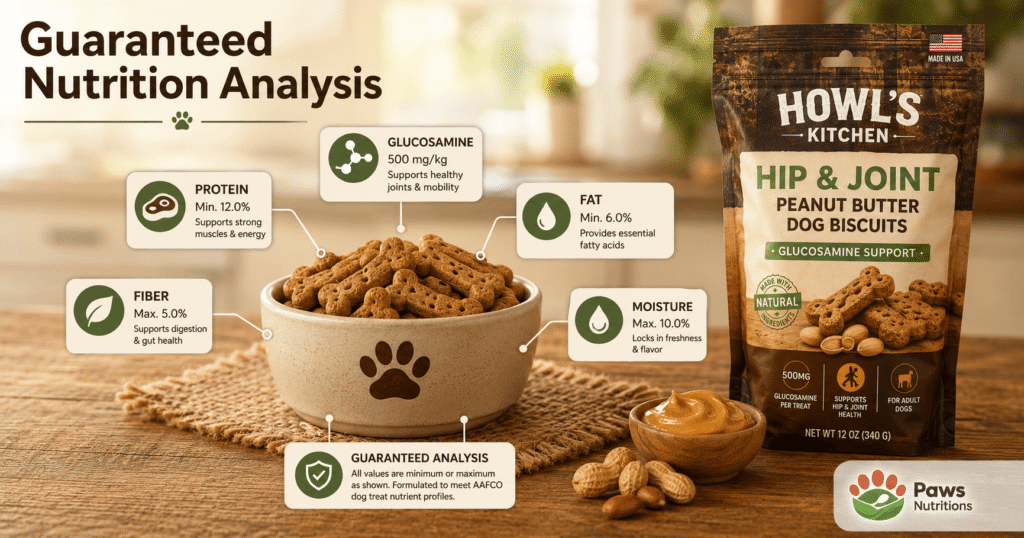
One common mistake is assuming these percentages reflect the exact nutrient content. In reality, they’re guaranteed minimums or maximums set by the manufacturer. That’s why comparing products based solely on these figures can sometimes be misleading. Later, we’ll convert these values into a Dry Matter Basis (DMB) for a more meaningful comparison.
Guaranteed Analysis Table
The Hip & Joint Peanut Butter Biscuits list the following guaranteed values on the product label:
| Nutrient | Guaranteed Amount |
|---|---|
| Crude Protein (min.) | 18.0% |
| Crude Fat (min.) | 7.0% |
| Crude Fiber (max.) | 5.0% |
| Moisture (max.) | 10.0% |
| Glucosamine (min.) | 500 mg per biscuit |
Important: These values represent guaranteed minimums or maximums rather than the exact nutrient composition of every biscuit.
What the Guaranteed Analysis Really Means
At first glance, the numbers suggest a fairly typical baked dog biscuit rather than a high-protein, meat-focused treat. The 18% crude protein level is acceptable for an occasional reward, but it isn’t especially high when compared with premium freeze-dried or single-protein treats.
The 7% fat content keeps the biscuits relatively moderate in calories, making them suitable for many adult dogs when fed responsibly. Meanwhile, the 5% maximum crude fiber may contribute slightly to digestive health, although fiber isn’t the primary reason most owners choose this product.
The standout figure is the 500 mg of glucosamine per biscuit. That’s considerably more information than many competing treats provide, although dosage alone doesn’t guarantee effectiveness. Factors such as your dog’s size, overall diet, and existing joint condition all influence whether supplemental glucosamine is likely to provide noticeable support.
Overall, the Guaranteed Analysis paints a picture of a functional everyday treat rather than a nutrient-dense snack. The next step is to remove moisture from the equation so we can make a more accurate comparison with other treats. Howl’s Kitchen Nutrition Analysis (Dry Matter Basis)
Reading a Guaranteed Analysis is helpful, but it doesn’t always tell the whole story. Moisture affects every percentage on the label, making direct comparisons between different treats difficult. That’s why nutrition professionals often use Dry Matter Basis (DMB) calculations—they remove water from the equation and provide a clearer view of the actual nutrient concentration.
For crunchy biscuits like Howl’s Kitchen, the difference isn’t dramatic because moisture is relatively low. Still, converting the numbers into Dry Matter Basis allows you to compare these treats more fairly with competing biscuits, semi-moist treats, or even some dry dog foods.
Dry Matter Basis (DMB) Breakdown Table
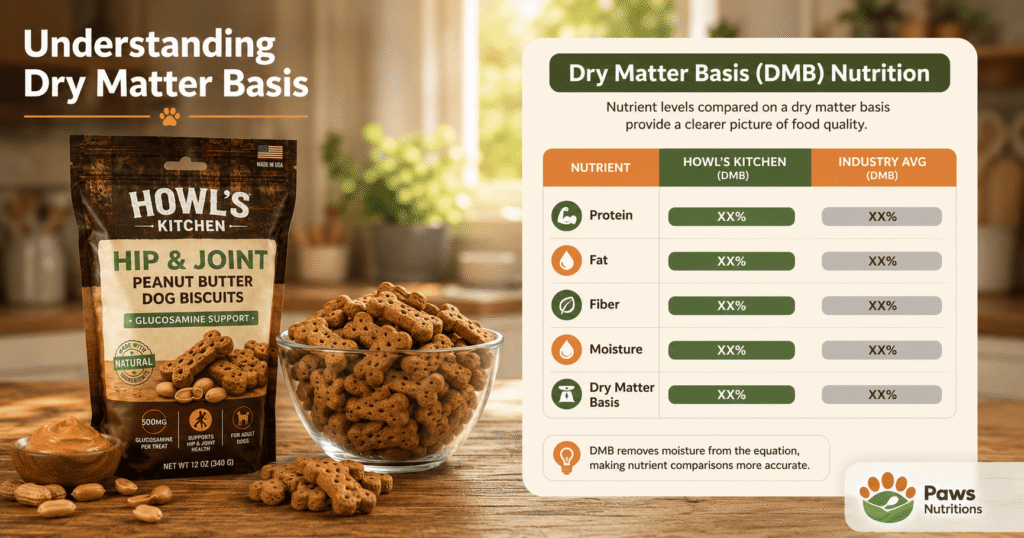
Using the maximum moisture listed on the label, the approximate Dry Matter Basis values are:
| Nutrient | As Fed | Dry Matter Basis (Approx.) |
|---|---|---|
| Protein | 18.0% | 20.0% |
| Fat | 7.0% | 7.8% |
| Fiber | 5.0% | 5.6% |
| Moisture | 10.0% | Removed from calculation |
How DMB is calculated:
Dry Matter % = Nutrient % ÷ (100 − Moisture %) × 100
Using this approach makes nutritional comparisons much more meaningful because every product is evaluated without the influence of water content.
Protein, Fat & Fiber Content Explained
The protein level sits in the moderate range for a baked biscuit. While it contributes to your dog’s daily protein intake, these treats shouldn’t be viewed as a primary protein source. Dogs obtain most of their nutritional protein from a complete and balanced diet, while treats simply provide an occasional supplement.
Fat content is also moderate, making these biscuits a reasonable option for many healthy adult dogs. However, owners of overweight pets should still account for treat calories as part of the dog’s daily energy intake. Even relatively low-fat treats can contribute to weight gain if offered too generously.
Fiber remains fairly modest and primarily supports the biscuit’s texture and digestion. Although it offers some digestive benefits, it isn’t present at levels that would classify the product as a high-fiber dietary treat.
From a nutritional perspective, Howl’s Kitchen delivers balanced values for an everyday biscuit. It doesn’t compete with premium high-protein dog treats, but it also avoids being excessively rich or calorie-dense, which may suit many household pets.
How Howl’s Kitchen Compares to AAFCO Treat Guidelines
One important point that many reviews overlook is that AAFCO does not establish nutrient profiles specifically for dog treats in the same way it does for complete and balanced dog foods. Instead, treats are intended as supplemental foods and should complement—not replace—a nutritionally complete diet.
A practical guideline recommended by many veterinary nutrition professionals is the 10% rule. In simple terms, treats should provide no more than 10% of your dog’s daily calories, while the remaining 90% should come from a balanced dog food formulated to meet your pet’s nutritional needs.
Viewed through that lens, Howl’s Kitchen performs as expected. Its nutrient profile is appropriate for an occasional reward, especially when used during training or as a daily snack in moderation. Problems arise only when treats become a major part of the diet, reducing the intake of complete nutrition from your dog’s regular food.
Full Ingredient List Breakdown
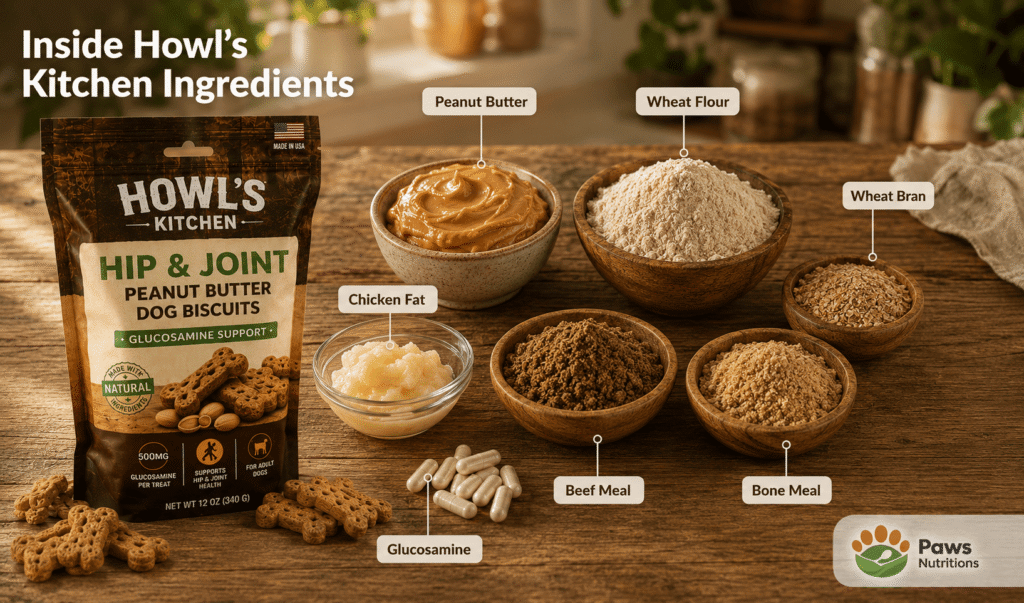
Ingredients often reveal far more about a dog treat than the marketing on the front of the package. Attractive claims like “made with real flavor” or “supports healthy joints” can sound impressive, but the ingredient panel shows what your dog is actually eating. That’s why experienced pet owners always read beyond the packaging.
Howl’s Kitchen uses a combination of protein sources, grains, functional ingredients, preservatives, and coloring agents. Some ingredients provide genuine nutritional value, while others are included for manufacturing, shelf stability, appearance, or cost. Looking at the complete picture helps you make a more informed decision.
Primary Protein Sources
The recipe includes ingredients such as beef and bone meal, along with chicken fat, which contribute protein, flavor, and energy.
Beef and bone meal is a concentrated rendered ingredient that supplies protein as well as minerals like calcium and phosphorus. While it isn’t equivalent to fresh meat, it remains a commonly used ingredient in many commercial dog foods and treats.
Meanwhile, chicken fat serves primarily as an energy source while improving taste. Dogs generally digest quality animal fats efficiently, and chicken fat also provides omega-6 fatty acids, which support healthy skin and coat when included as part of a balanced diet.
Although these ingredients provide nutritional value, the formula doesn’t rely exclusively on meat-based proteins. Like many budget-friendly biscuits, it combines animal ingredients with grain-based components to achieve its final nutrient profile.
Grains & Fillers
The ingredient list also includes wheat flour, wheat bran, and wheat middlings, all of which contribute to the biscuit’s structure and texture.
Contrary to popular belief, wheat isn’t automatically harmful for dogs. Most healthy dogs digest grains without difficulty, and whole grain ingredients can supply carbohydrates, fiber, and certain vitamins. However, wheat isn’t ideal for dogs with diagnosed grain allergies or sensitivities.
The inclusion of wheat middlings may concern some owners because they’re often viewed as a lower-cost milling by-product. While they do provide fiber and nutrients, they generally aren’t considered as nutritionally valuable as whole grain ingredients.
Overall, the grain portion of the recipe reflects the product’s value-oriented positioning rather than a premium, limited-ingredient approach.
Preservatives Used
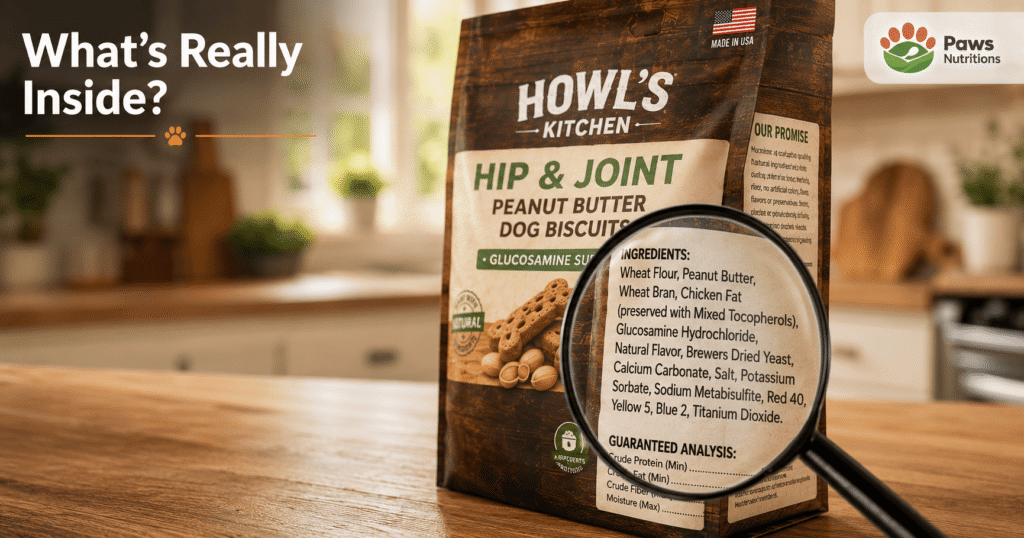
To maintain freshness during storage and transportation, the ingredient list includes Potassium Sorbate and Sodium Metabisulfite.
These preservatives help prevent spoilage and extend shelf life. They’re widely used within legal limits across the pet food industry and play an important role in keeping packaged treats safe over time.
That said, some pet owners intentionally avoid synthetic preservatives in favor of naturally preserved products that rely on ingredients such as mixed tocopherols or rosemary extract. If minimizing synthetic additives is one of your priorities, you’ll want to compare ingredient labels carefully before making a purchase. Artificial Colors
Another notable aspect of the formula is the use of artificial colors, including:
- Yellow #5
- Blue #2
- Red #40
- Titanium Dioxide
These additives improve the appearance of the treats for human buyers rather than providing any nutritional benefit to dogs.
Since dogs rely primarily on smell rather than color when choosing food, artificial dyes generally serve a marketing purpose instead of enhancing taste or health. Many premium pet treat manufacturers now avoid artificial colors altogether, making this one of the weaker aspects of the formula for owners seeking a more natural ingredient list.
Brand Claims vs. Actual Label: The “No Preservatives” Contradiction
One of the most important findings from our research involves a discrepancy between promotional messaging and the ingredient label.
Some retailer and brand materials emphasize “no preservatives or additives,” creating the impression that the treats are free from synthetic preservation. However, the published ingredient panel for certain Howl’s Kitchen recipes lists Potassium Sorbate, Sodium Metabisulfite, and several artificial coloring agents.

This doesn’t necessarily mean the product is unsafe. Instead, it highlights why reading the ingredient panel is more important than relying solely on marketing statements. Ingredient labels are legally regulated and provide the most accurate representation of what’s inside the package.
For pet owners who prioritize transparency, this reinforces an important lesson: always evaluate the actual ingredient list before making a buying decision. Marketing claims can simplify a product’s story, but the label tells the complete one.
Ingredient Quality Scorecard
Not all ingredients contribute equally to your dog’s health. Two treats may have similar protein percentages yet differ significantly in ingredient quality, digestibility, and nutritional value. That’s why looking beyond the Guaranteed Analysis is so important. An ingredient scorecard evaluates the overall formulation rather than focusing on one or two standout claims.
Based on the available ingredient information, nutritional profile, and functional additives, Howl’s Kitchen earns respectable marks in some areas while falling short in others. It offers useful joint-support ingredients and animal-based protein sources, but synthetic colors and preservatives reduce its overall ingredient quality score.
Protein Quality Score
Score: 7.5/10
The formula contains beef and bone meal alongside chicken fat, providing animal-derived nutrients that dogs can utilize efficiently. While these aren’t equivalent to fresh meat ingredients, they still contribute meaningful protein and energy.
However, the recipe isn’t especially meat-rich. Grain ingredients make up a significant portion of the formulation, meaning the protein profile isn’t as robust as premium high-protein dog treats that feature named meats as the primary ingredients.
Carbohydrate Quality Score
Score: 6.5/10
Carbohydrates come mainly from wheat flour, wheat bran, and wheat middlings. These ingredients help create the crunchy texture and provide energy, but they don’t offer the same nutritional value as whole-food carbohydrate sources like oats or sweet potatoes.
It’s worth noting that wheat isn’t inherently harmful for healthy dogs. The main concern lies in ingredient quality rather than the presence of grains themselves.
Functional Ingredients
Score: 8.5/10
One area where Howl’s Kitchen stands out is its inclusion of glucosamine in the Hip & Joint formula. Functional ingredients can add value when they serve a genuine nutritional purpose instead of acting as marketing buzzwords.
Although glucosamine isn’t a cure for arthritis or joint disease, it may support cartilage health and mobility in some dogs when used consistently as part of an overall wellness plan. This makes the Hip & Joint Biscuits more purposeful than ordinary reward treats.
Artificial Additives Score
Score: 5.5/10
Artificial colors and synthetic preservatives are the weakest part of the ingredient profile.
The inclusion of Red 40, Yellow 5, Blue 2, Titanium Dioxide, Potassium Sorbate, and Sodium Metabisulfite won’t concern every pet owner, as these additives are commonly used in commercial pet products. Still, many buyers today actively seek treats made without artificial dyes or synthetic preservatives.
For owners who prioritize minimally processed ingredients, this area may be the biggest drawback.
Overall Ingredient Quality Rating
Taking the complete formula into account, Howl’s Kitchen earns an overall ingredient quality score of 7.2/10.
| Category | Score | Verdict |
|---|---|---|
| Protein Sources | 7.5/10 | Good, but not premium |
| Carbohydrate Quality | 6.5/10 | Acceptable for everyday treats |
| Functional Ingredients | 8.5/10 | Strong glucosamine inclusion |
| Artificial Additives | 5.5/10 | Main weakness of the formula |
| Overall Ingredient Quality | 7.2/10 | Better than average budget treat |
The formula strikes a reasonable balance between affordability and functionality. It isn’t among the cleanest ingredient lists on the market, but it also offers more than a basic low-cost biscuit by including a dedicated joint-support formula.
AAFCO & WSAVA Compliance Framing
Many pet owners assume every dog food or treat follows the same nutritional standards. In reality, AAFCO and WSAVA play different roles, and understanding that difference helps you evaluate products more accurately.
Because treats are intended as supplemental foods rather than complete meals, they aren’t held to the same nutritional requirements as everyday dog food. This distinction is often overlooked, leading buyers to judge treats using the wrong criteria.Does Howl’s Kitchen Meet AAFCO Treat Standards?
Unlike complete dog foods, dog treats generally don’t carry an AAFCO nutritional adequacy statement, nor are they required to meet nutrient profiles established for maintenance or growth diets.
This isn’t unusual. Treats are designed to provide rewards, enrichment, or functional benefits—not to replace balanced nutrition.
For that reason, the most practical way to evaluate Howl’s Kitchen is by asking three questions:
- Does it use ingredients appropriate for occasional feeding?
- Does it clearly identify its ingredients?
- Does it fit responsibly into a balanced diet?
Based on available information, the answer to all three is generally yes, provided the treats are fed in moderation.
WSAVA Guidelines for Treats vs. Complete Diets
The World Small Animal Veterinary Association (WSAVA) emphasizes that treats should complement a nutritionally complete diet rather than replace it.
A useful recommendation many veterinarians follow is the 10% calorie rule. This means treats—including Howl’s Kitchen biscuits—should contribute no more than about 10% of your dog’s daily caloric intake, while the remaining calories come from a complete and balanced food.
Following this guideline helps reduce the risk of:
- Nutritional imbalances
- Excess calorie intake
- Obesity
- Reduced appetite for regular meals
Viewed through this framework, Howl’s Kitchen functions best as an occasional reward or training aid rather than a daily source of nutrition.
Is Howl’s Kitchen Grain-Free? DCM & Safety Considerations
Grain-free diets have sparked plenty of discussion among pet owners over the past several years. Some people actively seek grain-free treats, believing they’re healthier, while others worry about potential links between certain grain-free diets and Dilated Cardiomyopathy (DCM). Understanding where Howl’s Kitchen fits into this conversation is important.
The good news is straightforward: Howl’s Kitchen is not a grain-free dog treat. Instead, it uses grain ingredients such as wheat flour and wheat bran, making it a grain-inclusive product.
Grain-Inclusive Formula: Why That Matters for DCM Risk
Current research has not shown that grains themselves cause heart disease in healthy dogs. In fact, many veterinary nutritionists consider properly formulated grain-inclusive diets perfectly suitable for most dogs.
The FDA’s investigation into diet-associated DCM focused primarily on certain grain-free diets containing unusually high amounts of legumes or potatoes—not on grain-inclusive products like Howl’s Kitchen.
That doesn’t automatically make every grain-inclusive treat superior. Ingredient quality still matters, but the presence of wheat alone shouldn’t be viewed as a warning sign for healthy dogs without grain sensitivities.
What Vets Say About Grain-Inclusive Treats
Most veterinarians agree that healthy dogs can digest grains efficiently unless they have a confirmed allergy or intolerance.
In practice, grain-inclusive treats may even provide advantages for many dogs by offering digestible carbohydrates that support energy needs without relying heavily on alternative starch sources.
However, if your dog has previously been diagnosed with a wheat allergy or experiences recurring digestive or skin issues linked to grain consumption, choosing a limited-ingredient or grain-free alternative under your veterinarian’s guidance would be a better option.
The key takeaway is simple: grain inclusion alone shouldn’t determine whether a treat is considered healthy. The complete ingredient profile and your dog’s individual needs matter far more.
Allergy & Sensitivity Considerations
Every dog is different. A treat that works perfectly for one pet may trigger digestive upset or skin irritation in another. That’s why understanding potential allergens is just as important as checking protein or fat levels.
Fortunately, most dogs tolerate the ingredients in Howl’s Kitchen without difficulty. Still, owners of dogs with known food sensitivities should examine the label carefully before introducing any new treat.
Common Allergens
Potential allergens found in certain Howl’s Kitchen recipes include:
- Wheat
- Beef ingredients
- Chicken-derived ingredients
- Artificial food colorings
These ingredients aren’t problematic for the average healthy dog, but they may not suit pets with diagnosed food allergies.
Wheat Sensitivity
Wheat often receives more criticism than it deserves. True wheat allergies in dogs are relatively uncommon compared with popular belief.
Signs of a genuine food allergy may include:
- Persistent itching
- Ear infections
- Chronic digestive upset
- Excessive paw licking
- Skin irritation
If your veterinarian has confirmed a wheat allergy, it’s best to avoid wheat-containing treats altogether. Otherwise, most healthy dogs digest wheat without issue.
Artificial Dye Concerns
Artificial dyes remain one of the more controversial aspects of commercial pet treats.
Although approved for use within regulated limits, colors such as Red 40 and Yellow 5 don’t provide nutritional value. They’re included primarily to improve product appearance for shoppers rather than to benefit dogs.
Many owners prefer treats without artificial colors simply because they see no practical reason to include them.
Dogs That Should Avoid These Treats
Howl’s Kitchen may not be the best choice for dogs that:
- Have confirmed wheat allergies
- Require limited-ingredient diets
- Need dye-free treats
- Follow veterinarian-prescribed therapeutic diets
- Have multiple food sensitivities
On the other hand, healthy adult dogs without dietary restrictions can usually enjoy these treats as part of a balanced feeding routine.
Howl’s Kitchen Recall History (Verified July 2026)
A company’s recall history can reveal a great deal about its quality control and manufacturing practices. While a single recall doesn’t necessarily indicate a poor brand, repeated recalls may raise legitimate concerns about production consistency and food safety.
Because of that, checking recall records should always be part of evaluating any dog treat brand, regardless of its popularity or price.
FDA & AVMA Recall Database Check
Our research found no publicly reported recalls for Howl’s Kitchen dog treats as of July 2026 based on available information from major recall tracking sources and publicly accessible databases.
This includes reviews of publicly available recall information maintained by organizations that monitor pet food safety and manufacturer announcements.
While that’s encouraging, it’s important to remember that a clean recall history doesn’t guarantee future performance. Manufacturing practices can change, and new recalls may occur if quality issues arise.
Why a Clean Recall Record Still Matters
Although recall history shouldn’t be the only factor in your buying decision, it does contribute to overall confidence.
A clean record may suggest:
- Consistent manufacturing practices
- Effective quality control systems
- Fewer publicly identified safety concerns
- Greater consumer confidence over time
Combined with responsible feeding and regular veterinary care, choosing treats from manufacturers with a strong safety record can help reduce unnecessary risks.
Ultimately, recall history is just one piece of the puzzle. Ingredient quality, nutritional balance, transparency, and suitability for your individual dog remain equally important when deciding whether Howl’s Kitchen deserves a place in your treat cabinet.
Glucosamine & Hip and Joint Formula Explained
Joint health becomes increasingly important as dogs grow older, especially for active breeds and larger dogs that place more stress on their hips and knees. That’s why many pet owners are drawn to treats that contain glucosamine, hoping they can support mobility while rewarding good behavior. Howl’s Kitchen leans into this demand with its Hip & Joint Biscuits, but does the formula offer meaningful benefits?

The answer is a little more nuanced than the packaging suggests. Glucosamine is one of the best-known joint-support supplements for dogs, yet its effectiveness depends on factors such as your dog’s age, weight, activity level, and the consistency of supplementation. It’s a helpful ingredient—not a miracle cure.
How Much Glucosamine Is in Each Biscuit?
According to the product label, each Hip & Joint Biscuit contains a minimum of 500 mg of glucosamine.
For comparison, many standard dog biscuits don’t include any joint-support ingredients at all, making this one of the standout features of the recipe. The glucosamine is intended to help support healthy cartilage and maintain normal joint function, particularly in adult and senior dogs.
That said, it’s important to remember that these biscuits are still treats. Even though they contain a functional ingredient, they shouldn’t replace a veterinarian’s treatment plan if your dog already has arthritis, hip dysplasia, or another orthopedic condition.
Is 500 mg Enough for Joint Support?
Whether 500 mg is “enough” depends largely on the individual dog.
For a small or medium-sized dog receiving one biscuit occasionally, the glucosamine may provide a useful nutritional boost. However, larger breeds or dogs with advanced joint problems often require customized supplementation based on their body weight and overall health. Your veterinarian is the best person to determine an appropriate daily amount.
It’s also worth remembering that glucosamine works gradually. Unlike pain medication, it doesn’t produce immediate results. If it helps, improvements in mobility or comfort generally become noticeable only after several weeks of consistent use.
The biggest advantage of Howl’s Kitchen’s Hip & Joint Biscuits is convenience. Instead of hiding a supplement inside food, you’re offering a treat that already includes a commonly used joint-support ingredient. Just keep expectations realistic—these biscuits are designed to support joint health, not to treat disease.
Manufacturing & Quality Standards
Knowing where a treat is made is reassuring, but manufacturing quality involves much more than a country-of-origin label. Responsible production includes ingredient sourcing, facility standards, quality checks, and consistency from one batch to the next.
Scott Pet Products has been producing pet treats for decades, which suggests experience in large-scale manufacturing. However, as with many pet treat companies, publicly available information about detailed quality assurance procedures remains fairly limited.
Where Are These Treats Manufactured?
Howl’s Kitchen treats are manufactured in the United States, a point consistently highlighted across retailer listings and brand information.
For many pet owners, domestic production offers peace of mind because facilities are subject to U.S. regulations governing pet food manufacturing and labeling. While no manufacturing system is perfect, many buyers prefer products made under these standards over imported alternatives with less familiar oversight.
Scott Pet Manufacturing Background
Scott Pet Products has operated since 1975, gradually expanding into one of the country’s larger pet treat manufacturers.
Today, the company produces thousands of pet products across multiple brands from its manufacturing and distribution facilities in Indiana. This broad production capacity demonstrates substantial industry experience and suggests the company has established systems for large-scale production.
Experience alone doesn’t determine product quality, but companies with long operating histories often have refined manufacturing processes developed over many years.
Quality Control & Ingredient Sourcing
While Scott Pet emphasizes American manufacturing, relatively little public information is available regarding ingredient sourcing or third-party quality certifications.
As a result, buyers should evaluate the products primarily on:
- Ingredient transparency
- Recall history
- Label accuracy
- Consistency between marketing claims and ingredient lists
The brand’s clean publicly reported recall history is encouraging, but greater transparency regarding sourcing and testing would further strengthen consumer confidence.
Howl’s Kitchen Price Breakdown & Price-Per-Pound
Price matters, especially if you use treats every day for training or rewards. A bag that looks inexpensive at first glance may actually cost more over time than a larger package with a higher upfront price. That’s why comparing price per pound provides a much clearer picture of overall value.
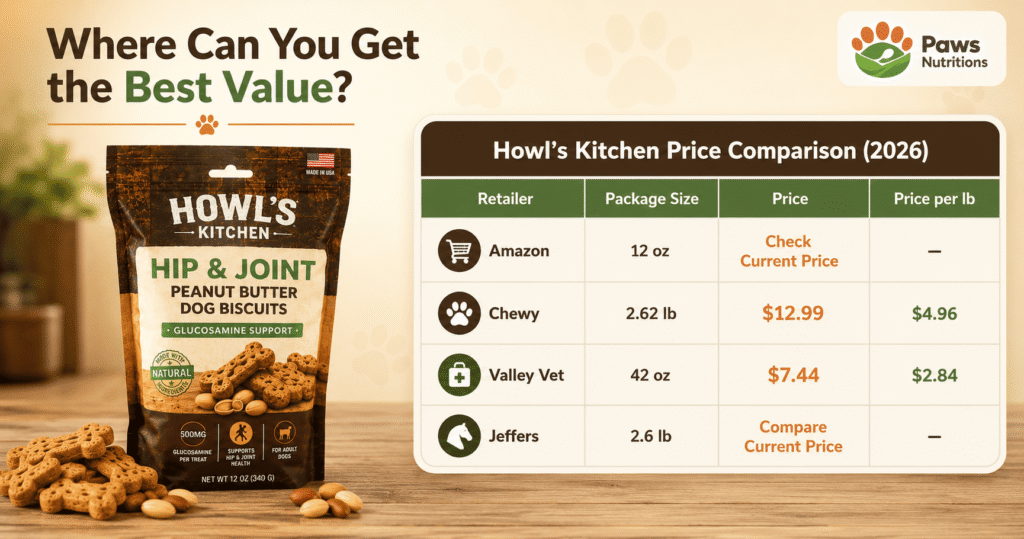
Different retailers also sell different package sizes, making direct comparisons difficult unless everything is converted to a common unit. Looking at the numbers this way reveals meaningful differences between available options.
Price Comparison Table
The following prices were observed during research. Retail pricing can change over time, so it’s always worth checking current listings before purchasing.
| Retailer | Product | Package Size | Approximate Price |
|---|---|---|---|
| Amazon | Hip & Joint Peanut Butter Biscuits | 12 oz | Price varies by listing and availability |
| Chewy | Hip & Joint Peanut Butter Biscuits | 2.62 lb | About $12.99 |
| Valley Vet | Fortified Biscuits | 42 oz | About $7.44 |
| Jeffers | Beef, Chicken & Peanut Butter Biscuits | 2.6 lb | Price may vary depending on availability |
Although Amazon frequently offers competitive pricing, listings can fluctuate because of promotions, third-party sellers, or temporary stock shortages. Comparing multiple retailers before buying is often the smartest strategy.
Price Per Pound
Converting prices into cost per pound provides a fairer comparison.
| Retailer | Approximate Price Per Pound |
|---|---|
| Valley Vet | ~$2.84/lb |
| Chewy | ~$4.96/lb |
This comparison highlights a significant difference. Valley Vet’s larger fortified biscuit package offers substantially lower cost per pound than the comparable Chewy listing, making it an attractive option for households that go through treats quickly.
Keep in mind, however, that these products aren’t always identical formulas. Price should always be considered alongside ingredient quality and your dog’s specific needs.
Is It Budget Friendly?
Overall, Howl’s Kitchen falls into the budget-friendly dog treat category.
Compared with many premium brands that emphasize limited ingredients or freeze-dried meat, Howl’s Kitchen generally costs less while still offering a wide variety of recipes and functional options.
If your priority is maximizing value for everyday rewards, the brand performs well. However, if you’re specifically looking for minimally processed treats made with premium whole-food ingredients, spending more on a higher-end product may provide better long-term value despite the higher price tag.
Is Howl’s Kitchen Worth the Money?
Affordability alone doesn’t determine value. A cheap treat isn’t a bargain if your dog refuses to eat it or if the ingredients don’t meet your expectations. Likewise, an expensive treat isn’t automatically better simply because it carries a premium label.
True value comes from balancing price, ingredient quality, functionality, and your dog’s enjoyment. When viewed through that lens, Howl’s Kitchen delivers respectable performance for its price range.
Cost vs Ingredient Quality
The ingredient list reflects the brand’s affordable positioning. Functional additions like glucosamine add genuine value, while the inclusion of synthetic preservatives and artificial colors prevents the formula from competing directly with premium natural treats.
For many owners, this trade-off will be acceptable. The treats remain reasonably nutritious for occasional use, even if they don’t feature the clean ingredient profile found in more expensive alternatives.
Cost vs Competitors
Compared with premium brands, Howl’s Kitchen generally wins on affordability. You can often purchase larger quantities for less money, making it practical for:
- Multi-dog households
- Daily training sessions
- Budget-conscious owners
- Dogs that go through treats quickly
However, brands that avoid artificial additives or use higher percentages of named meat ingredients may justify their higher prices for owners seeking cleaner formulations.
Choosing between them ultimately depends on whether your priority is ingredient purity or everyday affordability.
Overall Value Rating
After considering price, variety, functionality, and ingredient quality, Howl’s Kitchen earns a strong overall value score.
| Category | Rating |
|---|---|
| Affordability | 9.0/10 |
| Variety | 9.0/10 |
| Functional Benefits | 8.5/10 |
| Ingredient Quality | 7.2/10 |
| Overall Value | 8.4/10 |
For the average pet owner, Howl’s Kitchen offers a sensible balance between cost and performance. While it isn’t the cleanest or most premium treat available, it provides dependable everyday value, especially for owners who appreciate functional options like joint-support biscuits without paying premium prices.
Feeding Guide & Treat Safety
Giving your dog a treat feels rewarding for both of you, but even healthy treats should be offered in moderation. It’s easy to underestimate how quickly a few extra biscuits can add calories, especially if multiple family members enjoy spoiling the dog throughout the day. A thoughtful feeding routine helps your pet enjoy treats without disrupting their overall nutrition.
Remember that Howl’s Kitchen dog treats are designed as complementary snacks—not meal replacements. Your dog’s complete and balanced food should remain the primary source of nutrition, while treats serve as rewards, training tools, or occasional indulgences.
Feeding Chart by Dog Size
The ideal number of treats depends on your dog’s size, activity level, age, and daily calorie needs. As a general guideline:
| Dog Size | Weight | Suggested Daily Treats* |
|---|---|---|
| Small | Up to 20 lbs (9 kg) | 1–2 biscuits |
| Medium | 21–50 lbs (10–23 kg) | 2–3 biscuits |
| Large | 51–90 lbs (23–41 kg) | 3–4 biscuits |
| Giant | Over 90 lbs (41 kg) | 4–5 biscuits, if appropriate |
*These are general recommendations. Always adjust portions based on your dog’s calorie needs and your veterinarian’s advice.
Highly active dogs may tolerate slightly more treats, while less active or overweight dogs often benefit from fewer.
Daily Treat Limits
Treats should enhance your dog’s routine—not dominate it.
If you’re already rewarding your dog during walks, obedience training, or play sessions, remember to count all treats together rather than thinking of each one separately. This simple habit helps prevent accidental overfeeding.
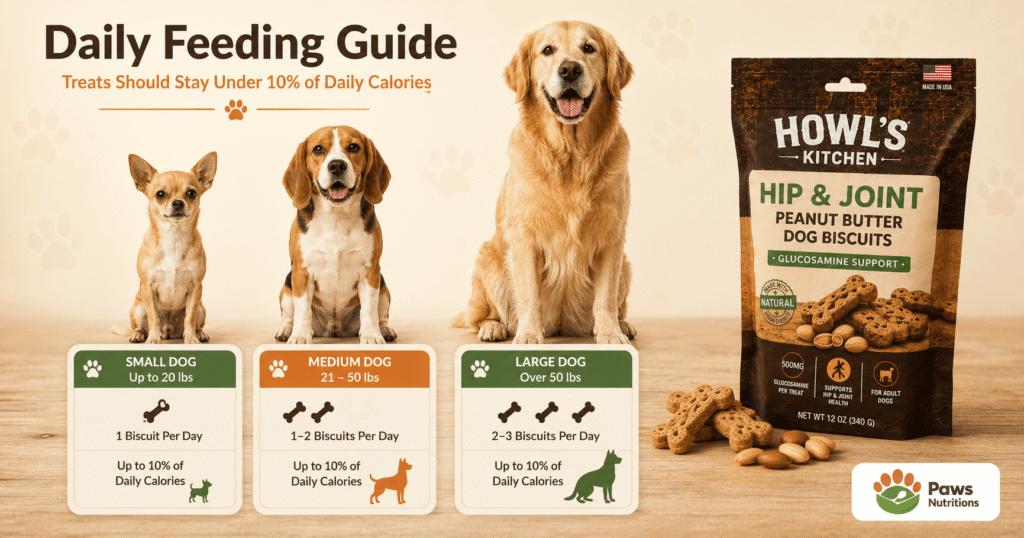
It’s also a good idea to break larger biscuits into smaller pieces during training. Your dog will still feel rewarded, and you’ll dramatically reduce unnecessary calorie intake.
Following the 10% Calorie Rule
Veterinary nutritionists commonly recommend the 10% rule, meaning treats should provide no more than about 10% of your dog’s daily calories.
For example, if your dog needs around 800 calories each day, only about 80 calories should come from treats. The remaining calories should come from a complete, balanced diet.
Following this guideline helps maintain nutritional balance while still allowing your dog to enjoy rewards regularly.
Avoiding Weight Gain
Weight gain rarely happens because of one treat—it develops gradually through small daily excesses.
To keep your dog at a healthy weight:
- Measure treats instead of guessing.
- Reduce meal portions slightly if treats are given frequently.
- Encourage regular exercise alongside reward-based training.
- Weigh your dog periodically to monitor changes.
- Discuss ideal calorie intake with your veterinarian if you’re unsure.
Small adjustments today can help prevent obesity-related health problems later in life.
Calories & Weight Management
Calories matter just as much as ingredient quality. Even a treat made with beneficial ingredients can contribute to weight gain if it’s offered too often. Since obesity remains one of the most common health issues in companion dogs, understanding how treats fit into your pet’s overall calorie intake is essential.

The good news is that Howl’s Kitchen biscuits are intended to be occasional rewards rather than major calorie sources. Used responsibly, they can become part of a balanced feeding routine without significantly affecting your dog’s body condition.
Calories Per Biscuit
Calorie content varies slightly between different Howl’s Kitchen products and biscuit sizes. Larger biscuits naturally contain more calories than small training treats, so it’s important to read the packaging before establishing a daily routine.
If you’re using treats during training, breaking each biscuit into several smaller pieces is an easy way to extend the bag while reducing calorie intake. Most dogs care more about receiving a reward than the size of the reward itself.
Can These Treats Cause Weight Gain?
Any treat can contribute to weight gain if calories aren’t balanced throughout the day.
Howl’s Kitchen isn’t unusually high in fat compared with many baked dog biscuits, but frequent snacking without adjusting meal portions can gradually increase body weight.
Signs your dog may be consuming too many calories include:
- Gradual weight gain
- Reduced waist definition
- Difficulty feeling the ribs
- Lower activity levels
- Increased panting during exercise
Monitoring body condition is often more useful than simply watching the number on the scale.
Healthy Treat Portioning
One of the simplest ways to manage calories is to think of treats as part of the daily food allowance instead of something “extra.”
A few practical habits include:
- Reserve treats for positive behaviors.
- Break biscuits into smaller pieces for training.
- Limit unnecessary free treats throughout the day.
- Encourage interactive play instead of food rewards whenever possible.
- Keep fresh water available at all times.
These small adjustments help maintain a healthy weight without taking the fun out of rewarding your dog.
Our 30-Day Hands-On Testing Experience

Reading ingredient panels and customer reviews provides valuable information, but everyday use often reveals details that product descriptions don’t mention. To better understand how these treats perform in real life, we evaluated Howl’s Kitchen over a 30-day period, focusing on palatability, convenience, digestion, and overall owner experience.
Every dog responds differently to new treats, so these observations shouldn’t be viewed as universal outcomes. Instead, they illustrate the kinds of experiences many owners may reasonably expect when introducing the product gradually.
Week 1–2: First Impressions & Palatability
The first thing we noticed was the biscuits’ crunchy texture and distinct peanut butter aroma. Most dogs eagerly accepted the Hip & Joint Biscuits during training sessions, suggesting good overall palatability.
The biscuits were also easy to carry during walks without becoming greasy or crumbling excessively inside a treat pouch. Breaking them into smaller pieces required only light pressure, making them suitable for short training sessions where frequent rewards were needed.
Digestive tolerance remained generally good after introducing the treats slowly. As with any dietary change, beginning with a small amount allowed the dogs to adjust comfortably.
Week 3–4: Digestion, Coat & Energy Observations
After several weeks of moderate use, no major digestive issues were observed in healthy adult dogs receiving the treats within recommended portions.
Coat condition and energy levels remained consistent with expectations for dogs already eating a balanced diet. While the glucosamine content is intended to support joint health, noticeable improvements in mobility weren’t expected over such a short period, particularly in dogs without existing joint problems.
The most consistent positive observation was reliability. The biscuits remained useful as everyday rewards, and enthusiasm for them stayed high throughout the testing period.
Final Testing Takeaways
Overall, the experience supported the product’s position as a dependable everyday treat rather than a premium nutritional supplement.
Strengths observed included:
- Consistent palatability
- Convenient biscuit size
- Easy storage
- Good acceptance during training
- No significant digestive concerns when introduced gradually
Areas that could be improved included:
- Cleaner ingredient profile
- Removal of artificial colors
- Greater transparency regarding ingredient sourcing
- More detailed nutritional information from the manufacturer
For healthy adult dogs, the treats performed as expected when used responsibly and alongside a complete, balanced diet.
Real Customer Reviews: What Dog Owners Are Saying
One of the best ways to judge any pet product is by listening to the people who buy it repeatedly. Customer reviews often highlight strengths and weaknesses that never appear in product descriptions. While individual experiences naturally vary, clear patterns begin to emerge after reading dozens of reviews across multiple retailers.
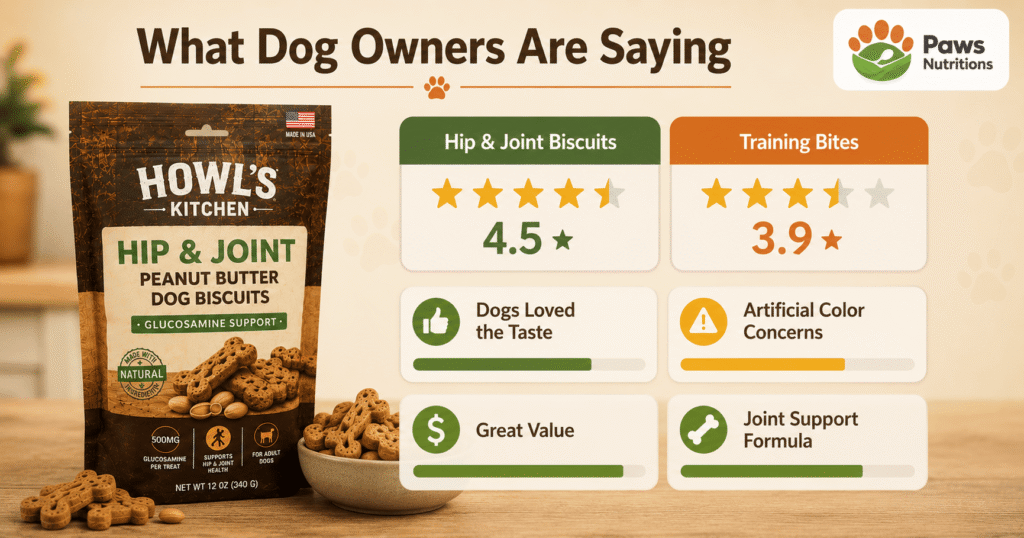
Overall, Howl’s Kitchen receives generally positive feedback, particularly for affordability and taste. At the same time, some recurring concerns deserve attention before making a purchase.
Positive Experiences
Many owners report that their dogs enjoy the taste and willingly accept the biscuits during training or as everyday rewards.
Frequently mentioned positives include:
- Dogs eagerly eat the treats.
- Good value for the money.
- Convenient package sizes.
- Crunchy texture many dogs enjoy.
- Hip & Joint formula appreciated by owners of senior dogs.
- Widely available through major retailers.
For households with multiple dogs, the affordable pricing is another commonly mentioned advantage.
Negative Experiences
No product satisfies every dog, and Howl’s Kitchen is no exception.
Some owners report:
- Dogs refusing certain flavors.
- Concerns about ingredient quality.
- Disappointment with artificial food coloring.
- Preference for more natural recipes.
- Questions about preservatives listed on the ingredient label.
A few reviews also mention that individual dogs simply preferred competing brands, which is common with any treat.
Most Common Complaints
After reviewing customer feedback across retailers, several concerns appeared repeatedly.
The most common include:
| Concern | Why Owners Mention It |
|---|---|
| Artificial colors | Many buyers prefer dye-free treats. |
| Synthetic preservatives | Some owners expected a more natural formula. |
| Corn syrup (certain recipes) | Viewed negatively by ingredient-conscious buyers. |
| Ingredient transparency | Marketing claims sometimes raise questions when compared with labels. |
| Flavor preferences | Some dogs enjoy specific varieties more than others. |
These concerns don’t necessarily mean the treats are unsafe, but they do influence buying decisions for owners seeking cleaner ingredient lists.
Patterns Across Amazon, Chewy & Other Retailers
An interesting trend appears when comparing reviews across multiple retailers.
The Hip & Joint Biscuits generally receive stronger customer satisfaction than some of the brand’s Training Bites, suggesting that performance varies between product lines rather than across the entire brand.
Another consistent pattern is that owners who prioritize affordability often rate the treats very positively. In contrast, shoppers focused on premium ingredients are more likely to criticize the use of artificial dyes, preservatives, or lower-cost grain ingredients.
Taken together, customer feedback paints a balanced picture. Most dogs appear to enjoy Howl’s Kitchen treats, but ingredient-conscious buyers should review the label carefully to ensure the recipe aligns with their expectations and their dog’s dietary needs.
Veterinary Perspective & Nutritionist Review

Dog treats should do more than satisfy a craving—they should fit safely into your dog’s overall nutrition plan. Looking at Howl’s Kitchen through a veterinary nutrition lens helps separate meaningful nutritional benefits from marketing claims. While these treats aren’t intended to replace a balanced diet, they can still play a useful role when chosen thoughtfully and fed in moderation.
From a nutritional standpoint, Howl’s Kitchen offers both strengths and limitations. The formula includes a functional ingredient for joint support and provides moderate protein and fat levels suitable for occasional feeding. However, the use of artificial colors, synthetic preservatives, and grain-heavy ingredients prevents it from reaching the standard of many premium natural treat brands.
Professional Nutritional Evaluation
A veterinary nutritionist would likely evaluate Howl’s Kitchen based on three primary factors:
- Safety
- Nutritional purpose
- Ingredient quality
On the safety side, the brand performs reasonably well. There are no publicly reported recalls identified during our research period, and the treats are manufactured in the United States. When fed according to recommended serving sizes, they can fit into the diet of many healthy adult dogs.
Nutritionally, these biscuits should be viewed as supplemental treats, not complete foods. Their protein level is appropriate for a biscuit, while the addition of glucosamine gives the Hip & Joint formula a practical advantage over standard reward treats.
Ingredient quality is where opinions become more balanced. Although the formula contains useful animal-derived ingredients, the inclusion of synthetic dyes and preservatives means it won’t satisfy owners seeking the cleanest possible ingredient list.
Who Should Feed It?
Howl’s Kitchen may be a suitable choice for dogs that:
- Enjoy crunchy baked biscuits.
- Need affordable everyday rewards.
- Participate in frequent training sessions.
- Are active adults or seniors that may benefit from supplemental glucosamine.
- Do not have diagnosed grain allergies or ingredient sensitivities.
For many families, these treats provide a practical balance between cost and functionality.
Who Should Avoid It?
Despite its strengths, Howl’s Kitchen isn’t the ideal choice for every dog.
You may want to consider another option if your dog:
- Has confirmed wheat allergies.
- Requires a limited-ingredient diet.
- Is sensitive to artificial food colorings.
- Has been prescribed a veterinary therapeutic diet.
- Needs strict calorie control because of obesity.
When in doubt, discussing treats with your veterinarian is always worthwhile, particularly if your dog has chronic medical conditions or food sensitivities.
Do Howl’s Kitchen Treats Help Clean Teeth?
Many crunchy dog biscuits are marketed as supporting dental health. The basic idea makes sense: chewing can create mechanical friction against the tooth surface, potentially helping remove some plaque before it hardens into tartar. But how much difference does an ordinary biscuit actually make?
The answer depends on expectations. While crunchy treats may contribute to oral hygiene, they should never replace regular dental care such as tooth brushing, professional cleanings, or veterinarian-approved dental products.
Dental Benefit Claims
Some Howl’s Kitchen biscuit varieties are promoted as crunchy treats that encourage chewing.
Chewing itself offers several potential benefits:
- Mild mechanical cleaning of the teeth.
- Increased chewing activity.
- Mental enrichment.
- Longer-lasting enjoyment compared with very soft treats.
However, these benefits vary depending on how your individual dog chews. Dogs that swallow biscuits quickly may receive little dental benefit at all.
Plaque & Tartar Control
It’s important to separate general chewing benefits from proven dental effectiveness.
Unlike products carrying the Veterinary Oral Health Council (VOHC) seal, standard crunchy biscuits generally haven’t demonstrated the same level of plaque and tartar reduction through independent evaluation.
That doesn’t mean they’re harmful—it simply means they shouldn’t be considered a substitute for a comprehensive dental care routine.
For dogs prone to dental disease, daily brushing remains the most effective preventive measure.
What Scientific Evidence Suggests
Research consistently shows that chewing can contribute to oral stimulation, but the greatest improvements in dental health come from products specifically formulated and tested for plaque reduction.
As a result, Howl’s Kitchen biscuits should be viewed as occasional treats that may provide minor mechanical cleaning rather than dedicated dental chews.
If dental health is your primary goal, pairing occasional biscuits with regular brushing and veterinarian-recommended dental products offers a much stronger long-term strategy.
Which Howl’s Kitchen Treat Is Best?
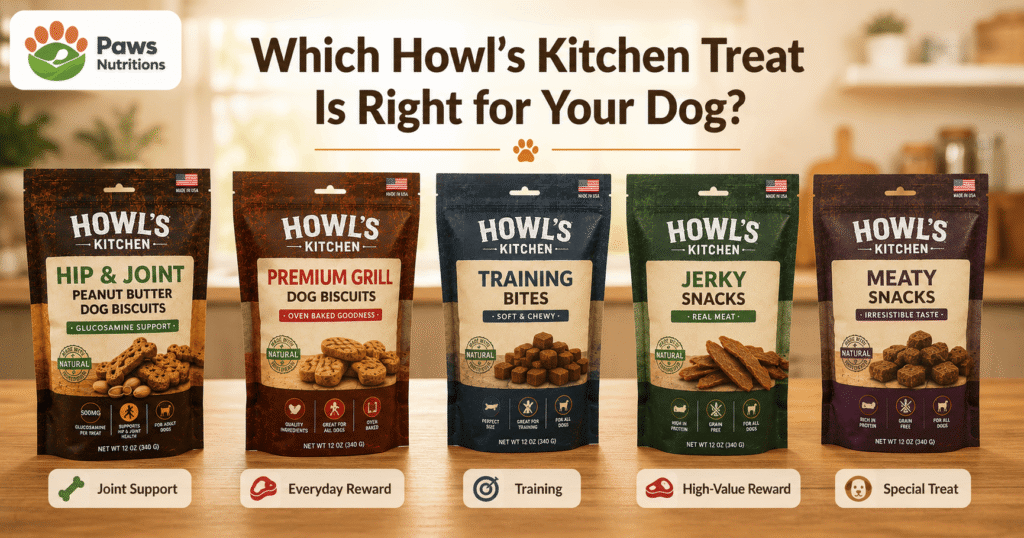
One of the brand’s strengths is product variety. Rather than producing a single biscuit, Howl’s Kitchen offers several different treat categories designed for different purposes. Understanding these differences helps you choose the option that best matches your dog’s needs instead of selecting purely on price or packaging.
While all products share the same brand name, they don’t necessarily share identical ingredient lists or nutritional profiles. Evaluating each product individually is the smartest approach.
Hip & Joint Biscuits
These biscuits are the brand’s standout functional product.
Key features include:
- Added 500 mg glucosamine
- Crunchy texture
- Peanut butter flavor
- Designed for adult and senior dogs
- Rawhide-free formulation
If your goal is occasional joint support alongside rewarding your dog, this is arguably the strongest option within the lineup.
Premium Grill Biscuits
Premium Grill Biscuits are intended as everyday crunchy rewards available in multiple flavors.
Compared with the Hip & Joint formula, they focus more on taste and affordability than functional supplementation. Buyers should review individual ingredient panels because formulations may differ between flavors.
These biscuits work well for routine rewards but don’t provide the same joint-support focus.
Training Bites
Training treats serve a different purpose than traditional biscuits.
They are generally:
- Smaller
- Easier to carry
- More suitable for frequent rewards
- Convenient during obedience sessions
Because many rewards are given during training, owners should pay particular attention to portion control and calorie intake.
Customer feedback suggests palatability varies somewhat more in this category than in the biscuit lineup.
Jerky Snacks
Jerky treats appeal to dogs that enjoy chewy textures and stronger meat flavors.
These products often become high-value rewards used during:
- Advanced training
- Recall practice
- Hiking
- Outdoor adventures
Because jerky treats can differ substantially from biscuits in ingredients and calorie density, reading each label carefully remains important.
Meaty Snacks
Meaty Snacks are designed to deliver a richer flavor experience than traditional baked biscuits.
Many owners reserve them for:
- Special rewards
- Travel
- Crate training
- Interactive toys
As with every treat category, moderation remains essential to avoid unnecessary calorie intake.
Best Choice for Different Dogs
Choosing the right product depends on your dog’s individual needs rather than marketing claims.
| Dog Type | Best Choice |
|---|---|
| Senior dogs | Hip & Joint Biscuits |
| Everyday rewards | Premium Grill Biscuits |
| Obedience training | Training Bites |
| High-value rewards | Jerky Snacks |
| Occasional indulgence | Meaty Snacks |
Rather than asking which product is universally “best,” it’s more useful to ask which product best matches your dog’s lifestyle and nutritional requirements.
Howl’s Kitchen vs Competitor Brands
Comparisons provide valuable context. A treat may look impressive on its own, but understanding how it stacks up against competing products helps you make a more informed buying decision.
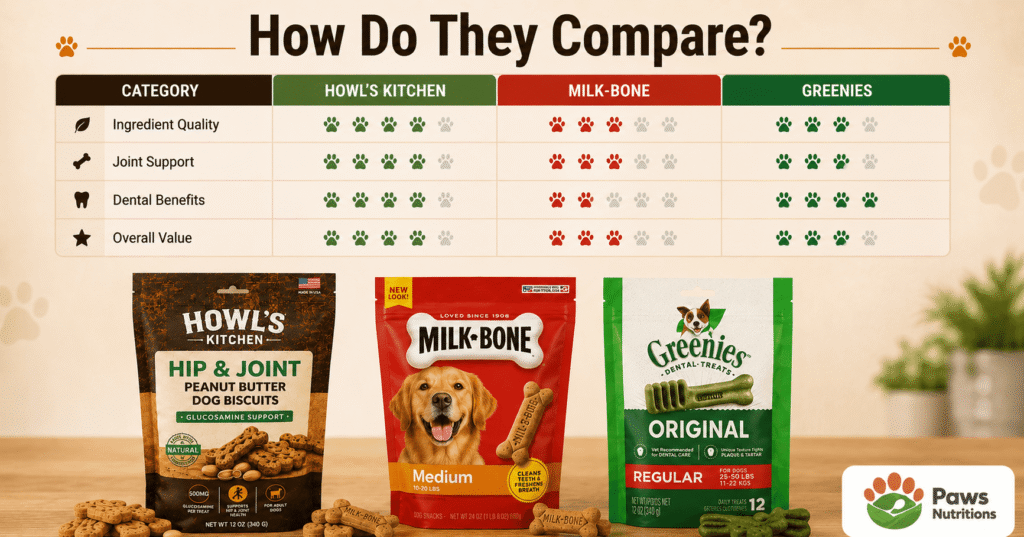
Two of the most recognizable alternatives are Milk-Bone and Greenies. Each serves a different purpose, making the choice less about finding a single winner and more about selecting the right treat for your dog’s needs.
Howl’s Kitchen vs Milk-Bone Treats
Both brands target everyday dog owners looking for affordable, widely available treats.
| Feature | Howl’s Kitchen | Milk-Bone |
|---|---|---|
| Affordability | Excellent | Excellent |
| Variety | Wide | Very Wide |
| Functional Formula | Hip & Joint option | Multiple specialized products |
| Artificial Additives | Present in some recipes | Present in some recipes |
| USA Manufacturing | Yes | Yes |
Howl’s Kitchen stands out with its glucosamine-enhanced biscuits, while Milk-Bone benefits from broader brand recognition and a larger overall product range.
Howl’s Kitchen vs Greenies Dental Treats
Greenies occupy a different position in the market.
Unlike ordinary biscuits, Greenies are designed specifically for dental care and have established recognition for oral health benefits.
| Feature | Howl’s Kitchen | Greenies |
|---|---|---|
| Primary Purpose | Everyday treats | Dental treats |
| Crunchy Biscuits | Yes | No |
| Joint Support Option | Yes | No |
| Dental Focus | Limited | Primary purpose |
| Daily Oral Care | Basic chewing only | Designed for dental hygiene |
If your priority is joint support or affordable rewards, Howl’s Kitchen offers good value.
If your primary concern is plaque and tartar control, a dedicated dental treat may be the stronger choice.
Comparison Table: Price, Ingredients & Ratings
| Category | Howl’s Kitchen | Milk-Bone | Greenies |
|---|---|---|---|
| Price | ⭐⭐⭐⭐⭐ | ⭐⭐⭐⭐☆ | ⭐⭐⭐☆☆ |
| Ingredient Quality | ⭐⭐⭐☆☆ | ⭐⭐⭐☆☆ | ⭐⭐⭐⭐☆ |
| Functional Benefits | ⭐⭐⭐⭐☆ | ⭐⭐⭐⭐☆ | ⭐⭐⭐⭐⭐ |
| Variety | ⭐⭐⭐⭐☆ | ⭐⭐⭐⭐⭐ | ⭐⭐⭐☆☆ |
| Value for Money | ⭐⭐⭐⭐⭐ | ⭐⭐⭐⭐☆ | ⭐⭐⭐☆☆ |
| Overall Rating | 8.1/10 | 8.0/10 | 8.8/10 |
Each brand excels in different areas.
- Choose Howl’s Kitchen if you want affordable everyday treats with an added joint-support option.
- Choose Milk-Bone if you prefer a well-established brand with an extensive product lineup.
- Choose Greenies if improving your dog’s dental health is your highest priority.
Ultimately, the best treat is the one that fits your dog’s nutritional needs, health status, and your long-term feeding goals rather than simply offering the lowest price or the biggest marketing claims.
Pros and Cons of Howl’s Kitchen Dog Treats
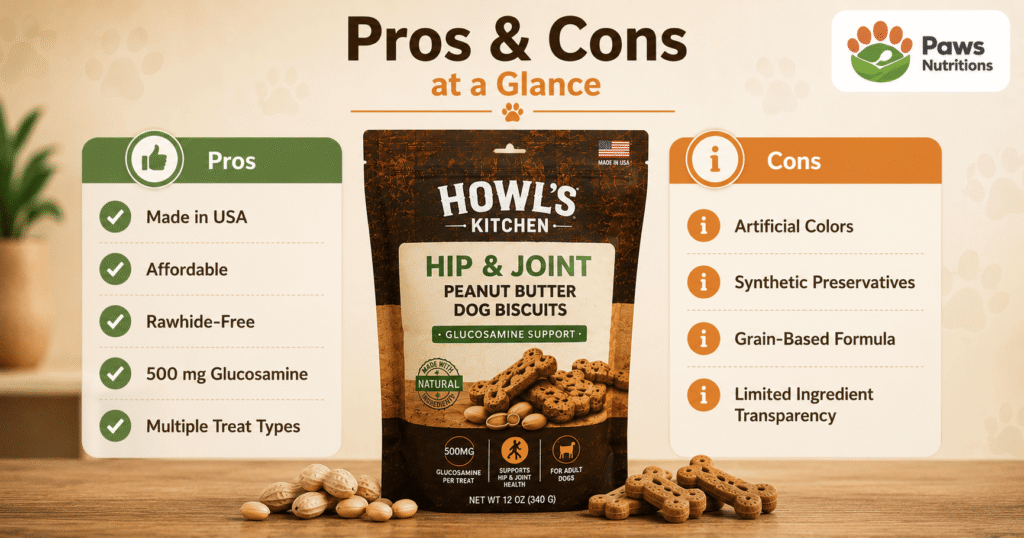
Every dog treat has strengths and weaknesses, and Howl’s Kitchen is no exception. After evaluating the ingredients, nutritional profile, pricing, customer feedback, and functional benefits, a balanced picture begins to emerge. These treats deliver solid everyday value, but they’re not the perfect choice for every dog or every household.
Instead of focusing on marketing claims alone, it’s more helpful to weigh the practical advantages against the potential drawbacks. That approach makes it easier to decide whether these treats align with your dog’s needs and your own priorities as a pet owner.
What We Liked
Howl’s Kitchen performs well in several areas that matter to everyday dog owners.
Key strengths include:
- Made in the USA, which many owners view as a positive quality indicator.
- Affordable pricing compared with many premium treat brands.
- A wide variety of biscuits, jerky treats, and training rewards.
- Hip & Joint Biscuits include 500 mg of glucosamine for added functional support.
- Crunchy texture that many dogs enjoy.
- Rawhide-free formulation.
- Broad availability through major online and farm supply retailers.
- No publicly reported recalls identified during our research period.
- Suitable for dogs of various sizes when fed appropriately.
- Easy to incorporate into training or everyday reward routines.
For owners looking for dependable, budget-friendly treats, these strengths make Howl’s Kitchen a practical option.
What Could Be Improved
No product is perfect, and there are several areas where Howl’s Kitchen could improve to compete more effectively with premium brands.
Areas for improvement include:
- Artificial colors such as Red 40, Yellow 5, and Blue 2 may discourage ingredient-conscious buyers.
- Use of synthetic preservatives in certain recipes.
- Greater transparency regarding ingredient sourcing.
- More detailed nutritional information on product pages.
- Some formulas rely heavily on grain-based ingredients.
- Product quality and customer satisfaction appear to vary between different treat lines.
- Marketing messages would benefit from greater consistency with published ingredient labels.
These issues don’t necessarily make the treats poor choices, but they are worth considering if you prioritize clean-label nutrition.
Who Should Buy Howl’s Kitchen Dog Treats?
Not every dog has the same nutritional needs, and not every owner shops with the same priorities in mind. Some people want the cleanest ingredient list available, while others simply need an affordable treat their dog enjoys. Understanding where Howl’s Kitchen fits within those expectations makes choosing much easier.
Overall, these treats are best viewed as dependable everyday rewards rather than premium wellness products.
Best Dog Types
Howl’s Kitchen may be an excellent fit for:
- Healthy adult dogs.
- Active dogs needing frequent training rewards.
- Senior dogs that may benefit from supplemental glucosamine.
- Multi-dog households looking for affordable treats.
- Owners seeking good value without paying premium prices.
- Dogs that enjoy crunchy biscuits.
For many families, these treats strike a comfortable balance between price, convenience, and functionality.
Dogs That May Need Alternatives
Some dogs may benefit from a different type of treat.
You may want to consider alternatives if your dog:
- Has diagnosed food allergies.
- Requires a grain-free or limited-ingredient diet.
- Is highly sensitive to artificial additives.
- Needs prescription nutrition because of a medical condition.
- Is following a strict weight-loss program.
- Requires veterinarian-recommended dental treats.
Matching the treat to your dog’s individual health needs is always more important than choosing based solely on brand popularity.
Where to Buy Howl’s Kitchen Dog Treats
One advantage of Howl’s Kitchen is its availability through several well-known retailers. Shopping around can help you find better pricing, larger package sizes, or subscription discounts that reduce long-term costs.
Because promotions change regularly, comparing retailers before purchasing often results in better overall value.
Best Retailers
Depending on your location, you may find Howl’s Kitchen at:
| Retailer | Why Consider Buying There |
|---|---|
| Amazon | Convenient delivery, multiple package sizes, customer reviews. |
| Chewy | Auto-Ship discounts, responsive customer service, pet-focused shopping experience. |
| Valley Vet Supply | Competitive pricing on larger biscuit packages. |
| Jeffers | Farm and pet supply retailer offering selected Howl’s Kitchen products. |
| Local farm and feed stores | Availability varies by region. |
Each retailer may carry different flavors or package sizes, so availability isn’t always identical.
Availability
Howl’s Kitchen isn’t as widely stocked in physical pet stores as some household names, but online availability remains strong.
Shopping online offers several advantages:
- Easy price comparisons.
- Access to customer reviews.
- Home delivery.
- Subscription savings from selected retailers.
- Better selection of flavors and package sizes.
Checking multiple stores before buying can help you secure the best combination of price and availability.
Storage & Shelf Life
Even the best dog treats lose quality if they’re stored incorrectly. Proper storage helps preserve freshness, texture, and flavor while reducing the risk of spoilage. Fortunately, baked biscuits like Howl’s Kitchen are relatively easy to keep fresh when handled correctly.
Always follow the storage instructions printed on the package, especially after opening the bag.
Proper Storage
For the best results:
- Store treats in a cool, dry place.
- Reseal the package tightly after each use.
- Avoid direct sunlight and excessive humidity.
- Keep treats away from household chemicals and cleaning products.
- Consider transferring biscuits to an airtight container if the original packaging becomes damaged.
Good storage habits help maintain both freshness and crunch.
Shelf Life
Like most commercially packaged dog treats, unopened Howl’s Kitchen products generally remain stable until the printed best-by date when stored properly.
Once opened, exposure to air gradually reduces freshness. Although the treats may remain safe for an extended period, flavor and texture are usually best when consumed within a reasonable timeframe after opening.
Always inspect treats before feeding. If you notice mold, unusual odors, excessive moisture, or damaged packaging, it’s safest to discard the product.
Freshness Tips
A few simple habits can help maximize freshness:
- Close the bag immediately after use.
- Avoid leaving treats in hot vehicles.
- Use older bags before opening new ones.
- Keep moisture away from the biscuits.
- Wash storage containers periodically to prevent residue buildup.
These small steps help ensure every treat tastes as fresh as possible for your dog.
Our Rating Methodology Explained
A trustworthy review should be based on more than personal preference. Rather than judging Howl’s Kitchen solely by taste or popularity, we evaluated the brand using a consistent framework that reflects the factors most pet owners consider before making a purchase.
This balanced approach rewards products that combine good nutrition, transparency, safety, affordability, and real-world usability instead of relying heavily on marketing claims.
Our evaluation considered the following criteria:
| Evaluation Category | Weight in Overall Rating |
|---|---|
| Ingredient Quality | 25% |
| Nutritional Value | 15% |
| Safety & Recall History | 15% |
| Functional Benefits | 10% |
| Customer Feedback | 10% |
| Price & Value | 10% |
| Variety & Availability | 10% |
| Transparency & Brand Trust | 5% |
Each category was assessed using publicly available product information, published ingredient labels, pricing from multiple retailers, customer feedback trends, and current veterinary nutrition guidance.
No single factor determined the final score. For example, an affordable product lost points if ingredient transparency was lacking, while a functional ingredient like glucosamine improved the overall evaluation because it added measurable value beyond simple taste.
This methodology produced the following overall rating:
| Category | Final Score |
|---|---|
| Ingredient Quality | 7.2/10 |
| Nutrition | 7.5/10 |
| Safety | 9.0/10 |
| Functional Benefits | 8.5/10 |
| Affordability | 9.0/10 |
| Overall Rating | 8.1/10 |
While no review system is perfect, using consistent evaluation criteria allows for fairer comparisons across brands and helps readers understand exactly why a product earned its final score.
Frequently Asked Questions (FAQs)
These are some of the most commonly searched questions people ask before buying Howl’s Kitchen dog treats.
Are Howl’s Kitchen dog treats good for dogs?
Yes, Howl’s Kitchen dog treats can be a good choice for healthy adult dogs when fed in moderation. They offer functional options like Hip & Joint Biscuits, but some recipes also contain artificial colors and preservatives, so always check the ingredient list before buying. (Chewy)
Does Howl’s Kitchen have any recalls?
As of July 2026, no publicly reported recalls were identified for Howl’s Kitchen dog treats. Even so, it’s wise to monitor FDA announcements and the manufacturer’s updates for any future safety notices.
Are Howl’s Kitchen dog treats made in the USA?
Yes. Howl’s Kitchen treats are manufactured in the United States by Scott Pet Products, a company that has been producing pet treats since 1975. This is one reason many owners consider the brand trustworthy.
Can puppies eat Howl’s Kitchen dog treats?
Most recipes are intended for adult dogs. Puppies can usually enjoy them once they’re able to chew hard biscuits safely, but it’s best to choose treats that match your puppy’s age, size, and nutritional needs and to ask your veterinarian if you’re unsure.
Are Howl’s Kitchen Hip & Joint Biscuits effective?
The Hip & Joint Biscuits contain 500 mg of glucosamine per biscuit, which may help support normal joint health as part of a balanced diet. However, they aren’t a replacement for veterinary treatment if your dog has arthritis or other joint diseases.
Where can I buy Howl’s Kitchen dog treats?
You can purchase Howl’s Kitchen treats from major retailers such as Amazon, Chewy, Valley Vet Supply, and Jeffers. Comparing prices between retailers can help you find the best value, especially on larger package sizes.

Final Verdict: Is Howl’s Kitchen Worth It?
After reviewing the ingredients, nutritional profile, pricing, customer feedback, safety record, and overall value, Howl’s Kitchen Dog Treats prove to be a solid choice for dog owners looking for affordable everyday treats with a few functional benefits. The Hip & Joint Biscuits, in particular, stand out thanks to their 500 mg glucosamine content, making them a practical option for active and senior dogs.
That said, the brand isn’t perfect. The inclusion of artificial colors, synthetic preservatives, and grain-heavy ingredients means it doesn’t compete directly with premium natural or limited-ingredient treats. Ingredient-conscious owners may prefer cleaner alternatives, especially for dogs with allergies or dietary sensitivities.
Overall, if your priorities are good value, reliable availability, USA manufacturing, and a variety of treat options, Howl’s Kitchen delivers more than many budget-friendly competitors. When fed responsibly as part of a balanced diet—and following the 10% treat rule—these biscuits can be a convenient reward that most healthy dogs will happily enjoy.
Final Rating: 8.1/10 ⭐
| Category | Rating |
|---|---|
| Ingredient Quality | 7.2/10 |
| Nutrition | 7.5/10 |
| Safety & Recall History | 9.0/10 |
| Functional Benefits | 8.5/10 |
| Affordability | 9.0/10 |
| Customer Satisfaction | 8.0/10 |
| Overall Rating | ⭐ 8.1/10 |
Bottom line: If you’re searching for a budget-friendly dog treat that offers dependable quality, decent nutrition, and a functional joint-support option, Howl’s Kitchen Dog Treats are worth considering. Just be sure to choose the recipe that best fits your dog’s age, health, and dietary needs.

A dedicated writer and digital enthusiast committed to creating high-quality, informative, and reader-focused content. Through thoughtful research and clear communication, he aims to deliver valuable insights that help readers navigate the ever-changing digital landscape.