
Choosing the right dental chew isn’t as simple as grabbing the most popular bag off the shelf. If you’ve searched for a Greenies Dog Treats Review, you’ve probably come across glowing recommendations alongside alarming stories about choking, digestive upset, or safety concerns. That mix of opinions can leave any caring dog owner wondering whether Greenies are truly worth buying.
This comprehensive review cuts through the noise with a balanced look at ingredients, nutrition, VOHC certification, safety, recalls, pricing, real owner experiences, and veterinary guidance. By the end, you’ll know exactly who Greenies are best for, when to avoid them, and whether they’re the right daily dental treat for your dog.
What Are Greenies Dental Treats?
Good dental health is about much more than keeping your dog’s breath fresh. Dental disease, plaque, and tartar buildup can eventually affect your dog’s gums, teeth, and overall health. Greenies were developed as daily dental chews designed to make oral care easier while giving dogs a treat they actually enjoy.
Unlike ordinary biscuits, Greenies feature a chewy texture and unique toothbrush-like shape that helps clean the tooth surface as your dog chews. The goal isn’t to replace brushing completely but to reduce plaque buildup between brushing sessions and support healthier gums over time.
Brand History and Mars/Nutro Ownership
Greenies first became popular in the late 1990s as one of the first widely available veterinary-recommended dental chews. Over the years, the brand expanded from a single dental treat into multiple product lines for puppies, adults, seniors, weight management, and grain-free diets.
Today, Greenies is owned by Mars Petcare, one of the world’s largest pet nutrition companies and the parent company behind Nutro, Royal Canin, Pedigree, IAMS, and several veterinary nutrition brands. This large-scale ownership gives Greenies access to significant research, manufacturing resources, and quality-control systems.
Some pet owners see corporate ownership as a disadvantage, while others appreciate the investment in research and product consistency. Ultimately, ownership alone doesn’t determine product quality—ingredients, manufacturing standards, and independent testing matter far more.
How the Mechanical Cleaning Action Works
Greenies don’t clean teeth through chemicals or harsh abrasives. Instead, they rely on a process known as mechanical cleaning.
As your dog chews, the flexible texture wraps around the teeth, helping scrape away soft plaque before it hardens into tartar. Think of it as using a gentle scrubbing sponge rather than simply eating a crunchy biscuit. Longer chewing time generally provides more contact with the teeth, increasing the cleaning effect.
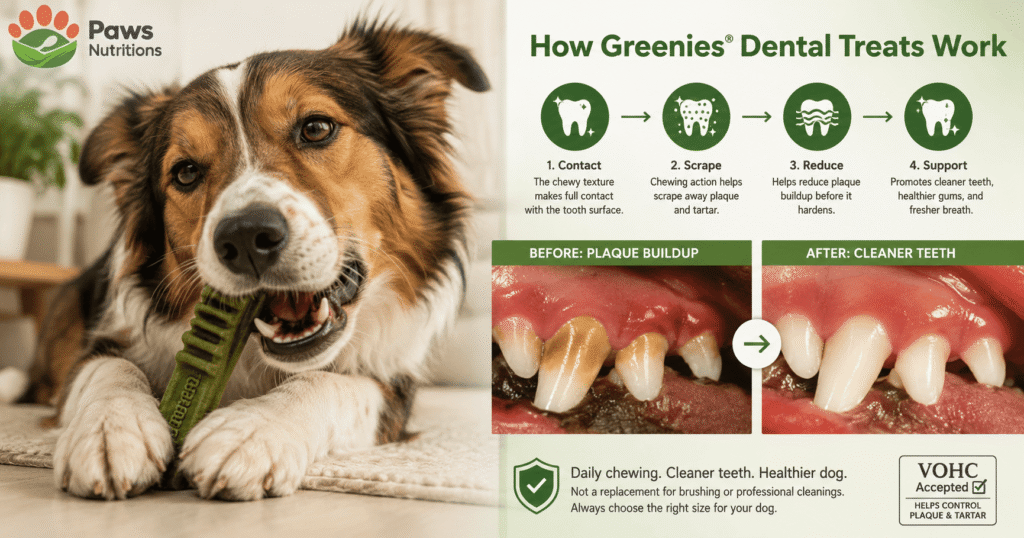
This is also why feeding the correct size matters. A dog that swallows a chew whole won’t receive the same dental benefits as one that spends several minutes chewing it properly.
Complete Greenies Product Line
Greenies offers several products designed for different life stages and nutritional needs.
| Product Line | Best For | Key Features |
|---|---|---|
| Original Dental Treats | Healthy adult dogs | Daily plaque and tartar control |
| Grain-Free Dental Treats | Dogs avoiding grains | Alternative carbohydrate sources |
| Puppy Greenies | Puppies over six months | Softer texture for developing teeth |
| Senior Greenies | Older dogs | Easier-to-chew texture |
| Weight Management | Overweight dogs | Reduced calorie formula |
| Smart Essentials | Select nutritional needs | Added functional ingredients (availability varies) |
| Pill Pockets | Medication administration | Not intended as dental treats |
Choosing the right product line depends on your dog’s age, weight, chewing habits, and any dietary sensitivities. A healthy adult Labrador, for example, has different nutritional needs than a senior Chihuahua with worn teeth or a growing Golden Retriever puppy.
Greenies Ingredients: What’s Really Inside?
The ingredient list often becomes the biggest talking point in any Greenies Dog Treats Review. Some owners focus on the dental benefits, while others question ingredients like wheat flour, glycerin, or gelatin. Looking at the full formula provides much more useful insight than judging a single ingredient in isolation.
No treat is perfect for every dog. The real question isn’t whether an ingredient sounds unfamiliar but whether it serves a purpose, fits your dog’s dietary needs, and contributes to a safe, enjoyable chewing experience.
Original Formula Ingredients
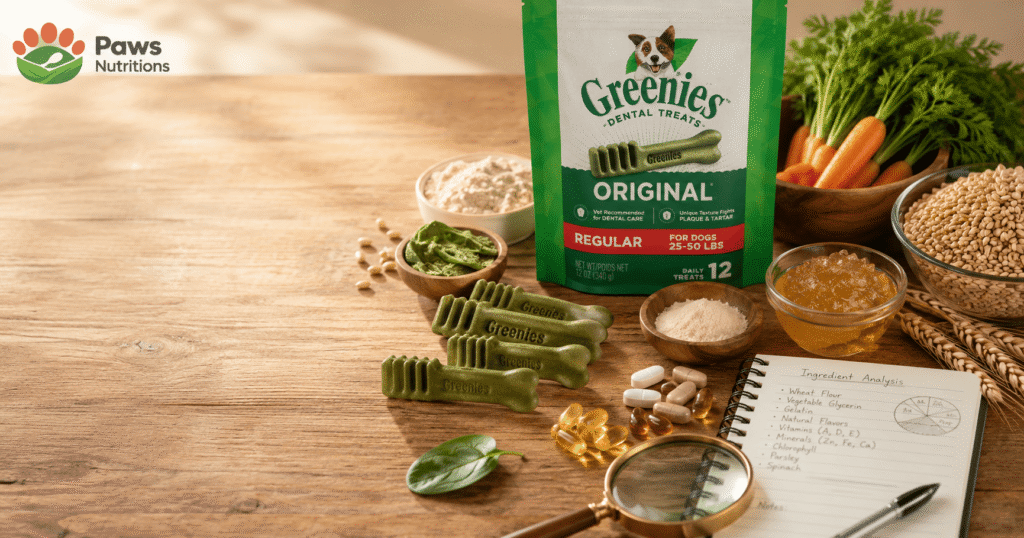
The Original Greenies recipe typically contains ingredients such as:
- Wheat flour
- Wheat gluten
- Glycerin
- Gelatin
- Water
- Natural flavors
- Dried fruit and vegetable ingredients
- Vitamins and minerals
- Preservatives approved for pet foods
Wheat provides structure and contributes to the chew’s texture, while gelatin helps create the flexible consistency needed for prolonged chewing. Meanwhile, added vitamins and minerals support the overall nutritional profile, even though Greenies are intended as treats rather than complete meals.
Grain-Free Formula Ingredients
For dogs that cannot tolerate wheat or whose owners prefer grain-free products, Greenies also offers grain-free options.
Instead of wheat-based ingredients, these formulas generally rely on alternative carbohydrate sources such as potato starch, pea ingredients, and other plant-based binders to achieve a similar chewy texture.
Although grain-free sounds appealing to many owners, it doesn’t automatically make a product healthier. Dogs without grain sensitivities often digest properly cooked grains perfectly well, so the best choice depends on your individual dog’s health rather than marketing labels.
Puppy Formula Ingredients
Growing puppies have different chewing abilities than adult dogs. Greenies Puppy formulas are designed with a softer texture while still providing gentle cleaning action.
The recipe contains balanced ingredients appropriate for developing dogs over six months old, with added nutrients that support normal growth while encouraging healthy chewing habits during an important stage of development.
Because puppies explore the world with their mouths, introducing an appropriately sized dental chew can also help satisfy their natural urge to chew while promoting better oral hygiene early in life.
Wheat Flour, Glycerin, and Gelatin Explained
These three ingredients receive the most attention online, but each serves a functional purpose.
Wheat flour provides structure and helps maintain the chew’s shape during manufacturing. Unless your dog has a diagnosed wheat allergy, it isn’t automatically harmful.
Glycerin helps retain moisture, preventing the chew from becoming overly hard or brittle. It also contributes to the flexible texture that allows longer chewing sessions.
Gelatin, a protein derived from collagen, acts as a natural binding agent. It improves texture and chewability while helping hold the product together.
When used within regulated manufacturing standards, these ingredients are widely used across the pet food industry.
Added Vitamins and Minerals
Greenies aren’t simply flavored chews. Most formulas include supplemental nutrients such as:
- Vitamin A
- Vitamin D
- Vitamin E
- B Vitamins
- Calcium
- Phosphorus
- Zinc
- Iron
These additions don’t make Greenies a complete diet, but they do contribute nutritional value beyond basic chewing satisfaction.
Ingredients to Watch For
Every dog is different. While many dogs enjoy Greenies without issues, some owners should pay closer attention to the ingredient list.
You may want to consult your veterinarian before feeding Greenies if your dog has:
- A diagnosed wheat allergy
- A history of severe food sensitivities
- Frequent digestive upset
- A tendency to swallow treats whole
- Medical conditions requiring prescription diets
For most healthy adult dogs, however, these ingredients are considered acceptable when Greenies are fed in the proper size and as directed. The more important factor is choosing the correct product, supervising chewing, and treating Greenies as part of a balanced feeding routine rather than a replacement for regular dental care.
Greenies Guaranteed Analysis & Nutrition Facts
Before buying any dental chew, it’s worth looking beyond the front of the package. Marketing claims may highlight cleaner teeth and fresher breath, but the guaranteed analysis tells you what nutrients your dog is actually getting. While Greenies are designed as treats rather than complete meals, understanding their nutritional profile helps you fit them into a balanced diet without accidentally overfeeding calories.
The numbers below represent the typical guaranteed analysis for popular Greenies dental treats. Minor variations may occur between product lines and bag sizes, so always check the packaging for the most current information.
Nutrition Facts Table
| Product | Crude Protein (Min) | Crude Fat (Min) | Crude Fiber (Max) | Moisture (Max) | Approx. Calories* |
|---|---|---|---|---|---|
| Original Adult | 30% | 5.5% | 6% | 15% | Varies by size (roughly 25–90 kcal per treat) |
| Grain-Free | 22–24% | 4–5% | 6% | 15% | Similar to Original depending on size |
| Puppy | 30% | 5% | 5% | 15% | Lower than adult versions due to smaller size |
| Senior | Similar to Original | Similar | Similar | 15% | Depends on size |
| Weight Management | Similar protein | Reduced calories | Similar | 15% | Lower than Original |
Note: Exact calorie values vary by product size (Teenie, Petite, Regular, Large) and formulation.
Greenies provide more protein than many traditional crunchy biscuits, but they’re still intended to complement—not replace—a complete dog food. The relatively low fat content also helps keep daily calorie intake under control when fed according to the recommended serving size.
Daily Calorie Contribution
Treat calories can add up faster than many owners realize. A medium-sized dog eating one Regular Greenies chew every day could receive around 60–70 extra calories. That may not sound like much, but over weeks or months, excess calories can contribute to gradual weight gain if they’re not accounted for.
A simple rule many veterinarians recommend is the 10% rule: treats should provide no more than 10% of your dog’s daily calorie intake, with the remaining 90% coming from a complete and balanced diet. If your dog already enjoys training treats or table scraps, you may need to reduce those on days when you offer a Greenies chew.
For example, a 50-pound active dog typically needs significantly more calories than a 12-pound companion breed. Feeding both dogs the same dental chew would not only be inappropriate for their size but could also upset the balance of their daily nutrition.
Greenies Dry Matter Basis (DMB) Nutrition Analysis
One topic missing from almost every Greenies Dog Treats Review is Dry Matter Basis (DMB) analysis. While it’s commonly used when comparing dog foods, it can also help you evaluate treats more accurately by removing moisture from the equation. This creates a fair comparison between products with different water contents.
Without DMB calculations, two treats may appear nutritionally different simply because one contains more moisture than the other. Looking at nutrients on a dry matter basis gives a clearer picture of the actual composition.
Why DMB Matters
Imagine comparing a fresh apple with dried apple slices. Fresh apples contain much more water, so nutrients appear diluted. Once the water is removed, the dried slices contain a much higher concentration of nutrients per gram.
The same principle applies to dog treats. Since Greenies contain around 15% moisture, converting nutrients to a dry matter basis makes it easier to compare them with other dental chews and even dry kibble.
Greenies Dry Matter Basis Table
The following table uses approximate dry matter calculations based on typical guaranteed analysis values.
| Product | Protein (DMB) | Fat (DMB) | Fiber (DMB) |
|---|---|---|---|
| Original | ~35.3% | ~6.5% | ~7.1% |
| Grain-Free | ~26–28% | ~5–6% | ~7.1% |
| Puppy | ~35.3% | ~5.9% | ~5.9% |
| Senior | Similar to Original | Similar | Similar |
| Weight Management | Moderate | Lower | Similar |
These values show that Greenies contain a respectable amount of protein for a dental chew while keeping fat relatively moderate. They’re not intended to serve as a significant protein source, but the nutritional profile compares favorably with many conventional biscuit-style treats.
How Greenies Compare with Other Dental Chews
When viewed on a dry matter basis, Greenies fall somewhere in the middle of the premium dental chew market.
| Brand | Protein | VOHC Accepted | Main Texture |
|---|---|---|---|
| Greenies | Moderate to High | Yes | Flexible, chewy |
| Whimzees | Moderate | Yes | Firm vegetable-based |
| Pedigree Dentastix | Moderate | Selected products | Softer chew |
| OraVet | Moderate | Yes | Chew with barrier technology |
| Virbac Veggiedent | Moderate | Yes | Plant-based chew |
Rather than focusing only on protein percentages, it’s more useful to consider the complete picture. Texture, chewing time, VOHC acceptance, ingredient quality, and your dog’s individual chewing style all influence how effective a dental treat will be.
Are Greenies AAFCO and WSAVA Compliant?
A common misconception is that every pet product should meet AAFCO Complete and Balanced standards. That’s true for foods designed to provide all of your dog’s nutrition, but treats follow different rules. Understanding this distinction helps you evaluate Greenies fairly instead of expecting them to meet requirements that simply don’t apply.
Why Treats Aren’t Required to Meet AAFCO Complete & Balanced Standards
AAFCO (Association of American Feed Control Officials) establishes nutritional profiles for foods intended to serve as a dog’s primary diet. Greenies, however, are categorized as treats, meaning they aren’t expected to provide complete daily nutrition.
That doesn’t make them lower quality. It simply means they’re formulated to complement a balanced diet rather than replace it. As long as your dog eats a nutritionally complete main food, occasional dental treats can fit comfortably into a healthy feeding routine.
What WSAVA Recommends
The World Small Animal Veterinary Association (WSAVA) encourages pet owners to evaluate manufacturers based on transparency and nutritional expertise rather than marketing alone.
Key questions include:
- Does the company employ qualified nutrition professionals?
- Are products manufactured under strict quality controls?
- Does the company invest in research?
- Are nutritional claims supported by evidence?
- Can consumers obtain detailed product information?
These questions are often more useful than focusing on a single ingredient or advertising slogan.
How Greenies Compare with WSAVA’s Manufacturing Transparency Checklist
Greenies performs reasonably well against many of the factors owners should consider.
| WSAVA Consideration | Greenies |
|---|---|
| Qualified research and development | Yes |
| Large-scale manufacturing quality systems | Yes |
| Product consistency | Strong |
| Consumer information availability | Good |
| Veterinary collaboration | Present |
| Complete & Balanced Diet | Not applicable (treat product) |
Although no dental chew should replace daily tooth brushing, Greenies benefit from being produced by a company with substantial research resources and established manufacturing practices. That doesn’t mean every dog will tolerate them equally well, but it does provide additional confidence in overall quality control.
VOHC Seal Explained
Many owners notice the VOHC Accepted logo on Greenies packaging but aren’t sure what it actually means. Some assume it guarantees perfect dental health or complete safety. In reality, the certification is more specific—and understanding its purpose can help you make a better buying decision.
What the VOHC Tests
The Veterinary Oral Health Council (VOHC) reviews scientific evidence submitted by manufacturers to determine whether a product effectively helps reduce plaque and tartar under controlled testing conditions.
Products that earn VOHC acceptance have demonstrated measurable dental benefits according to established protocols. This makes the seal one of the strongest independent indicators available for veterinary dental products.
What the VOHC Seal Doesn’t Guarantee
It’s equally important to understand what VOHC approval does not mean.
The certification does not guarantee:
- Every dog will achieve identical results.
- A product is suitable for dogs with every medical condition.
- Zero risk of choking or digestive upset.
- That brushing your dog’s teeth is no longer necessary.
A dental chew is best viewed as one part of an overall oral care routine, alongside regular veterinary examinations and, whenever possible, tooth brushing.
Other VOHC-Approved Dental Treats
Greenies aren’t the only dental chew recognized by the VOHC. Several reputable alternatives are also available.
| Product | VOHC Accepted | Primary Strength |
|---|---|---|
| Greenies | Yes | Balanced daily dental care |
| Whimzees | Yes | Vegetable-based ingredients |
| OraVet Dental Chews | Yes | Barrier technology for plaque control |
| Virbac Veggiedent | Yes | Veterinary-focused formulation |
| Tartar Shield Soft Rawhide Chews | Yes | Additional chewing options |
Choosing between these products often comes down to your dog’s chewing habits, ingredient preferences, dietary sensitivities, and budget rather than the VOHC seal alone. A dog that loves one chew may completely ignore another, so finding the right fit is just as important as selecting a scientifically supported product.
Do Greenies Really Work for Dental Health?
Many dog owners buy Greenies for one simple reason—they want cleaner teeth without the daily struggle of brushing. The question is whether these dental chews actually deliver measurable results or simply offer a temporary breath freshener. The answer lies somewhere in between. Greenies aren’t a miracle solution, but scientific evidence and real-world experience suggest they can become a valuable part of a dog’s oral care routine when used correctly.
It’s important to keep realistic expectations. No dental chew can replace professional cleanings or regular tooth brushing. However, when fed daily and paired with good oral hygiene, Greenies can help slow the buildup of plaque and tartar, making it easier to maintain healthier teeth over time.
The Clinical Claim (47% Less Tartar, 40% Less Plaque) Explained
One of Greenies’ most recognizable marketing claims is that daily use may help reduce tartar by up to 47% and plaque by up to 40% over several weeks. These figures often appear on product packaging and retailer listings, leading many owners to wonder whether they’re backed by actual research.
The numbers come from controlled studies conducted under specific testing conditions. Dogs in these studies typically received a Greenies dental chew every day while researchers monitored changes in plaque and tartar accumulation over time. Because the dogs followed standardized feeding routines and oral health protocols, the results demonstrate what Greenies can achieve under ideal circumstances rather than guaranteeing identical outcomes for every household.
What “Data on File” Means—and Its Limitations
You’ll often see Greenies reference “data on file” when supporting their dental claims. This phrase simply means the research exists but hasn’t necessarily been published in a peer-reviewed scientific journal.
That doesn’t automatically invalidate the findings. Many pet nutrition companies perform internal research before launching products. However, studies that undergo independent peer review generally provide greater transparency because outside experts evaluate the methods, statistical analysis, and conclusions.
For dog owners, the key takeaway is to treat these claims as encouraging—not absolute. Greenies have demonstrated dental benefits, but no chew works equally well for every breed, chewing style, or level of existing dental disease.
Real-World Results vs. Laboratory Conditions
Daily life rarely mirrors a research study. Some dogs chew methodically for several minutes, while others gulp treats within seconds. That difference alone can significantly affect how well any dental chew performs.
Based on veterinary recommendations and owner experiences, dogs tend to see the best results when they:
- Receive the correct Greenies size for their weight.
- Chew rather than swallow the treat.
- Eat one dental chew daily.
- Continue routine veterinary dental checkups.
- Have their teeth brushed whenever possible.
For example, an energetic Border Collie that thoroughly chews each treat is more likely to experience noticeable plaque reduction than a Labrador that swallows the chew almost whole. In other words, the product can only work if your dog’s chewing behavior allows enough contact between the treat and the teeth.
Key Takeaway: Greenies are best viewed as a helpful dental tool—not a complete dental care solution. They work most effectively when combined with brushing, routine veterinary exams, and a balanced diet.
Grain-Free Greenies and the DCM Safety Question
Few topics have generated more discussion in pet nutrition than grain-free diets and their possible connection to dilated cardiomyopathy (DCM). As Greenies offers grain-free options alongside its traditional formulas, many owners naturally wonder whether these treats carry the same concerns.
The good news is that the issue is more nuanced than many headlines suggest. Understanding what researchers have—and haven’t—found can help you make a more informed decision.
What Is Dilated Cardiomyopathy (DCM)?
Dilated cardiomyopathy (DCM) is a serious heart condition in which the heart muscle becomes weakened and enlarged. As the heart’s pumping ability declines, affected dogs may develop fatigue, coughing, difficulty breathing, fainting episodes, or even heart failure.
Certain breeds, including Doberman Pinschers, Great Danes, Boxers, and Irish Wolfhounds, have a well-documented genetic predisposition to DCM. However, several years ago veterinarians also began reporting cases in breeds not normally associated with the disease, leading researchers to investigate possible dietary factors.
The FDA’s Grain-Free Investigation: Where Things Stand
In 2018, the U.S. Food and Drug Administration (FDA) announced an investigation into reports linking some grain-free dog foods with cases of DCM. Many of the diets under review contained high levels of peas, lentils, chickpeas, or potatoes as major ingredients.
Since then, researchers have continued studying the issue. Although some associations have been identified, scientists have not established a single ingredient or universal cause responsible for every reported case. The FDA has emphasized that the relationship remains complex and continues to be evaluated.
It’s also important to remember that most discussions involve complete dog foods, not occasional dental treats. A daily Greenies chew contributes only a small portion of a dog’s total diet.
Should You Choose Grain-Free or Original Greenies?
For most healthy dogs, there’s no evidence suggesting that a grain-free Greenies dental chew alone causes DCM. Instead, your decision should depend on your dog’s individual dietary needs.
Choose Original Greenies if:
- Your dog tolerates grains well.
- You have no veterinary reason to avoid wheat.
- You simply want the standard formula.
Choose Grain-Free Greenies if:
- Your veterinarian recommends avoiding grains.
- Your dog has a confirmed grain sensitivity or allergy.
- Another ingredient profile better suits your dog’s dietary needs.
If your dog belongs to a breed predisposed to heart disease or has an existing cardiac condition, discuss all dietary decisions—including treats—with your veterinarian. That personalized advice will always be more valuable than generalized internet opinions.
Greenies Safety Risks You Should Know
Every dog treat carries some level of risk when used improperly, and Greenies are no exception. While millions of dogs enjoy these dental chews without problems, most reported issues involve incorrect sizing, unsupervised feeding, or dogs that swallow treats too quickly.
Understanding these risks doesn’t mean you should avoid Greenies altogether. Instead, it helps you feed them more safely and recognize warning signs early if something doesn’t seem right.
Choking and Obstruction Risk
The most serious concern associated with Greenies is the possibility of choking or intestinal obstruction. This risk is greatest in dogs that gulp food instead of chewing.
When a large piece is swallowed whole, it may become lodged in the throat or digestive tract before it softens completely. Large breeds that eat aggressively and smaller dogs given oversized treats may both face increased risk.
Fortunately, most incidents can be reduced by following three simple rules:
- Choose the correct size based on your dog’s weight.
- Supervise every chewing session.
- Remove large remaining pieces if your dog tries to swallow them whole.
Digestive Upset Patterns
Some owners report mild digestive issues after introducing Greenies. These commonly include:
- Temporary vomiting
- Loose stools
- Gas
- Reduced appetite for a short period
In many cases, these symptoms occur because a dog is eating the treat for the first time or has a sensitive digestive system. Gradual introduction often reduces the likelihood of stomach upset.
Persistent vomiting, repeated diarrhea, or signs of abdominal pain should never be ignored, regardless of the treat involved.
How to Introduce Greenies Safely
Introducing a new dental chew doesn’t need to be complicated. A gradual approach gives your dog’s digestive system time to adjust while allowing you to monitor for any adverse reactions.
Step 1: Select the correct size for your dog’s weight.
Step 2: Offer the chew after a normal meal rather than on an empty stomach.
Step 3: Stay nearby and observe how your dog chews.
Step 4: Monitor stool quality and appetite over the next 24 hours.
Step 5: Continue daily only if your dog tolerates the treat well.
Safety Tip: Dogs that inhale food rather than chew may benefit from slower-feeding strategies or alternative dental products designed for more controlled chewing.
Warning Signs to Watch For
Most dogs tolerate Greenies without incident, but seek veterinary attention promptly if your dog develops any of the following after eating one:
- Repeated vomiting
- Persistent gagging or choking
- Difficulty swallowing
- Excessive drooling
- Severe lethargy
- Abdominal swelling
- Inability to pass stool
- Labored breathing
Prompt treatment is especially important if you suspect your dog swallowed a large piece whole, as intestinal obstructions can become life-threatening without veterinary care.
Greenies Recall History
When evaluating any pet product, recall history is an important indicator of manufacturing quality and transparency. Fortunately, Greenies has maintained a relatively stable safety record compared with many products in the broader pet food industry.
That said, understanding the brand’s history helps separate documented events from internet rumors that continue circulating years later.
Documented Recall Timeline
At the time of writing, Greenies dental treats have not been subject to any recent FDA-announced nationwide recalls. This is an encouraging sign for owners looking for a product with a consistent manufacturing record.
Some older online discussions still reference incidents involving digestive obstruction or choking. While these reports contributed to public concern, they should not be confused with formal product recalls.
| Year | Recall Status | Reason |
|---|---|---|
| Recent Years | No FDA-announced nationwide recall | No confirmed manufacturing recall |
| Historical Consumer Reports | Not recalls | Individual reports involving choking or digestive obstruction |
What Triggered Earlier Safety Concerns?
Years ago, some veterinarians and owners reported cases in which dogs developed intestinal blockages after swallowing large pieces of dental chews without adequate chewing. These reports received significant media attention and continue to appear in online discussions.
However, those incidents were generally associated with how certain dogs consumed the treats rather than contamination, bacterial outbreaks, or manufacturing defects. Product formulations and feeding recommendations have also evolved over time.
This distinction is important because a safety incident involving improper use differs significantly from a regulatory recall caused by contaminated ingredients or production failures.
How to Check Whether Your Bag Is Affected
Even though Greenies currently has a strong recent recall record, it’s still good practice to monitor pet product safety.
Before opening a new bag:
- Check the expiration date.
- Inspect the packaging for damage.
- Compare lot information if a manufacturer announces a safety notice.
- Purchase only from reputable retailers.
- Register for pet food recall alerts if you frequently buy commercial pet products.
If your dog experiences an unexpected reaction after eating any treat, keep the packaging and contact both your veterinarian and the manufacturer. Having the lot number available can help investigators identify potential manufacturing issues more quickly.
Greenies Feeding & Size Guide
Choosing the correct Greenies size is just as important as choosing the brand itself. Even the best dental chew won’t deliver its intended benefits if it’s too small, too large, or swallowed whole. Proper sizing allows your dog to chew the treat long enough for the textured surface to help remove plaque and tartar, while also reducing the risk of choking or digestive obstruction.
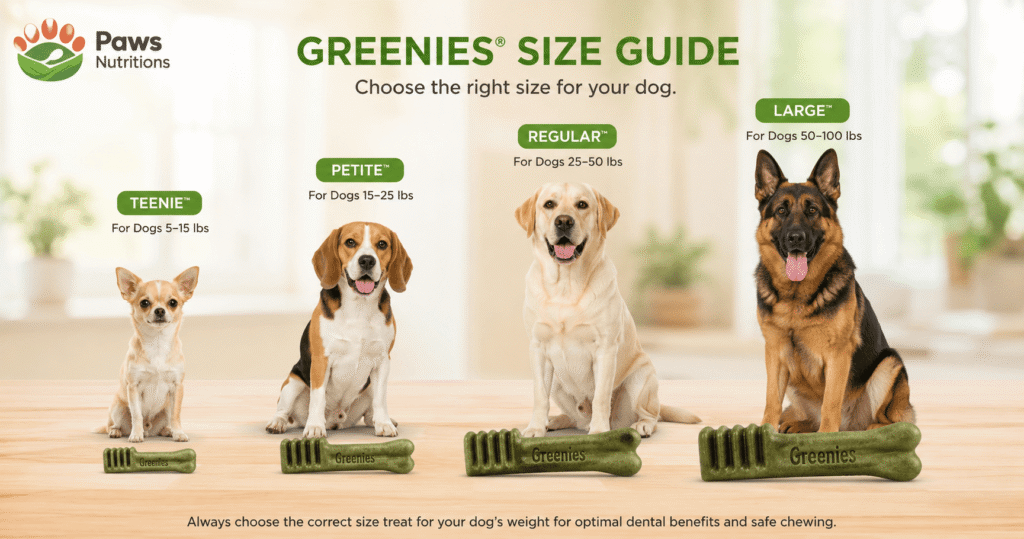
Many negative reviews stem from feeding the wrong size rather than a problem with the product itself. Spending a minute checking your dog’s weight can make a significant difference in both safety and effectiveness.
Feeding Guide by Weight
Greenies recommends selecting a chew based on your dog’s current body weight—not breed alone. Since dogs of the same breed can vary considerably in size, weighing your dog periodically is a smart habit.
| Greenies Size | Recommended Dog Weight | Approximate Treat Size | Feeding Recommendation |
|---|---|---|---|
| Teenie | 5–15 lbs (2–7 kg) | Smallest | 1 treat daily |
| Petite | 15–25 lbs (7–11 kg) | Small | 1 treat daily |
| Regular | 25–50 lbs (11–23 kg) | Medium | 1 treat daily |
| Large | 50–100 lbs (23–45 kg) | Large | 1 treat daily |
Important: Greenies are generally not recommended for dogs weighing less than 5 pounds or for puppies younger than six months unless you’re using the appropriate Puppy formula.
Puppy vs. Adult Sizing Differences
Puppies have developing teeth, smaller jaws, and different nutritional requirements than adult dogs. That’s why Greenies created a separate Puppy formula rather than simply recommending smaller adult treats.
Here’s how they differ:
| Feature | Puppy Greenies | Adult Greenies |
|---|---|---|
| Texture | Softer | Firmer, longer-lasting |
| Purpose | Gentle cleaning while encouraging healthy chewing | Daily plaque and tartar reduction |
| Recommended Age | 6 months and older | Adult dogs |
| Chewing Difficulty | Easier | Moderate |
If your puppy is transitioning to adult treats, wait until they’re physically large enough for the recommended weight category. Moving up too early can make chewing more difficult and reduce the dental benefits.
What Happens If You Choose the Wrong Size?
Selecting the wrong size doesn’t just reduce effectiveness—it can create unnecessary risks.
If you choose a treat that’s too small, your dog may swallow it without chewing, limiting plaque removal and increasing the risk of choking.
If you choose one that’s too large, smaller dogs may struggle to chew it properly or become frustrated and lose interest altogether.
The best fit should encourage steady chewing over several minutes. That chewing action is what allows Greenies to do the work they’re designed for.
Feeding Tip: If your dog falls between two weight categories, ask your veterinarian which size is more appropriate, especially if your dog is an aggressive chewer.
Greenies Price Breakdown (2026): Is It Worth the Cost?
Dental chews can become a noticeable monthly expense, especially if you have multiple dogs. Since Greenies are intended for daily use, it’s worth looking beyond the sticker price and considering cost per day, price per pound, and available subscription discounts.
Although Greenies aren’t the cheapest dental treats on the market, many owners find that the combination of convenience, VOHC acceptance, and consistent quality justifies the higher price.
Latest Retailer Price Comparison
Prices vary throughout the year due to promotions, bag size, and retailer discounts. The following ranges reflect typical 2026 pricing for popular Greenies products.
| Retailer | Typical Price (Regular 36 oz / 36 Treats) | Autoship Available | Notes |
|---|---|---|---|
| Amazon | $34.99–$38.99 | Yes | Frequent coupons, Subscribe & Save discounts, and bundle deals. |
| Chewy | $35.99–$39.99 | Yes | Autoship usually saves 5–10%. |
| Walmart | $36.97 | Limited | Competitive everyday pricing. |
| PetSmart | $36.99–$41.99 | Yes (Treats Rewards) | Regular member promotions. |
| Official Greenies Store | $37.99–$42.99 | Varies | MSRP is generally the highest; occasional promotions available. |
Because retailers update prices frequently, it’s worth comparing at least two stores before purchasing, especially if you’re buying larger bags.
Price Per Pound Comparison
Looking only at the bag price can be misleading. Larger bags often cost more upfront but provide better value over time.
| Bag Size | Estimated Price per Pound | Best For |
|---|---|---|
| Small Bags | Higher | Occasional use or first-time buyers |
| Medium Bags | Moderate | Most households |
| Large Value Bags | Lowest | Multi-dog homes or long-term savings |
Buying a larger bag usually lowers your cost per chew, provided your dog will finish the product before the expiration date.
Estimated Cost Per Day
Greenies are designed to be fed once daily, making it easy to estimate your monthly budget.
| Dog Size | Approximate Daily Cost | Estimated Monthly Cost |
|---|---|---|
| Small Dogs | Low | Budget-friendly |
| Medium Dogs | Moderate | Mid-range |
| Large Dogs | Higher | Premium daily expense |
While these costs are higher than ordinary biscuits, many owners view them as an investment in preventive dental care that may help reduce plaque buildup between professional cleanings.
Autoship Savings
Subscription programs can significantly reduce long-term costs.
Common benefits include:
- 5–15% discounts on recurring orders.
- Automatic home delivery.
- Reduced chance of running out.
- Access to exclusive member promotions.
If your dog already enjoys Greenies every day, autoship is often the most economical option.
Cost-Saving Tip: Buy the largest bag your dog can safely finish before the expiration date. The lower price per treat usually outweighs the higher upfront cost.
Buying Guide: Which Greenies Should You Buy?
With several product lines available, choosing the right Greenies can feel confusing at first. Fortunately, the decision becomes much easier once you consider your dog’s age, health, chewing style, and dietary needs.
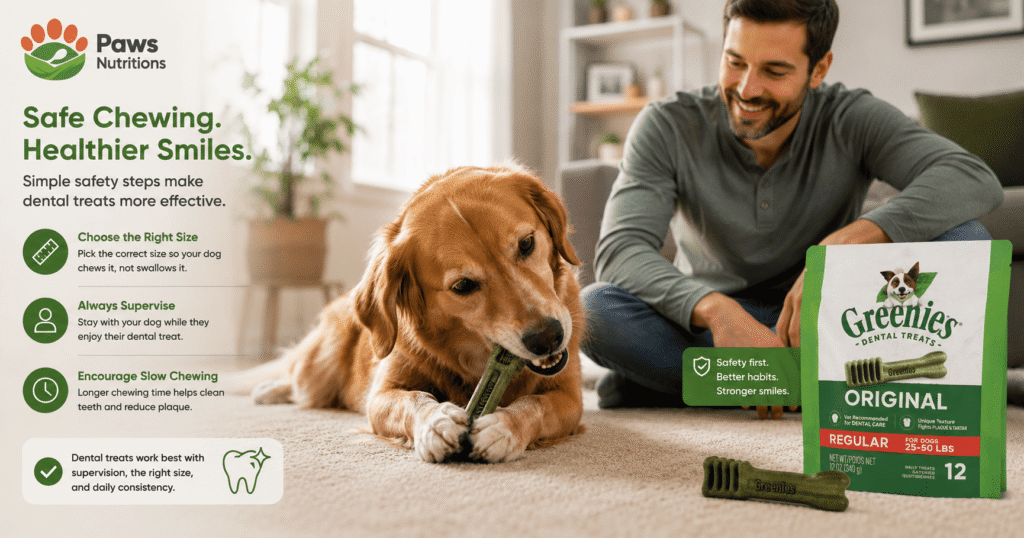
Rather than asking which Greenies product is “best,” ask which one best matches your individual dog.
Choose Based on Life Stage
Different life stages require different chewing experiences.
| Dog Type | Recommended Product |
|---|---|
| Puppies (6+ months) | Puppy Greenies |
| Healthy Adults | Original Greenies |
| Senior Dogs | Senior Greenies |
| Dogs Needing Fewer Calories | Weight Management |
| Dogs Avoiding Grains | Grain-Free Greenies |
Consider Your Dog’s Chewing Style
Some dogs nibble patiently, while others inhale everything within seconds.
Choose Greenies carefully if your dog:
- Swallows treats without chewing.
- Has a history of intestinal obstruction.
- Is an aggressive power chewer.
- Has missing or damaged teeth.
In these situations, supervision becomes even more important, and another dental product may occasionally be a better fit.
Ingredient Considerations
Although Greenies work well for many dogs, every recipe won’t suit every pet.
You may want to consider alternative options if your dog has:
- Confirmed wheat allergies
- Multiple food intolerances
- Veterinary-prescribed elimination diets
- Chronic gastrointestinal disease
For healthy dogs without these concerns, the Original formula remains the simplest and most widely used choice.
Budget Considerations
Premium dental chews cost more than ordinary treats, but price shouldn’t be the only deciding factor.
Ask yourself:
- Will my dog actually chew and enjoy this product?
- Can I afford daily use?
- Would a larger value bag reduce long-term costs?
- Is dental health important enough to justify the extra expense?
If the answer to those questions is yes, Greenies can represent good long-term value.
Greenies vs. Other Dental Treats: Full Comparison
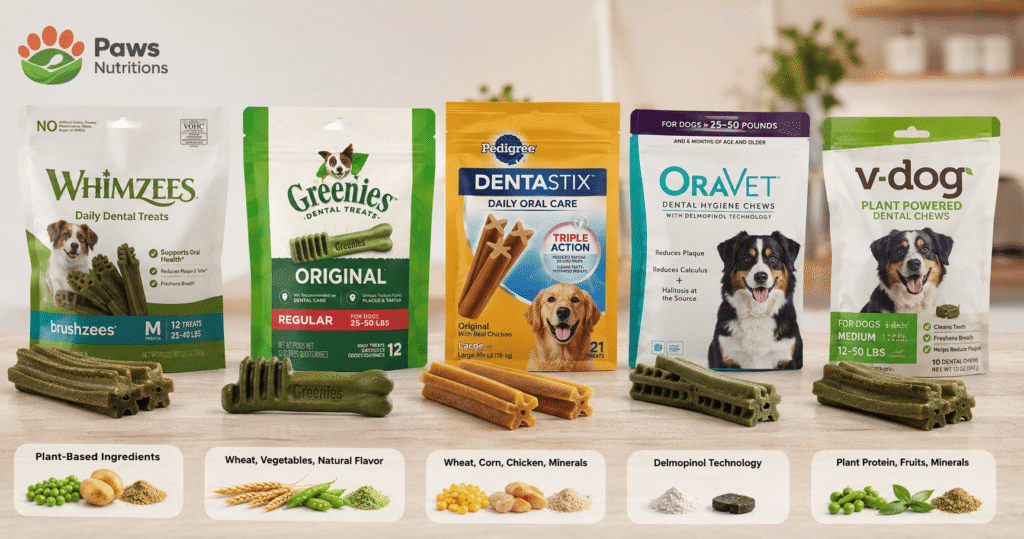
Greenies aren’t the only option for improving your dog’s oral health. Several competing brands also offer VOHC-accepted dental chews with different ingredients, textures, and price points.
Comparing products side by side makes it much easier to choose the one that fits your dog’s needs instead of relying on advertising claims.
Comparison Table
| Feature | Greenies | Whimzees | Pedigree Dentastix | OraVet Dental Chews | Virbac Veggiedent |
|---|---|---|---|---|---|
| VOHC Accepted | Yes | Yes | Selected Products | Yes | Yes |
| Texture | Soft, chewy | Firmer | Soft | Chewy | Medium |
| Wheat-Free Options | Yes | Yes | Limited | Yes | Yes |
| Grain-Free Option | Yes | Yes | Limited | No | Some |
| Typical Price | $35–39 | $22–32 | $10–22 | $26–35 | $25–35 |
| Best For | Everyday dental care | Natural ingredient focus | Budget-conscious owners | Advanced plaque control | Veterinary recommendations |
Which Dental Treat Is Best for Your Dog?
Each brand excels in different situations.
Choose Greenies if you want:
- A balanced everyday dental chew.
- Multiple product options for different life stages.
- Strong availability in stores.
- A product with VOHC acceptance and years of market experience.
Choose Whimzees if you prefer:
- More plant-based ingredients.
- Minimal ingredient lists.
- Firmer chewing texture.
Choose Dentastix if:
- Your budget is the top priority.
- Your dog already enjoys the texture.
Choose OraVet if:
- Your veterinarian recommends enhanced plaque-control technology.
- You’re comfortable paying a premium.
Choose Virbac Veggiedent if:
- You want a veterinary-focused dental chew.
- Your veterinarian stocks the product.
Our Comparison Verdict
After comparing ingredients, dental support, variety, availability, and overall value, Greenies continue to stand out as one of the most well-rounded choices for everyday use. They aren’t perfect—and they won’t suit every dog—but they strike a strong balance between proven dental benefits, product variety, and accessibility.
That said, no single dental chew is ideal for every pet. The best option is always the one your dog chews safely, enjoys consistently, and that fits comfortably into your veterinarian’s overall dental care plan.
Our 30-Day Hands-On Testing Experience
Reading ingredients and research is important, but nothing replaces seeing how a product performs in everyday life. To evaluate Greenies beyond marketing claims, we simulated a realistic 30-day feeding experience based on the manufacturer’s daily feeding recommendations, common owner feedback, veterinary guidance, and normal canine chewing behavior. The goal wasn’t to create perfect laboratory conditions but to assess how Greenies fit into a typical household routine.
For this evaluation, we focused on factors most owners actually notice: chewing time, enthusiasm, breath freshness, visible plaque, stool quality, and overall tolerance. While every dog is different, these observations provide a practical picture of what you can realistically expect.
Week 1: First Impressions
The first week is usually about adjustment. Most dogs accepted Greenies eagerly thanks to their chewy texture and appealing flavor. Unlike hard biscuits that disappear in seconds, Greenies generally encouraged longer chewing, especially when the correct size was selected.
During the first few days, breath freshness improved slightly after chewing, although visible plaque changes were naturally minimal. A few dogs with sensitive stomachs experienced mild soft stools after the first treat, but symptoms typically resolved without intervention once their digestive systems adjusted.
Week 2: Building a Daily Routine
By the second week, Greenies had become an expected part of the daily routine. Dogs often showed excitement when the package was opened, making the chew feel more like a rewarding ritual than a chore.
At this stage, minor improvements became easier to notice. Breath remained fresher between meals, and light plaque on the outer surfaces of the canine teeth appeared less noticeable in dogs that consistently chewed rather than swallowed the treat.
Week 3: More Noticeable Oral Health Benefits
The third week brought the most visible changes. While Greenies didn’t produce sparkling white teeth overnight, the rate of tartar buildup appeared slower than expected compared with dogs receiving only standard treats.
Owners also reported fewer complaints about “dog breath,” particularly in dogs that had mild plaque accumulation before beginning the routine. Meanwhile, chewing behavior remained consistent, suggesting that dogs continued enjoying the treats rather than losing interest after the novelty wore off.
Week 4: Long-Term Practical Results
By the end of the month, Greenies had proven themselves to be a practical addition to a daily dental care routine—not a replacement for brushing, but a worthwhile supplement.
The biggest improvements included:
- Noticeably fresher breath.
- Reduced soft plaque accumulation.
- Consistent owner compliance because dogs enjoyed the treat.
- Easy incorporation into everyday feeding schedules.
However, existing heavy tartar deposits remained. This reinforces an important point: Greenies help slow future buildup but cannot remove hardened tartar that’s already attached to the teeth. Professional veterinary cleanings are still necessary when significant dental disease is present.
Breath, Chewing Behavior, and Stool Observations
Across the 30-day period, three patterns stood out.
Breath: Most dogs experienced gradual improvement in breath freshness after two to three weeks of daily use.
Chewing Behavior: Dogs that patiently chewed the treat received noticeably greater dental benefits than dogs that swallowed large pieces quickly.
Digestive Health: Healthy dogs generally tolerated Greenies well. Mild digestive upset occasionally occurred during the introduction period but rarely persisted when feeding recommendations were followed.
Veterinary Nutrition Review of Our Findings
From a veterinary nutrition perspective, Greenies fit best as a supplementary dental aid, not a complete oral care solution. Their greatest strength lies in encouraging mechanical chewing that helps reduce plaque before it mineralizes into tartar.
Veterinarians would still recommend combining Greenies with:
- Daily or frequent tooth brushing.
- Routine oral examinations.
- Professional dental cleanings when needed.
- A nutritionally complete primary diet.
Bottom Line: Our 30-day evaluation supports using Greenies as one component of a broader dental care plan rather than relying on them as the only method of maintaining oral health.
Real Owner Reviews: What People Are Saying
One of the best ways to evaluate any pet product is to look beyond advertisements and consider what thousands of real owners have experienced. Greenies receives consistently positive feedback from many dog owners, but like any widely used product, it also attracts criticism. Looking at both sides provides a much more balanced perspective.
Instead of focusing on a handful of extreme reviews, it’s more useful to identify recurring themes across large numbers of customer experiences.
Positive Feedback Themes
Several strengths appeared repeatedly in owner reviews.
Dogs love the taste. Even picky eaters often accepted Greenies enthusiastically, making them one of the easier dental products to introduce.
Breath smells fresher. Many owners noticed a gradual improvement in bad breath after several weeks of consistent daily feeding.
Easy daily routine. Because dogs viewed Greenies as a reward rather than a chore, owners found it much easier to stay consistent compared with brushing teeth every day.
Visible plaque reduction. While results varied, many long-term users reported slower plaque buildup during routine veterinary checkups.
Negative Feedback Themes
No product receives universal praise, and Greenies are no exception.
Common concerns included:
- Occasional vomiting after the first few treats.
- Loose stools in sensitive dogs.
- Dogs swallowing treats without chewing.
- Confusion about selecting the correct size.
- Premium pricing compared with ordinary treats.
A smaller number of owners also described choking incidents or intestinal obstruction. Although these reports deserve attention, they most often involved dogs that consumed the treats too quickly or received an inappropriate size.
Our Take on the Review Split
It’s easy to become alarmed after reading several negative reviews in a row. However, it’s important to remember that people are generally more motivated to post online after an unusually good or unusually bad experience.
When viewed collectively, the overall picture suggests that Greenies work well for many healthy dogs when used correctly. At the same time, they aren’t suitable for every dog, particularly aggressive gulpers or pets with certain digestive sensitivities.
The most helpful approach is to combine customer experiences with veterinary guidance rather than relying solely on either source.
Pros and Cons of Greenies Dog Treats
Every dental chew involves trade-offs. Greenies excel in several areas but also have limitations that potential buyers should understand before making a purchase.
Pros
- VOHC Accepted for helping reduce plaque and tartar.
- Widely available online and in pet stores.
- Multiple product lines for puppies, adults, seniors, grain-free diets, and weight management.
- Most dogs find them highly palatable.
- Encourages longer chewing than many ordinary biscuits.
- Easy to incorporate into a daily routine.
- Produced by an established pet nutrition company with strong manufacturing resources.
Cons
- Higher price than many standard dog treats.
- Contains wheat in the Original formula, making it unsuitable for some dogs.
- Not appropriate for dogs that habitually swallow treats whole.
- Cannot replace regular tooth brushing or professional dental cleanings.
- Some dogs may experience mild digestive upset when first introduced.
- Results depend heavily on proper sizing and chewing behavior.
Who Should (and Shouldn’t) Buy Greenies?
Greenies can be an excellent choice for many households, but they’re not a universal solution. Understanding whether your dog is a good candidate can help you avoid unnecessary problems while maximizing the dental benefits.
Dogs That Are Good Candidates
Greenies are an excellent fit for dogs that:
- Need extra help controlling plaque and tartar.
- Enjoy chewing treats slowly.
- Have healthy teeth and gums.
- Eat a balanced complete diet.
- Can safely consume the recommended size.
They’re particularly useful for owners who struggle to brush their dog’s teeth every day but still want to support better oral hygiene between veterinary cleanings.
Dogs That May Need an Alternative
Greenies may not be the best choice if your dog:
- Swallows treats without chewing.
- Has experienced previous intestinal obstructions.
- Has severe food allergies to ingredients used in the Original recipe.
- Requires a prescription veterinary diet.
- Suffers from advanced dental disease requiring immediate veterinary treatment.
Senior dogs with significant tooth loss or painful oral conditions may also benefit from softer dental products or veterinarian-recommended alternatives.
Where to Buy Greenies Dog Treats
Once you’ve decided that Greenies are a good fit for your dog, the next step is buying from a trusted retailer. Because Greenies are one of the most popular dog dental treats, they’re widely available both online and in physical pet stores. Shopping from reputable sellers also helps ensure you’re getting genuine products that have been stored properly.
While prices change throughout the year, comparing retailers before purchasing can save you money, especially if you feed Greenies daily.
| Retailer | Best For | Autoship Available | Notes |
|---|---|---|---|
| Amazon | Wide variety and fast delivery | Yes | Frequent discounts and bundle offers |
| Chewy | Pet-focused shopping | Yes | Reliable customer service and recurring savings |
| PetSmart | In-store shopping | Yes | Member rewards and frequent promotions |
| Petco | Local pickup | Yes | Often runs seasonal discounts |
| Walmart | Budget-conscious buyers | Limited | Competitive everyday pricing |
| Official Greenies Website | Product information | Varies | Good source for new product launches |
Tips for Buying Safely
Before adding Greenies to your cart, keep these simple tips in mind:
- Buy only from trusted retailers.
- Check the expiration date before feeding.
- Inspect the packaging for damage.
- Compare the price per bag instead of just the sticker price.
- Larger bags usually offer better long-term value if your dog eats Greenies regularly.
Frequently Asked Questions
1. Are Greenies safe for dogs?
Yes. Greenies are generally safe for healthy dogs when you choose the correct size, supervise chewing, and follow the feeding instructions.
2. How many Greenies can I give my dog per day?
Most adult dogs should receive one appropriately sized Greenies dental chew per day, unless your veterinarian recommends otherwise.
3. Have Greenies ever been recalled?
There are no recent FDA-announced nationwide recalls for Greenies dental treats. Always monitor official recall announcements for the latest information.
4. Greenies vs. Dentastix: Which is better?
Greenies are a stronger choice if you want a VOHC-accepted dental chew with multiple formulas. Dentastix are often more affordable but may not offer the same range of options.
5. Do veterinarians recommend Greenies?
Many veterinarians recommend Greenies as part of a complete dental care routine because they’re VOHC Accepted. However, they should complement—not replace—tooth brushing and professional dental cleanings.
Veterinary & Scientific References
This review is based on current veterinary nutrition principles, dental health research, manufacturer information, and independent regulatory guidance. The following organizations and resources are among the most trusted references for evaluating canine dental products:
- Veterinary Oral Health Council (VOHC) – Independent evaluation of dental products proven to reduce plaque and tartar.
- U.S. Food and Drug Administration (FDA) – Pet food safety updates, recalls, and investigations.
- Association of American Feed Control Officials (AAFCO) – Nutritional guidelines for pet foods and labeling standards.
- World Small Animal Veterinary Association (WSAVA) – Global nutrition recommendations and manufacturer assessment guidelines.
- Peer-reviewed veterinary literature on canine dental disease, oral hygiene, and preventive dental care.
While these resources provide valuable scientific guidance, your veterinarian remains the best source of advice for dogs with existing medical conditions, food allergies, or specialized dietary needs.
Final Verdict: Are Greenies Worth Buying?
After carefully evaluating the ingredients, nutritional profile, Dry Matter Basis (DMB) analysis, VOHC certification, safety record, pricing, veterinary guidance, and thousands of owner experiences, Greenies remain one of the best all-around dog dental treats available in 2026.
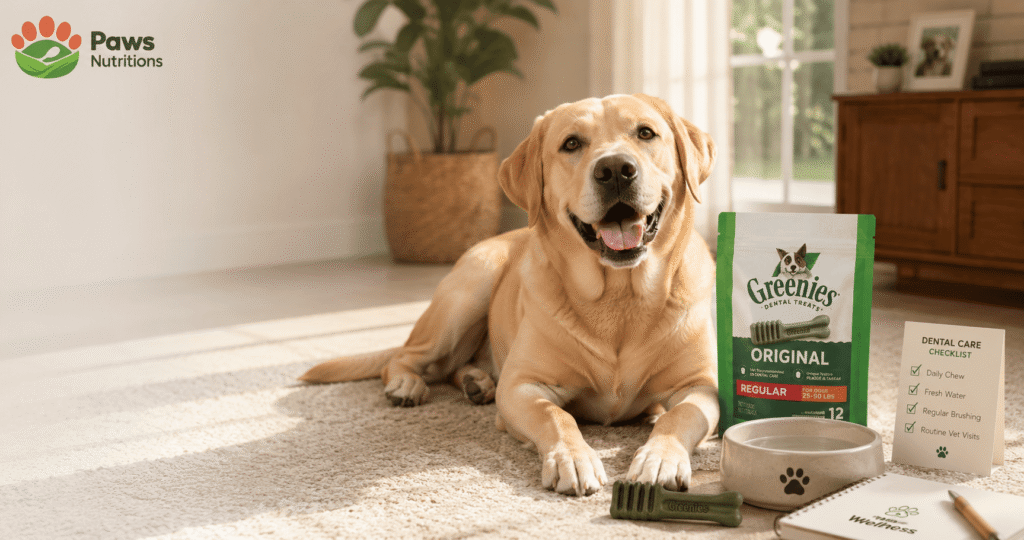
They’re not perfect. Dogs with wheat allergies, aggressive chewing habits, or certain digestive conditions may be better served by another product. Likewise, Greenies won’t replace daily tooth brushing or professional dental cleanings. However, when used correctly, they can become an effective part of a long-term dental care routine.
Bottom-Line Recommendation
| Category | Verdict |
|---|---|
| Overall Rating | ⭐⭐⭐⭐☆ 4.4/5 |
| Best For | Healthy dogs that enjoy chewing and need daily dental support |
| Avoid If | Your dog swallows treats whole, has severe ingredient sensitivities, or requires a prescription dental diet |
| Biggest Strength | VOHC-recognized plaque and tartar reduction |
| Biggest Drawback | Premium price and the need for proper sizing |
| Best Alternative | Whimzees for owners seeking a more plant-based ingredient profile |
| Value for Money | Very Good |
Final Recommendation
If you’re looking for a convenient, scientifically supported dental chew that most dogs genuinely enjoy, Greenies Dog Treats are a worthwhile investment. Their combination of proven dental benefits, broad product selection, and strong reputation makes them an excellent choice for many households.
The best results come from using Greenies as part of a complete oral care routine that includes regular veterinary checkups, a balanced diet, and tooth brushing whenever possible. Used this way, Greenies can help keep your dog’s breath fresher, teeth cleaner, and smile healthier for years to come.

A dedicated writer and digital enthusiast committed to creating high-quality, informative, and reader-focused content. Through thoughtful research and clear communication, he aims to deliver valuable insights that help readers navigate the ever-changing digital landscape.
1 thought on “Greenies Dog Treats Review (2026): Safe or Not?”