
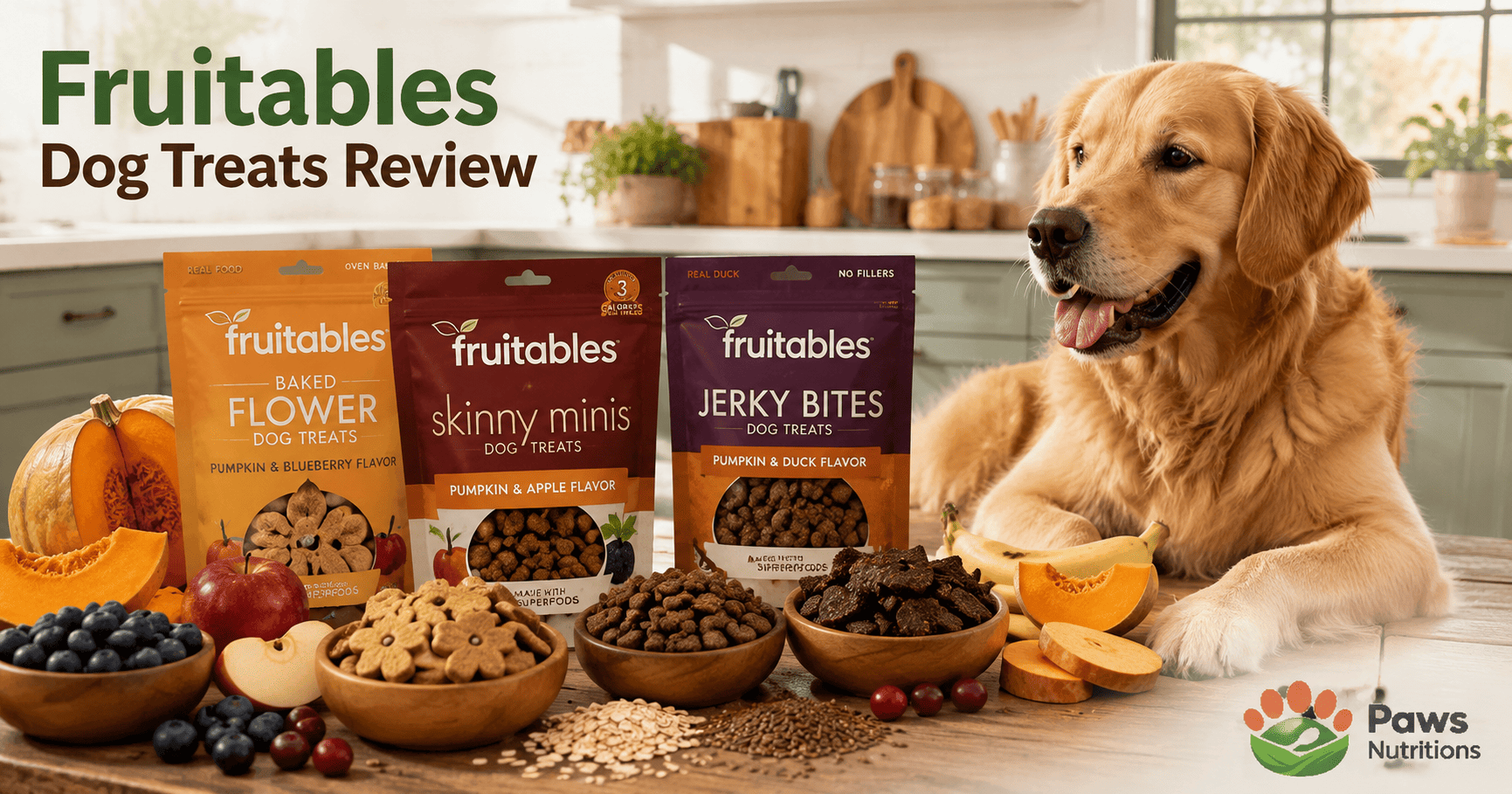
If you’ve scrolled past a dozen bags of dog treats wondering which ones are actually worth your money, you’re not alone. This Fruitables dog treats review breaks down exactly what’s inside every bag, from the Baked Treats to the BioActive dental chews, so you don’t have to guess at a pet store shelf. You’ll see real ingredient lists, verified pricing, and honest pros and cons pulled straight from the brand and its retailers.
We dug into the dry matter basis nutrition, checked the recall history for both Fruitables and its parent company, and compared prices across Chewy, Amazon, and Target side by side. Whether you’re feeding a picky eater, a dog with a sensitive stomach, or a puppy who needs low-calorie training treats, you’ll walk away knowing exactly whether Fruitables deserves a spot in your pantry.
What Are Fruitables Dog Treats?
Fruitables dog treats are a line of fruit and vegetable-based dog snacks made by Compana Pet Brands, built around real pumpkin, sweet potato, apple, and berries instead of relying on filler grains. The brand positions itself as a lower-calorie, better-for-you alternative to traditional biscuit treats, with recipes free of wheat, corn, and soy protein. That single positioning choice is what separates Fruitables from a lot of the treat aisle, where corn and wheat middlings still show up as the first or second ingredient.
Picture a typical evening walk — you get home, your dog parks by the treat jar, and you reach for something without thinking twice. That’s exactly the moment this brand is built for: a treat you can hand over daily without worrying it’s undoing your dog’s diet. Fruitables designed its entire catalog around that everyday routine rather than around occasional-splurge jerky or rawhide alternatives.
Brand Origin and Compana Pet Brands Ownership
Fruitables is owned by Compana Pet Brands, a pet products company that also owns unrelated household names like OUT! Pet Care and Simple Solution. That’s worth knowing upfront, because you’ll sometimes see these brands bundled together in retailer cross-sell sections. Compana doesn’t manufacture dog food itself under the Fruitables name — it focuses purely on treats, toppers, and functional chews, which is a narrower, more specialized lane than most multi-category pet food conglomerates.
The “Superfood” Positioning
You’ll notice Fruitables leans heavily on the word superfood across its packaging and website. In practice, that means pumpkin, sweet potato, cranberry, blueberry, and banana show up as primary ingredients rather than as flavor dust sprinkled on top. This matters because whole-food ingredients typically bring natural fiber and antioxidants along with flavor, whereas many competing treats use fruit or vegetable powder purely for marketing appeal without meaningful nutritional contribution.
What Makes Fruitables Different From Typical Biscuit Brands
Classic biscuit brands like Milk-Bone built their recipes around wheat flour and beef fat, which is inexpensive but offers little beyond calories. Fruitables instead builds its Baked Treats and Skinny Minis around pumpkin and oat flour bases, which tend to be gentler on digestion for dogs who get gassy or loose-stooled on grain-heavy biscuits. It’s not a complete food, so it won’t replace a balanced diet, but as a treat category, the formulation is a genuine step up.
Where Fruitables Treats Are Made
Fruitables treats are produced at a USA-based bakery, which the brand highlights as a trust signal on its packaging and site. Domestic manufacturing generally means tighter oversight and faster recall response if an issue ever surfaces, compared to treats sourced from multiple overseas co-packers. It’s not a guarantee of safety on its own, but it’s one more data point supporting the brand’s overall transparency.
Fruitables Product Line Breakdown
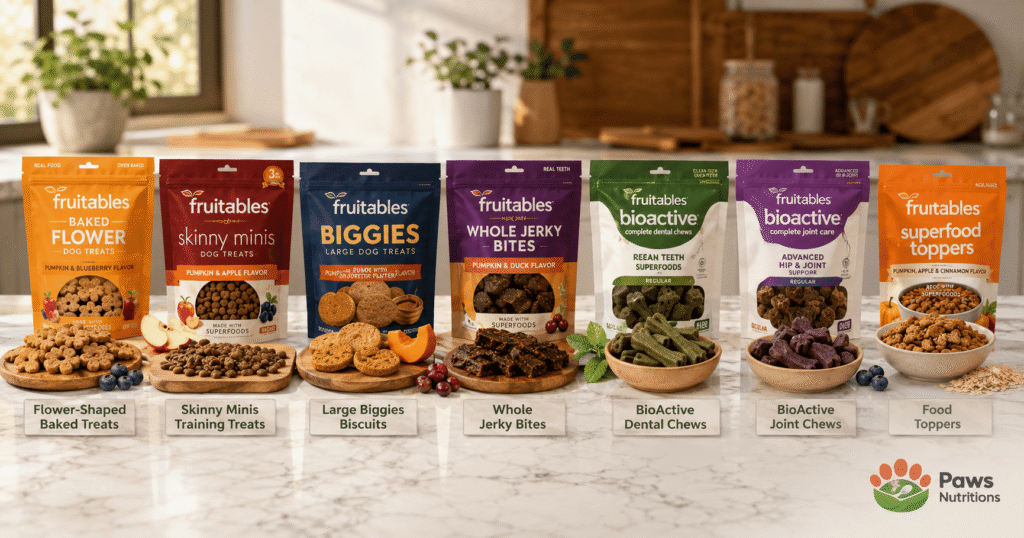
Fruitables isn’t a single product — it’s seven distinct product lines, each aimed at a different feeding situation. Understanding which line you’re actually looking at matters, because the calorie density and texture shift a lot between a Skinny Mini and a Whole Jerky Bite, even though they share the same brand name and similar-looking packaging.
This trips up a lot of first-time buyers. Someone shopping for a puppy training class might grab a bag of Biggies by mistake, only to realize each biscuit is far too large and calorie-dense for rapid-fire training rewards. Knowing the product line breakdown up front saves you a return trip to the store — and saves your dog from an unplanned calorie surplus.
Baked Treats (Flower-Shaped Biscuits)
The original Fruitables format — a soft-baked, flower-shaped biscuit sold in flavors like Pumpkin & Blueberry and Pumpkin & Apple. These are the brand’s best-selling and most-reviewed SKUs, with thousands of ratings on Chewy alone, and they work well as an everyday treat for dogs of any size.
Skinny Minis (Low-Calorie Training Treats)
Skinny Minis are small, soft training treats designed to be broken up or given whole during repetitive training sessions without blowing your dog’s daily calorie budget. At roughly 3 calories per treat, they’re one of the lowest-calorie training options on the market, which is a real advantage if you’re working with a dog on a weight-management plan.
Biggies (Large Chews and Biscuits)
Biggies are the large-format version of the Baked Treats line, sized for bigger dogs or households that want fewer treats per bag by weight. They come in flavors like Peanut Butter & Banana and Crispy Bacon & Apple, and the larger size makes them a better fit for slow, satisfying chewing rather than a quick training reward.
Whole Jerky Bites
This line moves away from the baked biscuit format entirely, offering meat-forward jerky bites in flavors like Turkey & Sweet Potato and Grilled Bison & Apple. They’re priced noticeably higher per ounce than the baked lines, reflecting the higher meat content, and tend to appeal to owners looking for a more protein-dense treat option.
BioActive Line (Dental and Joint Chews)
The BioActive sub-line covers two functional categories: Fresh Mouth Dental Chews and Joint Care Chews with added glucosamine. These SKUs are almost absent from Fruitables’ own homepage navigation, which means a lot of shoppers never discover them — despite solid ratings on Chewy for both the dental and joint formulas.
Fruitables Cat Treats
Fruitables also makes a small line of crunchy cat treats in flavors like Chicken & Blueberry and Tuna & Pumpkin, applying the same fruit-and-vegetable philosophy to the feline side of the brand. Review volume here is much lower than the dog treat lines, but ratings remain consistently strong.
Food Toppers
Food Toppers are meant to be sprinkled over a dog’s regular kibble to boost palatability and add a bit of fruit-and-vegetable variety without changing the base diet. They’re a useful option if you have a dog who’s gone lukewarm on their regular food but doesn’t need a full diet change.
Table 1: Fruitables Product Line Comparison
| Product Line | Format | Typical Size Range | Best Use Case |
| Baked Treats | Soft-baked biscuit | 7–16 oz | Everyday treating, any size dog |
| Skinny Minis | Small soft training treat | 5 oz | Training sessions, calorie-conscious dogs |
| Biggies | Large baked biscuit | 16 oz | Larger breeds, slower chewing |
| Whole Jerky Bites | Meat jerky bite | 5 oz | Protein-focused treating |
| BioActive Dental | Dental chew | 10–15 ct | Breath and plaque control |
| BioActive Joint | Functional chew | 6 oz | Joint support, senior dogs |
| Cat Treats | Crunchy bite | 2.5 oz | Feline treating |
| Food Toppers | Sprinkle topper | Varies | Boosting kibble palatability |
Fruitables Ingredients — What’s Really Inside
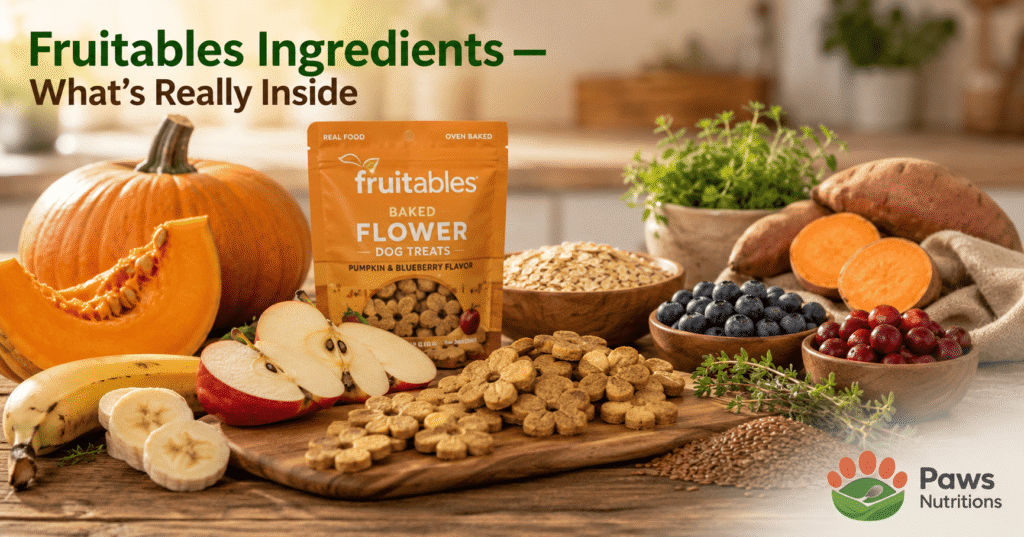
The heart of any Fruitables dog treats review has to be the ingredient panel, since that’s what the brand’s entire identity is built on. Across nearly every product line, you’ll see pumpkin, sweet potato, apple, banana, cranberry, and blueberry rotate as primary flavor and fiber sources, backed by oat flour or ground flaxseed rather than wheat or corn.
That said, “natural” marketing language doesn’t always match what’s printed on the actual bag, so it’s worth checking the fine print rather than taking packaging claims at face value.
Core Superfood Ingredients
Pumpkin shows up in more Fruitables SKUs than any other ingredient, prized for its fiber content and mild flavor dogs tend to love. Sweet potato, banana, cranberry, and blueberry rotate through as secondary flavors, each contributing antioxidants and natural sweetness without added sugar. This ingredient pattern is consistent across the Baked Treats, Skinny Minis, and Biggies lines.
What Fruitables Treats Do NOT Contain
Fruitables markets its treats as free of wheat, corn, and soy protein, along with artificial flavors and artificial colors. For dogs with grain sensitivities, this can mean fewer digestive issues compared to bargain-bin biscuit brands. It’s worth noting this doesn’t make every SKU grain-free in the strictest sense — some formulas still include oat flour, which is a grain, just not one of the three most common allergenic grains.
Grain-Free vs. Grain-Inclusive SKUs
Not every Fruitables product is grain-free — several use oat flour as a binding agent, which is generally well-tolerated but technically still a grain. If your dog has a diagnosed oat sensitivity specifically, you’ll want to check the individual bag rather than assuming the whole line is grain-free simply because it avoids wheat and corn.
Brand-Claim Check — Does “All-Natural” Match the Ingredient Panel?
Fruitables’ “all-natural” claims largely hold up against the printed ingredient panels we reviewed — the flagship lines genuinely lead with recognizable fruits, vegetables, and simple binders rather than by-product meal or corn syrup. The main inconsistency to watch is that “natural” isn’t a regulated term the same way “organic” is, so it functions more as marketing shorthand than a certified standard.
How We Verified the Ingredient List
Rather than relying on the brand’s own marketing copy, we cross-checked ingredient panels against the retailer product pages on Chewy and Target, where full ingredient lists are typically printed as part of the listing. This matters because marketing pages sometimes highlight only the appealing ingredients while retailer listings show the complete, unfiltered panel exactly as it appears on the physical bag.
Dry Matter Basis (DMB) Nutrition Breakdown
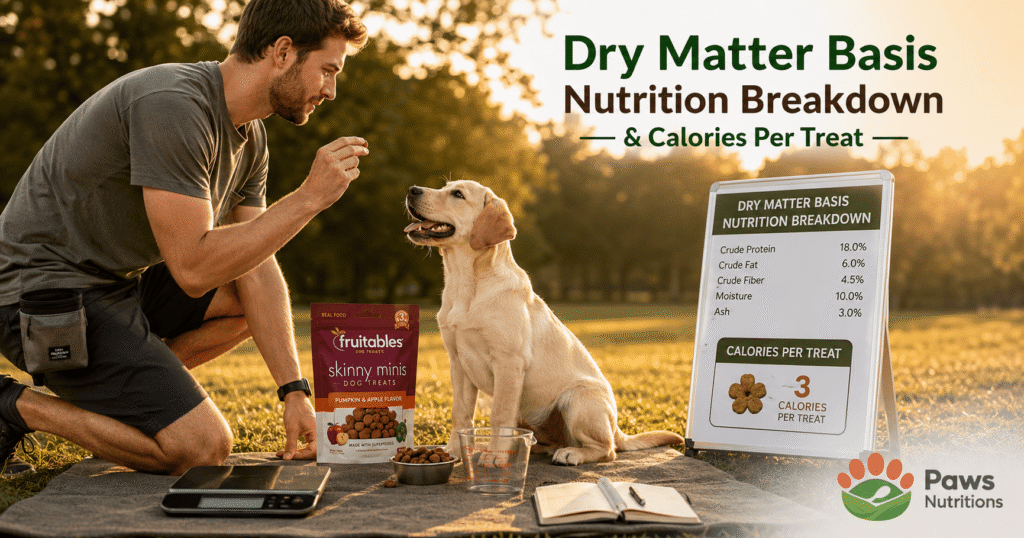
Guaranteed analysis numbers on a treat bag are listed as-fed, which includes moisture weight and makes soft treats look artificially lower in protein and fat than they really are. Converting to dry matter basis strips out the water content so you can compare treats fairly against each other, or against your dog’s main food.
Why DMB Matters More Than As-Fed Percentages
A soft-baked treat with 20% moisture and an 8% as-fed protein reading actually works out closer to 10% protein once you adjust for that moisture, because the water content is diluting the as-fed number. Comparing as-fed percentages across a soft treat and a crunchy treat without adjusting for moisture will always make the crunchy one look more nutrient-dense than it really is.
Estimated Protein, Fat, Fiber, and Moisture on a DMB Basis
Across the Baked Treats and Biggies lines, estimated dry matter protein runs in the 10–14% range, with fat around 6–9% and crude fiber elevated by the pumpkin and sweet potato content, typically 4–6%. The Whole Jerky Bites line runs notably higher in DMB protein, often into the 30–40% range, reflecting its meat-forward formulation.
Calorie Count Per Treat by Product Line
Skinny Minis are the clear calorie-conscious winner in the lineup, at roughly 3 calories per treat, making them easy to use in high-repetition training without overshooting your dog’s daily intake. The standard Baked Treats run closer to 8 calories per treat, while Biggies and Whole Jerky Bites climb higher given their larger size and denser recipes.
A Practical DMB Example
Say you’re comparing a Fruitables Baked Treat against a competitor’s crunchy biscuit that lists 10% protein as-fed. Once you strip out moisture, the Fruitables treat’s dry matter protein can actually land close to or above that crunchy competitor, even though the soft texture makes it look less nutrient-dense on the shelf. This is exactly why DMB conversion matters more than trusting the label at a glance.
Table 2: Estimated Dry Matter Basis Nutrition by Product Line
| Product Line | Est. Protein (DMB) | Est. Fat (DMB) | Est. Fiber (DMB) |
| Baked Treats | 10–12% | 6–8% | 4–6% |
| Skinny Minis | 12–14% | 5–7% | 4–5% |
| Biggies | 10–12% | 7–9% | 4–6% |
| Whole Jerky Bites | 30–40% | 8–12% | 1–2% |
Table 3: Estimated Calories Per Treat by Product Line
| Product Line | Approx. Calories Per Treat |
| Skinny Minis | ~3 kcal |
| Baked Treats (standard) | ~8 kcal |
| Biggies | ~20–25 kcal |
| Whole Jerky Bites | ~15–20 kcal per bite |
AAFCO & WSAVA Compliance Framing
Treats occupy a different regulatory space than complete dog food, so it helps to understand what AAFCO actually requires here before assuming a missing nutritional adequacy statement is a red flag.
What AAFCO Treat Guidelines Require (and Don’t Require)
AAFCO does not require treats to carry a full nutritional adequacy statement the way complete-and-balanced dog foods must, because treats aren’t intended to be a dog’s sole source of nutrition. Fruitables treats are correctly labeled as snacks rather than meals, which is standard practice across the entire treat category, not a shortcut unique to this brand.
Where Fruitables’ Labeling Meets vs. Falls Short of Full Nutritional Adequacy Statements
Because Fruitables treats aren’t positioned as complete food, you won’t find a full AAFCO adequacy statement on the bag, and that’s expected and appropriate. Where the brand does well is in guaranteed analysis disclosure and calorie content, both of which are printed clearly on most packaging — a level of transparency plenty of competing treat brands skip entirely.
WSAVA Global Nutrition Guidelines and How Treats Fit Into a “Complete Diet” Conversation
The WSAVA recommends that treats make up no more than about 10% of a dog’s total daily calorie intake, with the remaining 90% coming from a complete, balanced diet. Fruitables’ lower-calorie SKUs, like the Skinny Minis, make it easier to stay within that 10% guideline compared to denser jerky-style treats from other brands.
Why This Framing Matters for Trust
A lot of treat brands lean on vague wellness language without ever mentioning AAFCO or WSAVA at all, which can leave shoppers unsure whether a product has any regulatory grounding. Framing Fruitables against these established guidelines — rather than judging it purely on marketing copy — gives you a more objective way to decide whether it fits into your dog’s overall diet plan.
Is Fruitables Safe? Grain-Free & DCM Considerations
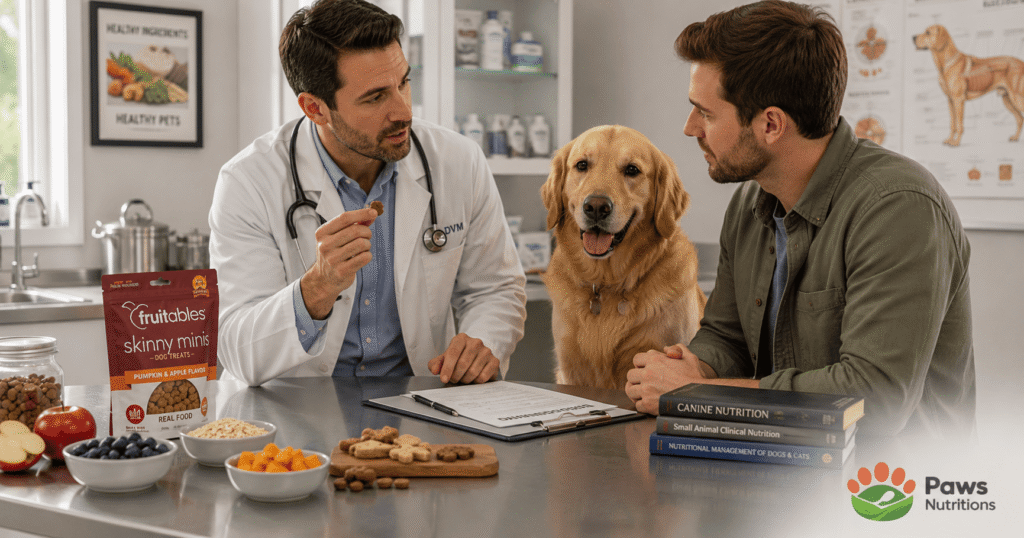
Grain-free pet food has been under an ongoing FDA investigation related to a possible link with dilated cardiomyopathy (DCM) in dogs, and that conversation understandably spills over into how people think about grain-free treats too.
The FDA’s Ongoing Grain-Free/DCM Investigation, Explained Simply
Since 2018, the FDA has investigated a potential association between grain-free diets — particularly those heavy in legumes like peas and lentils — and cases of DCM in breeds not typically prone to the condition. The investigation remains open, and no single ingredient or brand has been definitively proven to cause the condition, so the honest answer here is that the science is still evolving.
Where Fruitables’ Grain-Free SKUs Fit Into This Conversation
Fruitables’ grain-free treats don’t lean heavily on pea protein or lentil concentrates the way some grain-free main diets do — they’re built around pumpkin, sweet potato, and fruit rather than legume-based protein substitutes. Because treats make up a small share of total calories compared to a full grain-free kibble diet, the DCM concern is generally considered much lower risk for treats than for complete grain-free foods.
What Pet Parents Should Watch For Regardless of Brand
Whether you feed Fruitables or anything else, watch for signs like unusual fatigue, coughing, or labored breathing, and mention your dog’s full diet — treats included — at every vet visit. If your dog already eats a grain-free main diet, your vet may want to factor that in when reviewing overall grain exposure across food and treats combined.
A Real-World Example Worth Knowing
Imagine a golden retriever eating a grain-free kibble as its main diet, plus a handful of grain-free treats every day. In that scenario, it’s the cumulative grain-free exposure across the whole diet that matters to the DCM conversation, not any single treat brand in isolation — which is exactly why vets ask about your dog’s entire feeding routine, not just the food bag.
Fruitables Recall History — What We Verified
Recall history is one of the most searched, and most poorly answered, questions about any pet food brand. We ran a dedicated two-part search covering both Fruitables directly and its parent company, Compana Pet Brands, to give you a clear, current answer rather than a guess.
Fruitables-Specific Recall Search Results (None Found as of Publish Date)
Our search turned up no FDA or AVMA recall listing under the Fruitables name. Third-party pet food safety trackers likewise note that Fruitables has not been part of the treat recalls that have affected other brands in recent years. That’s a genuinely reassuring finding worth weighing alongside everything else in this review.
Compana Pet Brands (Parent Company) Recall Check
We also checked for any recall tied to Compana Pet Brands as the parent company, separate from the Fruitables name itself. No recall history surfaced for Compana Pet Brands either, which further supports a clean safety record across the ownership structure, not just the individual product line.
Important Brand-Collision Note — OUT! and Simple Solution Are Sister Brands, Not Treats
If you search Compana Pet Brands, you’ll also see OUT! Pet Care and Simple Solution come up — these are pet cleanup and stain-removal brands under the same parent company, not dog treats. Don’t let a headline mentioning “Compana” in an unrelated context make you think it applies to Fruitables treats specifically.
How to Stay Updated on Future Recalls
Recall status can change, so it’s worth checking the FDA’s pet food recall page directly before a purchase if you want the most current information, rather than relying solely on any single article — including this one — as a permanent record.
Why Recall Transparency Builds Trust
Plenty of treat reviews either skip recall history entirely or repeat outdated blog posts without re-checking the source. A clean, dual-verified result — brand and parent company both checked independently — gives you a much sturdier basis for trust than a single vague sentence claiming a brand is “generally considered safe.”
Table 4: Recall Verification Summary
| Entity Checked | Search Type | Result | Date Verified |
| Fruitables (brand) | Brand-specific recall search | No recall found | July 2026 |
| Compana Pet Brands (parent) | Parent company recall search | No recall found | July 2026 |
| Note: Always verify recall status directly with the FDA’s pet food recall database before purchase, since recall records can update at any time after this article is published. |
Fruitables Prices Compared — Chewy vs. Amazon vs. Target
Price-per-ounce is where a lot of treat comparisons fall apart, because bag sizes vary so much between product lines. We pulled live pricing from Chewy and Target, and cross-referenced Amazon pricing (which is cart-gated and fluctuates with coupons), to give you a realistic side-by-side picture.
Price-Per-Ounce Breakdown Across All Three Retailers
On a pure price-per-ounce basis, the standard 7 oz Baked Treats bags are the best value in the lineup at roughly $0.55–$0.65 per ounce on Chewy, while the Whole Jerky Bites run $1.80–$3.30 per ounce given their meat content. Target’s pricing tracks closely with Chewy on most shared SKUs, generally within a few cents per ounce.
Where Fruitables Is Cheapest by Product Line
Chewy tends to offer the lowest baseline pricing on the Baked Treats and Biggies lines once autoship discounts are applied, while Amazon can undercut both retailers temporarily through Subscribe & Save promotions — though those prices shift frequently and shouldn’t be treated as fixed.
Subscribe & Save and Bundle Discounts
Both Chewy’s autoship program and Amazon’s Subscribe & Save typically knock 5–15% off list price for recurring orders, which adds up if Fruitables becomes a regular part of your dog’s routine rather than a one-off purchase.
Amazon Pricing Disclaimer (Cart-Gated, Fluctuates — Verify Live)
Because Amazon pricing is gated behind the cart and changes with coupon stacking, treat any Amazon figure in this article as a snapshot rather than a guarantee. Always check the live price on Amazon’s page before assuming it beats Chewy or Target.
A Quick Real-World Cost Example
If your dog goes through one 7 oz bag of Baked Treats every two weeks, you’re looking at roughly $8 a month on Chewy — cheap enough to fold into a normal pet supply budget without much thought. Step up to daily Whole Jerky Bites at the same pace, and that monthly cost can triple, which is worth knowing before you commit to a feeding routine you’ll want to sustain long-term.
Table 5: Price-Per-Ounce Comparison by Retailer
| Product | Chewy ($/oz) | Amazon ($/oz, approx.) | Target ($/oz) |
| Baked Treats 7 oz | $0.57 | $0.31–$0.64* | $0.57 |
| Skinny Minis 5 oz | $1.00–$1.10 | $0.37–$1.50* | $1.10 |
| Biggies 16 oz | $0.50–$0.82 | Varies* | $0.61 |
| Whole Jerky Bites 5 oz | $1.80–$3.30 | Varies* | Not listed |
*Amazon pricing fluctuates with coupons and Subscribe & Save; verify live before purchase.
Table 6: Chewy Full SKU Pricing and Ratings Snapshot
| Product | Size | Chewy Price | Rating | Reviews |
| Pumpkin & Blueberry Baked Treats | 7 oz | $3.99 | 4.7 | 8,474 |
| Pumpkin & Apple Baked Treats | 7 oz | $3.99 | 4.7 | 4,831 |
| Crispy Bacon & Apple | 7 oz | $3.99 | 4.7 | 3,876 |
| Skinny Minis Pumpkin & Berry | 5 oz | $4.99 | 4.7 | 3,454 |
| Pumpkin & Banana | 12 oz | $5.94 | 4.7 | 2,408 |
| Grilled Bison Flavor | 12 oz | $9.99 | 4.6 | 1,062 |
| Biggies Peanut Butter & Banana | 16 oz | $8.99 | 4.7 | 658 |
| BioActive Fresh Mouth Dental (Small) | 15 ct | $12.99 | 4.5 | 133 |
Fruitables Reviews — What Real Owners Say
With tens of thousands of combined ratings across Chewy and Amazon, Fruitables has one of the more heavily reviewed treat lineups in its price bracket, giving us a solid sample size to spot real patterns rather than isolated complaints.
Common Praise Themes
The most repeated praise points across reviews are palatability (even picky dogs tend to eat these readily), gentler digestion compared to grain-heavy biscuits, and the low-calorie profile of the Skinny Minis for training. Several reviewers specifically mention using Fruitables successfully with dogs on veterinary-recommended weight-loss plans.
Common Complaints
The most frequent criticism is treat size feeling smaller than expected for the price, particularly on the Whole Jerky Bites line, along with occasional comments that the Biggies format is a bit large for small-breed dogs to break apart easily.
Review Volume by Platform
Chewy carries the highest per-SKU review counts within the pet-specific retail space, with the top Baked Treats flavor alone surpassing 8,000 reviews, while Amazon’s broader customer base pushes some listings past 21,000 combined ratings. Target’s review counts are far lower across the board, generally in the single or low double digits per SKU.
A Pattern Worth Noticing
Across both major platforms, a recurring storyline shows up again and again: owners of dogs with sensitive stomachs switching from a wheat-based biscuit to Fruitables and noticing fewer digestive upsets within a couple of weeks. That kind of repeated, independent pattern across thousands of reviews carries more weight than any single five-star rating on its own.
Table 7: Review Count and Rating Comparison by Platform
| Platform | Top SKU Rating | Top SKU Review Count |
| Chewy | 4.7 / 5 | 8,474 |
| Amazon | 4.6 / 5 | 21,921+ |
| Target | N/A | 2–24 per SKU |
Weight-Based Feeding Guide for Fruitables Treats
Portion control matters just as much with healthy treats as it does with junky ones — even a low-calorie treat can add up if you’re handing out a dozen a day.
The 10% Daily Calorie Rule Explained
Vets generally recommend keeping treats to no more than 10% of your dog’s total daily calorie intake, with the other 90% coming from a complete, balanced meal. For a 30-pound dog eating roughly 700 calories a day, that works out to about 70 calories worth of treats — which is a lot of Skinny Minis, but only a handful of Biggies.
Feeding Guide by Dog Weight (Small, Medium, Large Breeds)
Smaller dogs need meaningfully fewer treats than their size might suggest they deserve, since their total daily calorie budget is so much lower than a large breed’s. Use the table below as a starting point, then adjust based on your dog’s activity level and whether they’re also getting other treats or table scraps that day.
Adjusting Treat Portions for Puppies vs. Senior Dogs
Growing puppies burn calories quickly but also have smaller stomachs, so smaller, more frequent low-calorie treats like Skinny Minis tend to work better than large Biggies biscuits. Senior dogs with slower metabolisms or joint issues may benefit more from the BioActive Joint Care chews, dosed according to the package’s weight-based guidelines rather than treated as an unlimited snack.
A Sample Daily Routine
Take a 40-pound adult dog on a normal activity level: two Baked Treats during morning training, one Skinny Mini as a mid-day check-in reward, and a single Biggie as an evening wind-down snack comfortably stays under the 10% calorie guideline for that weight class. Adjust downward if your dog is also getting table scraps or other snacks that day.
Table 8: Feeding Guide by Dog Weight and Product Line
| Dog Weight | Daily Calorie Budget for Treats | Suggested Fruitables Portion |
| Under 10 lbs | ~20–35 kcal | 2–4 Skinny Minis |
| 10–25 lbs | ~40–65 kcal | 1 Baked Treat + 1–2 Skinny Minis |
| 25–50 lbs | ~65–100 kcal | 2 Baked Treats or 1 Biggie |
| 50–90+ lbs | ~100–150 kcal | 2–3 Biggies or 3–4 Jerky Bites |
Fruitables vs. Other Popular Treat Brands
Fruitables doesn’t exist in a vacuum, so here’s how it stacks up against three well-known names you’ve probably also considered.
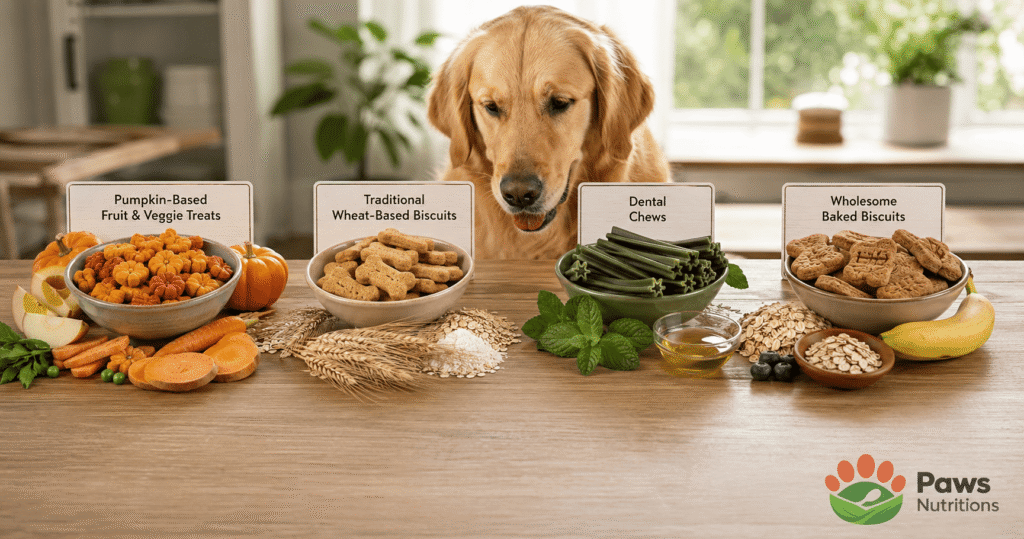
Fruitables vs. Milk-Bone
Milk-Bone’s classic biscuits lean heavily on wheat flour and beef fat, which is cheaper but offers far less fiber and fewer whole-food ingredients than Fruitables’ pumpkin-and-oat base. Fruitables costs somewhat more per ounce but delivers a noticeably cleaner ingredient panel.
Fruitables vs. Greenies
Greenies focuses almost entirely on dental chews, competing directly with Fruitables’ BioActive Fresh Mouth line rather than the broader treat catalog. Greenies has a longer track record specifically in dental efficacy studies, while Fruitables’ dental chews lean more on the fruit-and-vegetable formulation angle.
Fruitables vs. Old Mother Hubbard
Old Mother Hubbard’s baked biscuits are a closer stylistic match to Fruitables’ Baked Treats line, with both brands using wholesome, recognizable ingredients. Fruitables generally comes in at a lower calorie count per treat, making it the better pick if calorie control is your priority.
Which Treat Line Is Better?
For everyday, lower-calorie treating with clean ingredients, Fruitables comes out ahead of Milk-Bone on nutrition and ahead of Old Mother Hubbard on calorie efficiency. For dedicated dental care specifically, Greenies still holds a slight edge on clinical dental track record. The right choice really depends on what you’re solving for — everyday treating, dental maintenance, or strict calorie control — rather than a single brand being universally “best.”
Table 9: Fruitables vs. Milk-Bone vs. Greenies vs. Old Mother Hubbard
| Brand | Primary Ingredient | Grain-Free Options | Recall History | Best For |
| Fruitables | Pumpkin, sweet potato | Yes (select SKUs) | None found | Low-calorie everyday treating |
| Milk-Bone | Wheat flour | Limited | Some historical recalls | Budget biscuit treating |
| Greenies | Wheat gluten / glycerin base | Limited | Some historical recalls | Dedicated dental care |
| Old Mother Hubbard | Oat flour, molasses | No | None found | Wholesome baked biscuits |
Pros and Cons of Fruitables Dog Treats
After digging through the ingredient panels, pricing, and thousands of owner reviews, here’s the honest, balanced summary.
Who Fruitables Treats Are Best Suited For
Fruitables is a strong fit if you want an everyday treat with cleaner ingredients than a bargain biscuit brand, especially for dogs managing weight or mild grain sensitivities. If your priority is maximum protein density or dedicated dental clinical backing, you may want to pair Fruitables with a more specialized product for those specific goals.
Who Might Want to Look Elsewhere
If your dog has a diagnosed oat allergy, or you’re specifically hunting for a 100% grain-free lineup across every single SKU, you’ll want to read individual bag labels carefully before committing, since a handful of Fruitables recipes still use oat flour as a binder. Owners chasing the absolute lowest price per ounce regardless of ingredient quality may also find cheaper biscuit brands elsewhere.
Where Fruitables Excels
- Clean, recognizable ingredient panels built around real pumpkin, sweet potato, and fruit
- Genuinely low-calorie options in the Skinny Minis line for training and weight management
- No wheat, corn, or soy protein across the flagship lines
- Clean recall history for both the brand and its parent company
- Strong review volume and consistently high ratings across Chewy and Amazon
Where Fruitables Falls Short
- Whole Jerky Bites and BioActive chews cost significantly more per ounce than the baked lines
- Some SKUs still use oat flour, so they aren’t grain-free in the strictest sense
- BioActive functional chews are underexposed on the brand’s own website
- Amazon pricing fluctuates enough that it’s hard to know the “real” price without checking live
Common Mistakes When Feeding Treats Like Fruitables
Even a well-formulated treat can cause problems if it’s fed the wrong way, so it’s worth covering the mistakes we see repeated most often — regardless of which brand is in the bag.
Ignoring the 10% Calorie Rule
The single most common mistake is treating the “low-calorie” label as permission to hand out treats without limit. Even a 3-calorie Skinny Mini adds up fast if you’re giving out twenty a day during a long training session, so it still pays to track roughly how many you’re using.
Assuming All Fruitables SKUs Are Identical
Because the packaging shares the same branding and superfood imagery across the whole catalog, it’s easy to assume every bag has the same calorie count and ingredient profile. In reality, a Skinny Mini and a Whole Jerky Bite are nutritionally quite different products, and mixing them up in your feeding math can throw off your calorie budgeting.
Skipping the Transition Period
Switching too abruptly from a wheat-heavy biscuit to a pumpkin-and-oat-based treat like Fruitables can occasionally cause a short adjustment period for sensitive stomachs. Introducing any new treat gradually over a few days, alongside your dog’s usual snacks, tends to minimize any digestive hiccups.
How to Choose the Right Fruitables Product for Your Dog
Matching Product Line to Dog Size and Activity Level
Active, high-energy dogs going through frequent training sessions tend to do best with Skinny Minis, while calmer dogs who get treats less often can handle the larger Biggies or Baked Treats without much calorie concern.
Choosing Based on Dietary Sensitivities
If your dog reacts to wheat or corn specifically, most Fruitables SKUs should be a safe swap, but double-check the bag if your dog has a documented oat allergy, since a few recipes use oat flour as a binder.
Best Fruitables Picks for Training vs. Everyday Treating
For training, Skinny Minis are the clear pick thanks to their tiny calorie footprint and soft, easy-to-break texture. For everyday treating or a bedtime snack, the standard Baked Treats or Biggies offer more substance without requiring you to hand out a dozen pieces to feel satisfying.
Key Takeaways Before You Buy
- Fruitables treats lead with whole fruits and vegetables like pumpkin and sweet potato instead of wheat or corn filler
- Skinny Minis are the lowest-calorie option at roughly 3 calories per treat, ideal for training
- Both Fruitables and its parent company, Compana Pet Brands, show a clean recall history as of this review
- Chewy generally offers the best baseline pricing, while Amazon prices fluctuate with coupons and Subscribe & Save
- Whole Jerky Bites and BioActive functional chews cost significantly more per ounce than the baked lines
- Always keep total treats under 10% of your dog’s daily calorie intake, regardless of brand
Frequently Asked Questions
Are Fruitables treats good for dogs?
Yes — Fruitables treats use clean, recognizable ingredients like pumpkin and sweet potato, avoid wheat, corn, and soy, and have a clean recall history, making them a solid everyday treat choice.
What are Fruitables dog treats made of?
They’re primarily made from pumpkin, sweet potato, apple, banana, cranberry, or blueberry, combined with oat flour or flaxseed rather than wheat or corn.
What is the healthiest dog treat for a dog?
The healthiest treats are low-calorie, whole-food-based options with minimal fillers — Fruitables’ Skinny Minis are a good example of this category at roughly 3 calories per treat.
Can humans eat Fruitables dog treats?
Fruitables treats aren’t toxic to humans since they use food-safe fruit and vegetable ingredients, but they aren’t formulated or seasoned for human nutrition, so they’re not recommended as a snack.
What fruit can dogs not eat?
Dogs should never eat grapes, raisins, or cherries with pits, all of which are toxic — none of these appear in any Fruitables recipe, which instead uses dog-safe fruits like apple, banana, and blueberry.
What should you avoid when buying dog treats?
Avoid treats with corn syrup, artificial colors, unnamed “meat by-products,” or vague ingredient lists, and always check portion guidance so treats stay under 10% of daily calories.
Final Verdict
This Fruitables dog treats review confirms the brand largely lives up to its “superfood” positioning: clean ingredient panels, genuinely low-calorie options, a clean recall history for both Fruitables and Compana Pet Brands, and competitive pricing across Chewy, Amazon, and Target. The Skinny Minis stand out for training, the Baked Treats offer the best everyday value per ounce, and the BioActive line deserves more attention than it currently gets.
No treat brand is perfect for every dog, and Fruitables’ jerky and functional chews do carry a real price premium. But for pet parents wanting a lower-calorie, cleaner-ingredient alternative to standard biscuit treats, Fruitables earns its spot on the shortlist. Check current prices at Chewy, Amazon, or Target before you buy, since promotions shift often, and always weigh any treat — Fruitables included — against your dog’s full dail
Disclaimer: This article is written for educational and informational purposes only. It is not sponsored, affiliated, or a paid advertisement in any way. Any brand names, product links, or retailers mentioned are included purely for your reference and convenience — we have no business relationship with Fruitables, Compana Pet Brands, Chewy, Amazon, Target, or any other brand named here. Always check current pricing and consult your veterinarian before changing your dog’s diet or treat routine.

A dedicated writer and digital enthusiast committed to creating high-quality, informative, and reader-focused content. Through thoughtful research and clear communication, he aims to deliver valuable insights that help readers navigate the ever-changing digital landscape.