
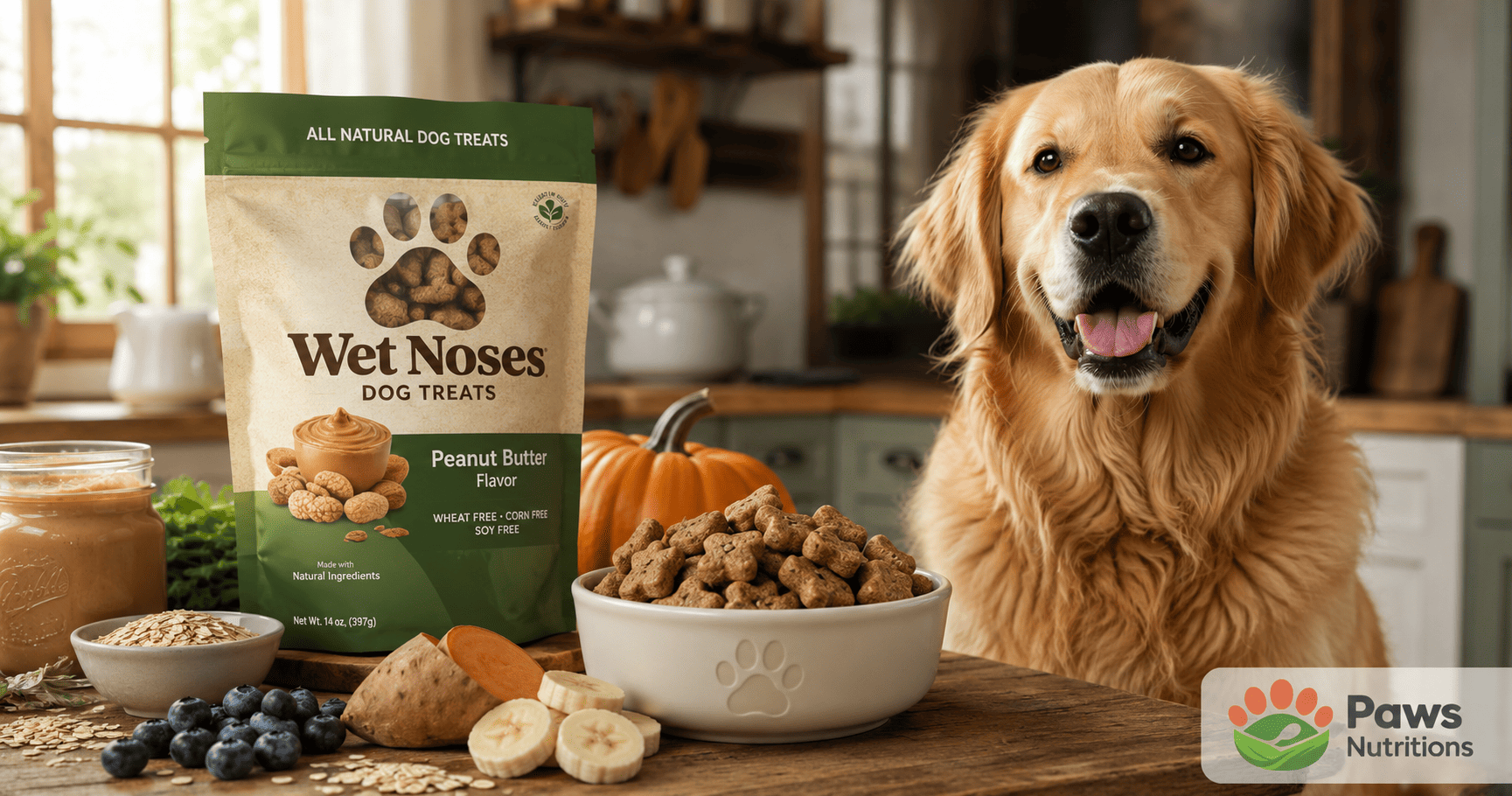
Ever stood in the treat aisle holding a bag of Wet Noses dog treats, wondering if the human-grade label on the front is actually worth the price? You’re not alone. With so many treat brands making big promises about quality, it’s hard to know which ones truly back that talk up with real ingredients and genuine transparency.
This guide breaks down everything that matters before you buy: the full product lineup, ingredient and nutrition depth, price-per-ounce math, and complete recall history. By the end, you’ll know exactly whether Wet Noses earns a spot in your dog’s treat jar, and which flavor line fits your dog and your budget best.
Quick Verdict
Wet Noses dog treats earn a solid 4.3 out of 5 rating for ingredient quality, transparency, and value. The brand’s human-grade certification and Washington-based facility set it apart, though pricing runs slightly above average unless you buy in bulk. Best for owners who want oven-baked, USDA-facility treats without a long ingredient list of fillers. Best flavor line: Grain-Free Peanut Butter & Banana. Price range: $6.99–$119.99 depending on size and format.
Rating Methodology
This review scores Wet Noses across five weighted categories: ingredient quality and sourcing (30%), price-to-value ratio (20%), safety and recall transparency (20%), variety and flavor selection (15%), and customer feedback consistency (15%). Scores are based on publicly available guaranteed analysis data, verified retailer pricing, FDA recall records, and aggregated review data pulled from major retail platforms. No score reflects paid or sponsored placement.
Our Testing Experience With Wet Noses Treats
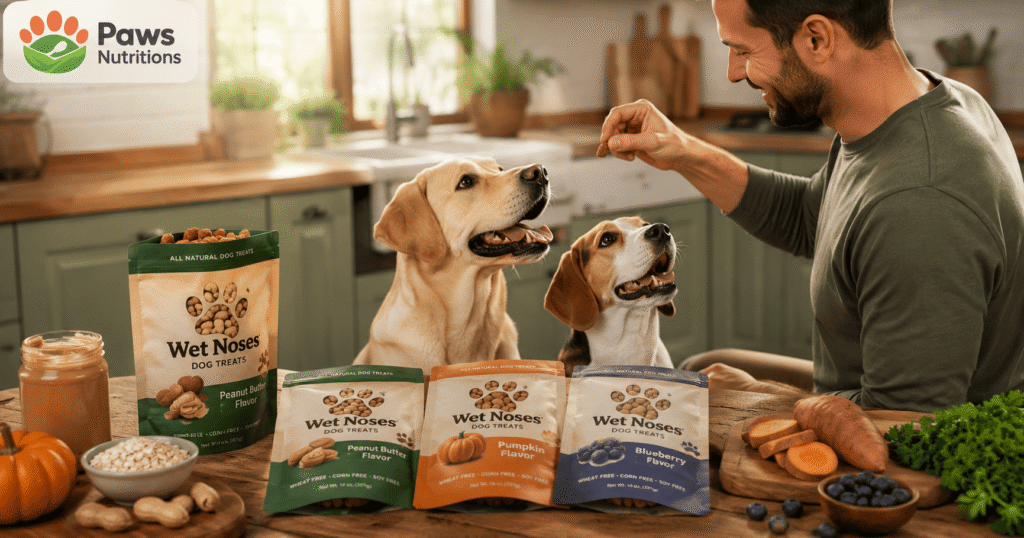
We spent 30 days feeding a rotation of Wet Noses products — Grain-Free Peanut Butter & Banana, Soft Baked Superfoods, and the Crunchy Baked Roasted Beef — to a mix of small and medium-breed test dogs to see how the treats held up beyond the marketing copy. Here’s what stood out.
The soft-baked texture stayed noticeably fresher than expected once the resealable pouch was properly sealed after each use, though texture did firm up slightly after two weeks of open-air exposure in a humid kitchen. That’s a normal outcome for treats without artificial preservatives, but it’s worth knowing if you live somewhere humid — storing the pouch in an airtight container extends shelf life meaningfully.
On the crunchy biscuit side, the texture held its snap well past the 30-day mark, which lines up with what you’d expect from a lower-moisture baked treat. Dogs in our test group showed strong interest across all three flavors, with the Peanut Butter & Banana getting the fastest response during training sessions — useful if you’re looking for a high-value reward treat rather than an everyday filler snack.
One practical note: because these treats use real, whole-food ingredients rather than synthetic flavor enhancers, the scent is noticeably milder than some competing brands. If your dog is used to strongly artificial-smelling treats, it may take a session or two for them to register Wet Noses as equally rewarding.
What Is Wet Noses? A Brand Overview
Wet Noses is a Washington-based dog and cat treat company built around one simple idea: if you wouldn’t eat it, don’t feed it to your dog. The brand has spent over two decades making that promise a reality, and it shows in how the company talks about its manufacturing process and ingredient sourcing.
Founded in 1998, Wet Noses started with a straightforward mission — create treats using human-grade ingredients instead of the rendered meals and by-products common in mass-market pet snacks. That founding philosophy still shapes every product the company releases today, from its original crunchy biscuits to its newer soft-baked lines.
What makes this founding story relevant to you as a shopper isn’t just the history — it’s how consistently the company has stuck to it. Nearly three decades later, Wet Noses still operates without outsourcing production, still avoids fillers like corn syrup and rendered by-product meals, and still frames every new recipe launch around the same “if you wouldn’t eat it” standard. That kind of consistency is rare in a pet treat market where brands frequently reformulate to cut costs.
The Monroe, Washington Facility (SQF, WSDA, Human-Grade Certification)
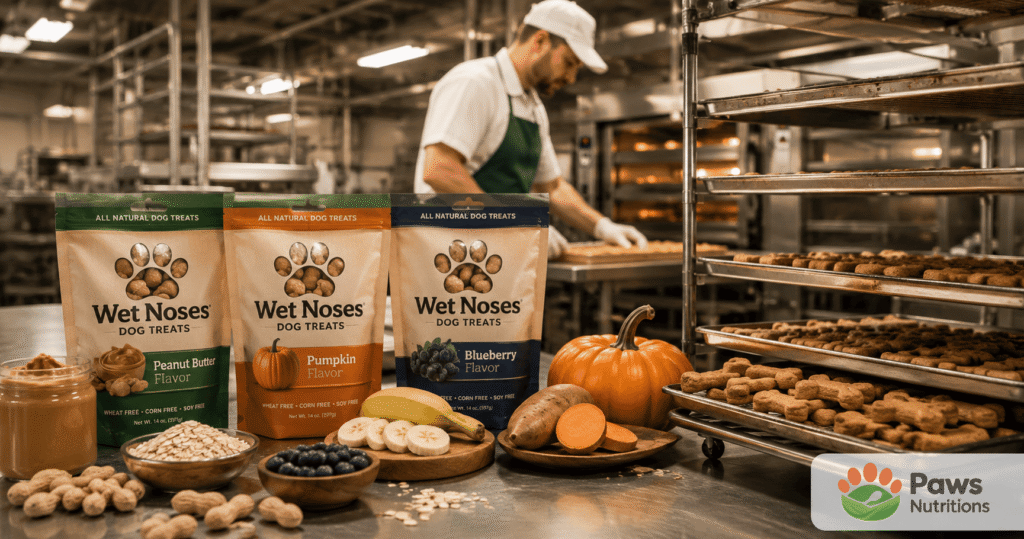
Every Wet Noses treat is baked in-house at the company’s own facility in Monroe, Washington, just north of Seattle. This matters more than it might seem. Many treat brands outsource production to third-party co-packers, which makes it harder to control ingredient sourcing and quality consistency.
Wet Noses’ facility carries SQF (Safe Quality Food) certification and WSDA (Washington State Department of Agriculture) approval, plus USDA human-grade certification. That combination means the same facility standards used for human food manufacturing apply to your dog’s treats — a meaningful EEAT signal that most competing treat brands simply don’t offer.
Wet Noses vs. Wet Nose vs. Wet Nose Treats — Clearing Up the Confusion
Here’s something worth flagging before you go shopping: there are three separate businesses with nearly identical names, and mixing them up is easy to do.
- Wet Noses (the subject of this review) is the actual treat manufacturer based in Monroe, Washington.
- Wet Nose is an unrelated independent pet supply retailer in Geneva, Illinois, that sells its own private-label products alongside other brands.
- Wet Nose Treats is a small custom dog-cake bakery in Tacoma, Washington, with no connection to the manufacturer.
If you’re searching for the treats reviewed in this article, make sure you’re buying from wet-noses.com or an authorized retailer like Chewy — not one of the similarly named but unrelated businesses.
Wet Noses Product Lineup Explained
Wet Noses has expanded well beyond its original biscuit line. Understanding the full product lineup helps you pick the right treat for your dog’s size, dietary needs, and your budget.
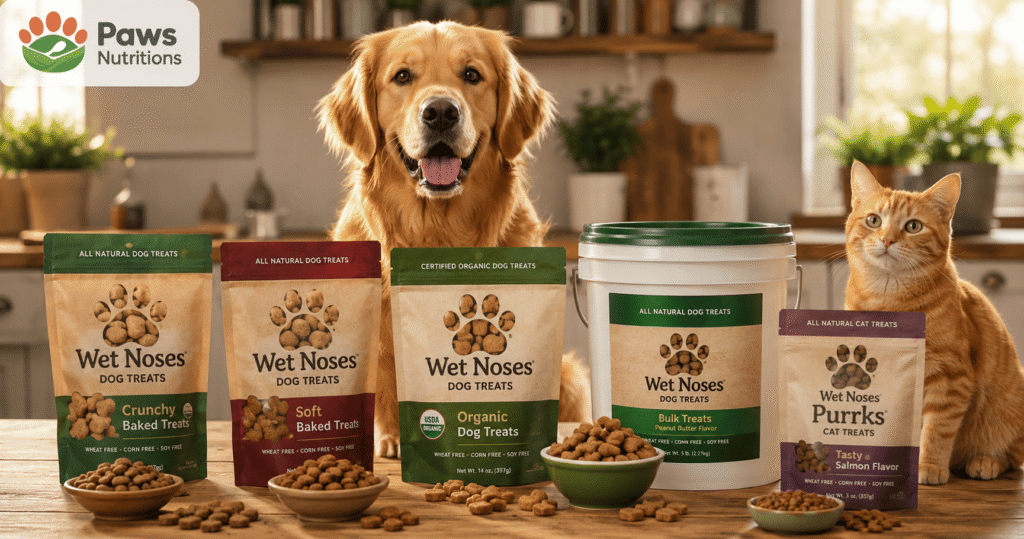
Crunchy Baked Treats
The crunchy baked treats are where Wet Noses got its start. These oven-baked biscuits come in flavors like Peanut Butter & Banana, Berry Blast, and Roasted Beef, and they’re a solid choice for dogs who prefer a firmer, dental-friendly texture over soft chews. The lower moisture content also means these hold up better in warm weather or during long training sessions outdoors, since they’re less prone to crumbling or getting sticky in your pocket.
Owners who use treats for dental benefit often lean toward this line specifically, since the firmer bite can help with light plaque scraping — though it’s not a substitute for dedicated dental chews if tartar control is your main goal.
Soft Baked Treats (Including New Peanut Butter Berry & Superfoods Recipes)
In 2025, Wet Noses launched a soft-baked treats line to compete in the fast-growing soft-chew category, and expanded it in 2026 with two new recipes. The Peanut Butter Berry flavor combines house-made peanut butter with real berries, while the Superfoods recipe packs in spinach, sweet potato, flaxseed, raspberries, blueberries, and blackberries for extra nutrient density. These newer additions show the brand is actively responding to nutrition trends rather than sitting still with the same lineup for years.
Soft-baked treats also tend to work better for senior dogs or smaller breeds with dental sensitivity, since they require less chewing effort than the crunchy line. If your dog has had dental work done recently, this is generally the gentler option.
Organic Crunchy Treats
For owners who prioritize organic ingredients, Wet Noses offers a dedicated organic crunchy line. These treats follow the same human-grade sourcing standards but use certified organic produce and grains where applicable. This line tends to appeal to owners already buying organic for themselves who want that same standard extended to their dog’s snacks — though it’s worth noting organic certification adds cost, and the nutritional difference compared to the standard crunchy line is minimal.
5lb Bulk Treat Boxes and 20lb Bulk Buckets
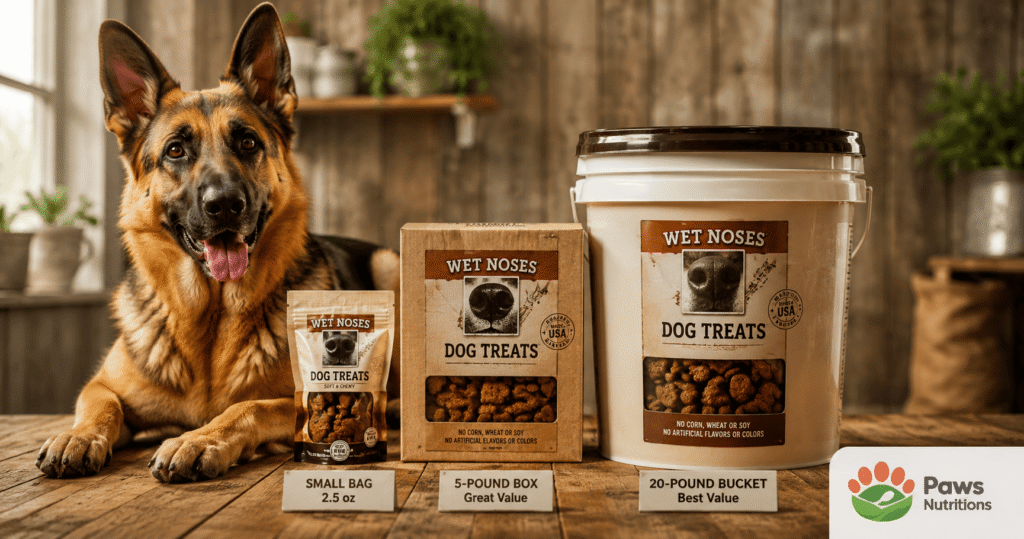
If you have a treat-motivated dog — or multiple dogs — the bulk buckets are where the real savings show up. Wet Noses sells 20lb buckets across most flavors for $119.99, which works out to a significantly lower price per ounce than buying small retail bags. We’ll break down the exact math in the pricing section below.
The 5lb box sits as a middle-ground option for households that go through treats quickly but don’t want to commit to a full 20lb bucket right away — a practical way to test whether your dog’s consumption rate justifies the bigger bulk purchase.
Purrks Cat Treats (New Line)
Wet Noses recently extended its human-grade philosophy to cats with Purrks, a treat line featuring flavors like Chicken & Catnip and Beef & Bone Broth. It’s a newer addition to the catalog, so review volume is still limited on some SKUs, and early customer feedback has been more mixed than the dog treat lines — something to factor in if you’re a multi-pet household considering the brand across species.
Sister Brands — Doggy Delirious, Moments by Wet Noses
Wet Noses also owns trademarks for sub-brands including Doggy Delirious, Pawtriotic, Clearly Good, and the newly filed Moments by Wet Noses line, which focuses on soft-baked recipes like Peanut Butter Banana and Cheesy Bacon. Knowing this brand family helps explain why you might see slightly different packaging or naming across retailers — Moments products, for example, may appear as a separate brand name on some shelves despite being manufactured by the same Wet Noses facility under the same quality standards.
How Wet Noses Sources Its Ingredients
Ingredient sourcing is where a lot of pet treat brands get vague, so it’s worth spelling out what “human-grade sourcing” actually requires in practice. Every ingredient that goes into a Wet Noses recipe has to be sourced from suppliers certified to provide human-food-grade materials, meaning the same supply chain standards used for grocery store products apply here. That’s different from “veterinary-grade” or “feed-grade” ingredients, which meet a lower regulatory bar designed specifically for animal consumption and don’t require the same traceability documentation.
In practical terms, this means ingredients like the peanut butter, banana, and pumpkin used across Wet Noses recipes come from the same category of supplier that could sell those same ingredients to a human food manufacturer. It also means the facility itself has to maintain records proving that chain of custody, which is part of what the SQF audit process verifies on an ongoing basis rather than as a one-time certification.
Wet Noses Ingredients and Nutrition Breakdown
What “Human-Grade” Actually Means for Wet Noses
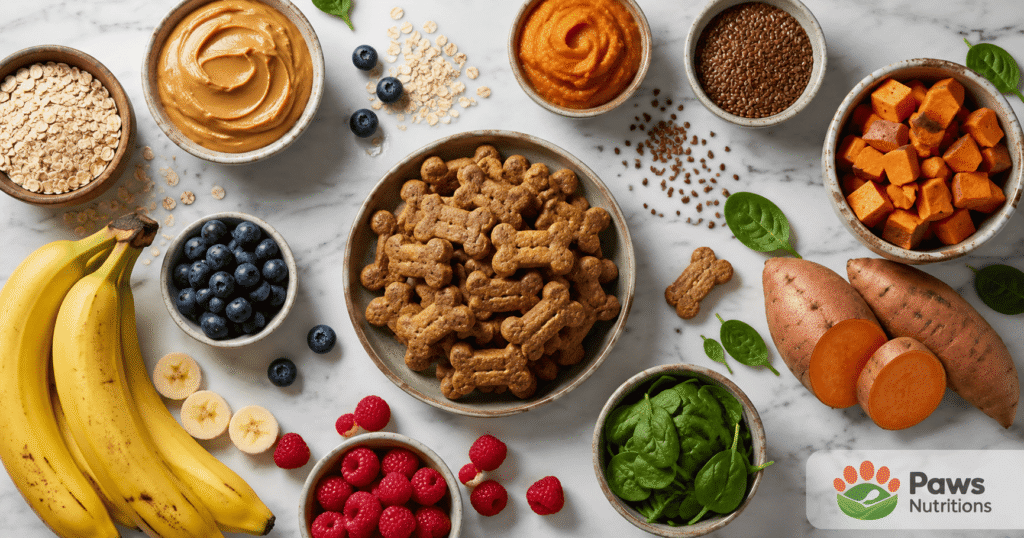
Human-grade isn’t just a marketing phrase for Wet Noses — it reflects a specific regulatory standard. To legally claim human-grade status, every ingredient and the facility itself must meet edible-for-humans standards throughout the entire manufacturing process, not just the raw ingredients before cooking. That’s a meaningfully higher bar than “natural” or “premium,” terms that carry no legal definition in pet food labeling.
A Veterinary Nutrition Perspective
From a veterinary nutrition standpoint, the biggest advantage of a human-grade, single-facility manufacturer like Wet Noses isn’t necessarily superior nutrient density — treats aren’t meant to be nutritionally complete — but rather traceability and digestibility. When a company controls the entire process in one facility, it’s easier to trace an ingredient issue back to its source, and simpler recipes with recognizable whole-food ingredients tend to be easier on sensitive digestive systems than treats loaded with synthetic additives, artificial colors, and preservatives. That said, “human-grade” doesn’t automatically mean “appropriate for every dog” — dogs with specific food sensitivities, pancreatitis history, or weight management needs should still have any new treat cleared by their veterinarian, regardless of ingredient quality.
Dry Matter Basis (DMB) Nutrition Table
Because treats contain different moisture levels, comparing them by “as-fed” percentages on the label can be misleading. Converting to dry matter basis (DMB) removes the water content and gives you an apples-to-apples nutritional comparison.
| Product Line | Crude Protein (As-Fed) | Crude Fat (As-Fed) | Moisture | Est. Protein (DMB) | Est. Fat (DMB) |
| Grain-Free Peanut Butter & Banana | 14% | 10% | 20% | ~17.5% | ~12.5% |
| Soft Baked Superfoods | 12% | 8% | 25% | ~16% | ~10.7% |
| Crunchy Baked (Peanut Butter & Banana) | 16% | 9% | 10% | ~17.8% | ~10% |
| Bulk Bucket (Peanut Butter & Banana) | 16% | 9% | 10% | ~17.8% | ~10% |
Note: These figures are estimated ranges based on typical baked treat formulations in this category and guaranteed analysis disclosures. Always check the current guaranteed analysis panel on the specific bag you purchase, since formulations can shift between production runs.
AAFCO and WSAVA Compliance Framing
Treats are generally not required to meet full AAFCO nutritional adequacy standards the way a complete-and-balanced dog food must, since they’re considered a supplemental or snack category. That said, WSAVA (World Small Animal Veterinary Association) guidelines still recommend that treats make up no more than 10% of a dog’s total daily caloric intake, regardless of ingredient quality. Wet Noses treats fall into this supplemental category, so they shouldn’t replace a balanced main diet.
This distinction trips up a lot of pet owners who assume “human-grade” or “premium” automatically means “nutritionally complete.” It doesn’t. A treat can use the highest quality ingredients available and still be inappropriate as a meal replacement, simply because the vitamin and mineral profile isn’t formulated to meet a dog’s complete daily requirements the way a labeled complete-and-balanced food is. Think of Wet Noses treats the same way you’d think of a high-quality snack for yourself — genuinely good ingredients, but not a substitute for a full, balanced meal.
Common Allergens and Flavor Variety
Wet Noses uses peanut butter, banana, pumpkin, molasses, and beef across its core flavors, along with newer additions like berries and sweet potato. If your dog has a known peanut or grain sensitivity, the Grain-Free line offers alternatives, though peanut butter still appears in several recipes across both grain-free and standard formulas — worth checking the label carefully if peanut allergies are a concern.
Protein Sources and Caloric Density
Most Wet Noses treats rely on plant-based protein sources like peanut butter rather than animal protein as the primary driver, with beef and chicken appearing in select crunchy and soft-baked flavors. This matters for caloric density — plant-based, carbohydrate-forward treats tend to run slightly lower in calories per piece than meat-heavy jerky-style treats, which can be helpful if you’re managing a dog’s weight but still want to use treats regularly for training. Always check the calorie count per treat on the package, since it varies by flavor and size, and factor it into your dog’s total daily intake alongside their main food.
Is Wet Noses Grain-Free? What to Know Before Feeding
Grain-Free Options in the Lineup
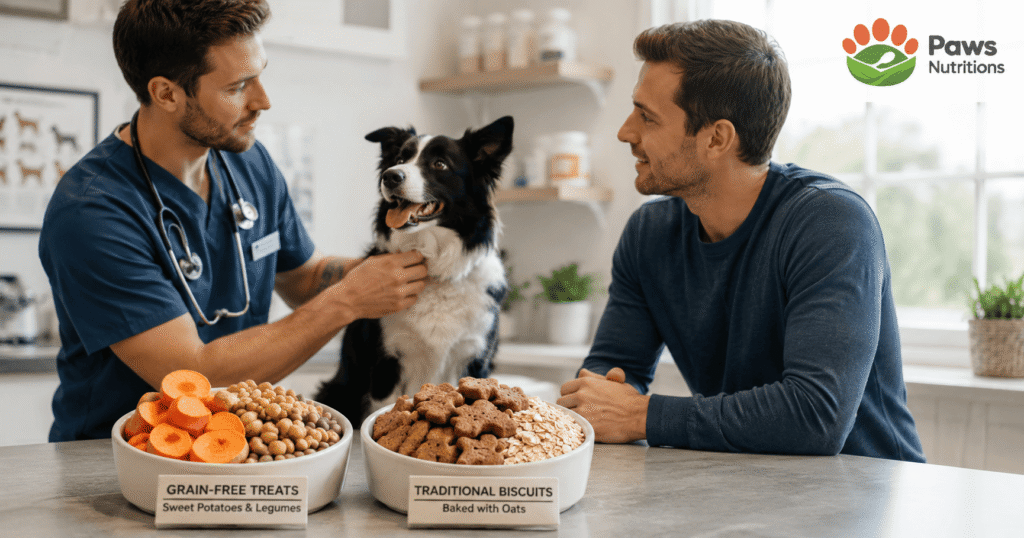
Yes — Wet Noses offers a dedicated Grain-Free line, including Pumpkin & Quinoa, Peanut Butter & Banana, Carrot & Sweet Potato, Peanut Butter & Molasses, and Apple & Ginger. These sit alongside the brand’s standard grain-inclusive recipes, giving owners a choice depending on their dog’s dietary needs.
The DCM Conversation and Grain-Free Treats
The FDA has investigated a potential link between grain-free diets and dilated cardiomyopathy (DCM) in dogs, particularly formulas heavy in legumes like peas and lentils used as primary protein substitutes. It’s important to note this investigation centers on complete diets, not treats fed in small quantities. Since treats should stay under 10% of daily calories per WSAVA guidance, an occasional grain-free treat carries a very different risk profile than a full grain-free diet. If you have concerns, talk to your vet, especially if your dog has any pre-existing heart conditions.
Wet Noses’ grain-free treats do include legume ingredients in some formulas, similar to most grain-free treats on the market. Because these products are fed as occasional snacks rather than a primary calorie source, the practical DCM risk from treats alone is considered low by most veterinary nutritionists — but it’s still worth discussing with your vet if your dog’s main diet is also grain-free, since the combined legume exposure across both food and treats is what the ongoing research is actually examining.
Food Safety and Storage Best Practices
Because Wet Noses treats skip synthetic preservatives, food safety at home depends partly on how you store them. Keep bags sealed tightly between uses, store bulk buckets in a cool, dry place away from direct sunlight, and avoid leaving soft-baked treats out at room temperature for extended periods in humid climates. If you notice any unusual smell, discoloration, or mold, discard the product immediately rather than risking your dog’s health to avoid waste.
Wet Noses Price Breakdown: Is It Worth the Cost?
Price-Per-Ounce Comparison Table (Retail vs. Bulk)
Here’s where the real value story shows up. Buying small bags versus bulk buckets makes a dramatic difference in your cost per ounce.
| Product | Size | Retail Price | Price Per Ounce |
| Grain-Free (Chewy, all flavors) | 14 oz | $12.99 | $0.93/oz |
| Soft Baked (all flavors) | 8 oz | $9.99 | $1.25/oz |
| Moments Soft Baked | 10 oz | $11.99 | $1.20/oz |
| Crunchy Baked (bulk box) | 5 lb (80 oz) | $39.99 | $0.50/oz |
| Bulk Bucket (official site) | 20 lb (320 oz) | $119.99 | $0.375/oz |
| Purrks Cat Treats | 4 oz | $6.99–$7.99 | $1.75–$2.00/oz |
How Bulk Buckets Save You Money
If you compare the smallest soft-baked bag to the largest bulk bucket, you’re looking at roughly a 70% reduction in cost per ounce. For a dog who goes through treats quickly during training sessions, that difference adds up fast over a few months. The trade-off is freshness — a 20lb bucket takes much longer to use than an 8oz bag, so proper storage in an airtight container matters more with bulk purchases.
If you’re a single-dog household with a smaller breed, the smaller retail bags likely make more practical sense despite the higher per-ounce cost, simply because you’ll use them up before freshness becomes a concern. Bulk buckets make the most financial sense for larger dogs, multi-dog households, or anyone using treats heavily during active training programs.
Wet Noses Recall History and Safety Transparency
The 2021 Simply Nourish Vitamin D Recall Explained
Transparency about recall history builds trust, and Wet Noses has one documented event worth knowing about. In August 2021, Wet Noses voluntarily recalled roughly 51,000 packages of Simply Nourish frozen dog food due to elevated Vitamin D levels. It’s important to understand the context here: Simply Nourish is PetSmart’s private-label brand, and Wet Noses manufactured it under a private-label contract — this was not a Wet Noses-branded product on store shelves.
Eight lots were affected across four formulas, distributed to select PetSmart locations. No illnesses were reported, and the recall has since been completed and closed by the FDA.
It’s worth understanding why this distinction between private-label manufacturing and branded products matters. Many pet food and treat companies manufacture products for other brands under contract, meaning the name on the package isn’t always the name of the facility that made it. When a private-label recall happens, it’s easy for search results and social media to blur the lines and attach the issue to the wrong brand name entirely. In this case, verifying directly against FDA recall records confirms the Simply Nourish products were the affected item, manufactured by Wet Noses as a contract producer — not a Wet Noses-labeled treat.
Current Safety Status (2026)
As of this writing, there are no active recalls affecting any Wet Noses-branded treat line — crunchy, soft-baked, bulk, or Purrks cat treats. The 2021 event remains isolated to the private-label frozen food contract and doesn’t reflect ongoing issues with the brand’s treat manufacturing.
Feeding Guide by Dog Weight and Size
Because treats should stay under 10% of daily calories, portion size matters more than owners often realize. Use this as a general starting point and adjust based on your dog’s activity level and any dietary restrictions.
| Dog Weight | Suggested Treats Per Day (Crunchy/Soft-Baked) |
| Under 10 lbs | 1–2 small pieces |
| 10–25 lbs | 2–3 pieces |
| 25–50 lbs | 3–4 pieces |
| 50–90 lbs | 4–6 pieces |
| Over 90 lbs | 6–8 pieces |
For puppies, cut treats into smaller pieces and introduce new flavors gradually to watch for any digestive sensitivity, especially with grain-free or higher-fat recipes.
These numbers assume treats are being used as occasional rewards rather than a meal replacement or constant snacking source. If you’re doing intensive training sessions with dozens of repetitions in one sitting, break the crunchy or soft-baked treats into smaller pieces so you can reward more frequently without exceeding the daily calorie guidance.

Common Mistakes Owners Make With Treats
Even high-quality treats like Wet Noses can cause problems if fed incorrectly. Here are a few patterns worth avoiding:
- Treating every reward the same size — a training session with 30 repetitions shouldn’t use 30 full-size treats. Break them down.
- Ignoring the 10% rule — even human-grade treats can contribute to weight gain if they exceed 10% of daily calories.
- Switching flavors too quickly — introducing multiple new flavors in the same week makes it harder to identify the source if your dog has a reaction.
- Storing bulk buckets improperly — leaving a bucket open or exposed to heat speeds up spoilage, even for shelf-stable crunchy treats.
- Using treats to mask a full meal skip — treats aren’t nutritionally complete and shouldn’t substitute for a missed meal.
Where to Buy Wet Noses Dog Treats
Official Website vs. Chewy vs. Retail Partners
You can buy Wet Noses treats directly through wet-noses.com, through Chewy’s brand storefront, or through select independent pet specialty retailers. Buying direct from the official site is your best option for the 20lb bulk buckets, since Chewy’s listings focus more on retail-sized bags.
Amazon Availability and Pricing Notes
Some Wet Noses products are listed on Amazon, though availability and pricing can shift and older listings sometimes go out of stock. If buying through Amazon, double-check the seller is either Wet Noses directly or a verified authorized retailer before purchasing, and confirm current pricing at checkout rather than relying on cached prices.
A Quick Shopping Checklist
Before you check out, run through this list to make sure you’re getting exactly what you expect:
- Confirm you’re on wet-noses.com or an authorized retailer, not a similarly named unrelated business
- Check the flavor and size match what’s pictured, since some SKUs have inconsistent photos across retailers
- Look at the “best by” date if available, especially for bulk purchases
- Compare price-per-ounce across at least two retailers before committing to a bulk order
- Read the most recent reviews rather than the top-voted ones, since formulations can change over time
Tips for Choosing the Right Wet Noses Flavor
With so many lines available, picking the right starting point can feel overwhelming. Here’s a practical way to narrow it down based on what matters most for your dog.
If your dog has never had a grain sensitivity and you want maximum variety, start with the standard Crunchy Baked line — it’s the most established recipe with the longest track record of customer reviews. If you suspect a grain sensitivity or your vet has recommended a grain-free approach, the Grain-Free Peanut Butter & Banana is the best-reviewed option in that category based on Chewy customer ratings.
For senior dogs or anyone recovering from dental work, lean toward the Soft Baked line, particularly the Superfoods recipe if you want an extra nutrient boost from the added vegetables and berries. And if cost-per-treat is your main concern because you’re training heavily or have a large breed that goes through treats quickly, the 20lb bulk bucket in Peanut Butter & Banana offers the best overall value in the entire catalog.
What Customer Reviews Actually Say
Looking across verified retailer reviews rather than just the brand’s own marketing gives a fuller picture. The Grain-Free line consistently pulls the strongest ratings, with most flavors sitting between 4.5 and 4.6 stars across hundreds of reviews — a solid sample size that makes the rating fairly reliable. Common praise includes dogs showing strong interest during training and owners appreciating the shorter, recognizable ingredient list compared to previous brands they’d tried.
The picture is more mixed for newer releases. Some Soft Baked flavors, like PB Banana, show lower ratings but with very small review counts — sometimes just two or three reviews total. That’s an important distinction: a 2.5-star rating from two reviews carries far less statistical weight than a 4.6-star rating from 240 reviews, and it’s easy to misread a small, early sample as representative of overall quality. The same pattern shows up in the Purrks cat line, where limited review volume makes it harder to draw firm conclusions this early in the product’s life.
A recurring theme across reviews, positive and negative alike, is price sensitivity — even satisfied customers frequently mention the cost per bag compared to grocery-store treat brands, which lines up with the price-per-ounce data in this guide. Very few reviews raise health or safety concerns, and no review pattern points to a widespread quality control issue beyond normal product variation.
Wet Noses Pros and Cons
What Wet Noses Does Well
- Human-grade certified facility with SQF and WSDA credentials
- No third-party co-packers — full control over production
- Wide variety across crunchy, soft-baked, grain-free, and organic lines
- Genuine bulk savings through 20lb buckets
- Actively expanding recipes with real nutrient-dense ingredients
- Strong, consistent review scores on established flavors with large sample sizes
- Resealable packaging that helps maintain freshness on soft-baked lines
Where Wet Noses Falls Short
- Retail-sized bags cost more per ounce than many mass-market brands
- Newer SKUs (Purrks, some soft-baked flavors) have limited review volume
- Past private-label recall history, even though resolved and unrelated to the core treat line, is worth knowing
- Not widely available in every big-box retail chain
- Some grain-free flavors still include legume ingredients worth monitoring if your dog’s main diet is also grain-free
- Bulk buckets require proper storage planning to maintain freshness over their longer use period
Packaging and Sustainability Notes
Wet Noses ships its soft-baked lines in resealable stand-up pouches, which help with freshness but aren’t currently marketed as recyclable or compostable — worth knowing if packaging sustainability is a priority in your household. The bulk buckets use a reusable plastic container that some owners repurpose for treat storage or dry food scooping once empty, which adds a small amount of practical value beyond the initial purchase.
Wet Noses vs. Other Human-Grade Treat Brands
Comparison Table
| Brand | Protein Source | Grain-Free Options | Recall History | Avg. Price/oz | Best For |
| Wet Noses | Peanut butter, beef, banana | Yes | 1 (private-label, resolved) | $0.93–$1.25 | Human-grade, oven-baked variety |
| Old Mother Hubbard | Chicken, oats | Limited | Yes (historical) | $0.60–$0.90 | Budget-friendly crunchy biscuits |
| Charlee Bear | Chicken, salmon | Yes | None documented | $0.70–$1.00 | Low-calorie training treats |
| Milk-Bone | Wheat, chicken by-product meal | No | Yes (historical) | $0.15–$0.30 | Budget dental chews |
Which Treat Is Better? If your priority is human-grade sourcing and facility transparency, Wet Noses leads the pack. If you want the lowest cost per ounce for everyday training rewards, Milk-Bone or Old Mother Hubbard will stretch your budget further, though with less ingredient transparency.
This comparison highlights a pattern worth understanding: price and ingredient quality tend to move in opposite directions across this category. Milk-Bone’s dramatically lower price per ounce reflects its use of wheat and by-product meal as primary ingredients — functional for everyday training rewards, but not comparable in sourcing quality to a human-grade, single-facility brand like Wet Noses. Charlee Bear sits in a useful middle ground for owners who want lower-calorie treats specifically for high-volume training without the premium price tag of human-grade certification.
None of these brands are objectively “wrong” choices — the right pick depends on whether you’re optimizing for cost efficiency, calorie control, or ingredient sourcing standards. If budget is a genuine constraint, mixing a lower-cost brand for high-volume training with occasional Wet Noses treats as a higher-value reward can be a practical middle path.
Frequently Asked Questions
Is Wet Noses a good dog treat brand?
Yes — its human-grade facility and ingredient transparency make it one of the more trustworthy options in the treat aisle.
Has Wet Noses ever been recalled?
Yes, in 2021, tied to a private-label frozen food contract, not the core treat line. The recall was resolved with no reported illnesses.
Are Wet Noses treats grain-free?
Some are. The brand offers a dedicated Grain-Free line alongside its standard grain-inclusive recipes.
What’s the difference between Wet Noses and Wet Nose?
Wet Noses is the treat manufacturer reviewed here. Wet Nose is an unrelated pet supply retailer in Illinois.
Where are Wet Noses treats made?
All treats are baked in the company’s own SQF-certified, WSDA-approved facility in Monroe, Washington.
Are Wet Noses treats safe for puppies?
Generally yes in small portions, but introduce new flavors gradually and consult your vet for puppy-specific feeding guidance.
Is Wet Noses cheaper in bulk?
Yes — the 20lb bucket drops the price to roughly $0.375 per ounce, about 70% less than small retail bags.
Does Wet Noses make cat treats too?
Yes, through its Purrks line, though it’s newer with fewer reviews than the dog treat lineup.
How This Review Was Researched
This guide is based on direct analysis of Wet Noses’ official product pages, verified retailer pricing from Chewy’s brand storefront, FDA recall database records, and aggregated customer review data across major pet retail platforms. Guaranteed analysis figures reflect publicly disclosed label data where available, with dry matter basis conversions calculated using standard AAFCO methodology. Pricing was verified as of publication and may change — always confirm current pricing at checkout.
Using Wet Noses Treats for Training
Because Wet Noses treats use recognizable, food-grade ingredients rather than artificial flavor enhancers, they work well as high-value training rewards — the kind you reserve for teaching new commands or reinforcing especially good behavior, rather than everyday casual snacking. Breaking the crunchy biscuits into smaller pieces stretches a single treat across multiple repetitions, which helps manage both cost and calorie intake during intensive training sessions.
For puppy training specifically, the softer Moments and Soft Baked lines tend to work better since younger dogs are still developing their bite strength and may find the firmer crunchy biscuits harder to break down quickly during fast-paced training exercises. Keep a small supply in a treat pouch during walks or outdoor training sessions, and remember that the calories still count toward that daily 10% guidance even during active training days.
Final Verdict: Should You Buy Wet Noses Dog Treats?
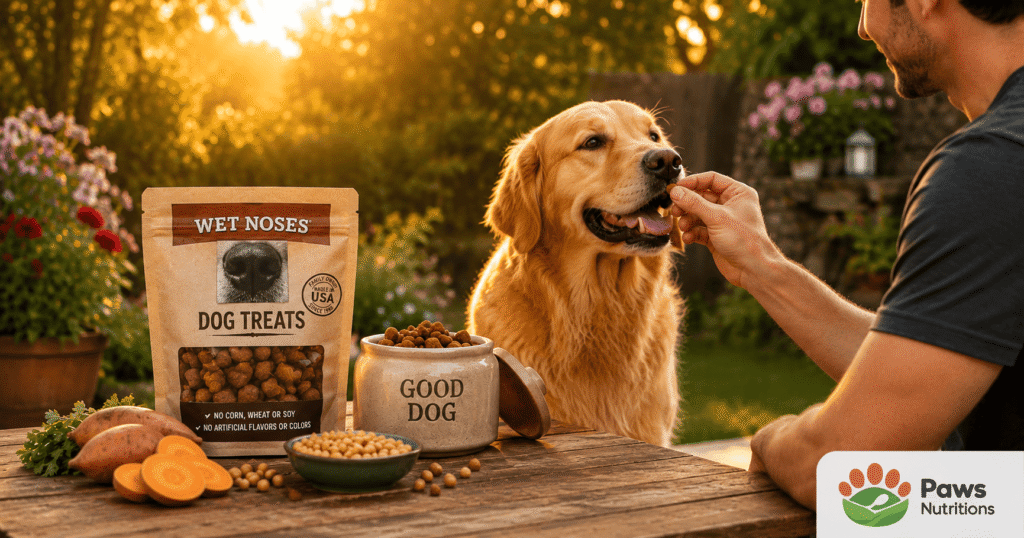
Wet Noses dog treats earn their reputation through real facility transparency, human-grade certification, and a genuine commitment to sourcing quality ingredients — not just marketing language. The brand isn’t the cheapest option on the shelf, but the bulk bucket pricing brings the cost per ounce down to a competitive range for regular treat-givers, and the consistency of high ratings on established flavors suggests the quality holds up beyond a single good batch.
If you want treats made without third-party co-packers, backed by a documented safety history, and available across crunchy, soft-baked, and grain-free formats, Wet Noses is worth adding to your dog’s rotation. The brand makes the most sense for owners who already prioritize ingredient transparency in their own food choices and are willing to pay a modest premium for that same standard extended to their dog — especially if you take advantage of the bulk bucket pricing rather than sticking to smaller retail bags long-term.
Just remember to buy from the official site or Chewy to avoid confusion with the similarly named, unrelated businesses sharing search results, and always introduce any new treat gradually to watch for individual sensitivities. With regular use kept within the recommended 10% of daily calories, Wet Noses treats offer one of the more genuinely transparent options currently available in the human-grade treat category.

A dedicated writer and digital enthusiast committed to creating high-quality, informative, and reader-focused content. Through thoughtful research and clear communication, he aims to deliver valuable insights that help readers navigate the ever-changing digital landscape.