
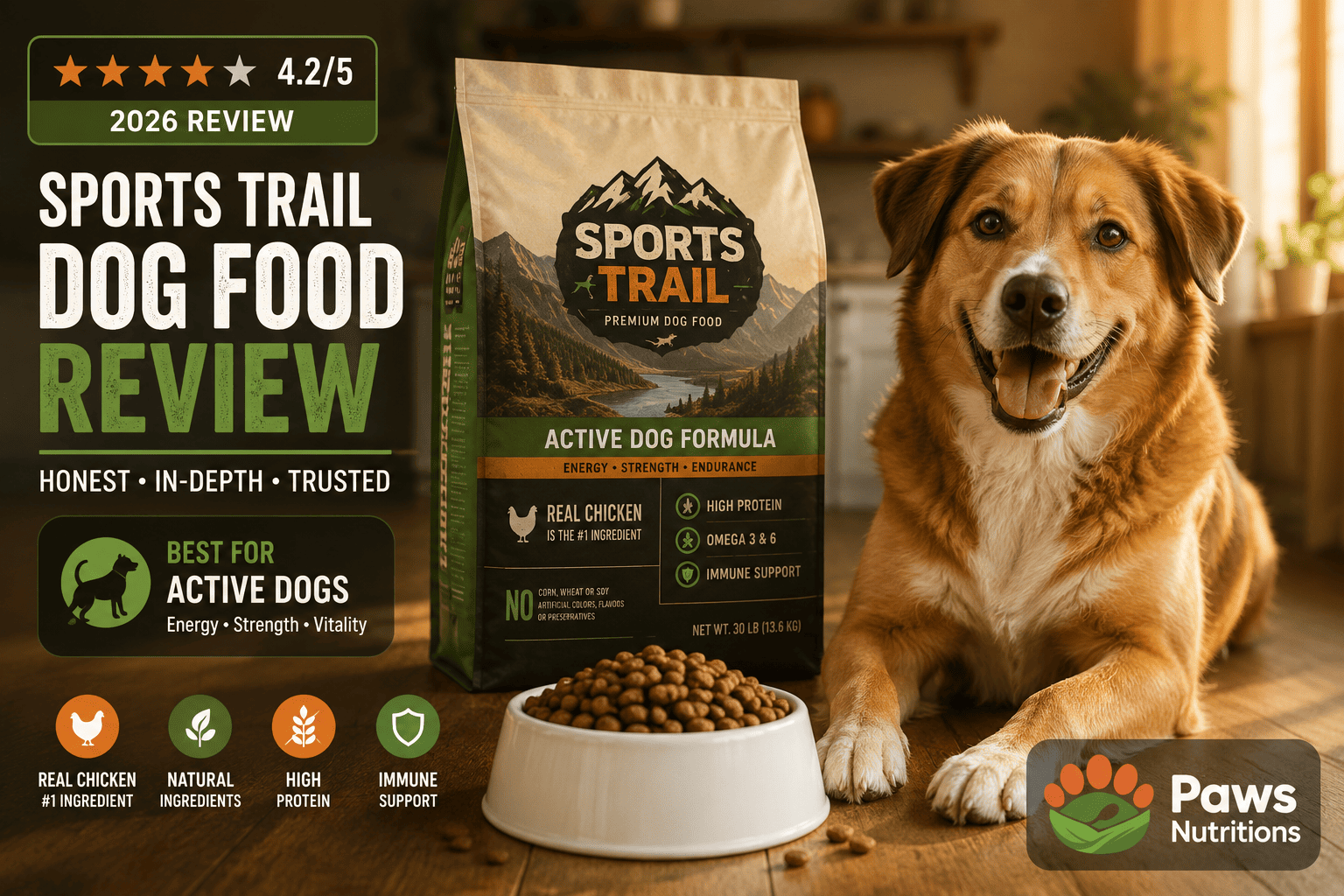
If you’ve been searching for an honest Sportstrail dog food review, you’re probably trying to figure out one simple thing: is this budget kibble actually safe for your dog, or are you just gambling with their health to save a few dollars? You’re not alone. With rising pet food prices and a confusing recall history attached to this brand, thousands of dog owners are asking the exact same question before they commit to a 50-pound bag.
In this complete review, we’ll break down the real ingredients, the nutritional value, the recall timeline, and exactly how much you’ll pay at different retailers. By the end, you’ll know precisely whether Sportstrail belongs in your dog’s bowl.
What Is Sportstrail Dog Food? (A Quick Overview)
Sportstrail dog food is a budget-tier dry kibble brand made for dog owners who need a large, affordable bag without breaking the bank. It’s not trying to be a premium, boutique pet food. Instead, it’s built for value — and that’s exactly what makes this Sportstrail dog food review so important for anyone weighing cost against quality.
You’ll typically find Sportstrail sitting on the shelves of farm supply stores and rural co-ops rather than national pet chains. That distribution choice tells you a lot about who this food is actually made for: practical pet owners, farm dog households, and anyone feeding more than one dog on a tight budget.
Brand Background — Who Makes Sportstrail?
Sportstrail is manufactured by Midwestern Pet Foods, Inc., a fourth-generation family-owned company based in Evansville, Indiana. The company was founded back in 1926, which gives it nearly a century of experience in the pet food manufacturing space. Midwestern also owns several other well-known brands, including Earthborn Holistic, Pro Pac, and SportMix — so Sportstrail sits within a much larger product family.
Knowing the parent company matters because it shapes manufacturing standards, facility oversight, and how the brand has responded to past issues. Midwestern Pet Foods produces all of its kibble domestically in the United States, which is a point in its favor when it comes to supply chain transparency. Unlike some budget brands that source ingredients or manufacture overseas, Midwestern operates its own US-based production facilities, meaning the company has direct oversight over quality control, ingredient sourcing, and batch testing.
It’s worth understanding this family-of-brands structure because it explains a lot about Sportstrail’s positioning. Earthborn Holistic sits at the premium end of Midwestern’s portfolio, with grain-free recipes and higher-quality named proteins. SportMix occupies the middle tier. Sportstrail, by contrast, is deliberately built as the company’s most affordable option — a clear economy play aimed at high-volume, value-driven buyers rather than the premium pet food shopper.
What Product Lines Does Sportstrail Offer?
The core Sportstrail lineup centers on its Bite Size Adult Dog Food formula, along with a Small Bite Chicken & Rice variation aimed at smaller dogs or dogs that prefer smaller kibble pieces. Both are sold almost exclusively in large 50-pound bags, which keeps the cost per pound unusually low compared to smaller bag sizes from other brands.
You won’t find a huge variety of specialized recipes here — no grain-free line, no limited-ingredient diet, no senior-specific formula. Sportstrail keeps things simple, which is part of what keeps the price down. This single-formula approach is actually fairly common among economy farm-store brands; rather than spreading manufacturing resources across a dozen recipes, Midwestern concentrates Sportstrail’s production on one or two consistent formulas that can be produced at scale and sold cheaply.
If you’re shopping for a more specialized diet — say, a weight-management formula, a sensitive-stomach recipe, or anything tailored to a specific health condition — Sportstrail simply won’t offer that option. That’s an important consideration before you commit to a 50-pound bag of any single formula.
Who Is Sportstrail Dog Food Designed For?
This food is built for budget-conscious owners, multi-dog households, and working or farm dogs that need volume more than gourmet ingredients. If you’re feeding three or four dogs and premium kibble simply isn’t financially realistic, Sportstrail is the kind of product designed with you in mind.
It’s worth being upfront about this from the start of our Sportstrail dog food review: this is an economy product, and it should be judged against other economy products — not against boutique or grain-free brands costing three times as much. Comparing Sportstrail to a $90 grain-free bag and concluding it falls short isn’t a fair test; comparing it to other sub-$35 farm-store kibbles is the appropriate benchmark, and that’s exactly the lens we’ll use throughout this review.
Think about the kind of household this food actually serves well: a family with two large dogs and a tight monthly budget, a rural property with several working farm dogs, or a rescue or shelter situation where feeding volume matters more than boutique ingredients. For these scenarios, Sportstrail solves a real, practical problem — even if it isn’t going to win any awards for ingredient sourcing.
Sportstrail Dog Food Ingredients — What’s Really Inside?
This is the section most pet owners care about most, and for good reason. The ingredient list tells you exactly what you’re feeding your dog every single day, and it’s where budget dog foods tend to cut corners. Let’s break down precisely what’s inside the bag — no sugarcoating.
Reading a dog food label can feel like decoding a foreign language if you’re not familiar with pet nutrition terminology. Ingredients are listed by weight before cooking, which means the first few items on the list make up the bulk of the formula. Understanding that ordering principle is the key to evaluating any dog food honestly, and it’s exactly how we’ll walk through Sportstrail’s label below.
Full Ingredient List (Bite Size Formula)
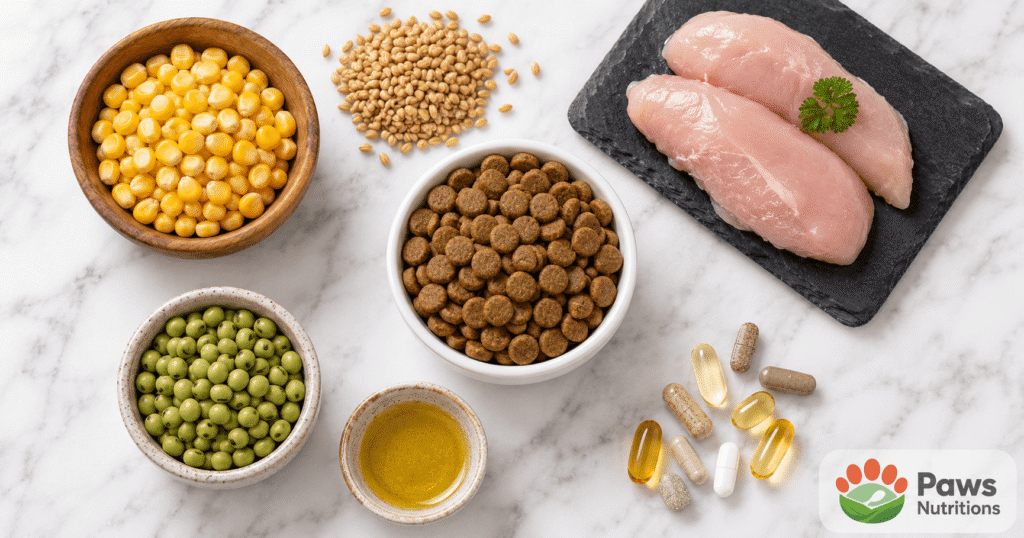
The Sportstrail Bite Size formula’s label lists: ground corn, corn gluten feed, wheat middlings, meat meal, chicken fat (preserved with mixed tocopherols), soybean meal, calcium carbonate, salt, potassium chloride, choline chloride, zinc sulfate, ferrous sulfate, and Vitamin E supplement, along with other trace vitamins and minerals required to meet AAFCO nutritional adequacy standards.
Notice that the first ingredient is a grain, not a named meat source. That single detail shapes almost everything else you need to know about this food’s nutritional profile. It’s a pattern you’ll see repeated across nearly every economy-tier dry dog food on the market, and Sportstrail is no exception to that broader industry trend.
Breaking Down the First 5 Ingredients
Ground corn is the primary ingredient, serving mainly as an energy source and carbohydrate filler. It’s inexpensive, widely available, and digestible for most healthy dogs, but it offers limited nutritional density compared to whole proteins. Corn does provide some essential fatty acids and a modest amount of fiber, but its main role here is bulk and caloric content rather than meaningful nutrition.
Corn gluten feed comes next — a milling byproduct used to boost the protein percentage on paper without the cost of real meat. This is technically a different product from corn gluten meal (which is more protein-dense); corn gluten feed is a lower-cost, lower-protein byproduct typically used in livestock feed before crossing over into budget pet food formulas. Wheat middlings follow, functioning mainly as a binder and fiber source rather than a meaningful nutrient contributor — another milling byproduct that’s inexpensive to source at scale.
Meat meal is the primary protein source, but notice it isn’t named — there’s no specific species listed, which is a transparency red flag we’ll cover in more detail below. Generic “meat meal” can legally include rendered tissue from multiple animal species, and the exact composition can shift from batch to batch depending on what’s available to the renderer at the time of production.
Finally, chicken fat rounds out the top five, preserved naturally with mixed tocopherols and providing a genuine source of omega-6 fatty acids for skin and coat health. This is actually one of the stronger points in the formula — chicken fat is a quality, palatable fat source, and using mixed tocopherols (a natural form of Vitamin E) rather than synthetic preservatives like BHA or BHT is a meaningfully better choice for long-term shelf stability and ingredient safety.
Protein Sources — Quality vs. Quantity
There’s a meaningful difference between “chicken meal” and simply “meat meal.” Named meat meals must come from a single, identified species, which makes sourcing traceable and generally more consistent in amino acid profile. Generic meat meal, on the other hand, can come from a mix of animal sources that vary batch to batch, which makes it harder to guarantee a consistent nutritional profile from one bag to the next.
This matters because protein quality directly affects digestibility and how efficiently your dog’s body can actually use that protein. Sportstrail meets the minimum protein percentage required by AAFCO, but the source itself is less transparent than what you’d find in mid-tier or premium brands. Two foods can share an identical 18% crude protein figure on the label and still differ dramatically in how much of that protein your dog actually absorbs and uses.
For context, premium and mid-tier dog foods typically lead with a named protein — “chicken,” “deboned salmon,” or “chicken meal” specifically — precisely because naming the source builds consumer trust and allows for more consistent quality control. Sportstrail’s choice to use unnamed meat meal is a direct cost-saving measure, and it’s one of the clearest signals of where this formula sits on the overall quality spectrum.
Controversial Ingredients to Know About
A few ingredients in this formula tend to spark debate among pet nutrition experts. Corn gluten feed and wheat middlings are both protein and fiber fillers that inflate the guaranteed analysis numbers without adding much real nutritional value. Soybean meal is a plant-based protein that some dogs tolerate fine, but it’s also a known allergen for food-sensitive dogs.
To be fair, not every dog reacts negatively to these ingredients — many dogs digest them without any issue at all, and these ingredients aren’t inherently toxic or dangerous in the way some online pet food forums sometimes suggest. The concern isn’t safety in the acute sense; it’s about long-term nutritional efficiency and the increased likelihood of digestive sensitivity or allergic response in susceptible dogs.
But if your dog has a sensitive stomach or known food allergies, these are the ingredients worth watching closely. Corn, wheat, and soy collectively account for three of the most commonly reported canine food allergens, and having all three present in a single formula increases the statistical likelihood that a sensitive dog will react to at least one of them.
What Ingredients Are Missing?
Compared to mid-tier and premium dog foods, Sportstrail is missing several things that matter for long-term health: there’s no named animal protein listed first, no whole fruits or vegetables (no blueberries, carrots, or sweet potatoes), and no added probiotics or digestive enzymes to support gut health.
You also won’t find glucosamine or chondroitin for joint support, or DHA for brain and eye development. None of these are dealbreakers for a healthy adult dog, but they’re worth knowing about — especially if you’re comparing Sportstrail against a step-up brand. Many mid-tier foods in the $40-50 range for a similar bag size include at least a few of these functional additions, even if they’re not marketed as premium or specialty formulas.
It’s also worth noting what’s absent in terms of potentially controversial additives: there’s no artificial coloring, no propylene glycol, and no BHA/BHT synthetic preservatives in this formula. So while Sportstrail is missing some beneficial additions, it’s also avoiding some of the more questionable ingredients you’ll find in certain other economy brands. That’s a small but genuine point in its favor.

Sportstrail Nutritional Analysis — Does It Meet Your Dog’s Needs?
Numbers on a bag can be confusing if you don’t know how to read them. This section breaks down the guaranteed analysis, explains what it actually means for your dog’s day-to-day health, and tells you honestly whether the nutritional profile holds up.
We’ll walk through each figure individually, translate it into something practically useful, and compare it against both AAFCO’s regulatory minimums and the broader market average — so you’re not just looking at isolated numbers but understanding what they mean in context.
Guaranteed Analysis Breakdown
Here’s the official guaranteed analysis for Sportstrail Bite Size Adult Dog Food, straight from the label:
| Nutrient | Guaranteed Analysis |
| Crude Protein (min) | 18.0% |
| Crude Fat (min) | 6.0% |
| Crude Fiber (max) | 7.0% |
| Moisture (max) | 10.0% |
| Metabolizable Energy | 3,010 kcal/kg / 295 kcal/cup |
These numbers meet the AAFCO minimum protein requirement of 18% for adult dog maintenance. In plain English: this food provides the bare nutritional floor for a healthy, average-activity adult dog — nothing more, nothing less.
The crude fiber maximum of 7% is also worth noting. This is on the higher end for dry kibble, largely a byproduct of the wheat middlings and corn gluten feed in the formula. Higher fiber content can support stool consistency, but excessive fiber from low-quality sources can also reduce overall caloric density and nutrient absorption.
Dry Matter Basis — The Real Nutritional Picture
Guaranteed analysis numbers include moisture content, which can make foods look different than they really are. Dry matter basis removes the moisture from the equation so you can compare foods fairly, regardless of their water content. This matters most when comparing a dry kibble to a wet food, but it’s also useful for getting an honest read on any single dry food’s true nutrient density.
With 10% moisture, Sportstrail’s dry matter protein works out to roughly 20%, and dry matter fat comes to about 6.7%. These figures sit on the lower end of the spectrum for dry kibble, which generally ranges from 22-32% protein on a dry matter basis across the market. Mid-tier brands typically land in the 24-26% protein range, while premium and grain-free formulas often push past 30%.
To calculate dry matter basis yourself for any food, simply divide the guaranteed percentage by (100 minus the moisture percentage), then multiply by 100. For Sportstrail’s protein: 18 ÷ (100-10) × 100 = 20%. This simple formula is worth keeping in your back pocket any time you’re comparing two different dog foods side by side.
Is the Protein Quality Good Enough?
Meeting the minimum AAFCO protein percentage doesn’t automatically mean the protein quality is excellent. A meaningful portion of Sportstrail’s protein comes from plant-based sources — corn gluten feed, wheat middlings, and soybean meal — rather than animal sources alone.
Plant proteins generally have a lower biological value than animal proteins, meaning your dog’s body can’t use them quite as efficiently. Biological value measures how well a protein source supplies the essential amino acids a dog actually needs and how readily the body can absorb and use them. Animal-based proteins like chicken or beef typically score significantly higher on this measure than plant-based proteins like corn gluten or soy.
For a healthy adult dog with normal activity levels, this typically isn’t a major problem — the dog will still get adequate protein to maintain muscle mass and basic bodily functions. For growing puppies or highly active working dogs, it’s a more significant limitation, since both groups have substantially higher protein quality and quantity demands that this formula simply isn’t designed to meet.
Fat Content and Energy — Enough for Active Dogs?
At a 6% minimum, Sportstrail sits on the lower end of fat content for dry dog food. This is generally adequate for a normally active adult dog living a fairly sedentary or moderately active lifestyle, but it likely falls short for working dogs, sporting breeds, or dogs with high energy demands. Most mid-tier adult formulas carry fat content in the 10-14% range, making Sportstrail noticeably leaner by comparison.
The chicken fat included does provide genuine omega-6 fatty acids, which support skin and coat health, but you may notice a dog with a more active lifestyle needs supplemental fat or a different formula entirely. Owners of working farm dogs, hunting dogs, or dogs that spend significant time outdoors in cold weather should pay particularly close attention here, since these dogs burn through calories and fat reserves considerably faster than a typical house pet.
At 295 kcal per cup, the caloric density is also on the lower side compared to many competing formulas, which often range from 350-400 kcal per cup. This means your dog may need to eat a larger volume of Sportstrail to meet the same caloric needs compared to a more calorie-dense food — something worth factoring into your feeding calculations.
AAFCO Compliance — What Does It Mean?
Sportstrail Bite Size is formulated to meet AAFCO nutrient profiles for adult dog maintenance only. That’s an important distinction — this food is not formulated for growth (puppies), reproduction (pregnant or nursing dogs), or high-performance working dogs. AAFCO, the Association of American Feed Control Officials, establishes the minimum nutritional standards that pet foods must meet to be legally labeled as “complete and balanced” for a given life stage.
If you have a puppy, a pregnant dog, or a working dog with elevated energy needs, this formula won’t meet their specific nutritional requirements, regardless of how affordable it is. Feeding an adult maintenance formula to a growing puppy, for example, can result in inadequate calcium-to-phosphorus ratios and insufficient protein for proper skeletal development — a genuine health risk rather than just a minor nutritional gap.

Sportstrail Dog Food Feeding Guide — How Much Should You Feed?
Getting portions right matters just as much as picking the right food. Overfeeding leads to weight gain; underfeeding can leave your dog low on energy. Here’s a complete, practical feeding guide based on your dog’s weight.
Portion control is one of the most overlooked aspects of dog nutrition, and it’s an area where even well-meaning owners frequently get it wrong. The numbers on a bag are a useful starting point, but they’re calibrated for an average dog — your individual dog’s metabolism, activity level, and body condition all factor into the right amount to feed.
Weight-Based Daily Feeding Chart
Use this chart as a starting point, then adjust based on your dog’s activity level, age, and body condition:
| Dog Weight | Daily Feeding Amount | Meals Per Day |
| 3–12 lbs | ¾ – 1 cup | 2 |
| 12–20 lbs | 1 – 2 cups | 2 |
| 20–50 lbs | 2 – 3½ cups | 2 |
| 50–100 lbs | 3½ – 6 cups | 2 |
| 100+ lbs | 6+ cups | 2–3 |
Less active or overweight dogs should be fed toward the lower end of each range, while highly active dogs may need the higher end — or a bit more. Always provide fresh, clean water alongside dry food, and adjust gradually rather than making sudden, large changes.
A simple, practical way to check whether you’re feeding the right amount is the rib test: you should be able to feel your dog’s ribs easily under a thin layer of fat without being able to see them prominently. If the ribs are difficult to feel, you’re likely overfeeding; if they’re sharply visible, you may be underfeeding. Checking this every couple of weeks is a far more reliable method than relying purely on a feeding chart.
How to Transition Your Dog to Sportstrail
Switching foods too quickly is one of the most common causes of digestive upset in dogs. Spread the transition over about a week: days 1-2 should be 75% old food and 25% Sportstrail; days 3-4 move to a 50/50 split; days 5-6 shift to 25% old food and 75% Sportstrail; and by day 7, your dog should be eating 100% Sportstrail.
Watch for signs of digestive upset — loose stools, vomiting, or excessive gas — during the transition. If symptoms persist beyond a week, it’s worth checking in with your veterinarian before continuing. For dogs with a known history of sensitive stomachs, it can be worth extending this transition window to ten or even fourteen days, moving even more gradually between the old and new food.
Cost Per Day — Is Sportstrail Really Affordable?
Let’s run the actual numbers using CountryMax’s current sale price of $26.99 for a 50-pound bag. A 40-pound dog eating roughly 3 cups per day will get through a 50-pound bag in about 267 days, which works out to approximately $0.10 per day.
For comparison, mid-tier brands like Purina ONE typically run closer to $0.25 per day, while premium brands like Blue Buffalo can exceed $0.60 per day. By that measure, Sportstrail is genuinely one of the most affordable dry dog foods available on a cost-per-day basis.
For a household feeding two 40-pound dogs, that translates to roughly $0.20 per day combined, or about $6 per month for both dogs — a genuinely significant saving compared to mid-tier or premium alternatives, which could easily run $30-40 per month or more for the same two dogs. This is precisely the value proposition that makes Sportstrail appealing to multi-dog households operating on a tight budget.

Sportstrail Dog Food Recall History — What Every Owner Needs to Know
This is, without question, the most important section of this Sportstrail dog food review. Before you commit to any bag, you deserve full transparency about what happened — and where things stand today.
We’re going to walk through this chronologically and in detail, because we believe pet owners deserve the full picture rather than a vague one-line disclaimer buried at the bottom of a product page. This is exactly the kind of information that’s frequently glossed over elsewhere, and it’s information that directly affects whether you should trust this brand with your dog’s health.
The 2020–2021 Midwestern Pet Foods Recalls — A Full Timeline
In December 2020, Sportmix products (a sister brand to Sportstrail, also manufactured by Midwestern Pet Foods) were recalled due to potentially dangerous aflatoxin levels — a toxin produced by mold that can grow on corn. This initial recall was triggered after the deaths of dozens of dogs were linked to contaminated products, prompting an urgent, large-scale response from the company.
By January 2021, the recall expanded significantly, eventually covering more than 1,000 lot codes across multiple Midwestern Pet Foods brands, including various SportMix and Sportstrail product lines. The scale of this expansion reflected just how widespread the contamination concern had become across the company’s manufacturing operations during that period.
Then in March 2021, Midwestern Pet Foods issued an additional recall, this time covering several brands — including Sportstrail — over potential Salmonella contamination. Unlike the aflatoxin issue, which is a toxin that builds up from mold growth, Salmonella is a bacterial contaminant that poses risks not just to dogs but to the humans handling the food as well. By August 2021, the FDA had escalated the situation further with a formal warning letter to the company, citing ongoing concerns about manufacturing practices.
The FDA Warning Letter — What It Said and Why It Matters
The FDA’s investigation found serious violations at Midwestern Pet Foods’ manufacturing facilities. Inspectors documented conditions the agency believed likely contributed to illness or death in hundreds of dogs and cats, with some affected products showing aflatoxin levels as high as 558 parts per billion — well above the FDA’s 20 ppb safety limit. To put that in perspective, that’s more than 27 times the legal threshold, representing a genuinely severe contamination event rather than a marginal compliance issue.
A formal warning letter is a serious regulatory action. It requires the manufacturer to demonstrate corrective measures and ongoing compliance, and it puts the company under heightened scrutiny going forward. The FDA typically reserves these letters for situations where standard inspection findings alone weren’t sufficient to ensure compliance, making this a meaningfully more serious regulatory step than a routine inspection report.
To its credit, Midwestern Pet Foods publicly stated it implemented corrective actions following the warning, including changes to testing protocols and facility procedures. The company also cooperated with the FDA’s ongoing investigation and worked to address the specific violations identified during the inspection process.
Is Sportstrail Safe to Buy Today?
As of this writing, there are no active recalls affecting current Sportstrail products. The brand remains in production and continues to be sold through farm and rural supply retailers. That said, given the seriousness of the 2020-2021 incidents, we recommend a degree of ongoing caution rather than treating the issue as fully resolved and forgotten.
We’re not going to tell you the recall history doesn’t matter — it absolutely does, and it’s a fair reason for hesitation. Any responsible pet food review has an obligation to take recall history seriously rather than minimizing it for the sake of a more favorable overall verdict. But we also want to be fair: no new confirmed incidents have surfaced since 2021, and the corrective measures the company described do address the root causes identified by the FDA.
Ultimately, this is a judgment call that depends on your own risk tolerance. Some pet owners will reasonably decide that a multi-year track record without further incidents is sufficient reassurance. Others will prefer to avoid any brand with a serious recall history altogether, regardless of subsequent corrective action. Both positions are defensible, and we think it’s our job to give you the full picture rather than make that decision for you.
How to Check If Your Bag Is Part of a Recall
Before you feed any new bag, take two minutes to verify it. Find the lot code and expiration date printed on the bag, then cross-check it against the FDA’s recall database at FDA.gov/animal-veterinary/recalls-withdrawals. This database is updated regularly and is the most authoritative source for current pet food recall information in the United States.
You can also check DogFoodAdvisor’s dedicated recall alert page for ongoing monitoring — many pet owners find this site easier to navigate than government databases, and it often catches recall news quickly. It’s also worth signing up for free recall email alerts through the FDA so you’re notified automatically if anything changes in the future — a small step that gives real peace of mind without requiring you to manually check every time you buy a new bag.
Sportstrail Dog Food Safety — Ingredients, Corn, and the Aflatoxin Risk
Understanding why the 2020 recall happened in the first place helps explain an important, often-overlooked safety consideration tied directly to this food’s corn-heavy formula.
Most pet food reviews skip this topic entirely or mention it only in passing, but we think it deserves a proper explanation — especially for a brand with Sportstrail’s specific recall history.
What Is Aflatoxin and Why Does It Matter for Corn-Based Dog Food?
Aflatoxin B1 is a naturally occurring toxin produced by Aspergillus mold, which can grow on corn, grains, and nuts under certain storage conditions. It accumulates in the liver and can cause serious hepatotoxicity (liver damage) in dogs if levels get high enough. Symptoms of aflatoxin poisoning can include lethargy, vomiting, jaundice (yellowing of the skin and eyes), and in severe cases, liver failure.
This isn’t unique to Sportstrail — any corn-heavy kibble carries a baseline risk if quality control during sourcing and storage isn’t airtight. Aflatoxin contamination typically originates at the agricultural level, often tied to specific growing seasons, weather conditions, and storage practices at grain elevators and processing facilities before the corn ever reaches a pet food manufacturer.
Given that ground corn is Sportstrail’s first ingredient, and given the 2020 recall was directly tied to aflatoxin contamination, this is a topic worth understanding rather than ignoring. The good news is that aflatoxin contamination, while serious when it occurs, is also something that responsible manufacturers can substantially mitigate through rigorous incoming-ingredient testing — testing that should, in theory, now be more robust at Midwestern Pet Foods following the FDA’s intervention.
What Did Midwestern Pet Foods Do After the Recall?
Following the FDA’s findings, Midwestern Pet Foods publicly committed to enhanced testing protocols and facility improvements designed to prevent a repeat incident. This reportedly included more frequent and more rigorous aflatoxin testing on incoming corn shipments, along with broader facility sanitation and quality control updates across its manufacturing operations.
Independent, fully transparent third-party audit results aren’t widely published, which limits how much outside verification is available to confirm the full scope and effectiveness of these changes. This is a meaningful limitation worth acknowledging honestly — pet owners are largely relying on the company’s own public statements rather than independently verified data.
We think it’s fair to acknowledge both sides here: the company took the regulatory action seriously and made public commitments to change, but full transparency around ongoing testing remains somewhat limited compared to what some premium brands publish voluntarily, such as detailed sourcing reports or routine third-party lab results made available to consumers.

Who Is Sportstrail Dog Food Best For?
Not every dog food fits every dog. Here’s our honest, practical breakdown of exactly who should consider Sportstrail — and who should look elsewhere.
We think this kind of practical suitability guidance is one of the most useful things a review can offer, because ingredient lists and guaranteed analysis numbers only tell part of the story. The real question every pet owner needs answered is simple: will this food actually work well for my specific dog?
Best Dog Types for Sportstrail
Sportstrail tends to work best for healthy adult dogs with no known allergies or food sensitivities, dogs with low-to-moderate activity levels, and households feeding multiple dogs where budget is a genuine constraint. It’s also a reasonable fit for large farm or outdoor working dogs where volume and value matter more than boutique ingredients.
If your dog has a track record of eating a wide variety of foods without issue, has no history of digestive sensitivity, and doesn’t have demanding energy requirements, Sportstrail is likely to perform adequately as a daily maintenance food. The key word here is adequately — this isn’t a food designed to optimize health outcomes, but it can reliably meet baseline nutritional needs for the right dog.
Best Dog Breeds for Sportstrail
Hardier breeds with fewer known food sensitivities — Labrador Retrievers, Beagles, Golden Retrievers, and many mixed farm breeds — generally tolerate economy kibble formulas like this one fairly well. Working farm breeds in low-to-moderate intensity settings also tend to do fine on this formula.
Breeds known for sensitive digestive systems — including German Shepherds, Bulldogs, and several smaller breeds prone to food allergies — may be better served by a higher-quality formula with more limited, named ingredients. This isn’t a hard rule, since individual dogs within any breed vary, but it’s a useful general pattern worth being aware of when making your decision.
Dogs That Should NOT Be Fed Sportstrail
Be direct with yourself here: this food is not appropriate for puppies, since it’s formulated for adult maintenance only, and not for pregnant or nursing dogs, whose nutritional demands exceed what this formula provides. Senior dogs may also benefit from a formula with added joint support, which Sportstrail lacks.
Dogs with known food allergies should steer clear too, since corn, wheat, and soy — all common allergens — are present in this formula. Highly active or sporting dogs will likely find the fat content insufficient for sustained energy demands, and dogs with sensitive stomachs may react poorly to the corn and soy content.
If your dog has ever shown signs of a food allergy — itchy skin, ear infections, chronic loose stools, or excessive licking of the paws — we’d strongly encourage you to work with your veterinarian before introducing this or any new food, rather than relying on trial and error alone.
What Veterinarians Generally Say About Budget Dog Foods
Most veterinarians agree that any AAFCO-compliant food is technically acceptable for a healthy adult dog, but they also emphasize that ingredient quality, sourcing transparency, and recall history all factor into a responsible feeding decision. The general veterinary consensus isn’t that budget food is inherently dangerous — it’s that quality differences exist, and owners should make an informed choice based on their individual dog’s needs and their own risk tolerance.
As always, we recommend talking to your vet before making any significant diet change, particularly if your dog has existing health conditions. A quick conversation at your dog’s next checkup, or even a phone call to your vet’s office, can help you weigh the tradeoffs specific to your dog’s age, breed, and health history.
Where to Buy Sportstrail Dog Food — Price Comparison by Retailer
Pricing varies more than you’d expect between retailers. Here’s exactly what you’ll pay right now, based on verified retailer listings.
We checked multiple retailers directly rather than relying on aggregated or outdated pricing data, since dog food prices — especially at farm supply chains — can shift fairly frequently based on regional promotions and seasonal sales.
Current Retail Price Comparison Table
Here’s how current pricing breaks down across the retailers we checked:
| Retailer | Size | Regular Price | Sale Price | Availability |
| CountryMax | 50 lbs | $30.99 | $26.99 | In stock |
| Luke’s Pet & Supply Co. | 50 lbs | $32.99 | $32.99 | Out of stock |
| IncredPets | 50 lbs | In-cart pricing | — | In stock |
Prices are subject to change, so always confirm the current price directly on the retailer’s website before purchasing. As of now, CountryMax offers the strongest confirmed value at $26.99 for a 50-pound bag.
It’s also worth noting that IncredPets uses an in-cart pricing model, meaning the final price only appears once you’ve added the item to your cart. This isn’t unusual for farm supply e-commerce, but it does make upfront price comparison slightly less convenient than retailers who display pricing directly on the product page.
Best Bag Size for Value
Sportstrail is sold almost exclusively in 50-pound bags, which is actually a point in its favor for cost-per-pound value — larger bags almost always work out cheaper per serving than smaller ones. Some farm supply stores also run loyalty programs or seasonal promotions that can shave a few more dollars off the price.
If you have appropriate dry, pest-proof storage available — a sealed container or bin is ideal — buying the largest available bag size is almost always the most economical choice for any dry dog food, Sportstrail included. Just be mindful of the bag’s printed expiration date, since kibble does gradually lose nutritional potency and palatability over time, even when stored properly.
Can You Buy Sportstrail on Amazon or Chewy?
Availability on major national platforms like Chewy and Amazon is limited for the Sportstrail line specifically, though the related Sportmix brand does appear on Chewy. For Sportstrail itself, your best bet remains farm and rural supply retailers like CountryMax, Tractor Supply, and independent co-ops.
This limited online distribution is consistent with Sportstrail’s positioning as a regional, farm-store-focused brand rather than a nationally distributed product competing for shelf space in big-box pet retailers or major e-commerce platforms.
Sportstrail vs. Other Budget Dog Foods — How Does It Compare?
Choosing a budget dog food often comes down to comparing similar options side by side. Here’s how Sportstrail stacks up against three of the most common alternatives.
These comparisons use approximate per-pound pricing based on typical bag sizes and current retail averages, so treat them as a general guide rather than an exact real-time calculation — prices do fluctuate by region and retailer.
Sportstrail vs. Ol’ Roy
Both are firmly in the economy tier, but here’s how they compare directly:
| Feature | Sportstrail | Ol’ Roy |
| Price per lb | ~$0.54/lb | ~$0.40–0.50/lb |
| Crude Protein | 18% | 18–21% |
| First Ingredient | Ground corn | Corn / meat and bone meal |
| Named meat protein | No | No |
| Recall history | Yes (2020–2021) | Yes (multiple) |
Which Food Is Better? Both are similar in overall quality and price point. Sportstrail edges ahead slightly thanks to its named chicken fat source, while Ol’ Roy is typically a touch cheaper and more widely available nationwide through Walmart locations.
Sportstrail vs. Pedigree Adult Dry Dog Food
Pedigree is a step up in brand recognition. Here’s the breakdown:
| Feature | Sportstrail | Pedigree Adult |
| Price per lb | ~$0.54/lb | ~$0.60–0.80/lb |
| Crude Protein | 18% | 21% |
| First Ingredient | Ground corn | Whole grain corn |
| Recall history | Yes (2020–2021) | Yes (historical) |
| Availability | Farm stores | Nationwide |
Which Food Is Better? Pedigree offers slightly higher protein and far wider availability, but at a noticeably higher price. If budget is your top priority and you shop at farm supply stores anyway, Sportstrail remains the more economical choice.
Sportstrail vs. Purina Dog Chow
Purina Dog Chow carries significantly stronger brand trust. Here’s how it compares:
| Feature | Sportstrail | Purina Dog Chow |
| Price per lb | ~$0.54/lb | ~$0.70–0.90/lb |
| Crude Protein | 18% | 21% |
| Named meat | No | Chicken (secondary) |
| Recall history | Yes (2020–2021) | Minor/historical |
| Brand trust | Moderate | High |
Which Food Is Better? Purina Dog Chow is the stronger overall choice if your budget has any flexibility at all, offering better protein transparency and significantly stronger brand trust. Sportstrail remains the better option only if minimizing cost is your absolute top priority.

Sportstrail Dog Food Pros and Cons — The Honest Summary
If you’ve skimmed straight to this section, here’s the scannable bottom line on everything we’ve covered so far.
We’ve kept this list strictly evidence-based, drawing only from the ingredient analysis, nutritional breakdown, and recall history already covered in detail above — nothing here is speculative.
Pros of Sportstrail Dog Food
- Extremely affordable — among the lowest cost-per-day options available
- Large 50-pound bags ideal for multi-dog households
- AAFCO compliant for adult dog maintenance
- Made in the USA by Midwestern Pet Foods
- Contains real chicken fat preserved with natural mixed tocopherols
- Widely available at farm and rural supply stores
- No artificial colors or synthetic BHA/BHT preservatives
Cons of Sportstrail Dog Food
- Unnamed “meat meal” reduces protein source transparency
- Corn-heavy formula with limited whole-food ingredients
- No added fruits, vegetables, or antioxidant sources
- Serious recall history from 2020–2021
- Low fat content not ideal for active or working dogs
- Contains corn, wheat, and soy — common allergens
- Not suitable for puppies, seniors, or dogs with special dietary needs
- Limited availability outside farm and rural supply retailers
Real Dog Owner Reviews — What Buyers Are Actually Saying
Numbers and ingredient lists only tell part of the story. Here’s what real dog owners report after actually feeding this food day to day.
We pulled together recurring themes across verified retailer reviews and owner feedback to give you a realistic sense of what to expect, beyond just the technical nutritional breakdown.
Positive Owner Experiences
Many owners report their dogs eat Sportstrail enthusiastically without hesitation, and describe solid, consistent bowel movements with no digestive issues. Energy levels stay normal in healthy adult dogs, and owners feeding multiple dogs consistently highlight the excellent value compared to premium alternatives.
One verified CountryMax reviewer described feeding the product to their dog with no stomach issues and consistently solid bowel movements, noting they would recommend it to other dog owners based on their experience. This kind of straightforward, practical feedback is fairly representative of the positive reviews we found — owners aren’t claiming miraculous health transformations, just reliable, no-drama daily feeding.
Common Complaints and Concerns
Some owners report dull coats or flaky skin, which likely ties back to the formula’s relatively low fat content. Dogs with corn or soy sensitivities have shown allergic reactions, and a small number of owners note their dogs lose interest in the food over time as palatability seems to drop with extended feeding.
A handful of reviewers also mention concern over the brand’s recall history directly, indicating that some prospective buyers do their research before purchasing and factor that history into their final decision — which is exactly the kind of informed approach we’d encourage.
Our Takeaway From Owner Reviews
Putting both sides together, Sportstrail genuinely works well for healthy, non-sensitive adult dogs in budget-conscious households. Owners who report problems typically have dogs with pre-existing sensitivities or higher nutritional demands than this formula was designed to meet.
This pattern lines up closely with what we’d expect based on the ingredient and nutritional analysis earlier in this review — there’s nothing surprising in the real-world feedback that contradicts the technical assessment. That consistency between label analysis and lived owner experience is a good sign that our overall evaluation is grounded in reality rather than guesswork.
PawsNutritions Final Verdict — Is Sportstrail Dog Food Worth It?
After breaking down every ingredient, every nutritional number, and the full recall history, here’s our honest, final take on this Sportstrail dog food review.
We’ve tried to be balanced throughout this review rather than either dismissing the brand outright or glossing over its genuine shortcomings. Here’s how it all adds up.
Our Overall Rating
| Category | Rating |
| Ingredient Quality | 2 / 5 |
| Nutritional Value | 2.5 / 5 |
| Affordability | 5 / 5 |
| Recall Safety History | 2 / 5 |
| Palatability | 3 / 5 |
| Value for Money | 4 / 5 |
| Overall | 2.5 / 5 |
Who We Recommend Sportstrail For
Sportstrail is a serviceable, genuinely budget-friendly dry dog food best suited for healthy adult dogs with no sensitivities, in households where premium food simply isn’t financially realistic. It’s not a premium product, and it shouldn’t be judged by premium standards. If your budget has any room to spare, stepping up to a mid-tier brand is worth considering.
If you’ve read this entire Sportstrail dog food review and your dog fits the profile we’ve described — a healthy adult with no allergies, no special dietary needs, and a budget that genuinely requires an economy option — this food can reasonably meet your needs. Just remember to monitor your dog’s weight, coat condition, and digestion over the first few weeks, and stay alert to any future recall notices.
Better Alternatives to Consider
- Purina Dog Chow — better protein transparency for a modest price increase
- Ol’ Roy — comparable budget tier with wider national availability
- 4Health (Tractor Supply) — noticeably better ingredient quality at a similar price
- Nutrisource Adult Chicken & Rice — a significant quality step-up if your budget allows
Frequently Asked Questions About Sportstrail Dog Food
Is Sportstrail dog food a good brand?
Sportstrail meets AAFCO minimum standards and works fine for healthy adult dogs, but it falls short of mid-tier and premium brands in ingredient quality and transparency.
Who makes Sportstrail dog food?
Sportstrail is made by Midwestern Pet Foods, Inc., a family-owned Indiana company founded in 1926 that also produces Earthborn Holistic, Pro Pac, and SportMix.
Has Sportstrail dog food ever been recalled?
Yes. In 2020–2021, Midwestern Pet Foods recalled Sportstrail and related products over aflatoxin and Salmonella concerns, and the FDA issued a formal warning letter in 2021.
What are the main ingredients in Sportstrail dog food?
The primary ingredients are ground corn, corn gluten feed, wheat middlings, meat meal, and chicken fat, making it a grain-inclusive, corn-heavy formula.
Is Sportstrail dog food safe to feed my dog?
There are no active recalls as of now, but given the brand’s history, we recommend checking the FDA recall database before purchasing any new bag.
Is Sportstrail dog food grain-free?
No. Sportstrail Bite Size is grain-inclusive, with ground corn, corn gluten feed, and wheat middlings among its primary ingredients.
Can I feed Sportstrail to my puppy?
No. Sportstrail Bite Size is formulated for adult maintenance only and doesn’t meet AAFCO nutritional requirements for puppy growth.
How much does Sportstrail dog food cost per bag?
A 50-pound bag currently retails between $26.99 (CountryMax sale price) and $32.99 (Luke’s Pet & Supply Co.).
Where can I buy Sportstrail dog food?
Sportstrail is sold primarily at farm and rural supply retailers like CountryMax, Tractor Supply, and independent co-ops, with limited mainstream online availability.
How does Sportstrail compare to Pedigree or Purina Dog Chow?
Pedigree and Purina Dog Chow offer slightly better protein transparency and wider availability, while Sportstrail offers a lower price point at farm supply stores.
Disclaimer
This review is for informational purposes only and is not a substitute for professional veterinary advice. Always consult your veterinarian before changing your dog’s diet, especially if your dog has pre-existing health conditions, allergies, or special dietary needs. Recall information is accurate as of the date of publication — always check the FDA website for the most current recall alerts.

A dedicated writer and digital enthusiast committed to creating high-quality, informative, and reader-focused content. Through thoughtful research and clear communication, he aims to deliver valuable insights that help readers navigate the ever-changing digital landscape.