

If you’ve ever walked down the pet food aisle at Walmart and spotted that familiar large bag for an almost unbelievably low price, you’ve probably wondered — is Kal Kan dog food actually good for your dog, or is it just cheap for a reason? It’s one of America’s oldest dog food brands, backed by the world’s largest pet food company, yet it raises real questions about ingredient quality and nutritional value. You deserve honest answers before you fill your dog’s bowl.
In this complete Kal Kan dog food review, we break down everything you need to know — from the full ingredient list and dry matter basis nutritional analysis to recall history, feeding guide, and how it stacks up against Pedigree and Purina Dog Chow. By the end of this guide, you’ll know exactly whether Kal Kan deserves a spot in your home.
What Is Kal Kan Dog Food? A Quick Brand Overview
Before we dive into ingredients and nutrition, it helps to understand where Kal Kan actually comes from. This brand has a surprisingly long and interesting history — one that explains both its strengths and its limitations on today’s market.
The History of Kal Kan — From 1936 to Today
Kal Kan was founded back in 1936, making it one of the oldest commercial dog food brands in the United States. In its early days, the brand made its name selling dog food made from horse meat — an ingredient that was both affordable and widely available at the time. The brand grew steadily across decades and even earned a small slice of pop culture fame: in Back to the Future, Doc Brown feeds his dog Einstein using an automated Kal Kan feeder, cementing the brand’s place in American households.
Over the years, Kal Kan’s product range was largely absorbed into the Pedigree family, which is now the flagship budget dog food brand under the same corporate umbrella. The Kal Kan cat food line was rebranded globally as Whiskas. Today, the Kal Kan name survives as a single dry dog food product — a no-frills, economy-sized kibble that remains one of the most affordable options on the market.
Who Manufactures Kal Kan Today?
Kal Kan is manufactured by Mars Petcare US — the world’s largest pet food company, and the same parent behind Pedigree, Royal Canin, Iams, Eukanuba, and Crave. This corporate backing means Kal Kan benefits from Mars Petcare’s large-scale manufacturing infrastructure and quality control standards. Research and formulation are developed through the Waltham Center for Pet Nutrition, one of the most well-funded pet nutrition research organizations in the world.
Despite this impressive corporate foundation, Kal Kan itself remains a stripped-back, low-cost product. Mars Petcare broadly aligns with WSAVA (World Small Animal Veterinary Association) guidelines across its premium brands, but Kal Kan doesn’t prominently market any WSAVA compliance claims — something worth noting when evaluating it against higher-tier options.
Where Is Kal Kan Dog Food Sold?
Kal Kan is sold primarily through Walmart and some Kmart locations across the US. It’s not stocked at major pet retailers like Chewy, PetSmart, or Petco, and its Amazon presence is limited and inconsistent. The brand operates a standalone website that appears largely dormant. Many real dog owners have reported supply inconsistencies at their local Walmart stores, so availability can vary significantly by region. If you rely on Kal Kan as a regular food, it’s worth checking local stock before committing.
Kal Kan’s Product Range — What’s Actually on the Shelf?
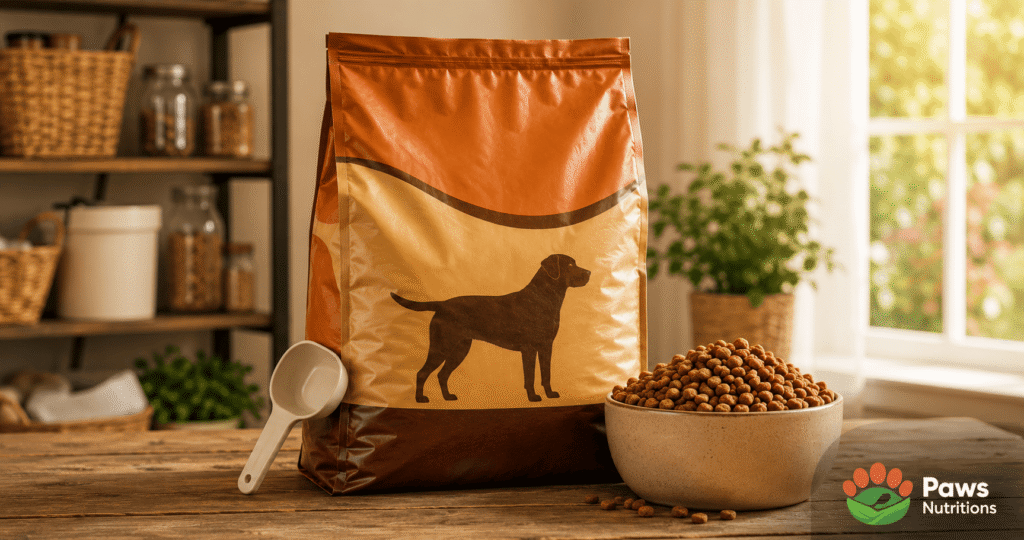
Here’s something you won’t find with most dog food brands: Kal Kan produces exactly one product — Kal Kan Complete Adult dry dog food. It comes in multiple bag sizes, including a large 52 lb bag, which makes it one of the most cost-effective bulk dry dog food options available in the US market today.
However, the single-product range is also a significant limitation. There’s no puppy formula, no senior formula, no wet or canned food, no breed-specific variants, and no grain-free option. If you have a household with dogs at different life stages — say, a puppy and an adult dog — Kal Kan simply can’t meet all of your needs. It’s an adult-only, one-size-fits-all solution.
Kal Kan Dog Food Ingredients — What’s Really Inside?
The ingredient list is where any honest Kal Kan dog food review has to start. What goes into the bag tells you far more than the marketing claims on the front. Let’s break down exactly what you’re feeding your dog.
The Full Ingredient List (Kal Kan Complete Adult)
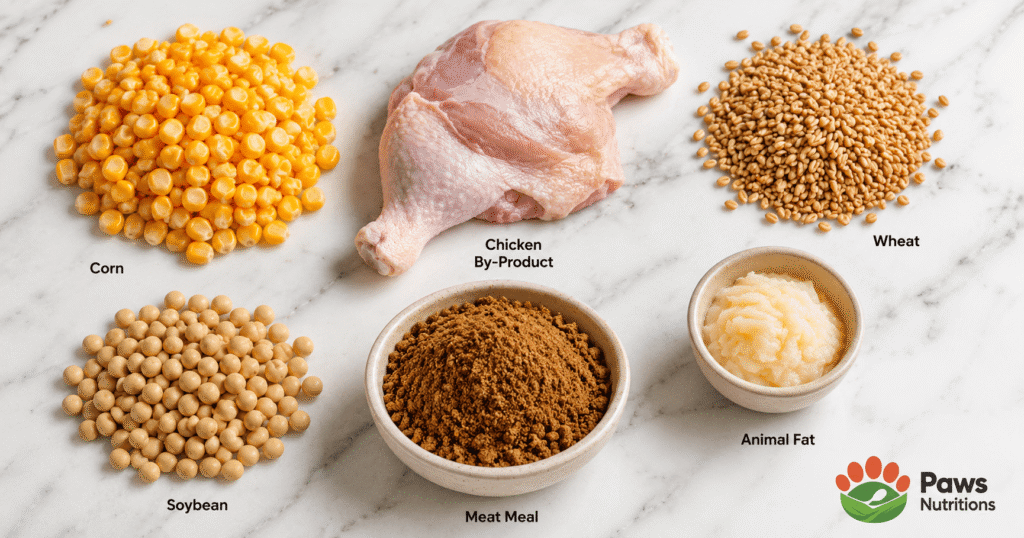
Ground Yellow Corn, Meat and Bone Meal, Soybean Meal, Ground Wheat, Chicken By-Product Meal, Animal Fat (preserved with BHA), Wheat Middlings, Corn Gluten Meal, Natural Flavor, Salt, DL-Methionine, Potassium Chloride, Choline Chloride, Zinc Sulfate, Ferrous Sulfate, Vitamin E Supplement, Niacin, Zinc Proteinate, Vitamin A Supplement, Copper Sulfate, Manganous Oxide, Riboflavin Supplement, Thiamine Mononitrate, Vitamin B-12 Supplement, Pyridoxine Hydrochloride, d-Calcium Pantothenate, Folic Acid, Biotin, Menadione Sodium Bisulfite Complex (source of Vitamin K activity), Vitamin D-3 Supplement, Sodium Selenite.
Protein Sources — Named vs. Unnamed Meats
The first named animal protein you’ll find is Chicken By-Product Meal. This ingredient includes ground and dehydrated chicken parts that aren’t skeletal muscle meat — things like necks, feet, organs, and undeveloped eggs. It’s not the most glamorous ingredient, but it does deliver real, concentrated protein and fat. The key word here is “named” — at least you know it’s chicken.
The bigger concern is Meat and Bone Meal — an unnamed animal protein source. This ingredient doesn’t specify the species, which raises legitimate questions about transparency and recipe consistency. Legally, it can include material from a variety of animal sources. The same issue applies to Animal Fat, another unnamed ingredient. While these aren’t necessarily dangerous, the lack of transparency makes it impossible for owners to identify allergen sources or monitor recipe changes over time. For dogs with known sensitivities, this is a real concern.
Grain Ingredients — Are They a Problem?
Ground Yellow Corn sits at the very top of the ingredient list, meaning it’s the heaviest ingredient by weight. It serves as the primary carbohydrate source and provides energy, but corn is also difficult for dogs to digest fully due to its cellulose content. It’s one of the most commonly reported dog food allergens. Beyond corn, you’ll also find Soybean Meal (a plant-based protein booster and common allergen), Ground Wheat (contains gluten — a trigger for sensitive dogs), and Wheat Middlings (a milling byproduct with limited nutritional value). Finally, Corn Gluten Meal is used to artificially inflate the protein percentage on the label, even though its biological value for dogs is far lower than animal-sourced protein.
None of these grains are inherently toxic for dogs. However, the sheer volume and variety of grain ingredients in this recipe is notable — it’s a grain-inclusive dog food that relies heavily on plant-based calories. This isn’t a deal-breaker for every dog, but it is something you should be aware of.
Vitamins, Minerals & Supplement Additives
Kal Kan includes a standard vitamin and mineral supplement pack covering the basics — Vitamin E, Vitamin A, Vitamin D3, and the full B-complex family. The mineral forms used are largely inorganic (Zinc Sulfate, Ferrous Sulfate, Copper Sulfate, Manganous Oxide), which have 5–15% lower absorption rates compared to organic chelated minerals. Some organic minerals like Zinc Proteinate do appear in the formula, which is a small positive.
One ingredient worth flagging specifically is Menadione Sodium Bisulfite Complex — a synthetic form of Vitamin K3. This compound has been banned as a human dietary supplement due to toxicity concerns at elevated doses, and while it’s still permitted in pet food safety regulations at the levels typically used in kibble, many higher-quality brands have moved away from it in favor of natural Vitamin K sources. The long-term cumulative effects in dogs aren’t fully studied, and it represents a legitimate — if modest — concern for health-conscious owners.
Kal Kan Dog Food Nutritional Profile — The Numbers Explained
Reading the guaranteed analysis on a dog food label can be misleading if you don’t know how to interpret it. The as-fed numbers include moisture content, which distorts the true nutritional picture. The real comparison tool is dry matter basis — and those numbers tell a very different story for Kal Kan.
Guaranteed Analysis — What the Label Shows
| Nutrient | As-Fed (Label) | Dry Matter Basis | Assessment |
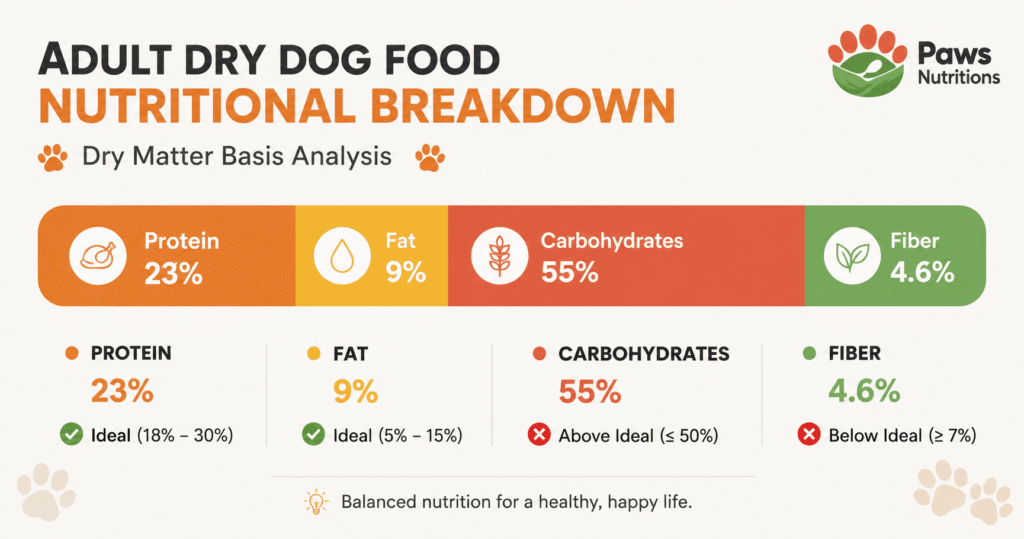
| Crude Protein | 20% minimum | 23% | Below ideal (30%+ preferred) |
| Crude Fat | 8% minimum | 9% | Below ideal (15%+ preferred) |
| Crude Fiber | 4% maximum | ~4.6% | Acceptable |
| Carbohydrates | Not listed | ~55% | Significantly above ideal |
| Moisture | 12% maximum | — | Standard for dry kibble |
Dry Matter Basis (DMB) — The Real Nutritional Picture
When you remove moisture from the equation and compare nutrients on a dry matter basis, Kal Kan’s nutritional profile becomes much clearer — and more concerning. Protein lands at approximately 23% DMB, which is well below the 30%+ seen in mid-range and premium brands. Fat sits at just 9% DMB, meaning lower energy density, which can actually cause dogs to eat more food to meet their caloric needs. Most strikingly, carbohydrates account for roughly 55% of the dry matter content — an unusually high figure that means more than half of your dog’s calories come from plant-based carbs rather than protein and fat.
Think of it this way: dogs are built to run on protein and fat. A diet where 55% of caloric content comes from carbohydrate-heavy grains isn’t aligned with their evolutionary nutritional preferences. It won’t cause acute illness in a healthy adult dog, but over months and years, the cumulative effect on weight, energy, and coat condition is worth considering.
Estimated Meat Content — Is There Enough Animal Protein?
Here’s something the label won’t tell you directly: a significant portion of Kal Kan’s total protein comes from plant-based sources like Soybean Meal and Corn Gluten Meal rather than animal ingredients. Plants are used to inflate the protein percentage on paper, but digestibility and biological value are fundamentally lower for plant protein than for animal protein. Your dog’s body simply absorbs animal protein more efficiently. Dogs fed primarily on plant protein over the long term may show signs of poor coat condition, lower energy levels, or digestive irregularities.
Does Kal Kan Meet AAFCO Standards?
This is a question every responsible dog owner should ask before choosing any commercial kibble. Understanding what AAFCO compliance actually means — and what it doesn’t — helps you set realistic expectations for any food.
What Is AAFCO and Why Does It Matter?
The Association of American Feed Control Officials (AAFCO) sets the minimum nutritional standards for commercially sold pet food in the United States. Every dog food sold legally must either meet AAFCO’s established nutrient profiles through lab formulation testing or pass AAFCO feeding trials conducted on real animals. When a bag says “complete and balanced,” it means the food has met AAFCO’s minimum requirements for the stated life stage. Think of AAFCO standards as the floor of nutritional adequacy — not the ceiling.
Is Kal Kan AAFCO Compliant?
Yes — Kal Kan Complete Adult is formulated to meet AAFCO nutritional levels for adult dog maintenance. That means it technically qualifies as a complete and balanced diet for healthy adult dogs. However, it’s critical to understand the scope of that claim. Kal Kan does not claim to meet AAFCO standards for puppies, pregnant or nursing females, or senior dogs. It is strictly an adult-maintenance formula.
From a WSAVA perspective, the World Small Animal Veterinary Association recommends choosing brands that employ full-time board-certified veterinary nutritionists and publish their own research. Mars Petcare broadly satisfies this through the Waltham Centre, but Kal Kan itself doesn’t market this compliance prominently. For owners following WSAVA guidelines strictly, this is worth factoring into your decision.

Is Kal Kan Dog Food Safe? Allergens, DCM & Ingredient Concerns
Safety is always the top priority when choosing a dog food. Let’s look at the three main areas of concern that come up most often with Kal Kan — allergens, heart health, and controversial additives.
Common Allergens Found in Kal Kan
Kal Kan contains three of the most commonly reported dog food allergens — corn (present in three forms), soy via Soybean Meal, and wheat via both Ground Wheat and Wheat Middlings. If your dog has a history of food allergies or sensitivities, these ingredients can trigger a range of symptoms including itchy skin, chronic ear infections, excessive scratching, diarrhea, and vomiting. The tricky part is that corn allergy and gluten intolerance in dogs often go undiagnosed for months because the symptoms mimic other conditions. If you notice persistent skin or digestive issues, Kal Kan’s high-grain profile may be worth reconsidering — and a vet visit is always the right call.
Is Kal Kan Connected to DCM (Dilated Cardiomyopathy)?
In 2018, the FDA launched an investigation into a potential link between grain-free dog food and Dilated Cardiomyopathy (DCM) — a serious and potentially fatal heart condition in dogs. This is important context for Kal Kan, because the brand is decidedly a grain-inclusive dog food. It is not grain-free, and it does not fall under the scope of the FDA’s DCM investigation.
In fact, from a DCM risk perspective, Kal Kan’s heavy reliance on traditional grain ingredients like corn and wheat may actually represent a safety advantage over trendy grain-free formulas that substitute legumes and potatoes. The FDA’s investigation is still ongoing and has not established a definitive causal mechanism, but the current scientific consensus suggests that grain-inclusive foods carry a lower associated risk. For owners concerned about cardiac health, this is a genuine positive for Kal Kan.
What About Menadione Sodium Bisulfite Complex?
As mentioned in the ingredient section, Menadione Sodium Bisulfite Complex — a synthetic Vitamin K source — appears in Kal Kan’s formula. While it’s permitted by the FDA at the concentrations typically used in pet food, it has been flagged by some veterinary nutrition researchers as a low-level concern, particularly with long-term daily feeding. Higher-quality brands have transitioned to natural Vitamin K sources. It’s not a reason to panic, but it is a reason to be aware.
Kal Kan Recall History — Has It Ever Been Recalled?
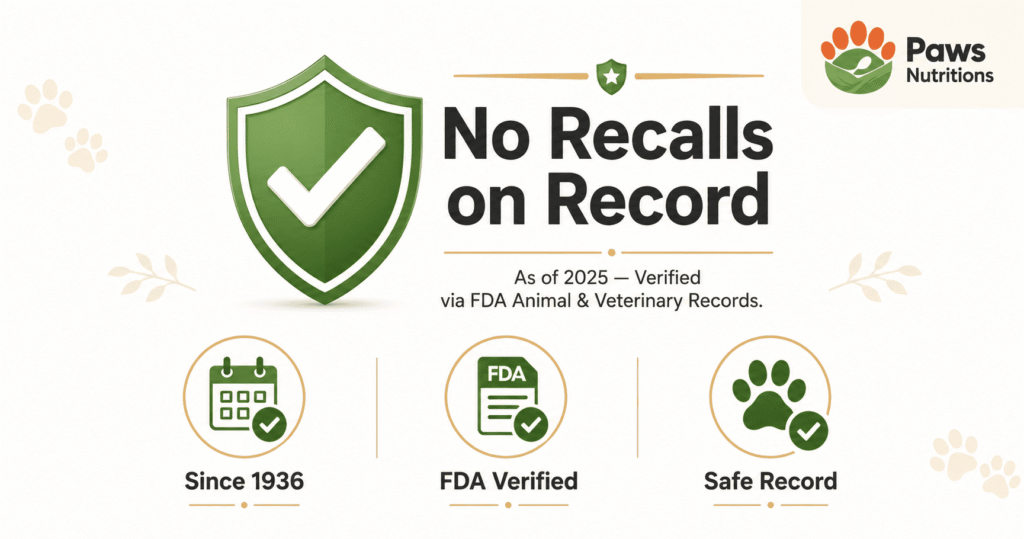
This is genuinely one of Kal Kan’s strongest selling points. As of 2025, Kal Kan has never been recalled by the FDA or issued a voluntary withdrawal. That’s a completely clean safety record spanning nearly 90 years on the market — a rare achievement in the pet food industry. Sources confirming this include the FDA Animal & Veterinary database and the American Veterinary Medical Association (AVMA). No contamination events, no pathogen issues, no nutrient deficiency recalls.
It’s worth noting some context: Kal Kan is a much smaller brand today than it was at its peak, which naturally limits its recall exposure. But even so, the clean record matters. When you compare it directly to Pedigree and Purina Dog Chow — both of which have experienced multiple recalls over the years — Kal Kan’s FDA recall history becomes one of the clearest arguments in its favor. We always recommend staying current with FDA recall alerts regardless of a brand’s historical record — pet food safety standards and manufacturing conditions can change.
Note: Always check the FDA Animal & Veterinary recall database regularly at fda.gov/animal-veterinary — even brands with clean records should be monitored.
Kal Kan Dog Food Feeding Guide — How Much Should You Feed?
Getting the right portion size is just as important as choosing the right food. Overfeeding is one of the leading causes of canine obesity, and with a carbohydrate-heavy formula like Kal Kan, portion control matters even more. The following guide gives you a solid starting point, though individual needs vary based on activity level, metabolism, and health status.
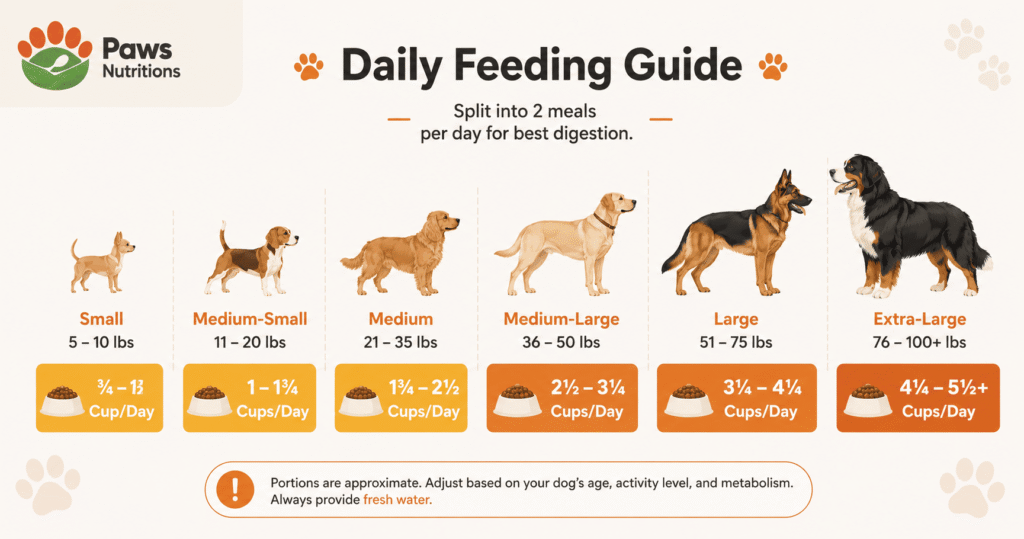
Kal Kan Feeding Chart by Dog Weight (Daily Amounts)
| Dog Weight | Daily Feeding Amount (Approx.) |
| 5 – 10 lbs | ¾ – 1 cup per day |
| 11 – 20 lbs | 1 – 1¾ cups per day |
| 21 – 35 lbs | 1¾ – 2½ cups per day |
| 36 – 50 lbs | 2½ – 3¼ cups per day |
| 51 – 75 lbs | 3¼ – 4¼ cups per day |
| 76 – 100 lbs | 4¼ – 5½ cups per day |
| 100+ lbs | 5½+ cups per day |
Note: Always check the specific bag’s feeding panel for the most current manufacturer recommendations. Split daily portions across two meals for better digestion. Active or working dogs may need 20–30% more than these estimates.
Feeding Tips for Kal Kan Dog Food
A few practical habits will help you get the most out of Kal Kan and keep your dog comfortable. First, always transition to new dog food gradually — mix the old and new food over 7–10 days to avoid digestive upset. Start with 75% old food and 25% Kal Kan, then shift the ratio gradually across the week.
Split the daily portion into two meals — morning and evening — rather than free-feeding. This supports better digestibility and helps you monitor how much your dog is actually eating. Always provide fresh, clean water alongside dry kibble. For neutered or less active dogs, reduce portions by about 10–20% to account for their lower caloric needs. Check your dog’s body condition score monthly — you should be able to feel the ribs with gentle pressure but not see them prominently.
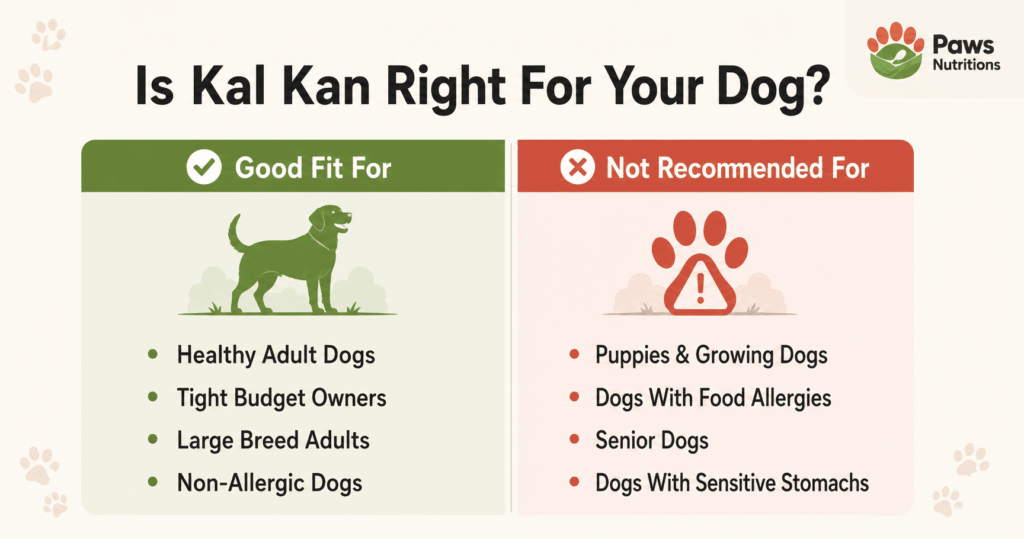
Who Is Kal Kan Dog Food Best For — and Who Should Avoid It?
Kal Kan is a very specific solution for a very specific situation. The more clearly you understand who it works for — and who it doesn’t — the better decision you’ll make for your individual dog.
Kal Kan May Be a Good Fit If…
- You’re on a tight budget and need to feed a large dog affordably without compromise on volume.
- Your dog has no known food allergies to corn, wheat, or soy — the most prevalent ingredients in this formula.
- You need a high-volume, large-bag option available at Walmart for cost-effective bulk buying.
- Your dog is a healthy adult with no special dietary requirements or underlying health conditions.
- You’re supplementing Kal Kan with fresh protein sources like cooked chicken or eggs to boost the overall nutritional balance.
Kal Kan Is NOT Recommended If…
- You have a puppy — Kal Kan does not meet AAFCO growth standards and should never be the primary food for a growing dog.
- Your dog has food allergies — corn, soy, and wheat are the top three ingredients and among the most common canine allergens.
- You have a senior dog — no senior formula means no age-appropriate protein boost, joint support, or adjusted caloric density.
- Your dog has a sensitive stomach — the unnamed meat ingredients and high grain content can trigger digestive issues in sensitive dogs.
- You want complete ingredient transparency — unnamed proteins like Meat and Bone Meal and Animal Fat make allergen tracking impossible.
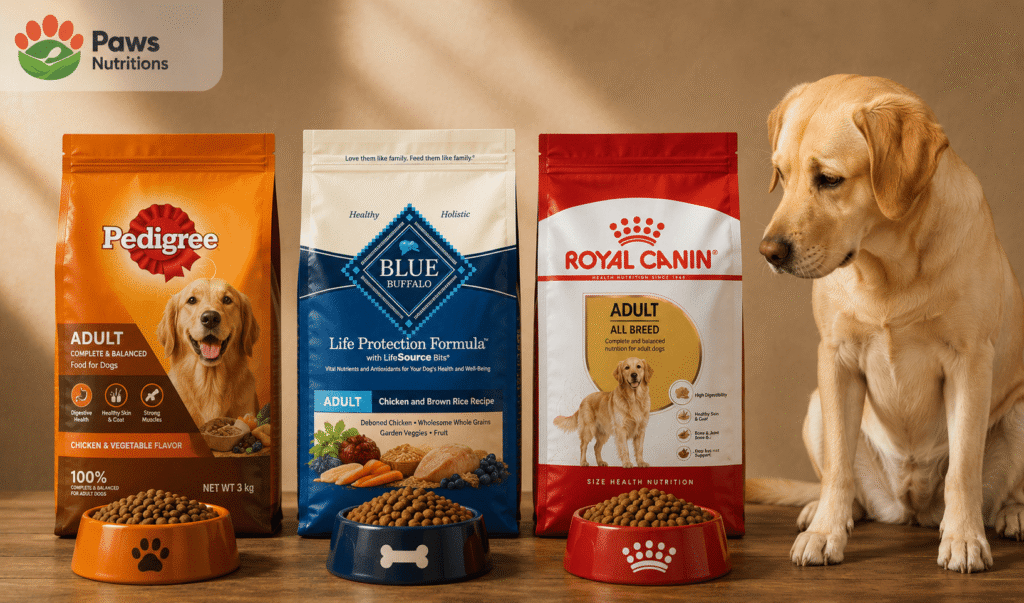
Kal Kan vs. Pedigree vs. Purina Dog Chow — Budget Dog Food Compared
How does Kal Kan actually stack up against the two most popular budget alternatives? This head-to-head comparison covers the factors that matter most: price per pound, protein and fat density, recall history, and availability.
| Factor | Kal Kan Complete Adult | Pedigree Adult Complete | Purina Dog Chow Complete |
| Price Per Pound | ~$0.60–$0.75/lb | ~$0.65–$0.80/lb | ~$0.85–$1.00/lb |
| #1 Ingredient | Ground Yellow Corn | Whole Grain Corn | Whole Grain Corn |
| Named Protein | Chicken By-Prod. Meal | Meat & Bone Meal | Chicken By-Prod. Meal |
| Unnamed Proteins | Yes | Yes | Yes |
| Protein (DMB) | ~23% | ~26% | ~27% |
| Fat (DMB) | ~9% | ~12% | ~13% |
| Carbs (DMB) | ~55% | ~49% | ~47% |
| Grain-Free Option | No | No | No |
| AAFCO Adult | Yes | Yes | Yes |
| Recall History | None — Clean Record | Multiple Recalls | Multiple Recalls |
| Availability | Walmart Only | Wide Retail | Wide Retail |
| Product Variety | 1 Product | Many Formulas | Many Formulas |
Which Food Is Better?
Looking at these numbers, Purina Dog Chow edges out Kal Kan on protein (27% vs 23% DMB) and fat content (13% vs 9% DMB), with a notably better macronutrient profile overall — though at a slightly higher price per pound. Pedigree sits between them but comes with a more concerning recall history. Kal Kan’s single unambiguous advantage is its recall history — zero incidents across nearly 90 years, compared to multiple recalls for both Pedigree and Purina Dog Chow over that same period.
If your absolute priority is the lowest possible cost, Kal Kan delivers. If you can stretch the budget by $0.20–$0.30 per pound, Purina Dog Chow or Purina One offer meaningfully better nutrition without a dramatic price jump. For most owners, Kal Kan is best viewed as a short-term or emergency solution rather than a permanent dietary staple.

Price & Value Analysis — Is Kal Kan Worth the Money?
Kal Kan’s 52 lb bag typically retails at Walmart for approximately $30–$40, placing its price per pound at around $0.60–$0.75 — one of the lowest figures in the entire dry dog food market. At that price point, it competes directly with Walmart’s own Ol’ Roy brand and undercuts Pedigree’s large bags in most markets.
The honest value assessment here is nuanced. For the price, you get a technically AAFCO-complete adult food with a spotless recall record and acceptable palatability — your dog will likely eat it. What you don’t get is strong protein density, transparency in ingredient sourcing, or flexibility for different life stages. If your monthly pet food budget is genuinely constrained, Kal Kan fulfills its promise. But if you can allocate even $5–$10 more per month, options like Diamond Naturals or Purina One offer significantly better nutritional adequacy without breaking the bank.
What Dog Owners Are Saying — Real Kal Kan Experiences
Across online communities, retail review sections, and pet forums, real Kal Kan owners share a fairly consistent picture. Dog food palatability is generally not the issue — most dogs eat Kal Kan without complaint, which is a meaningful positive. Mars Petcare’s use of natural flavoring appears to support good acceptance even in picky eaters.
The most common negative feedback clusters around two areas. First, a subset of owners report digestive issues — loose stools or diarrhea — particularly when switching from a higher-protein food without a proper food transition period. This likely reflects the significant shift in macronutrient ratios rather than a safety problem with Kal Kan itself. Second, and perhaps most practically significant, multiple owners note genuine availability problems — Walmart stores in certain regions carry inconsistent stock, and the brand has no reliable backup retail channel. One owner even reported finding an unusual white powdery substance in a purchased bag, though this appears to be an isolated anecdotal report. Large-breed owners — particularly those with German Shepherds, Labradors, and Mastiffs — are among Kal Kan’s most loyal customers, often using it as a base food supplemented with fresh protein.

What Veterinarians Say About Budget Dog Foods Like Kal Kan
Most veterinary nutritionists draw a clear distinction between “safe” and “optimal” when evaluating budget dog foods. Kal Kan sits firmly in the safe-but-not-optimal category for healthy adult dogs. Meeting AAFCO minimum standards means the food won’t cause acute nutritional deficiency — but it doesn’t mean it delivers peak nutrition.
A key concern veterinary professionals commonly raise with high-carb kibble is the canine obesity risk. Dogs are facultative carnivores — they can digest carbohydrates, but their physiology is optimized for protein and fat as primary fuel sources. A diet where 55% of calories come from carbohydrates can contribute to weight gain in less active dogs, especially those that are neutered. Monitoring body condition score closely is essential when feeding any high-carb formula.
Regarding unnamed proteins like Meat and Bone Meal and Animal Fat, the general professional consensus is that these ingredients aren’t acutely dangerous — but the lack of transparency makes it harder to identify allergen sources or rule out ingredient inconsistency between batches. Some vets advise owners feeding budget kibble to supplement with cooked lean meat, eggs, or fish oil to improve the overall diet supplementation profile without dramatically increasing cost. Others recommend periodic bloodwork to ensure long-term nutritional adequacy is being maintained.
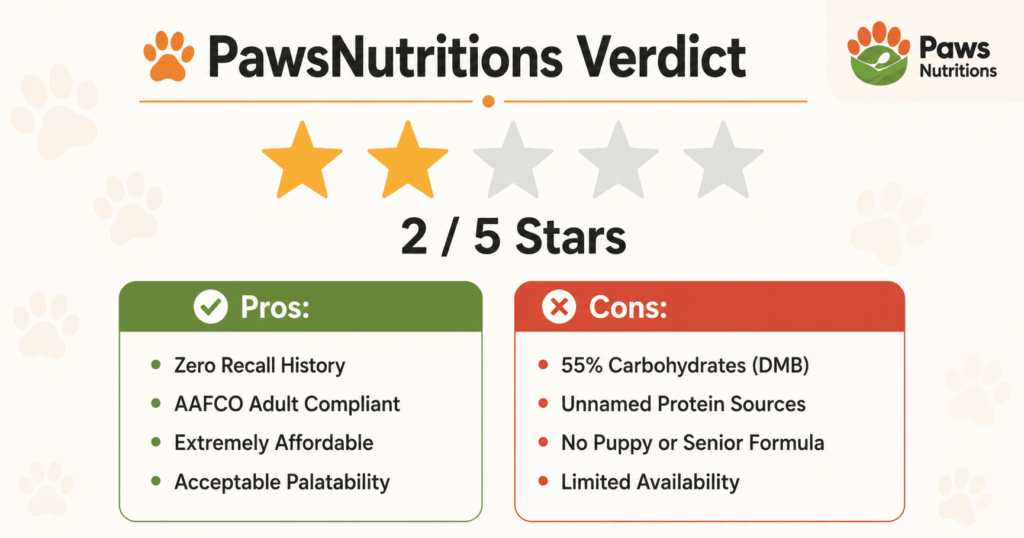
Our Final Verdict — Kal Kan Dog Food Rating
| Pros | Cons |
| Zero recall history since 1936 | Very high carbohydrate content (~55% DMB) |
| AAFCO-compliant for adult dogs | Unnamed protein sources (Meat & Bone Meal) |
| One of the most affordable options | No puppy, senior, or specialized formulas |
| Acceptable palatability — dogs eat it | Menadione Sodium Bisulfite Complex included |
| Mars Petcare manufacturing standards | Limited availability (Walmart only) |
| Clean ingredient list — no artificial colors | Low protein density compared to mid-range brands |
Our overall Kal Kan dog food rating lands at 2 out of 5 stars. Here’s the honest summary: Kal Kan is a brand with nearly 90 years of history and a genuinely impressive safety record — zero recalls since 1936 and AAFCO compliance for adult dogs. Those are real strengths. But the nutritional profile tells a less flattering story. With 55% carbohydrates on a dry matter basis, unnamed protein sources, no specialized formulas, and an ingredient like Menadione in the mix, it’s a below-average food by modern nutritional standards.
For a dog owner in a genuine financial pinch who needs to feed a healthy adult dog affordably, Kal Kan fulfills its core promise — it’s complete, balanced for adults, and it’s safe. But if your budget allows even a modest increase, brands like Purina One or Diamond Naturals deliver a meaningfully better nutritional profile at a price point that’s still very accessible. Think of Kal Kan as a budget dog food recommendation of last resort — useful when it needs to be, but not the best long-term choice for your dog’s health.
Frequently Asked Questions About Kal Kan Dog Food
Is Kal Kan dog food good for dogs?
Kal Kan meets AAFCO adult dog maintenance standards, so it’s technically complete and balanced for healthy adult dogs. However, its 55% carbohydrate content on a dry matter basis and reliance on unnamed protein sources make it a below-average choice nutritionally compared to most mid-range brands.
Has Kal Kan dog food ever been recalled?
No. As of 2025, Kal Kan has a completely clean recall record with zero FDA recalls or voluntary withdrawals since the brand launched in 1936 — one of the few budget dog food brands with this distinction.
Who makes Kal Kan dog food?
Kal Kan is manufactured by Mars Petcare US, the world’s largest pet food company and the same parent behind Pedigree, Royal Canin, and Iams.
Is Kal Kan dog food safe?
Kal Kan is considered safe for healthy adult dogs when fed as directed. It has no recall history and meets AAFCO nutritional minimums. Dogs with allergies to corn, soy, or wheat should avoid it.
Is Kal Kan suitable for puppies?
No. Kal Kan Complete Adult does not meet AAFCO puppy growth standards and should never be fed as the primary food for puppies, pregnant dogs, or nursing mothers.
Where can I buy Kal Kan dog food?
Kal Kan is sold primarily at Walmart in the US. It has limited and inconsistent availability on Amazon and is not stocked at major pet retailers like Chewy or PetSmart.
Why is Kal Kan so cheap?
Kal Kan’s low price reflects its use of high-volume, low-cost ingredients — primarily grain fillers (corn, wheat, soy) and unnamed animal by-products. A single product range and Walmart-only distribution further reduce overhead costs.
Does Kal Kan dog food contain grain?
Yes. Kal Kan is a grain-inclusive formula containing Ground Yellow Corn, Ground Wheat, Wheat Middlings, and Corn Gluten Meal. It is not grain-free and is not linked to the FDA’s DCM investigation.
How does Kal Kan compare to Pedigree?
Pedigree offers slightly better protein content (~26% DMB vs Kal Kan’s ~23%) and a wider product range, but it has experienced multiple recalls over the years. Kal Kan has zero. Both are high-carb budget brands with unnamed protein sources.
Can I mix Kal Kan with other dog food?
Yes. Many owners mix Kal Kan with a higher-protein food or supplement with cooked lean meat or eggs to improve overall nutritional balance without significantly increasing their monthly food cost.
Conclusion — The Bottom Line on Kal Kan Dog Food
Kal Kan is a brand with a genuinely remarkable history — nearly 90 years on shelves, a spotless safety record, and the manufacturing power of Mars Petcare behind it. For a healthy adult dog whose owner is working within a tight budget, it delivers the nutritional baseline AAFCO requires without ever triggering a recall. That’s not nothing.
But an honest Kal Kan dog food review can’t ignore what the numbers say: 55% carbohydrates, unnamed protein sources, limited product range, and an increasingly hard-to-find retail footprint. Kal Kan is a food that works when it needs to — but most dogs deserve better as their long-term daily diet. If you’re feeding Kal Kan right now, monitor your dog’s body condition score, consider protein supplementation, and check the FDA recall database regularly. And when your budget allows that small upgrade, don’t hesitate to make it.
Have questions about your dog’s nutrition? Speak with a veterinary nutritionist for personalized guidance — every dog is different, and expert advice is always the best investment you can make in their health.

A dedicated writer and digital enthusiast committed to creating high-quality, informative, and reader-focused content. Through thoughtful research and clear communication, he aims to deliver valuable insights that help readers navigate the ever-changing digital landscape.