
Picking the right food for your new puppy can feel overwhelming — especially with so many brands competing for your attention. IAMS puppy food has been a popular choice across the USA for decades, sitting on shelves in Walmart, PetSmart, and Chewy at a price most families can afford. But popular doesn’t always mean the best. Is IAMS actually good for your puppy’s growth, health, and long-term development, or are there better options worth considering?
In this complete IAMS puppy food review, you’ll get a fully honest breakdown — ingredients, AAFCO compliance, nutrition, safety concerns, recall history, vet opinions, and head-to-head comparisons with Purina, Pedigree, and Royal Canin. Everything you need to make a confident, informed decision for your puppy is right here.
What Is IAMS Dog Food? Brand Overview & History
Company Background — IAMS and Ownership by Mars Inc.
IAMS has been around since 1946, making it one of the older names in the American pet food industry. The brand was founded by Paul Iams, an animal nutritionist who believed that dogs thrived on animal-based protein rather than plant-heavy diets. For decades, the company stayed relatively small and independent.
That changed in 1999 when Procter & Gamble (P&G) acquired IAMS for $2.3 billion, bringing major corporate backing to the brand. Then in 2014, Mars Inc. (one of the world’s largest pet food conglomerates) purchased IAMS along with Eukanuba and several other brands for approximately $2.9 billion. Today, IAMS operates under the Mars Petcare umbrella, which also owns Pedigree, Royal Canin, Nutro, Whiskas, and Cesar, among others.
How IAMS Positions Itself in the Global Pet Food Market
IAMS sits firmly in the mid-range pet food category. It’s not a budget brand like Ol’ Roy or Alpo, but it doesn’t compete directly with ultra-premium brands like Orijen or The Farmer’s Dog either. The brand’s positioning is essentially, “science-backed, affordable, and accessible nutrition” for everyday dog owners.
Globally, IAMS is sold in dozens of countries and is particularly strong in the USA, UK, and parts of Asia. The brand leans heavily on its nutritional research heritage and veterinary association history to build consumer trust.
Product Philosophy: Affordable Nutrition vs Premium Pet Food Brands
IAMS has always positioned itself around the idea that quality nutrition shouldn’t cost a fortune. Their formulas are designed to meet AAFCO nutritional standards at a price point that most families can sustain long-term. This philosophy makes IAMS appealing to practical pet owners who want a reliable, consistent product without spending $80 a bag.
The trade-off, as we’ll explore throughout this review, is that meeting that price point sometimes means using lower-cost ingredient sources, like corn, chicken by-product meal, and grain-heavy carbohydrate blends, rather than the single-source proteins and whole food ingredients you’d find in premium formulas.
Where IAMS Is Manufactured
Most IAMS dry dog food sold in the USA is manufactured domestically. IAMS operates production facilities in Leipsic, Ohio, and Henderson, North Carolina. Wet and canned products may involve additional facilities depending on the product line. The brand claims rigorous quality control testing at these sites, though they don’t publish the same level of ingredient sourcing transparency as some premium competitors.
Target Market: Budget-Conscious vs Performance-Focused Pet Owners
IAMS primarily targets mainstream American dog owners, families with one or two pets who want a trusted brand without paying premium prices. It’s not typically the first choice for performance dog owners, raw feeding advocates, or pet owners seeking holistic or grain-free nutrition. But for the average puppy owner looking for a solid, science-backed kibble that’s easy to find and reasonably priced, IAMS is one of the most common starting points.
IAMS Puppy Food Product Lines Explained (Full Breakdown)
Dry Puppy Food Formulas (ProActive Health Puppy Line)
The IAMS ProActive Health Smart Puppy is the brand’s flagship dry puppy formula and the most widely reviewed product in the lineup. It’s designed for puppies from birth through 12 months and is available in multiple bag sizes. The formula uses chicken as the first ingredient, includes DHA from fish oil for brain and eye development, and is formulated to meet AAFCO growth standards.
There’s also a Large Breed Puppy variety under the ProActive Health line, which adjusts the calcium and phosphorus ratio to support controlled bone growth, something that’s particularly important for breeds prone to developmental orthopedic issues.
Wet/Canned Puppy Food Options
IAMS offers wet food options for puppies, typically in small pull-tab cans or trays. These are useful for picky eaters, transitioning puppies, or mixing with dry kibble to increase moisture intake. The wet formulas tend to have higher protein percentages on a dry matter basis and lower carbohydrate levels than the dry varieties, a notable advantage for puppies who need more digestible nutrition early in life.
Breed-Size Variations (Small Breed vs Large Breed Puppy Formulas)
One of IAMS’s genuine strengths is offering breed-size-specific formulas. Small breed puppies have faster metabolisms and need more calorie-dense food in smaller kibble sizes. Large breed puppies, on the other hand, need controlled calorie intake and balanced calcium-to-phosphorus ratios to prevent rapid growth that can stress developing joints. IAMS addresses both needs reasonably well for a mid-range brand.
Life-Stage Nutrition Approach (Puppy to Adult to Senior Transition)
IAMS follows a life-stage nutrition model, meaning they have distinct formulas for puppies, adults, and seniors. This is the recommended approach according to AAFCO guidelines. When your puppy reaches 12 months (or 24 months for large breeds), IAMS recommends transitioning to their adult formula. This gradual transition approach helps maintain digestive stability and avoids nutritional imbalances during growth phases.
Specialized Formulas (Sensitive Stomach, Weight Control, etc.)
While IAMS doesn’t have as expansive a specialty line as some competitors, they do offer options for sensitive stomach, weight control, and skin and coat health. These formulas use slightly modified ingredient profiles, for example, the sensitive stomach line reduces certain fiber sources and focuses on easily digestible proteins.
IAMS Puppy Food Ingredients Analysis (Deep Ingredient Breakdown)
Primary Protein Sources — Chicken, Chicken Meal, Animal By-Products
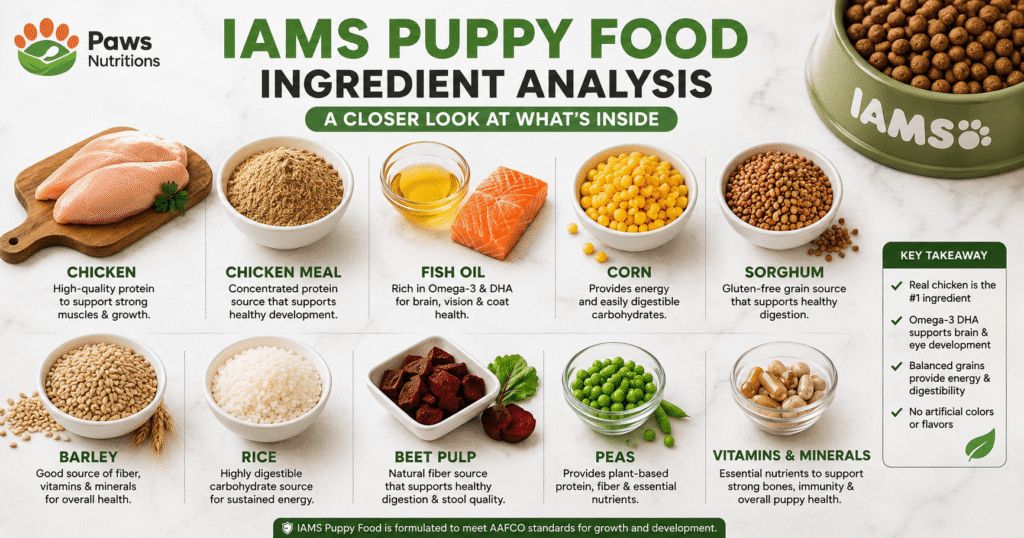
The first ingredient in IAMS ProActive Health Smart Puppy is chicken — a real, whole protein source that’s a strong start. However, the formula also includes chicken by-product meal, which is where things get more nuanced.
Chicken by-product meal refers to rendered parts of the chicken that aren’t sold for human consumption, things like necks, feet, undeveloped eggs, and intestines. While this sounds unappealing, these parts can actually be nutritionally dense, providing amino acids, collagen, and minerals. The concern isn’t necessarily the ingredient itself but the inconsistency in quality between batches and the lack of full transparency about exactly which parts are included.
Carbohydrate Sources — Corn, Sorghum, Barley, Rice
IAMS puppy formulas are relatively carbohydrate-heavy, with ground whole grain corn, sorghum, and barley appearing frequently in the ingredient list. On a calculated dry matter basis, carbohydrates in some IAMS formulas can reach around 45%–50%.
Dogs don’t have a strict dietary carbohydrate requirement, they’re primarily built for protein and fat metabolism. High carbohydrate content in kibble is largely a manufacturing necessity, as starch is needed to bind the kibble shape during extrusion. That said, the carbohydrate level in IAMS is higher than what you’d find in premium formulas, which is a legitimate concern for owners prioritizing low-glycemic, protein-forward feeding.
Fat Sources and Energy Density (Animal Fat, Fish Oil)
IAMS uses chicken fat as the primary fat source in most puppy formulas, which is a good-quality animal fat that provides a concentrated energy source and supports skin health. Fish oil is also included, which is the source of DHA (docosahexaenoic acid), an essential omega-3 fatty acid critical for puppy brain and vision development.
The fat levels in IAMS puppy formulas typically range from 14%–16% on a dry matter basis, which is appropriate for the energy demands of a growing puppy.
Essential Fatty Acids — Omega-3 & Omega-6 Balance
Maintaining the right omega-3 to omega-6 ratio matters for puppies because it directly influences inflammation response, coat health, and cognitive development. IAMS includes both omega-3s (via fish oil) and omega-6s (via chicken fat and plant oils). While the ratio isn’t published explicitly on the packaging, the inclusion of both sources is a positive sign for a mid-range formula.
DHA for Brain Development in Puppies
DHA (docosahexaenoic acid) is one of the most important nutrients for growing puppies. It supports neurological development, visual acuity, and cognitive learning, all things that matter enormously in the first year of your puppy’s life. IAMS includes DHA derived from fish oil in their puppy formulas, which is a genuine nutritional benefit and one of the brand’s strongest selling points for the puppy lineup specifically.
Additives, Preservatives, and Artificial Coloring Concerns
IAMS uses mixed tocopherols and citric acid as natural preservatives in their dry formulas, a better choice than ethoxyquin or BHA, which are more controversial synthetic preservatives used by some other brands. However, some IAMS products do contain caramel color, which is an added dye used to make the food look more appealing. Caramel color serves no nutritional purpose and has faced scrutiny in some safety discussions, though it’s not classified as dangerous by the FDA at levels used in pet food.
Natural flavor is another additive in some IAMS formulas. In pet food labeling, “natural flavor” is a broad term that can refer to animal digest, a palatability enhancer made from rendered animal tissue. It’s not harmful, but it does represent a transparency gap that some owners find concerning.
Chicken Meal vs Chicken By-Product Meal Explained
This is a distinction many dog owners get confused about, so let’s clear it up. Chicken meal is made by rendering clean chicken meat and skin, without added beaks, feet, or feathers, down to a concentrated dry powder. It’s actually a very protein-dense ingredient, more concentrated than fresh chicken because the water has been removed. Chicken by-product meal, on the other hand, is made from parts of the chicken that weren’t intended for human consumption, without the quality guarantee of “clean” chicken only.
IAMS uses both in various formulas. When chicken meal is listed, it’s a solid protein source. When chicken by-product meal appears, the quality is less predictable.
Digestibility and Ingredient Quality Concerns
The digestibility rate of a dog food determines how much of the nutrition your puppy actually absorbs versus what passes through as waste. Premium brands with high meat content typically achieve digestibility rates above 80%. IAMS formulas, due to their higher grain content, may have slightly lower digestibility, though exact figures aren’t published by the brand. Better digestibility means more nutrition from smaller portions and firmer, smaller stools, something you’ll notice fairly quickly when switching between brands.
IAMS Puppy Food Nutrition Profile & AAFCO Standards
Does IAMS Meet AAFCO Guidelines?
Yes, IAMS puppy food carries the AAFCO (Association of American Feed Control Officials) nutritional adequacy statement for “growth,” which is the required standard for puppy formulas. This means the product has either been tested through feeding trials or formulated to meet AAFCO’s minimum nutritional profiles for puppies.
AAFCO compliance is the baseline standard for all commercially sold pet food in the USA. Meeting it doesn’t mean a food is exceptional, it means it’s nutritionally safe and complete for general puppy development. IAMS meets this standard comfortably across its puppy product lines.
Crude Protein, Fat, and Fiber Analysis
Based on the guaranteed analysis on IAMS ProActive Health Smart Puppy (Dry):
| Nutrient | Minimum % (As Fed) |
|---|---|
| Crude Protein | 27% |
| Crude Fat | 14% |
| Crude Fiber | 3% (max) |
| Moisture | 10% (max) |
| DHA (Omega-3) | 0.05% |
| Calcium | 1.2% |
| Phosphorus | 1.0% |
These figures meet AAFCO’s growth requirements for puppies. The protein level of 27% is solid, not outstanding compared to premium brands hitting 35%+, but sufficient for most puppy breeds during normal development.
Calorie Density and Growth Requirements for Puppies
IAMS ProActive Health Puppy provides approximately 380–400 kcal per cup of dry food, depending on the specific formula. This is a reasonable energy density for puppies that need more calories per pound of body weight than adult dogs. Puppies generally need about 2x the calories per kilogram of body weight compared to adults, and IAMS’s feeding guidelines account for this with weight-based portion recommendations printed on every bag.
Life-Stage Nutritional Adequacy (Growth Formula Standards)
AAFCO sets separate standards for “growth” (puppies), “maintenance” (adults), and “all life stages.” An IAMS puppy formula labeled for growth has been assessed to meet the higher nutritional demands of the growth phase, including elevated calcium, phosphorus, protein, and DHA requirements that adult formulas don’t need to hit. This distinction matters, never feed an adult-formulated food to a puppy as the primary diet, as it may be deficient in key growth nutrients.
Digestibility Rate and Nutrient Absorption Quality
As mentioned earlier, IAMS doesn’t publish official digestibility data, a transparency gap compared to some competitors. However, based on the ingredient profile and carbohydrate levels, the digestibility of IAMS puppy food is considered moderate. Real chicken and chicken meal as primary proteins are reasonably digestible. The heavier reliance on grain carbohydrates slightly reduces overall nutrient absorption efficiency compared to meat-forward premium formulas.
Is IAMS Nutritionally Complete and Balanced?
Yes. IAMS puppy food is formulated as a complete and balanced diet, meaning your puppy doesn’t need vitamin or mineral supplements when fed according to the package guidelines. In fact, adding supplements to an already balanced kibble diet can create nutrient imbalances, particularly with calcium and phosphorus, which is something vets caution against. IAMS’s inclusion of added vitamins, minerals, and amino acids is partly a reflection of the processing required to make dry kibble, which can degrade some naturally occurring nutrients.
Is IAMS Puppy Food Safe? Ingredient Safety & Quality Concerns
Processing Methods Used in Kibble Manufacturing
All dry dog food, including IAMS, is made through a process called extrusion, where raw ingredients are mixed, pressurized, steam-cooked at high temperatures, shaped, and then baked. This process effectively kills pathogens and bacteria, making the food safe to eat and shelf-stable. However, the high-heat processing does degrade some heat-sensitive nutrients like certain vitamins, enzymes, and amino acids, which is why IAMS, like most kibble manufacturers, adds synthetic vitamins and minerals back into the formula after extrusion.
This is standard practice in the dry dog food industry and doesn’t make the food unsafe, but it’s a meaningful difference compared to fresh, freeze-dried, or raw diets that preserve more naturally occurring nutrients.
GMO Ingredient Debate in IAMS Formulas
IAMS formulas contain corn, which is among the most common GMO crops in the USA. They also use sorghum and barley, which are frequently treated with glyphosate (Roundup) before harvest as a desiccation agent, meaning these crops may carry herbicide residues into the final product.
The scientific consensus is that approved GMO crops are safe for consumption, and the FDA has not established that herbicide residues in commercial pet food cause direct harm at regulatory levels. However, some research has raised questions about long-term glyphosate exposure and its effects on gut microbiome health, a legitimate area of ongoing scientific discussion that’s worth monitoring, even if it hasn’t led to regulatory action yet.
Artificial Colors, Preservatives, and Controversial Additives
IAMS uses caramel color in some formulas, which is purely cosmetic and serves no nutritional function. The brand also lists natural flavor in several products, a vague term that can conceal the use of animal digest, a palatability enhancer with limited quality transparency.
On the positive side, IAMS has moved away from synthetic preservatives like BHA, BHT, and ethoxyquin in most of its modern formulas, now using mixed tocopherols (vitamin E) and citric acid instead, both considered significantly safer options.
Myths vs Facts About “Low-Quality Fillers”
One of the most common criticisms of IAMS is that it’s full of “fillers.” Corn, while not ideal in large quantities, is not nutritionally empty, it provides carbohydrates, linoleic acid (an omega-6 fatty acid), and some fiber. It’s a lower-cost ingredient compared to sweet potato or brown rice, but calling it a pure filler overstates the case.
The real concern with IAMS isn’t that the ingredients are fillers, it’s that the ratio of grain carbohydrates to animal protein is higher than in premium formulas, which can affect dogs differently depending on their individual metabolism, breed, and health status. Some dogs do fine on IAMS for years. Others show signs of digestive sensitivity or reduced coat quality, which may be a response to the higher carbohydrate load.
Veterinary Safety Perspective on Long-Term Feeding
From a veterinary standpoint, IAMS is generally considered a safe, AAFCO-compliant food for long-term feeding in healthy puppies. Most veterinarians will not warn against IAMS if your puppy is thriving on it. However, vets who specialize in veterinary nutrition often recommend brands with more transparent ingredient sourcing, higher meat content, and published digestibility data for dogs with specific health concerns.
IAMS Puppy Food Recall History & Brand Transparency
Past Recall Incidents and Reasons Behind Them
This is one of the most important sections of this review, and one that competing articles almost entirely skip. Here’s what you need to know.
IAMS has experienced relatively few recalls compared to some other major brands, but they have occurred. Notably:
- In 2010, Mars Petcare (IAMS’s parent company) was involved in a recall of certain products due to potential salmonella contamination, a risk that’s relevant in any dry pet food manufacturing environment.
- IAMS was also impacted during the massive 2007 melamine contamination crisis that swept through numerous brands using ingredients from Chinese suppliers. The crisis resulted in widespread pet deaths and triggered a major overhaul of pet food ingredient sourcing across the entire industry.
It’s worth noting that IAMS has had fewer recalls in recent years, particularly under Mars Petcare’s more stringent quality control programs post-2014.
How Recall Handling Impacts Trust in IAMS
How a brand responds to a recall tells you a great deal about its priorities. IAMS’s recalls have generally been handled through proper FDA notification channels, with product withdrawals and consumer alerts issued appropriately. No brand is completely immune to contamination risks in a mass-manufacturing environment, the key is transparency and speed of response.
Comparison with Recall History of Competitors
| Brand | Notable Recalls | Frequency |
|---|---|---|
| IAMS | 2007 (melamine), 2010 (salmonella concern) | Low |
| Purina | 2022 (packaging defect), 2016 (mold reports, later cleared) | Low–Moderate |
| Pedigree | 2014 (metal fragment), 2012 (mold) | Moderate |
| Royal Canin | Very limited recall history | Very Low |
| Blue Buffalo | 2017 (excess vitamin D), 2019 (pentobarbital detection) | Moderate |
IAMS’s recall record is relatively clean compared to several competitors, which is a meaningful trust signal for concerned pet owners.
Brand Transparency and Quality Control Systems
IAMS operates under Mars Petcare’s ISO-certified quality management systems and claims to conduct over 100,000 quality checks per year across its facilities. However, the brand doesn’t publish detailed ingredient sourcing documentation, third-party testing results, or batch-specific quality reports, something that truly premium brands like Orijen or Acana have made central to their consumer communication.
For a brand of IAMS’s size and market position, more transparency would strengthen trust significantly.
IAMS Puppy Food Benefits (Why Pet Owners Choose It)
Affordable Nutrition for Growing Puppies
The most obvious advantage of IAMS is the price. Feeding a medium-breed puppy IAMS ProActive Health costs significantly less per month than premium alternatives, sometimes 50%–60% less than brands like Blue Buffalo or Royal Canin. For multi-dog households or budget-conscious families, this makes IAMS a genuinely practical choice.
High Protein Content for Muscle Development
At 27% crude protein, IAMS puppy food provides adequate amino acid support for lean muscle development in growing puppies. With chicken as the lead protein and chicken meal as a concentrated secondary source, the formula delivers functional protein, even if the overall protein quality doesn’t match ultra-premium meat-forward formulas.
DHA Support for Brain and Vision Development
As noted earlier, the inclusion of fish oil-sourced DHA is one of IAMS’s genuine nutritional wins for the puppy market. DHA is critical during the first year of development, and IAMS ensures it’s present in their puppy-specific formulas, something not every mid-range brand prioritizes.
Easy Availability in the USA Market
You can find IAMS in virtually every major retailer across the USA, Walmart, Target, PetSmart, Chewy, Amazon, and most grocery chains. This availability matters more than people realize. Consistency of diet is important for puppies, and knowing you can always restock your puppy’s food without a special order is a real practical benefit.
Vet-Recommended Baseline Nutrition (General Guidance)
While IAMS isn’t the top recommendation from board-certified veterinary nutritionists, many general practice veterinarians consider IAMS an acceptable baseline diet for healthy puppies. It’s frequently mentioned alongside Purina Pro Plan and Hill’s Science Diet as a mainstream brand that meets minimum standards reliably.
Wide Range of Formulas for Different Puppy Needs
From small breed to large breed, dry to wet, standard to sensitive stomach, IAMS gives puppy owners meaningful options within a consistent brand ecosystem. This makes it easier to adjust as your puppy grows or if you notice digestive sensitivity developing.
IAMS Puppy Food Drawbacks & Concerns
Use of Corn and Grain-Heavy Formulas
The heavy reliance on corn, sorghum, and barley places IAMS on the higher end of the carbohydrate spectrum compared to premium alternatives. While these grains aren’t toxic, they contribute to a lower overall protein-to-carbohydrate ratio than many nutritionists recommend for carnivore-leaning species like dogs.
Limited Premium Meat Sources Compared to Higher-End Brands
IAMS uses chicken as its primary protein, which is solid, but the formula quickly shifts to chicken by-product meal and grain ingredients. Premium brands at a higher price point often list two or three named meat proteins in the top five ingredients, with no unnamed animal sources.
Controversy Around By-Products and Fillers
The term “by-product” carries significant stigma in the pet food world, and while the science is more nuanced than marketing claims, the lack of transparency around exactly what chicken by-products are sourced from is a legitimate concern. Ingredient quality can vary between production batches in ways that aren’t visible to the consumer.
Limited Transparency Compared to Premium Competitors
IAMS doesn’t publish ingredient sourcing reports, third-party lab testing results, or detailed manufacturing audits publicly. In an era where brands like Open Farm and Acana provide full supply chain transparency, IAMS’s opacity feels like a missed opportunity and a trust gap that some informed pet owners find difficult to overlook.
Mixed Customer Experiences with Digestion Sensitivity
Customer feedback on IAMS is genuinely mixed. Many owners report their puppies thrive on it with firm stools, healthy coats, and good energy. Others describe loose stools, excess gas, and ear infections, symptoms sometimes associated with higher carbohydrate intake or sensitivity to corn or wheat derivatives. Individual puppy responses vary widely, and it’s worth monitoring your puppy’s digestion closely during the first few weeks on any new food.
Feeding Experience & Real-World Puppy Response
Transitioning Puppies to IAMS (Feeding Adaptation Period)
If you’re switching your puppy to IAMS from another brand, or transitioning from breeder food, do it gradually over 7–10 days. Start with 75% old food and 25% IAMS, then increase the IAMS proportion every few days. Rapid food changes are a leading cause of digestive upset in puppies, regardless of the brand you’re switching to.
Stool Quality, Digestion, and Energy Levels
On IAMS, most puppies produce moderate-volume stools. The grain-heavy formula tends to produce slightly larger stool volumes than premium, high-meat foods, a natural result of lower digestibility. Energy levels in puppies fed IAMS are generally reported as normal and appropriate for their age and breed. If you notice persistent loose stools beyond the first two weeks, it may signal that IAMS’s formula isn’t the right match for your specific puppy.
Coat Health and Skin Condition Observations
The omega-3 and omega-6 fatty acids in IAMS, particularly from chicken fat and fish oil, contribute to coat health. Many owners report a reasonably shiny, healthy coat in puppies on IAMS. However, some dogs with underlying skin sensitivity or food allergies to corn or poultry may show dry, flaky skin or excessive scratching on this formula, symptoms worth discussing with your vet if they appear.
Palatability — Do Puppies Actually Like It?
Most puppies eat IAMS eagerly. The addition of natural flavor and the aroma profile of the kibble makes it attractive to most dogs. Extremely picky puppies may occasionally hesitate, but broadly speaking, palatability is not a weakness of IAMS, it’s one of the reasons the brand has maintained consumer loyalty for decades.
Portion Control and Feeding Guidelines by Weight
IAMS provides clear feeding guidelines based on your puppy’s current and expected adult weight. As a general reference:
| Puppy Weight | Daily Amount (Dry Kibble) |
|---|---|
| 5 lbs | 1/3 – 1/2 cup |
| 10 lbs | 1/2 – 3/4 cup |
| 20 lbs | 3/4 – 1.5 cups |
| 40 lbs | 1.5 – 2.5 cups |
| 60+ lbs | 2.5 – 4 cups |
Always split daily rations into 2–3 meals per day for puppies under 6 months, and 2 meals per day thereafter. Adjust based on your puppy’s actual growth, activity level, and body condition score.
IAMS Puppy Food vs Competitors (In-Depth Comparison Section)
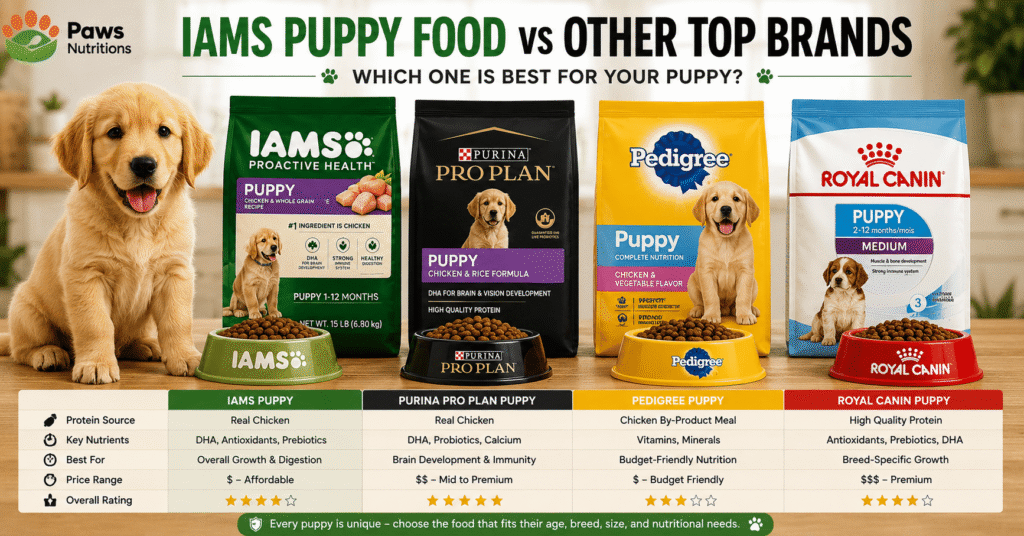
IAMS vs Purina Pro Plan — Ingredient Quality vs Affordability
| Factor | IAMS ProActive Health Puppy | Purina Pro Plan Puppy |
|---|---|---|
| First Ingredient | Chicken | Chicken |
| Protein % | 27% | 30% |
| Fat % | 14% | 17% |
| Key Additives | DHA (fish oil), tocopherols | DHA (fish oil), live probiotics |
| Carbohydrate Level | High (45%–50%) | Moderate (35%–40%) |
| Price (per lb) | Lower | Higher |
| AAFCO Status | Growth | Growth |
| Digestibility | Moderate | High |
| Recall History | Limited | Limited |
Which Food Is Better? Purina Pro Plan edges out IAMS in protein content, digestibility, and ingredient quality. It includes live probiotics for gut health and a lower carbohydrate load. However, it costs noticeably more. If budget is a major concern, IAMS is a reasonable alternative. If you can stretch the budget, Pro Plan offers better overall nutritional value for puppies.
IAMS vs Pedigree — Budget-Tier Comparison
| Factor | IAMS ProActive Health Puppy | Pedigree Puppy |
|---|---|---|
| First Ingredient | Chicken | Ground Whole Grain Corn |
| Protein % | 27% | 23% |
| Fat % | 14% | 12% |
| DHA Included | Yes | No |
| Carbohydrate Level | High | Very High |
| Price (per lb) | Slightly Higher | Lower |
| AAFCO Status | Growth | Growth |
Which Food Is Better? IAMS is meaningfully better than Pedigree for puppies. It has higher protein, includes DHA for brain development, and leads with chicken rather than corn as the first ingredient. If you’re choosing between these two on a tight budget, IAMS is the clearly stronger option.
IAMS vs Royal Canin — Vet-Grade Nutrition Comparison
| Factor | IAMS ProActive Health Puppy | Royal Canin Puppy |
|---|---|---|
| First Ingredient | Chicken | Chicken By-Product Meal |
| Protein % | 27% | 30% |
| Fat % | 14% | 17% |
| Breed-Specific Options | Limited | Extensive |
| Digestibility | Moderate | Very High |
| Veterinary Backing | General | Strong |
| Price (per lb) | Lower | Much Higher |
| Recall History | Limited | Very Low |
Which Food Is Better? Royal Canin wins on digestibility, breed-specific precision, and veterinary credibility, but costs significantly more. For puppies with breed-specific health concerns or sensitivities, Royal Canin is the stronger choice. For healthy puppies without special requirements, IAMS offers reasonable value at a fraction of the cost.
IAMS vs Blue Buffalo — Natural Ingredient Positioning
| Factor | IAMS ProActive Health Puppy | Blue Buffalo Life Protection Puppy |
|---|---|---|
| First Ingredient | Chicken | Deboned Chicken |
| Grain-Free Option | No | Yes (separate line) |
| Artificial Colors | Some formulas | None |
| Key Features | DHA, omega fatty acids | LifeSource Bits, antioxidants |
| Price (per lb) | Lower | Higher |
| Recall History | Limited | Moderate (2017, 2019) |
Which Food Is Better? Blue Buffalo’s ingredient list looks cleaner on paper, but the brand’s recall history is more concerning than IAMS. IAMS wins on recall safety, Blue Buffalo wins on ingredient appearance and marketing appeal.
Value-for-Money Comparison Table
| Brand | Quality | Safety Record | Avg Price/lb | Best For |
|---|---|---|---|---|
| IAMS | Moderate | Good | ~$1.50/lb | Budget-conscious owners |
| Purina Pro Plan | High | Good | ~$2.00/lb | Best overall nutrition |
| Pedigree | Low–Moderate | Moderate | ~$0.90/lb | Absolute budget only |
| Royal Canin | Very High | Excellent | ~$3.50/lb | Breed-specific/sensitive needs |
| Blue Buffalo | Moderate–High | Fair | ~$2.20/lb | Natural ingredient preference |
What Veterinarians & Experts Say About IAMS Puppy Food
General Vet Opinions on Mainstream Puppy Nutrition Brands
Most general practice veterinarians support the use of major commercial brands like IAMS for healthy puppies. The reasoning is straightforward: these brands invest in nutritional research, meet AAFCO standards, and have large-scale quality control systems in place. From a vet’s clinical perspective, a puppy thriving on IAMS doesn’t need to be switched to something more expensive.
Where IAMS Fits in Vet-Recommended Feeding Categories
Vets tend to organize dog food into three informal tiers: veterinary therapeutic diets (prescription only), quality commercial diets (IAMS, Purina, Hill’s), and boutique or grain-free diets (more variable quality). IAMS sits comfortably in the quality commercial diet category, not specialized enough for therapeutic purposes but reliable enough for everyday healthy puppy feeding.
When Vets Recommend IAMS (And When They Don’t)
Vets are likely to support IAMS for: healthy puppies with no specific health conditions, owners on a consistent budget, and dogs that are clearly thriving on the formula. They may steer away from IAMS for: puppies with diagnosed food allergies, dogs with IBD or chronic digestive issues, and large breeds with specific orthopedic development concerns where Royal Canin Large Breed Puppy is often preferred instead.
Scientific Perspective on Balanced Kibble Diets
The scientific consensus supports complete and balanced dry kibble as a safe, viable long-term diet for dogs when formulated to AAFCO standards. The idea that dogs can only thrive on raw or fresh food is not supported by the majority of peer-reviewed veterinary nutrition research. IAMS, as an AAFCO-compliant kibble, fits within the definition of a nutritionally adequate diet for puppies.
Is IAMS Puppy Food Good for Sensitive Stomachs?
Common Digestive Issues in Puppies
Puppies commonly experience “loose stools, gas, and vomiting” during dietary transitions, when stressed, or when their diet doesn’t suit their digestive system. Some puppies have genuinely sensitive stomachs driven by “food intolerances, intestinal parasites, or underlying GI conditions” and others simply need time to adjust to a new food.
Ingredient Triggers (Corn, Protein Sources, Additives)
For puppies with sensitive digestion, IAMS’s standard formulas may pose some challenges. “Corn is a known trigger” for some dogs with grain sensitivities, though true corn allergies are actually less common than popularly believed. Chicken is among the most common “protein allergens in dogs” so if your puppy is showing signs of food sensitivity on IAMS, the chicken protein source may be as much of a culprit as the corn.
Alternative IAMS Formulas for Sensitive Digestion
IAMS offers a “Sensitive Skin & Stomach” formula for adult dogs, though their puppy-specific sensitive line is less developed. If your puppy is showing digestive sensitivity on standard IAMS, you might consider mixing dry kibble with a small amount of wet IAMS to increase moisture and ease digestion, or transitioning to Purina Pro Plan Sensitive Skin & Stomach Puppy formula, which is better developed for this specific need.
When to Switch to a Different Brand
Switch your puppy’s food if you notice “persistent loose stools beyond 2–3 weeks on IAMS, chronic gas, skin itching, ear infections, or poor coat quality” that doesn’t improve after the adjustment period. These can be signs the formula isn’t right for your specific puppy’s biology, not necessarily that the food is “bad,” just that it’s not the right match.
Is IAMS Puppy Food Made in the USA?
Manufacturing Locations and Supply Chain Overview
Yes, the majority of IAMS dry dog food sold in the USA is manufactured domestically. IAMS’s primary USA production facilities are located in Leipsic, Ohio and Henderson, North Carolina. These facilities operate under Mars Petcare’s quality management systems and comply with FDA regulations for pet food manufacturing.
Ingredient Sourcing Transparency
While IAMS manufactures in the USA, not all of its raw ingredients are sourced domestically. Like most large-scale pet food manufacturers, IAMS sources ingredients globally, which means some vitamins, minerals, and even some protein sources may come from international suppliers. The brand doesn’t publish a full ingredient sourcing map, which is a transparency gap worth acknowledging.
Quality Control Standards in Production Facilities
Mars Petcare maintains ISO 9001 quality management certification across its facilities and conducts extensive in-process and finished-product testing. IAMS claims to exceed FDA regulatory requirements for safety testing, including checks for salmonella, mycotoxins, and heavy metals. Independent verification of these claims isn’t publicly available.
Comparison with Imported Premium Brands
Interestingly, some premium brands that market themselves aggressively on quality, including certain Canadian and European formulas, manufacture outside the USA. IAMS’s domestic manufacturing is actually a meaningful advantage compared to imported alternatives, as it reduces supply chain complexity and allows for faster recall response if needed.
Best IAMS Puppy Food Formula — Which One Should You Choose?
Best for Small Breed Puppies
IAMS ProActive Health Smart Puppy Small & Toy Breed is the right choice for puppies expected to reach under 20 lbs at adulthood. It features smaller kibble sizing appropriate for small mouths and a higher calorie density per cup to match the faster metabolism of toy and small breeds.
Best for Large Breed Puppies
IAMS ProActive Health Large Breed Puppy is formulated with a controlled calcium and phosphorus ratio designed to support steady, healthy bone growth in large and giant breeds. If you have a Labrador, German Shepherd, Golden Retriever, or any breed expected to exceed 50 lbs at maturity, this is the IAMS formula to choose.
Best for Sensitive Stomach Puppies
IAMS doesn’t have a dedicated puppy-specific sensitive stomach formula, which is a gap in the product line. For puppies with sensitive digestion, the best approach within IAMS is to use the wet/canned puppy food temporarily while their digestive system adjusts, or to mix wet and dry food in equal parts to reduce the overall carbohydrate load and increase moisture intake.
Best Budget-Friendly Option
The IAMS ProActive Health Smart Puppy Large Bag (30 lbs) offers the best cost-per-day value across the lineup. Buying in bulk significantly reduces the per-pound cost, and the formula itself is the most widely available and most reviewed within the brand’s puppy range.
How to Choose the Right Formula for Your Puppy’s Needs
Start by identifying your puppy’s expected adult size. Then consider: does your puppy have any known food sensitivities, is budget a primary concern, are there specific health conditions your vet has flagged? Use these filters to narrow down the right IAMS formula. If in doubt, IAMS ProActive Health Smart Puppy is a solid all-rounder for most mixed-breed and medium-sized puppies.
Pros and Cons Summary (Balanced View)
Key Advantages of IAMS Puppy Food
- Meets AAFCO growth standards for puppies
- Affordable and widely available across the USA
- Includes DHA from fish oil for brain and vision development
- Offers breed-size specific formulas (small, standard, large breed)
- Manufactured primarily in USA facilities
- Relatively clean recall history compared to major competitors
- Uses natural preservatives (mixed tocopherols, citric acid)
- Chicken is the first ingredient in most puppy formulas
Main Disadvantages and Concerns
- High carbohydrate content (corn, sorghum, and barley dominant)
- Uses chicken by-product meal, less transparent ingredient quality
- Contains caramel color in some formulas, cosmetic additive, no nutritional value
- Limited ingredient sourcing transparency compared to premium brands
- No dedicated puppy sensitive stomach formula
- Lower protein-to-carbohydrate ratio than premium competitors
- Some dogs experience digestive sensitivity on this formula
- “Natural flavor” is a vague, low-transparency additive
Overall Value Assessment
IAMS puppy food represents solid mid-range value for the price. It’s not the best puppy food you can buy, but it’s a safe, AAFCO-compliant choice that millions of puppies across the USA have grown up on without issue. If budget is your primary constraint and your puppy is healthy and thriving, IAMS does what it promises. If you can afford to spend more, brands like Purina Pro Plan offer meaningfully better ingredient quality and digestibility for puppies.
Frequently Asked Questions About IAMS Puppy Food
Is IAMS puppy food good for puppies?
Yes, it is a complete and balanced diet meeting AAFCO growth standards, providing adequate protein, fat, DHA, vitamins, and minerals for normal puppy development, though it is a mid-range rather than premium formula.
Do vets recommend IAMS puppy food?
Many general vets consider it an acceptable option for healthy puppies, while veterinary nutrition specialists often prefer higher-digestibility brands like Purina Pro Plan or Hill’s, but most vets won’t object if the puppy is thriving on it.
Is IAMS dog food good for my dog?
Yes, for healthy dogs it provides adequate everyday nutrition at an affordable price, but dogs with specific medical or dietary needs may require more specialized formulas outside the IAMS range.
Is IAMS puppy food better than Pedigree puppy food?
Yes, IAMS is nutritionally stronger with higher protein, DHA for brain development, and chicken as the primary ingredient, making it a clearly better option despite slightly higher cost.
Where does IAMS rank in quality?
IAMS sits in the mid-tier category, above budget brands like Pedigree but below premium brands like Purina Pro Plan, Royal Canin, and Orijen in ingredient quality and digestibility.
Does IAMS dog food contain artificial colors?
Some formulas include caramel color, which has no nutritional value but is used for appearance, so checking the specific product label is recommended if you want to avoid it.
Final Verdict — Should You Feed Your Puppy IAMS?
Who Should Choose IAMS Puppy Food
IAMS is a good fit for you if your puppy is healthy with no known food sensitivities or allergies, budget is a genuine constraint and you need reliable nutrition at an accessible price, you want a widely available brand that’s easy to restock anywhere in the USA, your vet has approved IAMS as a suitable option for your specific puppy, or you have a breed without specific orthopedic, digestive, or dermatological concerns.
Who Should Avoid It
IAMS may not be the right choice if your puppy has “diagnosed food allergies” particularly to corn or poultry or a “sensitive stomach” that needs higher digestibility and lower carbohydrate content. Giant breed puppies with strict developmental nutrition requirements may be better served by Royal Canin or Purina Pro Plan Large Breed Puppy. Owners who prioritize ingredient transparency and want a brand that publishes sourcing and testing data may also find IAMS falls short of their expectations.
Final Rating Based on Nutrition, Safety, and Value
| Category | Rating |
|---|---|
| Ingredient Quality | 3 / 5 |
| Nutritional Completeness | 4 / 5 |
| Safety & Recall Record | 4 / 5 |
| Value for Money | 4 / 5 |
| Ingredient Transparency | 2 / 5 |
| Overall | 3.4 / 5 |
Best Use-Case Scenario for IAMS in Real-World Feeding
IAMS puppy food performs best as a consistent, daily dry kibble for healthy puppies of small to medium breeds in households where budget and availability are important considerations. It shines in multi-dog families, shelters, and rescue environments where feeding many dogs affordably without compromising on AAFCO compliance is the priority. It’s not the pinnacle of canine nutrition but in the right context, it’s a dependable, honest choice that delivers on what it promises.
Disclaimer:Always consult your veterinarian before making significant changes to your puppy’s diet. Every puppy is different and individual health needs should always guide your feeding decisions.

A dedicated writer and digital enthusiast committed to creating high-quality, informative, and reader-focused content. Through thoughtful research and clear communication, he aims to deliver valuable insights that help readers navigate the ever-changing digital landscape.