
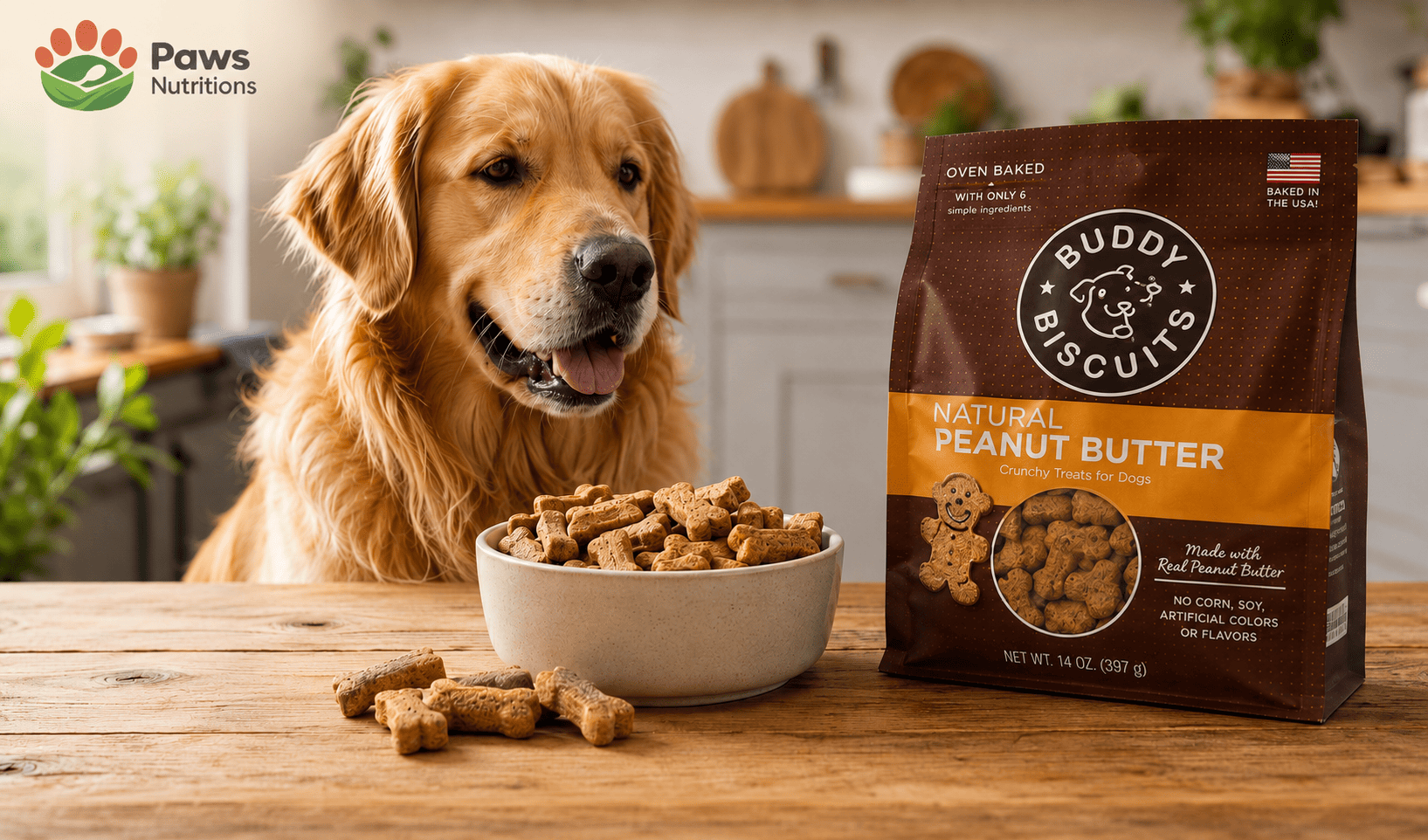
Is your dog going wild for the smell of Buddy Biscuits, but you’re not totally sure what’s actually in them? You’re not alone. Thousands of dog owners buy this crunchy, peanut-butter-scented treat every week, yet very few stop to check the guaranteed analysis or ask whether it fits their dog’s real nutritional needs.
This Buddy Biscuits reviews guide breaks down the ingredients, nutrition, safety record, and real customer feedback so you can make a confident, informed choice. We’ll cover what’s inside the bag, how many calories your dog is really eating, whether puppies can have them, and how Buddy Biscuits stacks up against other popular treats — no fluff, just what you need to decide.
Buddy Biscuits at a Glance — What You Need to Know
This quick-reference summary pulls together the key findings from our full Buddy Biscuits reviews breakdown below, so you can get the gist before diving into the details. Buddy Biscuits are crunchy and soft-baked dog treats made by Cloud Star Corporation, known for a short ingredient list and a homemade-style recipe. They’re best suited for training rewards, occasional snacking, and dogs who enjoy a firm, crunchy bite. Most formulas skip corn, wheat, and soy, which appeals to owners avoiding common fillers.
The biggest strength is ingredient simplicity paired with strong palatability — most dogs genuinely love the taste. The biggest concern is that, like any treat, calorie density adds up fast if you’re not measuring portions. Overall, Buddy Biscuits earn a solid rating for everyday treating, though owners of dogs with food sensitivities should read the ingredient panel on their specific flavor before buying.
What Are Buddy Biscuits? Brand and Product Overview
Who Makes Buddy Biscuits?
Buddy Biscuits is manufactured by Cloud Star Corporation, a California-based pet treat company founded in the 1980s. The brand built its identity around limited ingredient recipes that resemble homemade baking rather than heavily processed treats, positioning itself as a trustworthy everyday option rather than a premium boutique brand.
What Types of Buddy Biscuits Are Available?
The lineup includes crunchy oven-baked biscuits, Soft & Chewy training treats, and specialty lines like Hip & Joint soft chews. Flavors range from peanut butter and roasted chicken to pumpkin and apple. Sizes vary from small training bites to larger biscuits meant for medium and large dogs, so portion control is something every owner needs to plan around.
Are Buddy Biscuits Made in the USA?
Buddy Biscuits are manufactured in the United States, which the brand highlights on its packaging. That said, “made in the USA” refers to where baking and packaging happen — it doesn’t guarantee every raw ingredient was sourced domestically. Always check the ingredient panel if sourcing transparency matters to you.
Buddy Biscuits Ingredients: What’s Really Inside?
Buddy Biscuits Ingredient List Explained
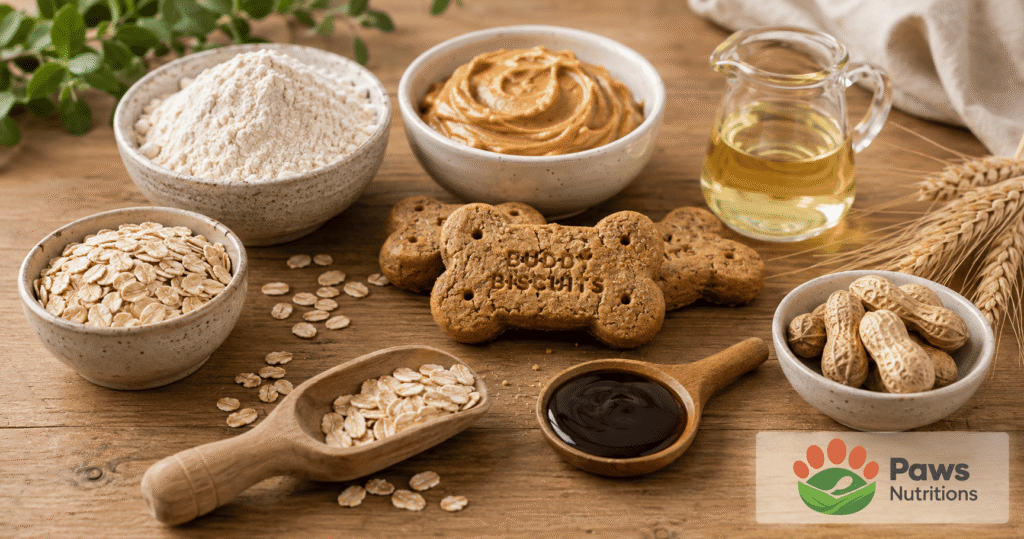
A typical crunchy peanut butter recipe starts with whole wheat flour, oat flour, or rolled oats, followed by peanut butter, vegetable oil, and molasses for flavor. You’ll also see natural flavoring, salt, and a mixed tocopherols preservative, which is a naturally derived alternative to artificial antioxidants like BHA. Formulas vary slightly by flavor, so always check your specific box.
This ingredient order matters more than most owners realize. Under AAFCO labeling rules, ingredients are listed by weight before cooking, so whatever appears first — usually a flour or grain — makes up the largest share of the recipe. That’s normal for a baked biscuit, since treats are built around caloric density and texture, not protein concentration. Don’t expect a treat label to read like a dog food label; the two serve very different nutritional purposes.
Which Buddy Biscuits Ingredients Are Good for Dogs?
Peanut butter and oats provide usable energy and a small protein boost, while pumpkin (in some formulas) adds gentle fiber that supports digestion. Molasses contributes natural sweetness without relying on refined sugar alone. These ingredients aren’t nutritionally complete, but they’re recognizable, food-grade, and generally well tolerated by healthy adult dogs.
Which Ingredients Should Dog Owners Watch?
Some recipes include added sugar or molasses higher up the ingredient list than health-focused owners might prefer. Dogs with grain sensitivities should note that many formulas rely on wheat or oat flour as the primary carbohydrate. If your dog has a known wheat allergy or is on a limited-ingredient diet, cross-check every flavor carefully before feeding.
Are Buddy Biscuits Clean-Label Dog Treats?
“Clean label” isn’t a regulated term, but it generally means short, recognizable ingredient lists free of artificial dyes and synthetic preservatives. Buddy Biscuits largely meet that bar — no artificial coloring, and preservatives are naturally sourced. They’re not a limited-ingredient diet (LID) product, though, since most recipes include several carbohydrate and flavor ingredients together.
Buddy Biscuits Nutrition Analysis
Calories, Protein, Fat, and Fiber
Based on the guaranteed analysis printed on packaging, most Buddy Biscuits formulas run roughly 8-10% crude protein, 5-7% crude fat, and 2-4% crude fiber on an as-fed basis, with moisture kept low since they’re baked biscuits. These numbers are typical for a carbohydrate-forward training treat rather than a protein-dense one.
Are Buddy Biscuits High in Protein?
No, and that’s expected — treats aren’t meant to be a protein source. A treat’s job is palatability and reward value, not meeting your dog’s daily amino acid needs. Your dog’s main meal, not the treat jar, should be doing the nutritional heavy lifting.
How Many Calories Are in Buddy Biscuits?
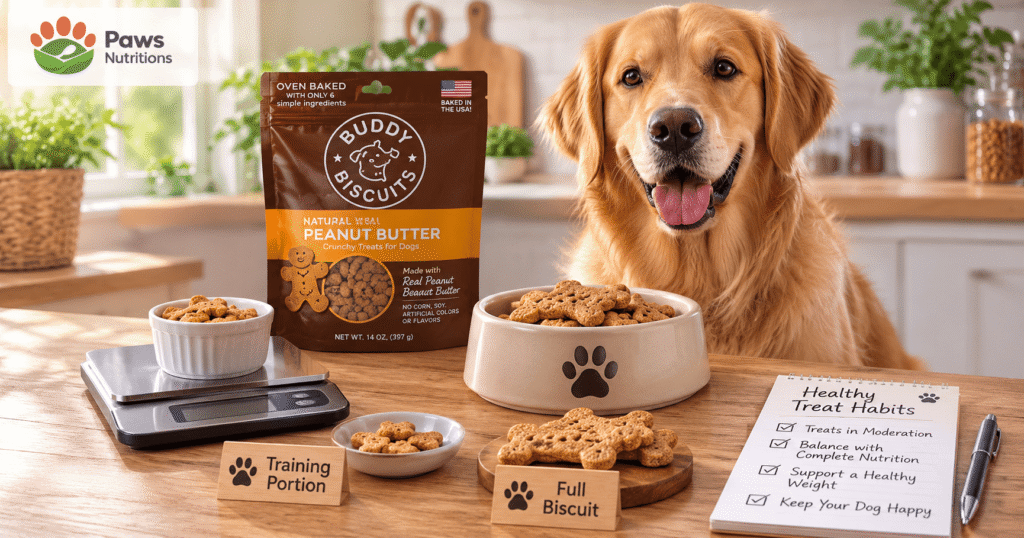
A standard crunchy biscuit runs somewhere around 15-35 calories depending on size, while smaller training bites sit closer to 3-8 calories each. For a 20-pound dog needing roughly 500-600 daily calories, even three or four full-size biscuits can represent a meaningful chunk of their daily caloric intake.
Are Buddy Biscuits Nutritionally Complete?
Buddy Biscuits are treats, not a substitute for a complete and balanced dog food. They aren’t formulated to meet AAFCO nutrient profiles for daily feeding, so they should never replace a portion of your dog’s actual meals, only supplement them occasionally.
It’s worth understanding why this distinction matters. A complete-and-balanced dog food is formulated with precise ratios of digestibility, essential amino acids, vitamins, and minerals validated through AAFCO feeding trials or nutrient profiles. Treats skip that formulation process entirely because they’re designed to be fed in small amounts alongside an already-balanced diet. Relying on biscuits for a meaningful share of daily nutrition — even accidentally, through over-treating — can quietly unbalance an otherwise well-planned feeding routine.
Are Buddy Biscuits Healthy for Dogs?
When Buddy Biscuits Can Be a Good Choice
They work well as a training reward, an occasional snack, or a treat for dogs who enjoy a satisfying crunch. Healthy adult dogs without grain sensitivities generally tolerate them fine when portions stay reasonable and treating doesn’t crowd out balanced meals.
When Buddy Biscuits May Not Be the Best Choice
Overweight dogs, dogs on prescription or therapeutic diets, and dogs with confirmed food allergies may need a different treat entirely. In these cases, the carbohydrate content or specific allergens in Buddy Biscuits could work against a vet-directed feeding plan.
Are Buddy Biscuits Good for Puppies?
Some Buddy Biscuits products are labeled for puppies, but always check the specific package for an age recommendation. Smaller training bites work better than full-size crunchy biscuits for young mouths, and calories still need to be counted against a puppy’s already-precise feeding schedule.
Buddy Biscuits Benefits: What Dogs and Owners May Like
Owners consistently point to strong palatability, easy portioning for training sessions, wide availability in grocery and pet stores, and a satisfying crunch texture that many dogs find rewarding. The recognizable, short ingredient list also appeals to owners wary of long chemical-sounding labels.
Can Buddy Biscuits Be Used for Training?
Yes — their size and crunch make them a popular training reward. For frequent training sessions, break larger biscuits into smaller pieces to avoid overfeeding calories while still delivering the reward your dog is working for.
Buddy Biscuits Drawbacks: What Should Concern Dog Owners?
Ingredient and Nutrition Concerns
Calorie density and added sugars in some flavors are the main concerns. Owners feeding multiple treats a day should recalculate their dog’s regular meal portions to avoid unintentional weight gain over time.
Potential Problems for Sensitive Dogs
Dogs with wheat, oat, or peanut sensitivities may react poorly to certain formulas. Digestive upset, itching, or loose stool after a new treat warrants stopping the product and monitoring your dog closely.
Why the Exact Buddy Biscuits Formula Matters
Don’t judge the whole brand off one bad experience with a single flavor. Crunchy, soft, and specialty formulas have different ingredient panels, so a dog that reacts to peanut butter biscuits might do fine with a pumpkin variety.
Buddy Biscuits Feeding Experience: What Real Customers Say
Beyond ingredient panels and lab-style numbers, real-world Buddy Biscuits reviews from verified buyers add another layer of insight — how dogs actually respond, day to day, once the bag is opened.
What Dog Owners Like About Buddy Biscuits
Most reviews highlight strong taste appeal, a satisfying crunch, and reliability as a training tool. Many owners mention their dogs recognizing the box or bag and getting visibly excited, which speaks to genuine palatability.
Common Customer Complaints
A recurring complaint involves individual dogs experiencing vomiting or diarrhea after eating a specific batch, along with occasional freshness or packaging concerns. Some owners also report their dog refusing certain flavors outright.
Customer Reviews vs. Ingredient Analysis
One dog’s bad reaction doesn’t prove a product-wide safety issue — individual sensitivities, pre-existing conditions, and coincidental illness timing all play a role. Still, if you see a pattern of similar complaints tied to the same lot number, it’s worth reporting to the manufacturer and the FDA.
Are Buddy Biscuits Safe for Dogs?
Buddy Biscuits Safety Considerations
Choose an appropriately sized biscuit for your dog, supervise chewing (especially with harder crunchy varieties), and store treats in a sealed container to maintain freshness and prevent mold or staleness.
Can Dogs Eat Buddy Biscuits Every Day?
Yes, in moderation. Veterinary nutritionists commonly recommend the 10% rule: treats, including biscuits, shouldn’t exceed roughly 10% of a dog’s total daily calorie intake. Daily treating is fine as long as you’re adjusting meal portions to compensate.
What Dogs Should Avoid in Biscuits and Treats
Watch for excessive sugar, known allergens specific to your dog, and anything showing signs of spoilage, staleness, or unusual smell. When in doubt about a batch, don’t feed it.
Buddy Biscuits Recall History: Are They Safe in 2026?
Have Buddy Biscuits Ever Been Recalled?
We ran a dual-source check against both the Buddy Biscuits brand name and its parent company, Cloud Star Corporation, across FDA recall databases and pet food recall trackers. As of 2026, we found no confirmed FDA recall on record for Buddy Biscuits or Cloud Star. What does exist is a number of individual customer complaints describing vomiting and diarrhea after feeding specific batches — these are consumer reports, not verified, company-issued, or FDA-confirmed recalls, and it’s important not to conflate the two.
This distinction matters for EEAT and for your dog’s safety alike. A confirmed recall involves lab-tested contamination, an official FDA or company announcement, and specific lot numbers pulled from shelves. A cluster of unverified customer complaints, on the other hand, can stem from many causes — an unrelated illness, a different food or chew given around the same time, or a genuine but isolated sensitivity to one ingredient. Neither possibility should be dismissed, but only one of them qualifies as a documented recall.
How to Check a Dog Treat Recall
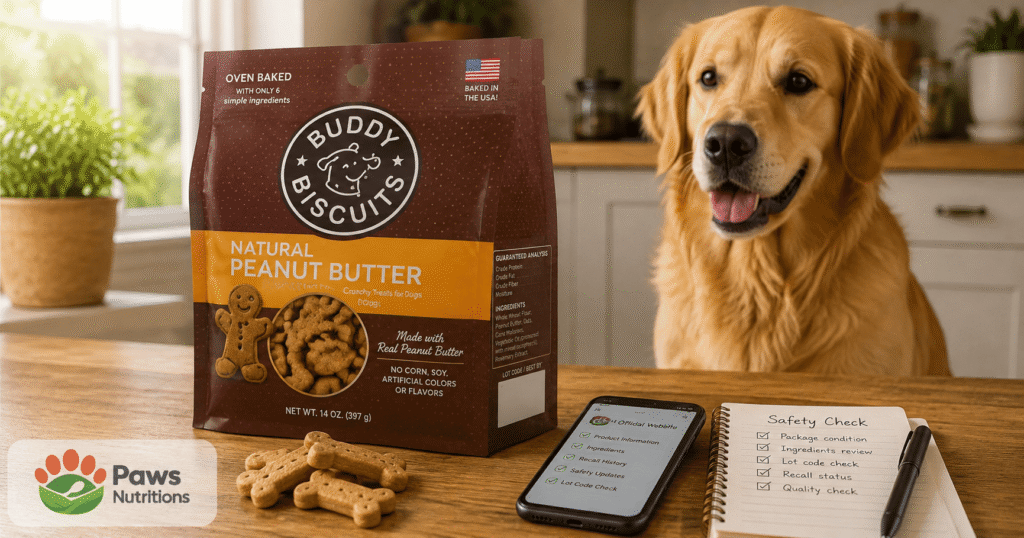
Search the FDA’s Recalls, Market Withdrawals, and Safety Alerts page directly, check the manufacturer’s own recall or safety page, and always keep your bag’s lot number and best-by date so you can cross-reference against any future recall notice.
What to Do If Your Dog Becomes Sick After a Treat
Stop feeding the suspected product immediately, monitor for worsening symptoms like repeated vomiting or lethargy, and contact your veterinarian promptly if symptoms persist beyond 24 hours. Keep the packaging and lot code in case it’s needed for reporting or testing.
Buddy Biscuits vs. Other Popular Dog Treats
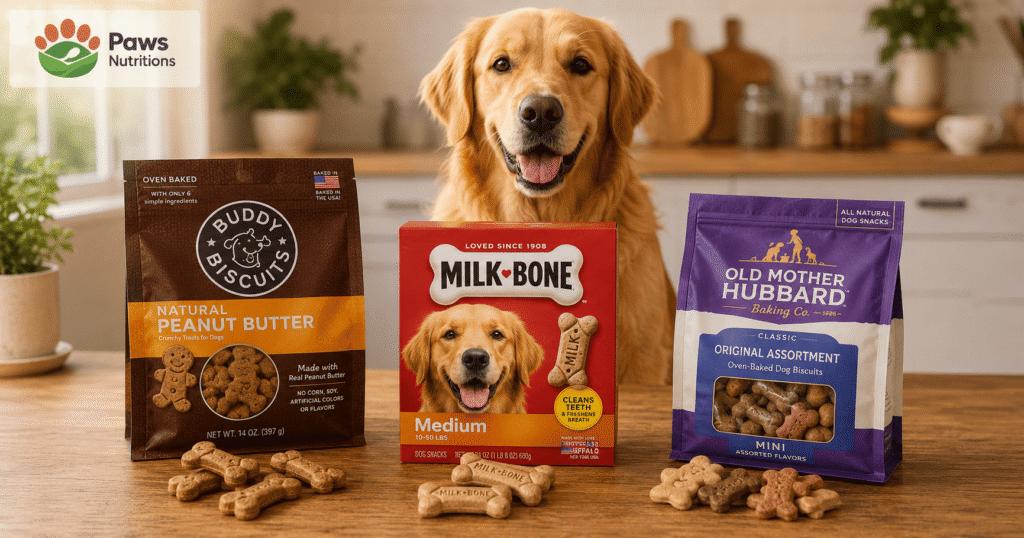
A key part of any honest Buddy Biscuits reviews roundup is seeing how the brand actually stacks up against the competition, not just on paper but on the metrics that matter most to your dog.
| Feature | Buddy Biscuits | Milk-Bone | Old Mother Hubbard |
| Main protein source | Peanut butter, wheat flour | Wheat flour, meat meal | Whole wheat, oats |
| Avg. calories per treat | 15-35 (varies by size) | 20-40 | 15-30 |
| Grain-free options | Limited | Limited | Limited |
| Recall history (2026) | None confirmed | None confirmed | None confirmed |
| Best for | Training, everyday snacking | Everyday snacking | Crunchy biscuit lovers |
Buddy Biscuits vs. Milk-Bone
Both are wheat-based crunchy biscuits with similar calorie ranges. Buddy Biscuits lean slightly more toward a “homemade” recipe positioning, while Milk-Bone offers a broader range of dental and specialty formulas.
Buddy Biscuits vs. Old Mother Hubbard
Old Mother Hubbard also emphasizes oven-baked, simple recipes with comparable calorie counts. The choice often comes down to flavor preference and which shape your dog finds more satisfying to chew.
Buddy Biscuits vs. Cleaner/Minimal-Ingredient Treats
True limited-ingredient treats typically list a single protein source and skip added sugars entirely. Buddy Biscuits are simpler than many mainstream treats but not as minimal as dedicated single-ingredient treats like freeze-dried liver.
Which Dog Treat Is the Better Choice?
For training, Buddy Biscuits’ size range works well. For sensitive dogs, a true limited-ingredient treat is safer. For ingredient-conscious owners on a budget, Buddy Biscuits strike a reasonable middle ground.
There’s no single winner across every category, and that’s the honest answer most comparison articles skip. If your dog handles wheat and peanuts fine, all three brands in this comparison perform similarly on calories and safety history. The real differentiator usually comes down to your dog’s individual palatability preference and whether you value a slightly more premium formula enough to pay more per ounce.
How Many Buddy Biscuits Can You Give Your Dog?

Buddy Biscuits Treat Guide by Dog Size
| Dog Size | Approx. Weight | Suggested Daily Biscuits |
| Toy/Small | Under 15 lbs | 1 small biscuit or 2-3 training bites |
| Medium | 15-40 lbs | 1-2 medium biscuits |
| Large | 40-70 lbs | 2 medium or 1-2 large biscuits |
| Extra-Large | 70+ lbs | 2-3 large biscuits |
How to Calculate Treat Calories
Start with your dog’s daily calorie needs from your vet or a reliable calculator, then keep treat calories under 10% of that total. Subtract the difference from their regular meal if you’re treating heavily during a training day.
Can You Give Buddy Biscuits to a 3-Month-Old Puppy?
Only in very small, soft pieces if the label supports puppy feeding, and always with close portion control. At this age, calorie needs are precise, so lean on puppy-formulated training treats when possible.
What Can Puppies Chew Instead of Regular Biscuits?
Best Treat Textures for Young Puppies
Soft training treats, freeze-dried single-protein pieces, and puppy-specific chews are gentler on developing teeth than hard crunchy biscuits, which can be tough for very young puppies to manage safely.
What Can a 4-Month-Old Puppy Chew On?
Teething puppies benefit from appropriately sized rubber chew toys and soft treats rather than hard biscuits that could stress emerging teeth. Always supervise chewing and avoid anything that could splinter or break into large chunks.
Buddy Biscuits for Dogs With Special Dietary Needs
Buddy Biscuits for Overweight Dogs
Given the calorie density, overweight dogs often do better with lower-calorie treats like small vegetable pieces or dedicated diet treats, reserving Buddy Biscuits for occasional, smaller portions.
Buddy Biscuits for Dogs With Allergies
Always read the full ingredient panel for wheat, peanut, or dairy allergens before feeding. A single-protein, limited-ingredient alternative is safer for confirmed food allergy cases.
Buddy Biscuits for Dogs With Sensitive Stomachs
Introduce any new treat gradually and watch for soft stool or gas over the following 24-48 hours. If symptoms appear, discontinue and consult your veterinarian before trying another flavor.
What Do Vets Think About Buddy Biscuits?
What Makes a Dog Treat a Good Choice From a Veterinary Perspective?
Veterinary nutrition guidance generally favors treats with modest calories, recognizable ingredients, and appropriate portion sizing relative to a dog’s total diet — criteria Buddy Biscuits largely meet for healthy adult dogs.
Are Buddy Biscuits Appropriate as an Everyday Reward?
For healthy dogs without dietary restrictions, yes, as long as the 10% treat-calorie rule is respected and meals are adjusted accordingly.
When Should You Ask Your Veterinarian About Treats?
Talk to your vet before introducing any new treat if your dog has allergies, is overweight, has gastrointestinal issues, or is on a prescription diet, since even “healthy” treats can interfere with a specific medical plan.
What Are the Cleanest Dog Treats?
“Clean” generally means short ingredient lists, no artificial dyes or synthetic preservatives, recognizable whole-food ingredients, and appropriate calorie density for the treat’s size. Remember that “natural” on a label doesn’t automatically mean a treat is lower in calories or better suited to every dog.
Owners chasing a “clean” treat often overlook that a short ingredient list can still be calorie-dense, and a longer list isn’t automatically unhealthy if every ingredient serves a clear nutritional or functional purpose. The more useful habit is reading past the front-of-bag marketing and checking the guaranteed analysis alongside the ingredient panel together, since neither one tells the full story on its own.
What Is the Best Biscuit to Feed Your Dog?
Best Biscuit for Training
Smaller, low-calorie training bites that can be given frequently without exceeding daily limits.
Best Biscuit for Large Dogs
Larger crunchy biscuits sized to match a bigger dog’s bite and calorie allowance.
Best Biscuit for Small Dogs
Mini training-sized biscuits or biscuits broken into smaller pieces to prevent overfeeding.
Best Biscuit for Ingredient-Conscious Owners
A short-ingredient, no-artificial-additive formula like Buddy Biscuits’ core recipe.
Best Option for Dogs With Sensitive Diets
A true single-protein, limited-ingredient treat rather than a multi-ingredient biscuit.
What to Feed Dogs Instead of Biscuits
Small pieces of your dog’s regular kibble, dog-safe fruits like blueberries or apple slices, plain cooked chicken or pumpkin, and purpose-made low-calorie training treats all work as lighter alternatives when you want to cut back on biscuit calories.
How to Choose a Healthy Dog Treat
Check the Ingredient List
Look for recognizable, whole-food ingredients near the top of the list.
Compare Calories Per Treat
Match treat calories to your dog’s size and daily allowance.
Consider Your Dog’s Size and Age
Puppies, seniors, and small breeds all have different texture and portion needs.
Look Beyond Marketing Claims
“Natural” and “wholesome” aren’t regulated terms — always verify with the actual guaranteed analysis.
Match the Treat to Your Dog’s Dietary Needs
Dogs with allergies, obesity, or prescription diets need treats chosen with their vet, not just their taste preference.
Buddy Biscuits Pros and Cons at a Glance
| Pros | Cons |
| Short, recognizable ingredient list | Not suitable for dogs with grain or peanut allergies |
| Strong palatability across most dogs | Calorie density adds up with frequent treating |
| Widely available and affordably priced | Some flavors contain added sugar or molasses |
| Easy to portion for training | Not a true limited-ingredient treat |
| No confirmed 2026 recall on record | Individual dogs may react differently to specific batches |
Buddy Biscuits FAQs
Are Buddy Biscuits healthy?
They’re a reasonably clean, moderate-calorie treat for healthy adult dogs when fed in moderation, but they aren’t nutritionally complete.
What is the healthiest brand of dog treats?
There’s no single “healthiest” brand — compare ingredient quality, calorie density, and your dog’s specific needs instead.
Are Buddy Biscuits made in the USA?
Yes, they’re manufactured in the USA, though not every raw ingredient is necessarily US-sourced.
Can I give a 3-month-old puppy treats?
Only very small, soft pieces in limited amounts, ideally from a puppy-formulated treat line.
Is it okay to give your dog treats every day?
Yes, as long as treats stay under roughly 10% of daily calories and meals are adjusted.
What are the cleanest dog treats?
Treats with short ingredient lists, no artificial dyes, and recognizable whole-food ingredients near the top.
Final Verdict: Are Buddy Biscuits Worth Buying?
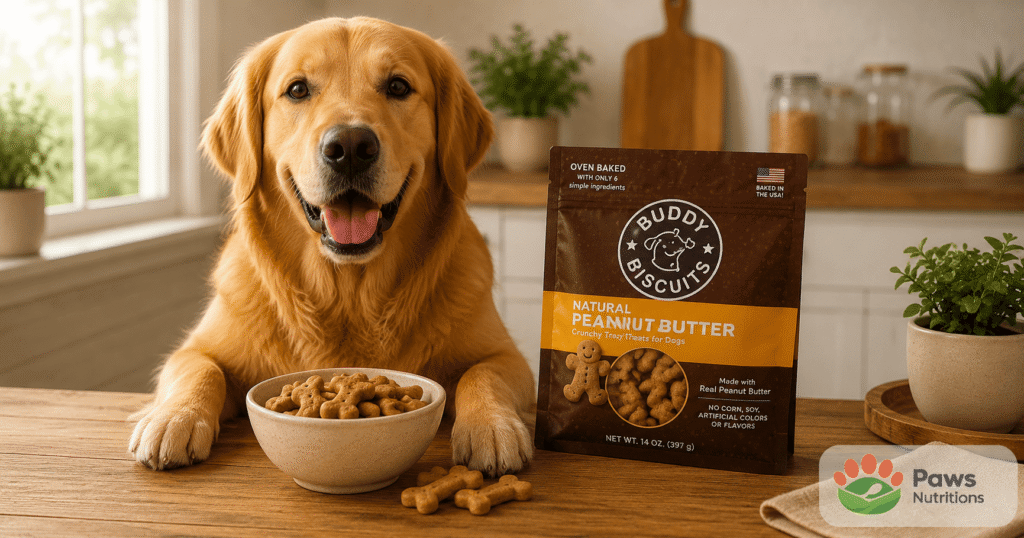
Bringing together everything covered in these Buddy Biscuits reviews — ingredients, nutrition, safety, recalls, and real customer feedback — Buddy Biscuits earn a solid, middle-of-the-pack recommendation: a short, recognizable ingredient list, strong palatability, and no confirmed 2026 recall make them a reasonable everyday treat for healthy adult dogs. They’re not a fit for dogs with grain or peanut sensitivities, and calorie-conscious owners need to portion carefully, especially during frequent training sessions.
Our Bottom Line on Buddy Biscuits
If your dog is healthy, has no known allergies, and you’re treating in moderation, Buddy Biscuits are a safe, tasty, and budget-friendly choice. For dogs with special dietary needs, a vet-approved, single-ingredient alternative is the safer route.
Disclaimer: This article is written for educational purposes only. PawsNutritions has no affiliate, sponsorship, or paid promotional relationship with Buddy Biscuits, Cloud Star Corporation, or any other brand mentioned. Any brand or retailer links included are provided solely for reader convenience and do not constitute an endorsement.

A dedicated writer and digital enthusiast committed to creating high-quality, informative, and reader-focused content. Through thoughtful research and clear communication, he aims to deliver valuable insights that help readers navigate the ever-changing digital landscape.
1 thought on “Buddy Biscuits Reviews 2026: Are They Safe & Healthy?”