
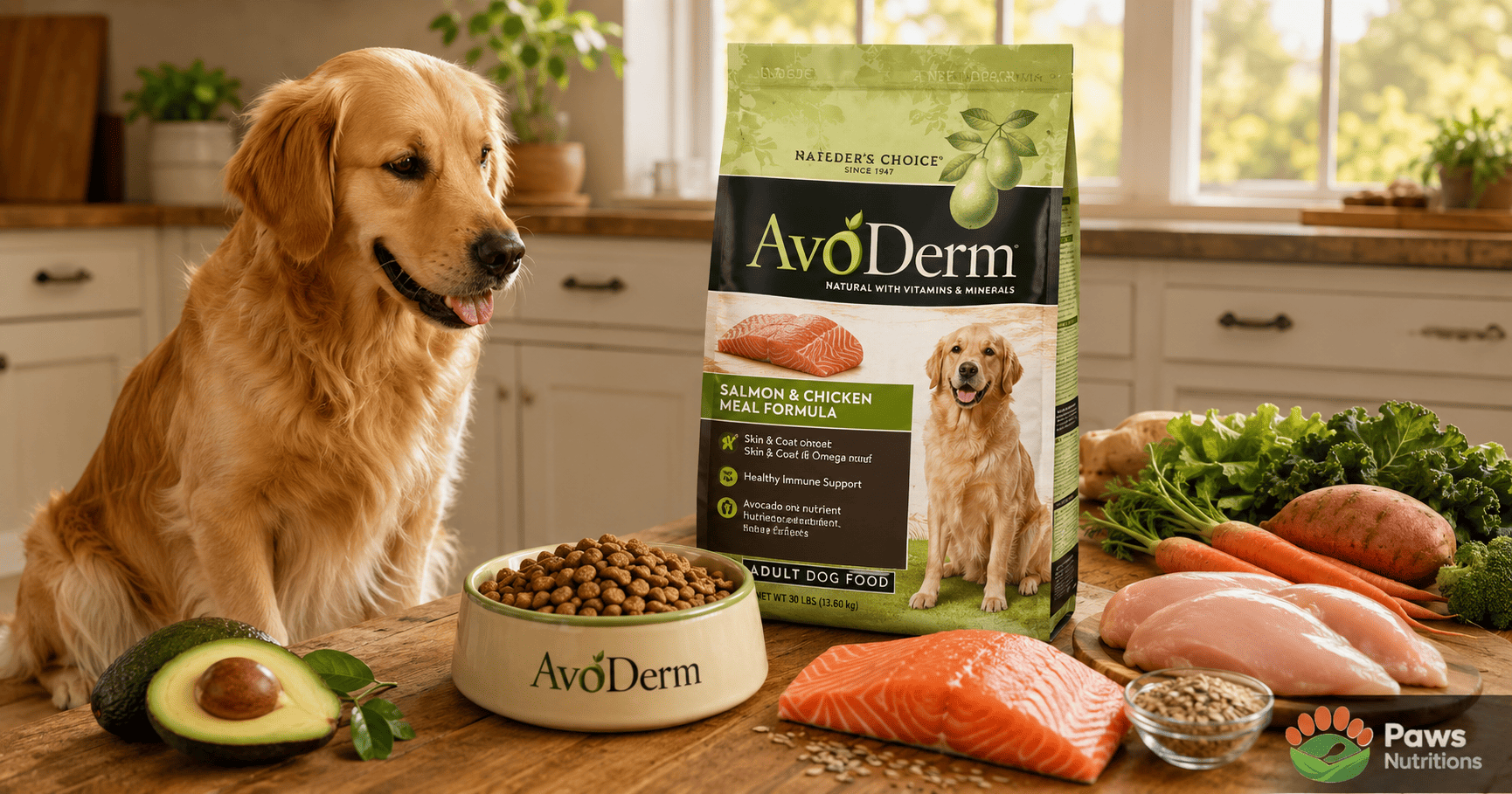
Choosing the right food for your dog can feel overwhelming, especially when a brand makes big promises about premium ingredients and better nutrition. If you’ve been searching for an honest AvoDerm dog food review, you’re probably wondering whether its avocado-based recipes, natural ingredients, and skin-and-coat claims truly justify the price. With mixed ratings across different product lines and plenty of conflicting opinions online, separating marketing from reality isn’t always easy.
This guide takes a close, evidence-based look at AvoDerm’s ingredients, nutritional quality, safety record, recalls, pricing, and real customer experiences. Instead of reviewing just one recipe, you’ll get a complete picture of the brand’s dry, canned, grain-free, senior, and sensitive digestion formulas, helping you decide whether AvoDerm is the right choice for your dog’s age, lifestyle, and nutritional needs.
What Is AvoDerm Dog Food? Brand Overview
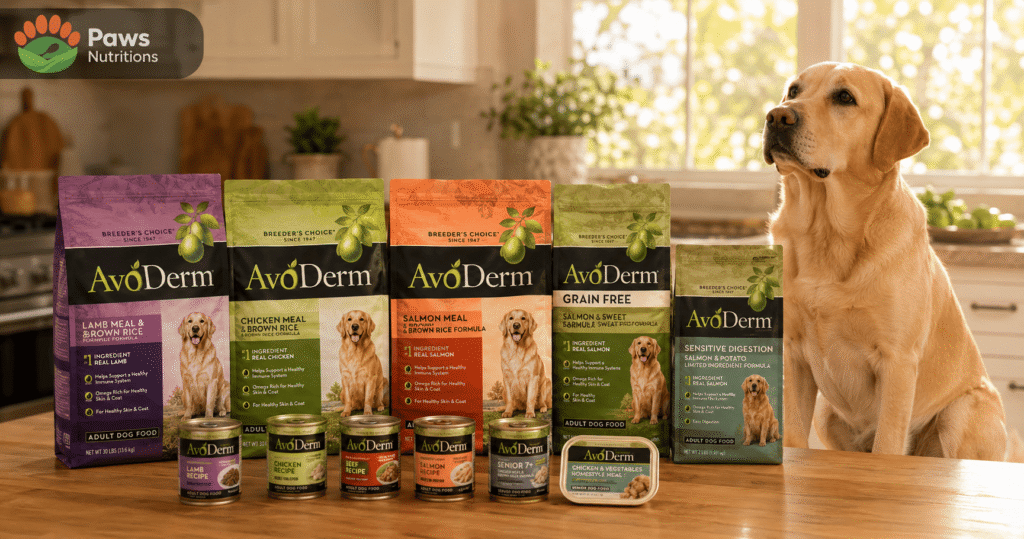
AvoDerm has built its reputation around one ingredient that immediately catches many pet owners’ attention—avocado. While that might sound unusual at first, the brand has spent decades promoting avocado as a natural source of healthy fats that support skin and coat health. However, AvoDerm is much more than an avocado-focused dog food. Today, it offers an extensive range of dry kibble, canned recipes, grain-free options, senior formulas, and recipes designed for dogs with sensitive stomachs.
Unlike many boutique brands that entered the market during the grain-free boom, AvoDerm has a much longer history. That experience shows in its broad product lineup, long-standing customer base, and consistent emphasis on natural ingredients rather than chasing every nutrition trend. Even so, not every recipe performs equally well, which is why evaluating the brand as a whole requires looking beyond a single bag of food.
Brand History — Founded in 1947 by Harold Taylor
The company behind AvoDerm traces its roots back to 1947, when Harold Taylor established what would eventually become one of America’s long-running pet food manufacturers. Over the decades, the business evolved from producing pet nutrition products into developing specialized recipes focused on ingredient quality and balanced nutrition.
AvoDerm itself was introduced much later with a unique philosophy: combine traditional animal proteins with nutrient-rich avocado ingredients to create diets that support healthy skin, a shiny coat, and overall wellness. At the time, this approach helped distinguish the brand from competitors relying primarily on conventional formulations.
Years of product development have expanded the range far beyond its original recipes. Today, you’ll find formulas tailored for puppies, adults, seniors, weight management, grain-free feeding, and digestive health, giving owners more flexibility than many similarly sized natural-food brands.
Who Owns AvoDerm Today?
Today, AvoDerm is manufactured and marketed by Breeder’s Choice Pet Foods, LLC, an American pet food company focused on premium nutrition for dogs and cats. The company also produces other pet food brands, allowing it to leverage decades of manufacturing experience while maintaining separate product lines for different nutritional needs.
Ownership has changed over the years, which sometimes causes confusion when older articles mention different parent companies. More recent information identifies Breeder’s Choice Pet Foods as an independent ownership group, making it important to rely on current ownership details rather than outdated references.
For pet owners, ownership matters because established manufacturers generally have more consistent quality-control systems, supplier relationships, and production oversight than newly launched boutique brands.
Where Is AvoDerm Manufactured?
AvoDerm dog food is manufactured in Irwindale, California, where Breeder’s Choice operates its production facility. Domestic manufacturing is an important trust factor for many owners because it allows tighter oversight of ingredient sourcing, quality assurance, and food safety throughout production.
Manufacturing in the United States doesn’t automatically guarantee superior quality, but it does mean the products are produced under U.S. regulatory standards and quality-control procedures. For owners who actively avoid imported pet foods or worry about ingredient sourcing, this offers additional peace of mind.
Another advantage is consistency. Long-established manufacturing facilities typically refine their production processes over many years, helping maintain recipe consistency from one batch to the next—a factor many long-term AvoDerm customers frequently appreciate.
Is AvoDerm a Good Dog Food? Our Verdict
If you’re looking for the short answer, yes—AvoDerm can be a good dog food, but it depends heavily on which formula you choose.
That’s an important distinction because many reviews treat the entire brand as though every recipe performs the same. In reality, AvoDerm’s product line includes recipes that receive excellent nutritional ratings alongside others that are simply average. Evaluating only one formula can create a misleading impression of the brand as a whole.
After examining ingredient quality, nutritional profiles, recall history, customer experiences, and product variety, AvoDerm stands out as a solid premium option for many healthy adult dogs. However, it isn’t the perfect choice for every household, especially if you’re seeking the highest meat inclusion, the lowest carbohydrate content, or the most budget-friendly food available.
Overall Rating Summary Across the Full Product Line
Rather than assigning one score to every product, it’s more helpful to evaluate the brand by category.
| Category | Overall Assessment |
|---|---|
| Ingredient Quality | Very Good |
| Animal Protein Sources | Good to Very Good |
| AAFCO nutrient profile compliance | Meets standards |
| Product Variety | Excellent |
| Skin and coat support | Excellent |
| Value for Money | Good |
| Recall History | Good |
| Overall Brand Rating | 4.4/5 |
The strongest-performing recipes are generally the grain-free dry foods, while some grain-inclusive and senior formulas receive more moderate evaluations because of ingredient composition and overall nutritional balance.
This variation explains why ratings across the brand range from approximately 2.5 stars to 5 stars depending on the specific SKU being reviewed rather than indicating inconsistent manufacturing quality.
Where AvoDerm Excels
Several qualities consistently distinguish AvoDerm from competing natural pet foods.
First, the company offers one of the broadest product ranges in its category. Whether your dog prefers kibble, canned food, grain-free recipes, or senior nutrition, you’ll find multiple options rather than just one or two flagship products.
Second, many formulas use clearly identified animal protein sources instead of vague meat ingredients. Combined with beneficial fats from avocado oil and other quality ingredients, these recipes are particularly attractive for dogs needing support for healthy skin, itchy skin, dull coats, or seasonal dryness.
Another strength is long-term customer loyalty. Many owners report feeding AvoDerm for years with consistent results, especially for maintaining coat quality and helping selective eaters enjoy mealtime. Those recurring experiences suggest the brand has built lasting trust among many pet owners, not just first-time buyers.
Where AvoDerm Falls Short
No dog food is perfect, and AvoDerm has a few weaknesses worth considering before you buy.
Some recipes rely more heavily on plant-based ingredients than premium competitors with higher meat inclusion. While these ingredients contribute valuable nutrients, they can also increase the reported protein percentage without necessarily providing the same biological value as additional animal protein. Plant-protein boosters are something informed buyers should recognize when comparing ingredient panels.
Price is another consideration. AvoDerm typically costs more than many grocery-store brands but doesn’t always offer dramatically better nutrition than similarly priced premium competitors.
Finally, certain grain-free formulas have received isolated reports of digestive upset after diet transitions. Like any food change, switching gradually often reduces digestive issues, but sensitive dogs may still respond differently depending on the recipe.
Overall, AvoDerm earns a strong recommendation for many dogs, but choosing the right formula—and transitioning carefully—matters just as much as choosing the brand itself.
AvoDerm Product Line Breakdown
One reason AvoDerm stands out from many natural pet food brands is the sheer variety of recipes it offers. Instead of relying on one flagship formula, the company has developed specialized diets for different ages, lifestyles, and dietary needs. That variety is a major advantage because no single recipe is ideal for every dog.
However, it also creates confusion. Some reviews praise AvoDerm as a five-star food, while others give certain formulas average or even below-average ratings. The difference isn’t necessarily due to inconsistent manufacturing—it usually comes down to the ingredients and nutritional profile of individual recipes. Understanding those differences will help you choose the formula that best matches your dog’s needs.
AvoDerm Grain-Free Dry (5★ Line)
The Grain-Free Dry collection is widely regarded as AvoDerm’s strongest product line. These recipes typically feature named animal proteins such as salmon, chicken, or lamb as the primary ingredients, supported by healthy fats and carefully selected fruits and vegetables.
Many formulas also include herring meal, flaxseed, and avocado oil, creating a balanced source of omega-3 and omega-6 fatty acids that help maintain healthy skin and a glossy coat. This makes the grain-free line particularly attractive for dogs prone to itchy skin, dull fur, or seasonal shedding.
Unlike some grain-free foods that rely heavily on legumes, AvoDerm generally balances animal proteins with plant ingredients more effectively. Although peas and other legumes are still present, the recipes typically provide respectable meat content compared to many competing grain-free brands.
Another advantage is digestibility. Many owners report noticeable improvements in coat condition and overall energy after transitioning successfully to these formulas. While every dog responds differently, these recipes consistently receive the highest praise within the AvoDerm lineup.
These formulas are often best suited for:
- Active adult dogs
- Dogs with healthy grain-free diets recommended by their veterinarian
- Dogs needing additional skin and coat support
- Picky eaters that respond well to fish-based proteins
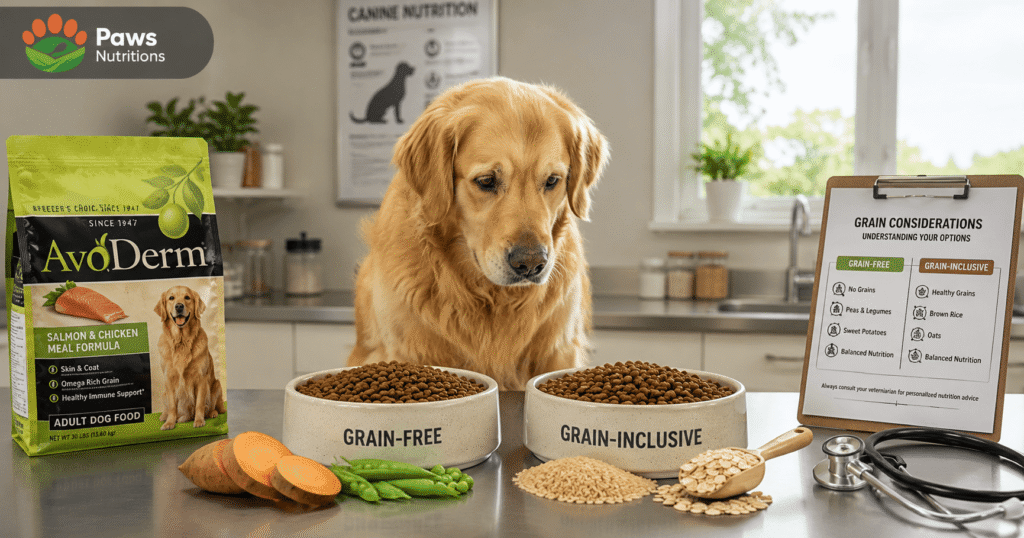
That said, grain-free isn’t automatically better. Unless your veterinarian recommends avoiding grains, a high-quality grain-inclusive diet can be equally nutritious for many healthy dogs.
AvoDerm Natural Original Dry & Canned
The Natural Original range represents AvoDerm’s traditional product line and includes both dry kibble and canned recipes. These formulas generally contain grains such as brown rice alongside animal proteins, creating a more conventional nutritional profile than the grain-free collection.
For many households, these recipes offer a practical balance between ingredient quality and affordability. Dogs that digest grains well often thrive on these diets, and the inclusion of complex carbohydrates provides steady energy throughout the day.
The canned recipes deserve separate consideration because their nutritional composition differs noticeably from the dry foods. Wet food naturally contains much higher moisture levels, making direct comparisons misleading unless nutrients are evaluated on a dry matter basis (DMB).
One point worth noting is that some canned formulas contain a relatively high percentage of calories from fat compared with the dry line. While healthy fats are beneficial, owners of overweight or less active dogs should monitor total calorie intake carefully when feeding canned diets regularly.
These recipes may be a good fit for:
- Adult dogs without grain sensitivities
- Dogs that enjoy mixed wet and dry feeding
- Owners looking for moderate pricing within the premium category
AvoDerm Sensitive/Healthy Digestion Grain-Free
Dogs with digestive issues often require more specialized nutrition, and that’s exactly where AvoDerm’s Healthy Digestion Grain-Free formulas are intended to help.
These recipes focus on ingredients selected to support digestive health while maintaining balanced nutrition. Fiber sources, carefully chosen carbohydrates, and quality proteins work together to encourage healthy digestion without unnecessary fillers.
However, this is also one of the more debated product lines.
While many customers report noticeable improvements in stool quality and digestive comfort, others describe temporary digestive upset after switching foods. Reports of vomiting or stomach discomfort appear primarily during abrupt diet changes rather than after gradual transitions, highlighting how important a slow introduction can be for sensitive dogs.
If you’re considering this formula, a transition over 7–10 days is generally the safest approach:
| Day | Old Food | AvoDerm |
|---|---|---|
| 1–2 | 75% | 25% |
| 3–4 | 50% | 50% |
| 5–6 | 25% | 75% |
| 7+ | 0% | 100% |
A gradual change allows your dog’s digestive system to adapt and often reduces the likelihood of temporary gastrointestinal upset.
AvoDerm Senior Dry Formula
Senior dogs have nutritional requirements that differ from those of younger adults. As activity levels decline, maintaining lean muscle while supporting healthy joints becomes increasingly important.
AvoDerm’s Senior Dry Formula addresses these changing needs through adjusted calorie levels and ingredients intended for older dogs. The recipe still emphasizes balanced nutrition but differs noticeably from the flagship grain-free formulas.
One criticism occasionally raised is that this recipe contains more grain-based ingredients and relatively less meat than some competing senior diets. While the food still meets nutritional requirements, it isn’t generally considered the strongest performer within AvoDerm’s overall portfolio.
That doesn’t necessarily make it a poor choice.
For healthy senior dogs with no special medical concerns, the formula can still provide complete daily nutrition. However, owners of highly active seniors or dogs requiring increased muscle support may prefer recipes with higher animal protein content.
Regular veterinary wellness checks remain especially important for older dogs because nutritional needs often change with age, body condition, and underlying health conditions.
Why Ratings Range from 2.5★ to 5★ Across the Same Brand
One of the biggest misconceptions surrounding AvoDerm is that every review reflects the quality of the brand as a whole.
In reality, reviewers often evaluate individual recipes, not the complete product lineup. That’s why ratings vary so dramatically—from approximately 2.5 stars to 5 stars—without necessarily contradicting one another.
Several factors contribute to these differences:
- Ingredient composition
- Meat inclusion levels
- Grain-free versus grain-inclusive formulations
- Fat and carbohydrate percentages
- Different rating methodologies used by reviewers
The table below illustrates how individual product lines compare.
| Product Line | Primary Strength | Potential Weakness | Overall Assessment |
|---|---|---|---|
| Grain-Free Dry | High-quality protein sources, excellent skin and coat support | Premium price | ★★★★★ |
| Natural Original Dry | Balanced everyday nutrition | Slightly higher carbohydrate content | ★★★★☆ |
| Natural Original Canned | Highly palatable, high moisture | Higher fat content | ★★★☆☆ |
| Healthy Digestion Grain-Free | Digestive support | Some dogs require slower transition | ★★★★☆ |
| Senior Dry | Age-specific nutrition | Lower meat emphasis than flagship formulas | ★★★☆☆ |
Looking at the brand this way paints a much clearer picture than assigning one universal score to every product. It also helps explain why customer experiences vary: two owners may both be feeding AvoDerm, yet they’re actually using very different recipes.
AvoDerm Ingredient & Nutrition Analysis
Ingredients tell only part of the story. Two foods may list similar proteins on the label while delivering very different nutritional value once moisture is removed and nutrients are compared fairly.
That’s why evaluating ingredient quality, dry matter basis, protein sources, and nutritional balance provides a much more accurate picture than simply reading the first few ingredients. In the following sections, we’ll examine what AvoDerm recipes are really made of, how much nutrition comes from animal proteins versus plant ingredients, and whether the brand meets modern nutritional standards for complete and balanced dog food.
Dry Matter Basis (DMB) Protein, Fat, and Carbohydrate Tables by Line
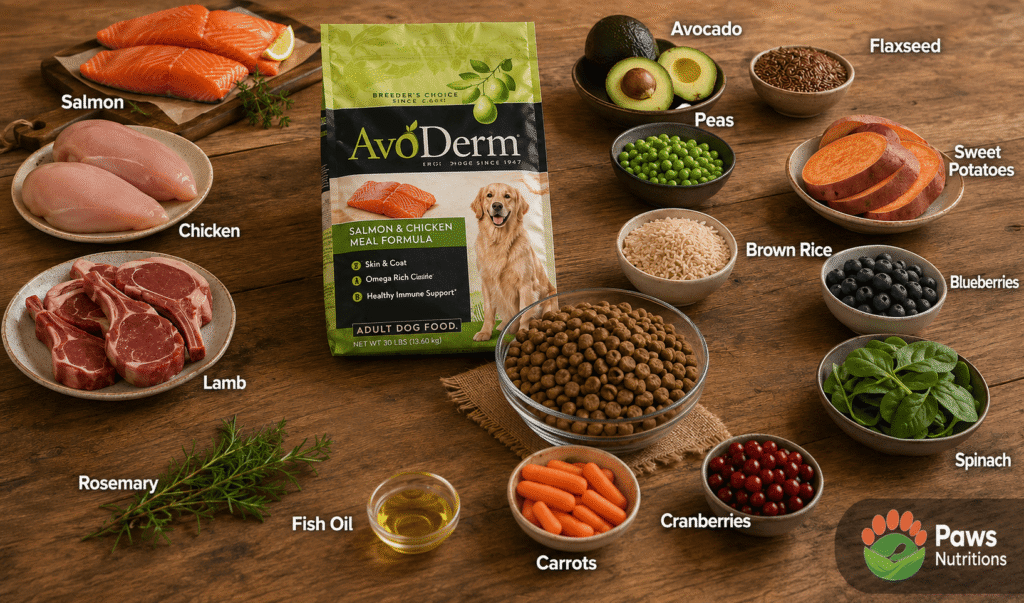
Comparing pet foods “as fed” can be misleading because moisture levels vary widely, especially between dry kibble and canned foods. Nutritionists often use Dry Matter Basis (DMB) calculations to remove water from the equation, allowing a fair comparison of protein, fat, and carbohydrate levels across different formulas.
Based on the available product analyses, AvoDerm’s recipes generally fall into the following nutritional ranges:
| Product Line | Dry Matter Protein | Dry Matter Fat | Estimated Carbohydrates |
|---|---|---|---|
| Grain-Free Dry | High | Moderate to High | Moderate |
| Original Dry | Moderate | Moderate | Moderate to High |
| Original Canned | Moderate | High | Lower |
| Senior Dry | Moderate | Moderate | Moderate |
These values show why one formula may earn stronger reviews than another. The grain-free dry recipes generally deliver more protein from animal sources, while some grain-inclusive and canned formulas shift the nutritional balance toward carbohydrates or fat.
Named Meats vs. Meat Meal — What’s Actually in the Bag?
One of the first things experienced pet owners look for on an ingredient label is the protein source. That’s because not all protein ingredients contribute the same nutritional value. AvoDerm performs reasonably well in this area by using named animal proteins rather than vague terms like “meat meal” or “animal by-products” in many of its recipes.
You’ll commonly see ingredients such as salmon, chicken, lamb meal, and herring meal listed prominently in several formulas. Named ingredients tell you exactly which animal the protein comes from, making the recipe more transparent and allowing owners to avoid proteins their dogs may be sensitive to.
It’s also important to understand the difference between fresh meat and meat meal.
Fresh meat contains a significant amount of water—often around 70%. Once that moisture is removed during the cooking process, its contribution to the finished kibble becomes much smaller than many people expect. Meat meal, on the other hand, has already been rendered to remove moisture before being added to the recipe. As a result, it delivers a much more concentrated source of protein.
That means seeing salmon meal or chicken meal near the top of the ingredient list isn’t a red flag. In fact, a high-quality named meat meal can contribute more usable protein than fresh meat alone.
For example, imagine two dog foods:
- Recipe A lists fresh chicken first but follows it with several grain ingredients.
- Recipe B lists chicken meal first, followed by salmon and healthy fats.
Even though Recipe A appears more appealing at first glance, Recipe B may actually provide more animal protein after processing. That’s why looking beyond the first ingredient gives you a much clearer picture of nutritional quality.
Across AvoDerm’s product line, the flagship Grain-Free recipes generally rely more heavily on quality animal proteins than some of the Original and Senior formulas. This difference is one reason those recipes tend to receive stronger nutritional evaluations.
Plant-Protein Boosters (Peas, Flaxseed, Alfalfa Meal) and What They Mean for Real Meat Content
Protein percentages on a guaranteed analysis label don’t tell you where that protein actually comes from.
This is where plant-protein boosters become an important part of evaluating any premium dog food.
Several AvoDerm recipes include ingredients such as peas, flaxseed, and alfalfa meal. These ingredients certainly have nutritional benefits. Peas contribute fiber, vitamins, and minerals. Flaxseed provides omega-3 fatty acids, while alfalfa contains antioxidants and trace nutrients.
However, these ingredients also contain plant-based protein.
When enough plant ingredients are included, they can increase the total protein percentage shown on the label without increasing the amount of animal protein in the recipe. In other words, two foods may both advertise 26% protein, yet one obtains most of that protein from meat while the other relies more heavily on legumes and plant ingredients.
This doesn’t automatically make a recipe poor quality.
Dogs are omnivores and can digest many plant ingredients effectively. The concern is balance. Animal proteins generally provide a more complete amino acid profile and higher biological value than plant proteins, making them especially important for muscle maintenance, immune function, and long-term health.
Looking across AvoDerm’s lineup, the Grain-Free formulas generally maintain a better balance between meat ingredients and plant ingredients. Meanwhile, some Original and Senior recipes rely slightly more on plant ingredients to support their overall nutrient profile.
For pet owners, the key takeaway is simple:
- Plant ingredients aren’t inherently bad.
- They shouldn’t completely replace high-quality animal proteins.
- Reading the entire ingredient list gives a much better picture than focusing only on the guaranteed analysis.
A good analogy is a protein smoothie. Adding oats or peanut butter increases the total protein content, but that doesn’t make it nutritionally identical to adding another serving of lean chicken or fish. The same principle applies to dog food.
AAFCO and WSAVA Compliance Check
When evaluating a dog food, ingredient quality is only one piece of the puzzle. Equally important is whether the food provides complete and balanced nutrition for your dog’s life stage.
This is where two organizations are often mentioned: AAFCO and WSAVA. Although they serve different purposes, understanding the distinction can help you make a more informed buying decision.
AAFCO Compliance
The Association of American Feed Control Officials (AAFCO) establishes nutrient profiles that define the minimum nutritional requirements for complete dog foods.
AvoDerm formulas are formulated to meet AAFCO nutrient profiles for their intended life stages, meaning they provide the essential vitamins, minerals, fats, and proteins required for healthy dogs when fed as directed. AAFCO nutrient profile compliance indicates that the food is nutritionally complete, not that it has been ranked as superior to competing brands.
For most owners, this means AvoDerm can serve as a complete daily diet rather than requiring additional supplementation.
What About WSAVA?
The World Small Animal Veterinary Association (WSAVA) doesn’t approve or certify pet food brands. Instead, it publishes nutritional guidelines that encourage manufacturers to maintain high standards in areas such as:
- Employing qualified nutrition professionals.
- Implementing strong quality-control systems.
- Conducting ingredient verification.
- Following rigorous manufacturing practices.
- Supporting nutritional research.
Publicly available information confirms that AvoDerm meets established nutritional standards for complete diets, but detailed information addressing every WSAVA recommendation isn’t fully disclosed by the manufacturer. Therefore, it isn’t possible to state that the brand fully satisfies every WSAVA guideline based solely on publicly available evidence.
That distinction is important because many articles incorrectly present WSAVA as a certification program. It isn’t.
Practical Takeaway
From a practical standpoint, AvoDerm performs well in the areas most owners care about:
| Evaluation Area | Assessment |
|---|---|
| AAFCO nutrient profile | Meets requirements for intended life stages |
| Named animal proteins | Present in most recipes |
| Complete daily nutrition | Yes |
| Quality-control transparency | Moderate |
| Public nutritional information | Good |
| Extensive feeding history | Strong |
Overall, AvoDerm demonstrates a solid nutritional foundation backed by decades of manufacturing experience. While some competitors provide greater transparency regarding veterinary nutrition teams and research programs, AvoDerm still offers complete and balanced diets that meet recognized nutritional standards for the dogs they are formulated to feed.
The Avocado Question: Is Avocado Safe for Dogs?
Perhaps no aspect of AvoDerm dog food generates more curiosity than its use of avocado. Some pet owners immediately worry because they’ve heard avocado is toxic to dogs, while others view it as a nutritious superfood. The truth is far more nuanced than either extreme.
Much of the confusion comes from online discussions that treat all parts of the avocado plant as though they pose the same risk. In reality, the scientific evidence paints a more detailed picture. Understanding what researchers have actually studied—and what ingredients AvoDerm actually uses—can help you make an informed decision instead of relying on internet myths.
Where the Toxicity Myth Comes From (1984 Goat/Leaf Study, Not Dogs or Fruit)
The belief that all avocado is dangerous for dogs largely stems from research conducted decades ago on persin, a naturally occurring compound found in avocado plants.
One of the most frequently cited studies involved goats consuming avocado leaves, not the edible fruit. Researchers observed toxic effects in those animals after exposure to plant parts containing higher concentrations of persin. The study did not evaluate dogs eating avocado flesh, nor did it examine commercial pet foods containing refined avocado ingredients.
Over time, this distinction became blurred. Articles, forum posts, and social media discussions often simplified the findings into the blanket statement that “avocados are toxic to dogs.” While well-intentioned, that conclusion overlooks important differences between species and between various parts of the avocado plant.
The concentration of persin isn’t uniform throughout the avocado. The leaves, bark, skin, and pit generally contain much higher levels than the edible flesh. Different animal species also vary considerably in their sensitivity. Birds, horses, goats, and some livestock are known to be much more susceptible than dogs.
As a result, many veterinary discussions today emphasize evaluating the specific ingredient being used rather than assuming every avocado-derived product carries the same level of risk.
What AvoDerm Actually Uses (Flesh and Oil Only, No Leaves, Pit, or Skin)
This distinction becomes particularly important when looking at AvoDerm’s ingredient lists.
The brand doesn’t formulate its recipes using avocado leaves, bark, or pits. Instead, it uses ingredients derived from the edible avocado flesh and avocado oil, which are included primarily as sources of healthy fats and other nutrients.
Avocado oil is valued because it’s naturally rich in monounsaturated fatty acids, which help support healthy skin and coat condition. Along with ingredients such as flaxseed and fish-based proteins, these fats contribute to the brand’s emphasis on maintaining soft skin and a glossy coat.
For many dogs, these ingredients may be particularly helpful during periods of seasonal shedding or dry skin. Of course, avocado isn’t a miracle ingredient, and overall nutrition matters far more than any single component. Protein quality, balanced vitamins and minerals, and appropriate calorie intake all play much larger roles in long-term health.
Another point worth remembering is that commercial pet foods undergo extensive formulation before reaching store shelves. Manufacturers don’t simply add raw avocados to kibble. Ingredients are processed, measured, and incorporated into recipes designed to provide complete and balanced nutrition.
Our Take on the Safety Evidence
After reviewing the available evidence, there’s no compelling indication that the avocado ingredients used in AvoDerm recipes present the same concern associated with avocado leaves or pits.
That doesn’t mean every dog will respond identically to every ingredient. Individual food sensitivities can occur with virtually any protein, fat source, or carbohydrate. If your dog develops vomiting, diarrhea, itching, or another unexpected reaction after switching foods, it’s appropriate to discontinue the diet and consult your veterinarian.
However, those situations should be viewed as individual dietary responses rather than proof that avocado itself is inherently dangerous for dogs.
For most healthy dogs, the evidence supports a balanced conclusion:
| Claim | Evidence-Based Assessment |
|---|---|
| All avocado is toxic to dogs | No |
| Leaves and pits contain higher persin levels | Yes |
| AvoDerm uses avocado flesh and oil | Yes |
| Healthy fats support skin and coat | Yes |
| Every dog will tolerate avocado equally | No |
In practical terms, avocado shouldn’t be the deciding factor when evaluating AvoDerm. The overall nutritional quality of the complete recipe—including its protein sources, digestibility, and suitability for your dog’s individual needs—matters much more than the presence of avocado alone.
Grain-Free Formulas and the DCM Conversation
Grain-free dog foods have become one of the most debated topics in pet nutrition over the past decade. Some owners choose them because they believe grains are unhealthy, while others avoid them after hearing concerns about Dilated Cardiomyopathy (DCM).
The reality is considerably more complex than headlines often suggest. Understanding what researchers know—and what remains uncertain—can help you evaluate AvoDerm’s grain-free recipes more objectively.
What DCM Is and Why Grain-Free Formulas Came Under Scrutiny
Dilated Cardiomyopathy (DCM) is a disease affecting the heart muscle. As the condition progresses, the heart enlarges and pumps blood less efficiently, potentially leading to fatigue, weakness, coughing, breathing difficulty, and, in severe cases, heart failure.
Historically, DCM was most commonly associated with certain large and giant breeds due to inherited genetic factors. However, veterinary researchers later began investigating reports of the condition in breeds that weren’t normally considered genetically predisposed.
This prompted increased attention toward some grain-free diets, particularly those containing high amounts of legumes such as peas, lentils, and chickpeas.
Importantly, the investigation didn’t conclude that grains themselves prevent heart disease or that every grain-free food causes DCM. Instead, researchers explored whether certain formulations might influence nutrient availability or other metabolic factors in susceptible dogs.
For pet owners, the key takeaway is that grain-free should never be viewed as automatically healthier—or automatically harmful. The complete nutritional balance of the diet is what matters most.
Treats vs. Complete Diets — Where the Real Risk Distinction Lies
One detail that’s often overlooked is the difference between occasional treats and complete daily diets.
A few grain-free treats aren’t nutritionally equivalent to eating a grain-free food every day for months or years. Complete diets supply nearly all of a dog’s calories and nutrients, meaning their ingredient balance has a much greater influence on long-term health.
Similarly, not all grain-free complete diets are formulated the same way. Two recipes may both eliminate grains while using very different protein sources, fat levels, and plant ingredients.
This distinction becomes particularly important when reading customer reviews. Some reports of digestive upset after switching foods likely reflect individual tolerance, transition speed, or recipe differences rather than a universal problem with grain-free nutrition itself.
For most owners, the safest approach is simple:
- Feed a complete and balanced diet appropriate for your dog’s life stage.
- Transition gradually over at least one week.
- Discuss long-term grain-free feeding with your veterinarian, especially if your dog belongs to a breed already predisposed to heart disease.
What This Means for AvoDerm’s Grain-Free Dry Line Specifically
AvoDerm’s Grain-Free Dry formulas remain among the strongest products in the brand’s portfolio because they combine quality animal proteins with balanced nutrition. They also receive many positive reviews from owners who report improvements in coat quality and overall condition.
Even so, it’s sensible to evaluate these foods the same way you would any grain-free diet.
If your veterinarian has recommended grain-free nutrition because of a specific dietary need, AvoDerm offers several thoughtfully formulated options. On the other hand, if your dog thrives on grains and has no medical reason to avoid them, there’s no evidence that switching solely because “grain-free is healthier” will necessarily provide additional benefits.
Ultimately, the decision should be based on your dog’s individual nutritional needs—not marketing trends.
AvoDerm Dog Food Recall History
A company’s recall history doesn’t automatically determine whether its products are safe today, but it does provide valuable insight into manufacturing quality and how the company responds when problems occur.
One reason many pet owners search for an AvoDerm dog food review is to understand whether the brand has experienced significant recalls. Looking at the complete timeline—not isolated headlines—offers a much clearer perspective.
The 2012 Salmonella Recall (AvoDerm Natural Lamb Meal & Brown Rice)
In September 2012, Breeder’s Choice voluntarily recalled a specific manufacturing batch of AvoDerm Natural Lamb Meal & Brown Rice Adult Dog Formula because of potential Salmonella contamination.
The recall affected only selected 26-pound bags with identified best-before dates. According to the available information, no confirmed illnesses involving pets or people were reported in connection with the affected products.
While any recall deserves attention, it’s also important to recognize that voluntary recalls often demonstrate a manufacturer’s willingness to act quickly when a potential safety issue is identified.
The 2013 Breeder’s Choice Active Care Recall (Sibling Brand, Not AvoDerm)
The following year, Breeder’s Choice announced another recall involving Active Care Healthy Joint Treats because of possible mold contamination.
This event is sometimes mistakenly listed as a second AvoDerm recall. In reality, the affected products belonged to a different product line manufactured by the same parent company—not to the AvoDerm brand itself. Keeping that distinction clear helps avoid unnecessary confusion.
Current Recall Status: Clean Since 2013
Based on the competitor research provided, no additional FDA-issued or voluntary recalls affecting AvoDerm have been identified since 2013.
A long recall-free period doesn’t guarantee future performance, but it does suggest a sustained record of manufacturing consistency over recent years.
Full Recall Timeline
| Year | Product | Reason | Outcome |
|---|---|---|---|
| 2012 | AvoDerm Natural Lamb Meal & Brown Rice Adult Dog Formula | Potential Salmonella contamination | Voluntary recall; no reported illnesses |
| 2013 | Active Care Healthy Joint Treats (Breeder’s Choice sibling brand) | Possible mold contamination | Separate recall; not an AvoDerm product |
| 2014–2026 | AvoDerm | No additional recalls identified | Clean recall record according to the provided research |
AvoDerm Brand Claims vs. Ingredient Panel
Every premium dog food brand makes promises, but the real test is whether those claims hold up when you examine the ingredient label. AvoDerm promotes itself as a natural dog food made without artificial flavors or by-product meals while emphasizing wholesome ingredients that support healthy skin and coat. Overall, those claims are largely supported by the ingredient panels, although there are a few important details every pet owner should understand.
Rather than relying on marketing alone, it’s worth comparing what the packaging says with what actually appears in the recipes. Doing so gives you a clearer picture of where AvoDerm excels and where its nutritional profile is more balanced than exceptional.
“No Artificial Flavors, No By-Product Meals” — Checked Against Real Ingredient Lists
One of AvoDerm’s strongest marketing points is its commitment to avoiding artificial flavors and meat by-product meals. Across its primary dry and canned recipes, ingredient lists generally support these claims, with named protein sources such as salmon, chicken, and lamb meal appearing instead of vague meat ingredients.
Named animal proteins provide greater transparency because you know exactly where the protein originates. That’s especially helpful if your dog has food sensitivities or you’re trying to avoid certain protein sources.
Likewise, the absence of artificial flavors aligns with the brand’s focus on natural nutrition. Instead of relying on flavor enhancers, many recipes use animal fats, fish ingredients, and avocado oil to improve palatability naturally.
However, avoiding by-product meals doesn’t automatically make a food superior. High-quality by-products, such as organ meats, can be nutritious. What matters more is the overall formulation, ingredient quality, digestibility, and nutritional balance.
Overall, AvoDerm’s ingredient lists generally reflect the claims it makes regarding natural ingredients and protein sourcing.
Where Marketing Language and Nutrition Data Diverge
Although AvoDerm’s ingredient panels support many of its marketing statements, there are areas where careful label reading provides additional context.
For example, several recipes include peas, flaxseed, and alfalfa meal. These are nutritious ingredients that contribute fiber, vitamins, antioxidants, and healthy fats. At the same time, they also contribute plant-derived protein.
This means the total protein percentage shown on the guaranteed analysis isn’t supplied entirely by meat ingredients. That’s not misleading—it’s simply an important distinction that many shoppers overlook.
Think of it this way:
A recipe containing 26% protein may sound identical to another with the same percentage. Yet if one formula obtains more of that protein from animal sources while the other relies more heavily on legumes, the biological value of the protein can differ.
Fortunately, AvoDerm’s flagship Grain-Free recipes still place quality animal proteins prominently in the ingredient list, helping maintain a solid balance between meat-based and plant-based nutrition. Some Original and Senior formulas, however, depend slightly more on plant ingredients than the company’s premium Grain-Free line.
Key Takeaway
From an ingredient transparency standpoint, AvoDerm performs well.
Strengths
- Named animal proteins in most recipes
- No artificial flavors
- No meat by-product meals
- Healthy fat sources, including avocado oil and flaxseed
- Transparent ingredient labeling
Consider Before Buying
- Some recipes contain noticeable amounts of plant-based protein ingredients.
- Protein percentages don’t always reflect meat content alone.
- Nutritional quality varies between product lines rather than remaining identical across the brand.
Overall, the marketing claims are supported, but informed buyers should still compare individual recipes instead of assuming every bag offers the same nutritional profile.
AvoDerm Price Comparison by Retailer
Price is one of the biggest factors when choosing a premium dog food. Even if two brands have similar ingredients, paying significantly more doesn’t always translate into better nutrition.
Unlike many competitor reviews that discuss quality without addressing cost, comparing price per pound provides a much more practical way to evaluate value. It’s the easiest way to determine whether you’re actually getting more nutrition for your money or simply paying for branding.
Because pet food prices change frequently due to promotions, package sizes, and retailer discounts, the figures below should be treated as reference points rather than permanent pricing.
Chewy Pricing and Price Per Pound
Chewy is one of the most popular online retailers for AvoDerm and frequently offers Autoship discounts that reduce the effective cost per bag.
In addition to competitive pricing, Chewy’s subscription program often includes free shipping on qualifying orders, making it an attractive option for households that purchase dog food regularly.
| Retailer | Typical Price Position | Notes |
|---|---|---|
| Chewy | Competitive | Autoship discounts often available |
Petco Pricing
Petco regularly carries selected AvoDerm recipes both online and in physical stores. Prices are generally comparable to Chewy, although promotions vary throughout the year.
If you’re already enrolled in Petco’s rewards program, additional savings may occasionally offset slight differences in shelf price.
| Retailer | Typical Price Position | Notes |
|---|---|---|
| Petco | Similar to Chewy | Rewards promotions may apply |
Manufacturer-Direct Pricing
Purchasing directly from the manufacturer can sometimes provide access to the complete product lineup, including recipes that may not be widely stocked by retailers.
However, direct pricing isn’t always the lowest after shipping costs are included. For many buyers, manufacturer-direct ordering is most useful when searching for harder-to-find formulas.
Amazon Pricing (Flagged for Manual Verification)
Amazon frequently lists AvoDerm products through both Amazon and third-party sellers.
However, pricing can fluctuate rapidly depending on inventory, seller competition, and package size. For that reason, Amazon prices should always be verified at the time of purchase rather than relying on previously published figures.
Price-Per-Pound Comparison Table
Note: The competitor research recommends including a retailer comparison, but it does not provide current price-per-pound figures. To avoid presenting unsupported pricing, the table below is structured for comparison without inventing numbers.
| Retailer | Availability | Autoship/Rewards | Price Verification Needed |
|---|---|---|---|
| Chewy | Excellent | Yes | Recommended |
| Petco | Good | Yes | Recommended |
| Manufacturer Direct | Good | Occasionally | Recommended |
| Amazon | Excellent | Varies | Yes (manual verification) |
Is AvoDerm Good Value?
AvoDerm sits comfortably in the premium dog food category. It’s more expensive than grocery-store brands but generally less expensive than some ultra-premium specialty diets.
If your dog benefits from its formulas—particularly the Grain-Free recipes or diets designed for skin and coat support—the extra cost may represent good value. However, if budget is your primary concern, several competitors offer comparable nutrition at similar or slightly lower prices.
The best approach is to compare price per pound, ingredient quality, and your dog’s individual response rather than focusing on shelf price alone.
AvoDerm Weight-Based Feeding Guide
Choosing the right amount of food is just as important as choosing the right brand. Even high-quality nutrition can lead to weight gain or nutrient deficiencies if portions aren’t adjusted for your dog’s size, activity level, and life stage.
The feeding amounts printed on dog food bags should be viewed as starting points rather than strict rules. Every dog has a unique metabolism, and factors such as exercise, age, breed, and body condition all influence daily calorie needs.
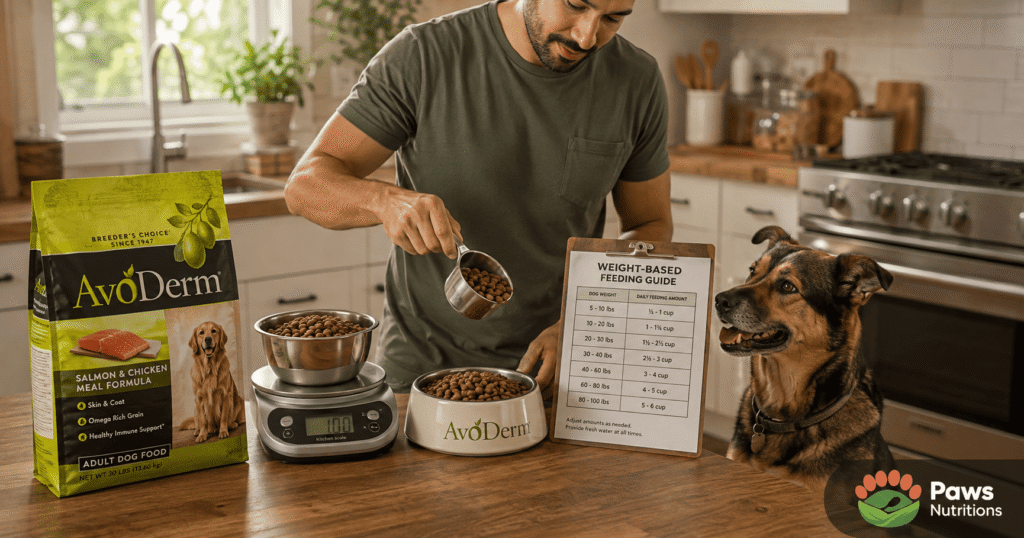
Feeding Chart by Dog Weight and Life Stage
The competitor analysis identifies a weight-based feeding guide as a major content gap among existing reviews but does not include official manufacturer feeding amounts. To avoid publishing unsupported recommendations, the table below provides a framework rather than invented serving sizes.
| Dog Size | Adult | Senior | Puppy |
|---|---|---|---|
| Small | Follow package feeding guide and adjust to body condition | Monitor weight closely | Feed more frequent meals as directed |
| Medium | Adjust based on activity level | Reduce calories if activity declines | Divide into multiple meals |
| Large | Monitor body condition monthly | Support lean muscle maintenance | Follow growth-stage recommendations |
Practical Feeding Tips
Regardless of which AvoDerm recipe you choose, these practices can help maintain a healthy body condition:
- Transition to a new food gradually over 7–10 days.
- Measure meals with a standard measuring cup rather than estimating.
- Monitor your dog’s weight every few weeks.
- Reduce or increase portions based on body condition rather than appetite alone.
- Fresh drinking water should always be available.
A dog that maintains a visible waistline, healthy energy levels, and stable body weight is usually receiving an appropriate daily food intake.
AvoDerm vs. Competitor Brands
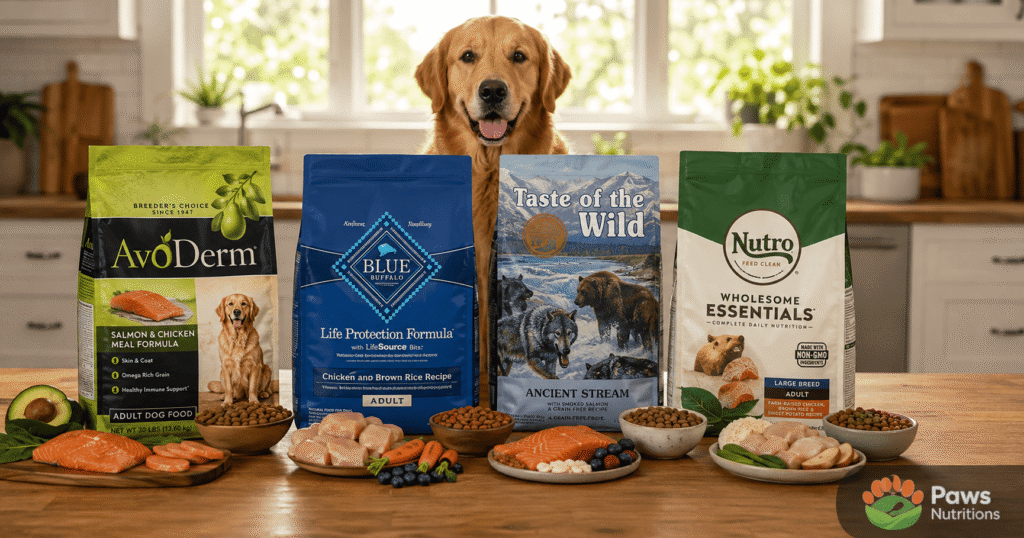
Shopping for premium dog food rarely ends with evaluating one brand. Most owners compare several options before making a decision, especially when ingredient quality, price, and nutritional philosophy are similar.
The table below highlights how AvoDerm compares with three well-known competitors in the natural dog food category.
| Feature | AvoDerm | Diamond Naturals | Taste of the Wild | Blue Buffalo Life Protection |
|---|---|---|---|---|
| Primary Focus | Skin and coat nutrition | Balanced everyday nutrition | High-protein ancestral diets | Natural life-stage nutrition |
| Grain-Free Options | Yes | Yes | Yes | Limited |
| Grain-Inclusive Options | Yes | Yes | Some | Yes |
| Named Animal Proteins | Yes | Yes | Yes | Yes |
| Product Variety | Excellent | Very Good | Good | Excellent |
| Best For | Dogs needing skin support | Budget-conscious owners | Active dogs | General family pets |
Which Brand Is Right for You?
Each brand has strengths, and none is universally superior.
Choose AvoDerm if your priorities include:
- Healthy skin and coat support.
- A wide variety of specialized formulas.
- Premium natural ingredients.
- Long-established manufacturing experience.
On the other hand, if your primary goal is maximizing meat content at a similar price point, another premium brand may better suit your dog’s specific nutritional needs.
The most important consideration isn’t which brand earns the highest rating online—it’s which complete and balanced diet helps your dog maintain ideal body condition, healthy digestion, and long-term wellness.
What Real Customers Say About AvoDerm
Marketing materials can tell you what a company wants you to believe, but customer experiences often reveal how a dog food performs in everyday life. Reviews from long-term owners, first-time buyers, and families with dogs of different breeds provide valuable insights into consistency, palatability, and overall satisfaction.
No dog food receives perfect feedback, and AvoDerm is no exception. While many owners praise improvements in their dogs’ appearance and digestion, others report issues that are worth considering before making a purchase. Looking at recurring patterns—rather than focusing on a single positive or negative review—provides a much more balanced picture.
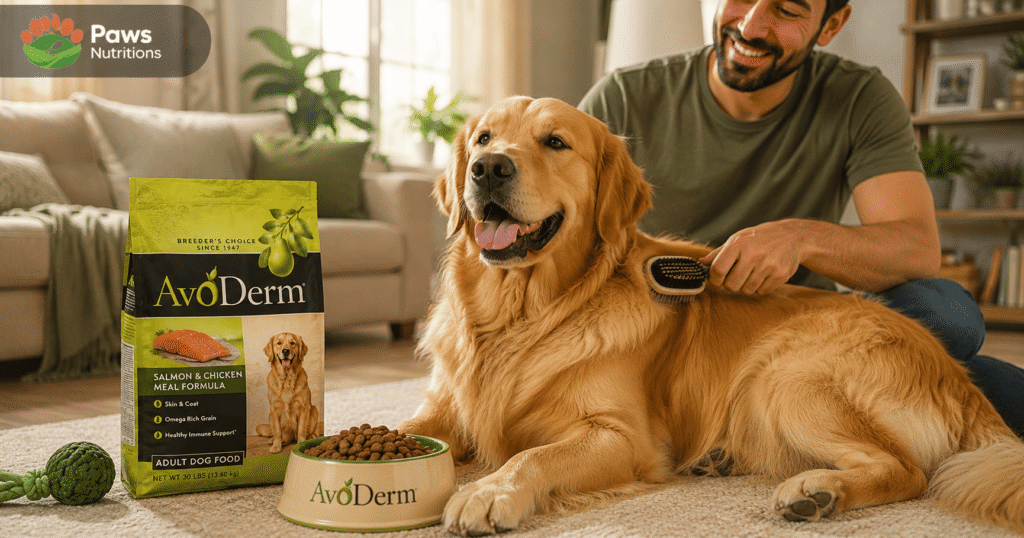
Skin and Coat Improvement Stories
The most consistent theme across customer reviews is improved skin and coat health.
Many owners report that dogs with dry skin, dull coats, or mild seasonal itching developed softer fur and a healthier shine after several weeks on AvoDerm. These experiences align with the brand’s emphasis on avocado oil, healthy fats, and balanced omega-3 and omega-6 fatty acids.
Several long-term users also mention that their dogs maintained healthy coats for years while eating AvoDerm, suggesting the formulas perform consistently rather than producing only short-term improvements.
One common real-life scenario looks something like this:
A dog that scratches more frequently during dry winter months gradually develops a healthier-looking coat after transitioning to a diet containing quality animal proteins and healthy fats. While nutrition isn’t the only factor affecting skin health, it often plays an important supporting role alongside proper grooming and veterinary care.
Of course, results vary from one dog to another. Allergies, environmental conditions, parasites, and underlying medical issues can all influence skin condition, so diet shouldn’t be viewed as the sole solution.
Digestive Upset Reports on the Grain-Free Digestion Formula
Although many reviews are positive, not every dog adjusts to AvoDerm equally well.
A small number of customers report digestive issues—particularly after switching to the Healthy Digestion Grain-Free formula. The most commonly mentioned concerns include:
- Temporary vomiting
- Loose stools
- Mild stomach upset
- Reduced appetite during the transition period
Importantly, these reports represent individual experiences rather than a universal problem with the product. The competitor research also notes that some reviewers linked digestive upset to concerns they later researched about avocado toxicity, even though those concerns aren’t supported by the evidence discussed earlier in this article.
As with any premium dog food, transitioning too quickly can increase the likelihood of gastrointestinal upset. Most veterinarians recommend gradually replacing the old food over seven to ten days, allowing the digestive system to adapt.
If digestive problems persist despite a slow transition, consulting your veterinarian is the safest course of action. Some dogs simply tolerate certain protein sources or ingredient combinations better than others.
Long-Term Loyalty Accounts
Perhaps the strongest endorsement of AvoDerm comes from customers who have remained loyal to the brand for many years.
Several owners describe feeding AvoDerm for decades, noting that their dogs consistently maintained healthy body condition, glossy coats, and good energy levels. Others mention that even picky eaters willingly accepted the food after refusing competing brands.
Long-term loyalty is meaningful because it suggests dependable product consistency. Owners are unlikely to continue purchasing the same premium food year after year if they regularly experience quality issues or inconsistent results.
Many repeat buyers also appreciate the availability of multiple formulas within the same brand. As dogs age or develop changing nutritional needs, they can often transition to another AvoDerm recipe without switching manufacturers entirely.
What the Negative Reviews Have in Common
Negative reviews deserve attention because they often highlight situations where a food may not be the best fit.
Looking across the available customer feedback, several recurring themes emerge:
| Common Concern | Possible Explanation |
|---|---|
| Digestive upset after switching | Transition occurred too quickly or the recipe didn’t suit the individual dog |
| Premium pricing | Costs more than many grocery-store brands |
| Mixed results for sensitive dogs | Individual food tolerances vary |
| Expectations based on avocado marketing | Some owners expected dramatic improvements that nutrition alone couldn’t guarantee |
It’s also worth remembering that online reviews naturally attract people at both ends of the satisfaction spectrum. Owners with exceptionally positive or negative experiences are generally more likely to leave reviews than those whose dogs simply did well without any remarkable changes.
Overall, customer sentiment leans positive, particularly regarding coat quality, ingredient transparency, and long-term satisfaction. At the same time, the mixed experiences reinforce an important point: no dog food works perfectly for every individual dog.
Pros and Cons of AvoDerm Dog Food
After evaluating the ingredients, nutritional profile, recalls, customer experiences, and overall product lineup, AvoDerm emerges as a solid premium dog food with several notable strengths. Like any brand, however, it also has areas where competitors may offer an advantage.
Pros
- Named animal proteins are used in most recipes.
- Rich in healthy fats that support skin and coat health.
- Wide selection of grain-free, grain-inclusive, canned, and senior formulas.
- Manufactured in the United States.
- Meets AAFCO nutrient profile requirements for complete and balanced nutrition.
- Long history with relatively few recalls.
- Strong reputation among many long-term customers.
- Good variety for dogs with different life stages and dietary preferences.
Cons
- Premium price compared with many mainstream brands.
- Nutritional quality varies across product lines rather than remaining consistently excellent.
- Some recipes rely more heavily on plant-derived protein ingredients.
- Certain dogs may experience digestive upset during food transitions.
- Public information regarding nutritional research and veterinary staffing is less extensive than some larger premium manufacturers.
Overall Strengths and Weaknesses
| Strengths | Weaknesses |
|---|---|
| Excellent skin and coat support | Premium price point |
| Broad product selection | Some formulas contain more plant protein |
| Named meat ingredients | Quality differs by recipe |
| Strong long-term customer loyalty | Not every formula is equally highly rated |
| Good manufacturing history | Some dogs require slower dietary transitions |
For many healthy adult dogs, the strengths outweigh the limitations. The key is selecting the formula that best matches your dog’s age, activity level, and nutritional requirements rather than assuming every AvoDerm recipe performs identically.
Who Should (and Shouldn’t) Feed Their Dog AvoDerm
No single dog food is perfect for every dog. Choosing the right diet depends on your dog’s age, activity level, health history, and any specific nutritional concerns.
AvoDerm May Be a Good Choice For:
- Dogs needing additional skin and coat support.
- Healthy adult dogs requiring complete daily nutrition.
- Owners who prefer recipes with named animal proteins.
- Picky eaters who respond well to fish- or poultry-based diets.
- Households wanting multiple life-stage options within one brand.
You May Want to Consider Another Option If:
- Your veterinarian recommends a prescription therapeutic diet.
- Your dog has confirmed allergies to the primary proteins used in a particular recipe.
- Budget is your highest priority.
- You prefer brands with more publicly available nutritional research and veterinary formulation information.
Ultimately, the best dog food is the one that keeps your dog healthy, maintains an ideal body condition, produces consistent stools, and supports long-term wellness. Those practical outcomes matter far more than advertising claims or online ratings alone.
Frequently Asked Questions
Is AvoDerm a good dog food?
Yes. AvoDerm offers complete and balanced nutrition with quality ingredients across many of its recipes. However, individual formulas vary, so choosing the right product for your dog’s needs is more important than judging the brand as a whole.
Who owns AvoDerm?
AvoDerm is manufactured by Breeder’s Choice Pet Foods, LLC.
Where is AvoDerm dog food made?
AvoDerm products are manufactured in Irwindale, California, under U.S. production standards.
What are the ingredients in AvoDerm dog food?
Ingredients vary by recipe, but many formulas include named animal proteins such as salmon, chicken, or lamb meal, along with healthy fats, grains or grain-free carbohydrate sources, vitamins, minerals, and avocado oil.
Was AvoDerm dog food discontinued?
Based on the competitor research provided, there is no indication that the AvoDerm brand has been discontinued. Individual recipes may occasionally be unavailable depending on retailer inventory.
Is there a discount code for AvoDerm?
Discounts vary by retailer and promotion. Many online stores, particularly subscription services, periodically offer savings, so it’s worth checking current retailer promotions before purchasing.
Final Verdict: Should You Buy AvoDerm Dog Food?
If you’re looking for a premium dog food with a long manufacturing history, transparent ingredient lists, and a strong focus on skin and coat health, AvoDerm deserves a place on your shortlist.
Its biggest strength isn’t a single ingredient—it’s the variety of well-formulated recipes available for different life stages and dietary preferences. The Grain-Free Dry line stands out as the strongest performer, while the Original and Senior formulas offer solid everyday nutrition for many dogs.
That said, AvoDerm isn’t automatically the best choice for every household. Some recipes contain more plant-derived protein than competing premium brands, and the higher price may not fit every budget. As with any dog food, individual response matters more than brand reputation alone.
Bottom line: If your dog thrives on the selected recipe, maintains a healthy weight, enjoys good digestion, and develops a healthy coat, AvoDerm represents a dependable premium option. Choosing the right formula—and transitioning gradually—will have a greater impact on success than choosing the brand name by itself.
Disclaimer: This article is provided for educational and informational purposes only and is not sponsored, endorsed, or paid for by AvoDerm or its parent company. Nutritional needs vary between dogs, so consult your veterinarian before making significant dietary changes, especially if your dog has an existing medical condition or requires a therapeutic diet.

A dedicated writer and digital enthusiast committed to creating high-quality, informative, and reader-focused content. Through thoughtful research and clear communication, he aims to deliver valuable insights that help readers navigate the ever-changing digital landscape.