
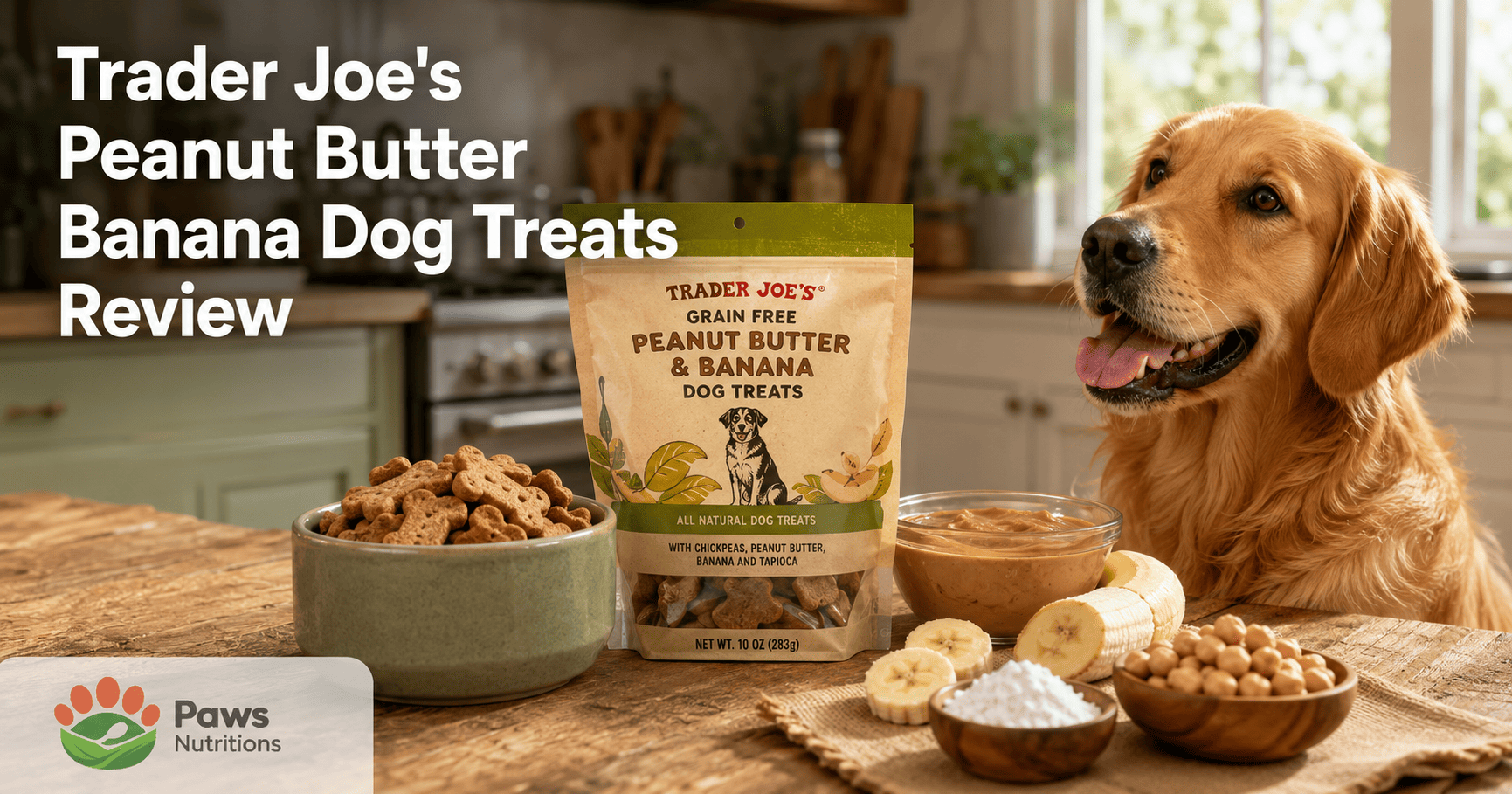
Choosing a healthy dog treat isn’t as easy as grabbing the first bag you see, especially when ingredient labels, grain-free claims, and online reviews often send mixed messages. If you’re considering Trader Joe’s Peanut Butter Banana Dog Treats, you’re probably wondering whether they’re truly nutritious, safe, and worth adding to your dog’s snack routine. After all, every treat should support your dog’s well-being—not just satisfy their taste buds.
This in-depth review answers those questions and more. You’ll discover what’s inside these treats, how they compare with other options, whether grain-free recipes are actually safe, their recall history, real owner experiences, pricing, feeding recommendations, and who they’re best suited for. By the end, you’ll have the confidence to decide if they’re the right reward for your furry companion.
What Are Trader Joe’s Grain-Free Peanut Butter & Banana Dog Treats?
Finding a treat that’s both enjoyable and made with recognizable ingredients can feel like a challenge. Trader Joe’s Grain-Free Peanut Butter & Banana Dog Treats are designed to offer a simple, plant-based reward made without wheat, corn, or soy. Instead of relying on traditional grains, the recipe uses ingredients like chickpeas and banana to create a crunchy snack that appeals to many dogs while catering to owners looking for grain-free dog treats.
Unlike many heavily processed treats filled with artificial colors or meat by-products, this product focuses on a relatively short ingredient list and familiar flavors. Peanut butter provides a rich aroma that dogs naturally enjoy, while banana adds a subtle sweetness without making the treat overly sugary. Although they’re marketed as a wholesome everyday reward, it’s still important to understand what these treats actually provide nutritionally before making them a regular part of your dog’s diet.
Product Overview and Where It Fits in Trader Joe’s Pet Treat Lineup
Trader Joe’s has gradually expanded its pet section with several affordable treats aimed at everyday use rather than specialized therapeutic nutrition. Among these offerings, the Peanut Butter & Banana Grain-Free Dog Treats stand out as a vegetarian option for owners who prefer treats without meat proteins. Their crunchy texture makes them suitable as an occasional reward during walks, after grooming, or simply as a small snack between meals.
Within Trader Joe’s lineup, these treats sit alongside options such as Beef Recipe Jerky Strips, Salmon & Sweet Potato Treats, seasonal decorated biscuits, and Natural Peanut Butter for Dogs. This variety allows owners to choose treats based on their dog’s preferences, dietary sensitivities, or training needs. Compared with softer training treats, however, these biscuits are slightly larger and crunchier, making them better suited for casual rewarding than repetitive training sessions.
Product Specifications at a Glance
Before looking deeper into the ingredients, here’s a quick snapshot of what buyers can expect.
| Feature | Details |
|---|---|
| Product Name | Trader Joe’s Grain-Free Peanut Butter & Banana Dog Treats |
| Treat Type | Crunchy baked dog biscuits |
| Primary Flavor | Peanut Butter & Banana |
| Package Size | 10.6 oz (300 g) |
| Texture | Crunchy |
| Grain-Free | Yes |
| Artificial Colors | None listed |
| Artificial Flavors | None listed |
| Best For | Adult dogs, everyday rewards |
| Primary Carbohydrate Sources | Chickpeas, Tapioca Starch |
| Main Protein Source | Chickpeas and Peanut Butter |
| Availability | Trader Joe’s stores and selected online marketplaces |
These specifications provide a useful overview, but they don’t tell the full story. A closer look at the ingredients and nutritional profile reveals whether the recipe truly lives up to its healthy image.
Package Size, Shape, and Calorie Count Per Treat
The treats come in a 10.6-ounce resealable bag, making them easy to store in a pantry or travel bag. Each biscuit is bone-shaped and moderately sized, large enough to feel rewarding for medium and large dogs while still being easy to break into smaller pieces for little breeds.
Each treat contains approximately 13 calories, although the exact value may vary slightly depending on manufacturing batches. That makes them a relatively moderate-calorie option compared with many bakery-style dog biscuits that can exceed 20 calories each. For owners monitoring their dog’s weight, knowing the calorie content is especially helpful because treats should remain a small portion of the daily calorie intake rather than replacing balanced meals.
Who Makes Them? Sourcing and Manufacturing Transparency
One question many pet owners ask is who actually manufactures Trader Joe’s pet products. Unlike some pet food brands that prominently advertise their manufacturing facilities, Trader Joe’s primarily operates as a private-label retailer. The company works with approved manufacturing partners that produce products exclusively to Trader Joe’s specifications, but the individual manufacturers are rarely disclosed publicly.
This limited transparency isn’t unusual among private-label brands, yet it can leave some owners wanting more information about sourcing practices. Available product information indicates that the treats are manufactured under food safety standards and feature ingredients selected to meet Trader Joe’s quality expectations. However, the company doesn’t publish detailed supplier audits, ingredient sourcing maps, or manufacturing certifications in the same way some premium pet nutrition brands do.
Full Ingredient List Breakdown
Ingredients often reveal far more about a dog treat than the front of the package ever can. Marketing terms like “natural” or “grain-free” sound appealing, but understanding what each ingredient contributes is the key to deciding whether a product deserves a place in your dog’s treat jar. Fortunately, Trader Joe’s Peanut Butter Banana Dog Treats contain a relatively straightforward ingredient list that’s easier to evaluate than many highly processed alternatives.
Rather than focusing on flashy claims, it’s worth examining each ingredient individually, considering its nutritional role, digestibility, and overall quality. This approach helps you separate genuinely beneficial components from ingredients that mainly improve texture, sweetness, or shelf life.
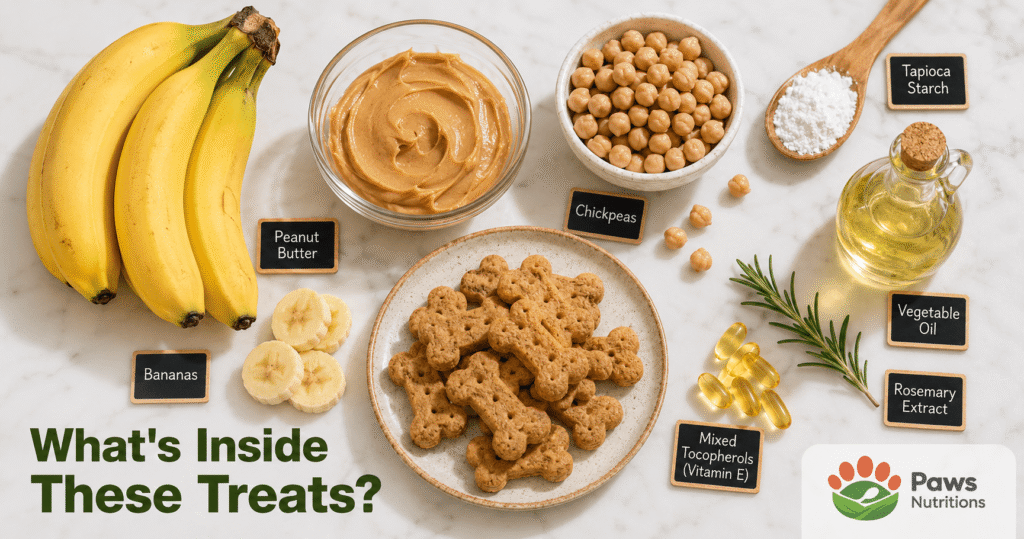
Complete Ingredient Panel, Explained One by One
The recipe combines several plant-based ingredients to create its crunchy texture while delivering flavor dogs generally enjoy.
| Ingredient | Purpose | Why It Matters |
|---|---|---|
| Chickpeas | Primary carbohydrate and plant protein | Rich in fiber, protein, and complex carbohydrates. |
| Peanut Butter | Flavor and healthy fats | Adds taste while supplying natural fats and some protein. |
| Banana | Natural fruit ingredient | Provides potassium, antioxidants, and natural sweetness. |
| Tapioca Starch | Binder | Helps maintain biscuit structure and crispness. |
| Vegetable Oils | Fat source | Improve texture and palatability. |
| Molasses | Natural sweetener | Enhances flavor in small amounts. |
| Natural Flavor | Taste enhancement | Improves aroma without artificial flavorings. |
Overall, the recipe avoids several ingredients that many owners prefer to limit, including wheat, corn, soy, and artificial colorings. That doesn’t automatically make it healthier than every alternative, but it does create a cleaner ingredient profile than many traditional supermarket biscuits.
Functional Benefits of Every Ingredient
Each ingredient serves more than one purpose. For example, chickpeas contribute both digestible carbohydrates and plant protein while adding dietary fiber that supports healthy digestion. Their slow-digesting carbohydrates may also help produce steadier energy compared with highly refined starches.
Meanwhile, peanut butter isn’t included solely for flavor. It supplies beneficial fats that improve palatability and make treats more satisfying. Bananas contribute small amounts of potassium and naturally occurring antioxidants, while vegetable oils help maintain freshness and improve texture. Although these nutrients aren’t present in amounts large enough to transform a dog’s overall diet, they can contribute positively when treats are fed responsibly.
Ingredient Quality Rating
Looking beyond marketing claims, here’s how each major ingredient compares from a nutritional perspective.
| Ingredient | Primary Function | Quality Rating |
|---|---|---|
| Chickpeas | Carbohydrate & Fiber | ⭐⭐⭐⭐☆ Excellent |
| Peanut Butter | Healthy Fat & Flavor | ⭐⭐⭐⭐⭐ Excellent |
| Banana | Natural Fruit Ingredient | ⭐⭐⭐⭐☆ Very Good |
| Tapioca Starch | Texture & Binding | ⭐⭐⭐☆☆ Good |
| Molasses | Sweetener | ⭐⭐☆☆☆ Moderate |
| Vegetable Oils | Fat Source | ⭐⭐⭐☆☆ Good |
Taken together, the ingredient list earns a solid overall rating because it relies on recognizable food ingredients instead of artificial fillers. The only components that deserve moderation are added sweeteners like molasses, which provide flavor but little nutritional value.
Ingredient Panel Discrepancy: What Changed Between Older and Current Formulations?
One interesting discovery when comparing older packaging with current listings is that the ingredient panel has evolved over time. Earlier versions displayed slight differences in ingredient order and supporting components, leading some long-time buyers to wonder whether the recipe had changed.
These adjustments are common in the pet food industry and don’t necessarily indicate a decline in quality. Manufacturers often reformulate products to improve consistency, ingredient availability, shelf stability, or production efficiency while keeping the overall nutritional profile similar. However, if your dog has a food sensitivity, it’s always wise to read the ingredient panel each time you purchase a new bag instead of assuming the recipe remains identical.
What “Additive-Free Peanut Butter” Actually Means
The phrase “additive-free peanut butter” can sound confusing at first glance. In this context, it generally refers to peanut butter made without unnecessary additives such as artificial sweeteners or preservatives that aren’t needed for the product’s intended use.
One ingredient every dog owner should watch for is xylitol, an artificial sweetener that is extremely toxic to dogs even in very small amounts. Fortunately, Trader Joe’s Peanut Butter & Banana Dog Treats do not list xylitol among their ingredients. Even so, checking the label before every purchase remains a smart habit, particularly if recipes are updated over time.
Nutritional Analysis: Guaranteed Analysis & Dry Matter Basis (DMB)
A treat can have an attractive ingredient list yet still provide less nutrition than you’d expect. That’s why looking beyond the front label is important. The guaranteed analysis shows the minimum or maximum levels of key nutrients, while Dry Matter Basis (DMB) calculations remove moisture from the equation, making it easier to compare different dog treats fairly.
Although manufacturers aren’t required to provide DMB values for treats, estimating them offers a much clearer picture of nutrient density. This approach is commonly used by veterinary nutritionists and allows you to compare crunchy biscuits with soft treats or even complete dog foods on equal footing.
Estimated Protein, Fat, and Fiber on a Dry Matter Basis
Trader Joe’s Peanut Butter & Banana Dog Treats are formulated as a complementary snack rather than a complete diet. Based on the published guaranteed analysis and estimated moisture content, the nutritional profile looks balanced for an occasional reward, with a moderate amount of plant-based protein and dietary fiber.
Here’s an estimated Dry Matter Basis breakdown:
| Nutrient | Guaranteed Analysis (As Fed) | Estimated Dry Matter Basis (DMB) |
|---|---|---|
| Crude Protein | 14% (min) | ~15.2% |
| Crude Fat | 10% (min) | ~10.9% |
| Crude Fiber | 3% (max) | ~3.3% |
| Moisture | 8% (max) | — |
Compared with many traditional biscuit treats, the protein content is respectable but still lower than high-meat training treats. That’s expected because this recipe relies primarily on chickpeas and peanut butter rather than animal-based protein sources. The moderate fat level supports palatability without making the treats excessively rich, while the fiber helps maintain their crunchy texture and may support healthy digestion.
Calories Per Treat and How That Fits Your Dog’s Daily Intake
Calories matter just as much as ingredients, especially if your dog enjoys several treats throughout the day. Each Trader Joe’s Peanut Butter & Banana biscuit contains roughly 13 calories, placing it in the moderate range for crunchy dog treats.
At first glance, 13 calories may not sound significant. However, small treats can add up quickly. For example, giving six biscuits throughout the day adds nearly 80 calories—enough to exceed the recommended treat allowance for many small dogs.
A useful guideline from veterinary nutrition experts is the 10% rule, which suggests treats should contribute no more than about 10% of your dog’s daily calorie intake.
| Dog Size | Approximate Daily Calories* | Maximum Calories From Treats | Approximate TJ’s Treats Per Day |
|---|---|---|---|
| Small (10–20 lbs) | 300–500 | 30–50 | 2–4 treats |
| Medium (20–50 lbs) | 600–1,000 | 60–100 | 5–7 treats |
| Large (50–80 lbs) | 1,100–1,600 | 110–160 | 8–12 treats |
*Actual calorie needs vary depending on age, activity level, breed, metabolism, and health status.
If you’re using these biscuits for training, consider breaking them into smaller pieces. Your dog will still enjoy the reward while consuming fewer calories over the course of a session.
Glycemic Impact of Chickpeas and Tapioca Starch
One topic that many reviews overlook is how the carbohydrate sources may influence blood sugar. While dog treats aren’t intended to replace balanced meals, understanding the ingredients helps you make better choices—especially if your dog has specific dietary needs.
Chickpeas generally have a lower glycemic impact than highly refined grains because they’re naturally rich in fiber, plant protein, and complex carbohydrates. These qualities can help slow digestion and promote steadier energy release.
Tapioca starch, on the other hand, is more refined and digests more quickly. In this recipe, it primarily functions as a binding ingredient rather than the main nutritional component. Since treats are fed in relatively small quantities, the overall glycemic effect is usually modest for healthy dogs.
If your dog has diabetes, insulin resistance, or another condition requiring careful carbohydrate management, it’s best to discuss treat choices with your veterinarian. Even nutritious treats should fit within an overall dietary plan tailored to your dog’s medical needs.
How TJ’s Treats Compare Nutritionally to Boutique Alternatives
Trader Joe’s positions these treats as a simple, affordable option rather than a premium functional snack packed with added supplements. When compared with boutique brands, the nutritional differences become more noticeable.
| Feature | Trader Joe’s PB & Banana | Premium Boutique Treats |
|---|---|---|
| Protein Source | Primarily plant-based | Mostly animal-based |
| Protein Level | Moderate | Often higher |
| Artificial Colors | None listed | Usually absent |
| Grain-Free | Yes | Often yes |
| Added Functional Ingredients | Minimal | Frequently includes probiotics, omega-3s, collagen, or glucosamine |
| Price | Budget-friendly | Usually more expensive |
For everyday rewarding, Trader Joe’s treats offer good value. However, if you’re specifically looking for treats that support joint health, skin and coat, or digestive health, premium functional treats may provide additional nutritional benefits beyond basic snacking.
Are Grain-Free Treats Safe? The DCM Conversation Explained
Few topics have created more confusion among dog owners than grain-free dog food and its possible connection to Dilated Cardiomyopathy (DCM). Headlines have understandably made some owners question whether any grain-free product—including treats—is safe. Fortunately, the answer is more nuanced than many online discussions suggest.
The most important distinction is that Trader Joe’s Peanut Butter Banana Dog Treats are treats, not complete and balanced meals. Because treats typically make up only a small portion of your dog’s daily diet, they’re evaluated differently from foods intended to meet all nutritional requirements. Understanding that difference helps put the DCM discussion into proper context.

What the FDA’s DCM Investigation Actually Found
Beginning in 2018, the U.S. Food and Drug Administration (FDA) investigated reports of Dilated Cardiomyopathy (DCM) in dogs eating certain grain-free diets. Many of the reported foods contained high amounts of ingredients such as peas, lentils, chickpeas, or potatoes.
Importantly, the FDA did not conclude that grain-free diets alone cause DCM. Instead, investigators found that the issue appeared to involve multiple factors, including overall diet formulation, ingredient combinations, genetics, and individual health differences. Research on this topic continues, and veterinary nutritionists generally recommend evaluating the entire diet rather than focusing on a single ingredient.
Treats vs. Complete Diets — Why the Risk Profile Is Different
This distinction is often missed in online discussions. A complete and balanced dog food supplies virtually all of your dog’s daily nutrients, while a treat is intended only as an occasional reward.
Because treats should contribute less than 10% of daily calories, they have a much smaller impact on overall nutritional balance. Even if a grain-free treat contains chickpeas or tapioca starch, it doesn’t replace the nutrients your dog receives from its regular food.
That said, treats shouldn’t become a major calorie source. Feeding excessive amounts of any snack—grain-free or otherwise—can upset the nutritional balance of your dog’s overall diet.
Should Grain-Sensitive Dogs Still Choose This Product?
For dogs that genuinely struggle with certain grains, this recipe may be an appropriate option because it avoids wheat, corn, and other common cereal ingredients. Some dogs with diagnosed grain sensitivities tolerate grain-free treats very well when introduced gradually.
However, it’s worth remembering that grain allergies are actually less common than many owners assume. Food allergies in dogs are more frequently linked to certain animal proteins than grains. If your dog experiences persistent itching, digestive upset, or recurring ear infections, proper allergy testing and veterinary guidance are far more reliable than simply switching to grain-free products.
Ultimately, Trader Joe’s Peanut Butter Banana Dog Treats can fit into a healthy feeding routine for many dogs, provided they’re offered in moderation as part of a complete, nutritionally balanced diet.
AAFCO & WSAVA Compliance: What Pet Owners Should Know
Seeing terms like AAFCO and WSAVA on pet nutrition websites can be confusing if you’re unfamiliar with industry standards. While these organizations play important roles in evaluating pet foods, their recommendations apply differently to treats than they do to complete meals. Understanding that difference helps you judge products more accurately instead of relying on marketing claims alone.
For Trader Joe’s Peanut Butter Banana Dog Treats, the goal isn’t to replace your dog’s daily food but to provide an enjoyable snack. That means the expectations for nutritional completeness are different from those for a complete dog diet.
What AAFCO Nutrient Profiles Mean for Treats (Not Just Dog Food)
The Association of American Feed Control Officials (AAFCO) establishes nutrient profiles for complete and balanced dog foods. Products meeting these standards are formulated to supply all the essential nutrients a dog needs when fed as the primary diet.
Treats are different. Because they’re designed as supplemental rewards, they’re generally not required to meet AAFCO nutrient profiles. Instead, they should be fed alongside a nutritionally complete dog food that already provides the vitamins, minerals, amino acids, and other nutrients your dog requires.
This distinction is one reason ingredient quality matters more than expecting a treat to function like a complete meal.
WSAVA’s Global Nutrition Guidelines and How Treats Fit In
The World Small Animal Veterinary Association (WSAVA) publishes widely respected nutritional guidelines that encourage owners to look beyond advertising claims. Their recommendations emphasize factors such as nutritional expertise, quality control, manufacturing standards, ingredient sourcing, and ongoing research.
Although WSAVA guidelines primarily focus on complete pet foods, the same principles can help you evaluate treats. Choosing products with transparent ingredients, sensible calorie levels, and consistent manufacturing practices is generally a better approach than selecting treats based solely on trendy buzzwords like “natural” or “grain-free.”
Why Treats Should Stay Under 10% of Daily Calories
One of the simplest nutrition rules is also one of the most valuable: treats should contribute no more than about 10% of your dog’s daily calorie intake.
Following this guideline helps maintain a balanced intake of essential nutrients while reducing the risk of unwanted weight gain. For example, a medium-sized dog eating a complete commercial diet can usually enjoy several Trader Joe’s Peanut Butter Banana Dog Treats each day without disrupting overall nutrition, provided the total treat calories remain within that recommended limit.
Treats work best as occasional rewards for good behavior, training, enrichment toys, or bonding—not as meal replacements. When used thoughtfully, they can strengthen your relationship with your dog while supporting long-term health rather than compromising it.
Trader Joe’s Dog Treats Recall History: Full Timeline
Product recalls can be unsettling, especially when they’re related to something your dog eats. Fortunately, checking a brand’s recall history is one of the easiest ways to evaluate its long-term safety record. While Trader Joe’s Peanut Butter Banana Dog Treats have attracted attention for their simple ingredient list, many owners also want to know whether they’ve ever been affected by a recall.
The good news is that this specific product has not been linked to any known recall. However, Trader Joe’s has been involved in a few food-related recalls over the years, including products containing peanut butter. Understanding what actually happened helps separate historical events from the safety of today’s dog treats.
The 2012 Sunland/Dogsbutter Peanut Butter Recall
One of the most notable recall events connected to Trader Joe’s occurred in 2012, when Sunland Inc. voluntarily recalled certain peanut butter products because of potential Salmonella contamination. The recall affected numerous brands across the United States, including some peanut butter products sold under Trader Joe’s label.
It’s important to understand that this recall was tied to human food peanut butter, not specifically to Trader Joe’s packaged dog treats. Since peanut butter is a common ingredient in both human and pet products, the event understandably raised concerns among pet owners.
The recall highlighted the importance of ingredient sourcing and manufacturing oversight rather than indicating a recurring problem with Trader Joe’s pet treats. Since then, food safety monitoring and supplier verification have continued to improve across the industry.
The 2012 Trader Joe’s Creamy Salted Valencia Peanut Butter Recall
During the same period, Trader Joe’s also voluntarily recalled its Creamy Salted Valencia Peanut Butter after it was linked to the broader Sunland manufacturing issue. Customers were advised not to consume the product and were offered refunds.
Again, this event involved a human grocery product, not the Trader Joe’s Peanut Butter Banana Dog Treats sold today. Because the product names both include peanut butter, many online discussions mistakenly connect the two, creating unnecessary confusion.
When evaluating pet products, it’s always worth checking whether a recall specifically names the exact product you’re considering rather than assuming every item from the same retailer was affected.
Has This Specific Product Ever Been Recalled?
Based on publicly available recall records, Trader Joe’s Grain-Free Peanut Butter & Banana Dog Treats have never been subject to an official recall.
That doesn’t guarantee a product will never experience a future recall—no manufacturer can promise that. However, the absence of any recall history is still a positive sign and suggests that the product has maintained a consistent safety record since its introduction.
Even with products that have clean recall histories, responsible pet owners should continue to:
- Inspect every new bag before feeding.
- Check expiration or “best by” dates.
- Monitor official recall announcements periodically.
- Stop feeding the product if you notice unusual odor, discoloration, mold, or damaged packaging.
Staying informed is one of the simplest ways to protect your dog’s health, regardless of which treat brand you choose.
Price Per Pound & Price Per Treat: Is It Worth the Cost?
Price often plays a bigger role in buying dog treats than many owners expect. A bag may seem inexpensive at first glance, but the actual value depends on how many treats you receive, the cost per serving, ingredient quality, and how long the package lasts.
One reason Trader Joe’s Peanut Butter Banana Dog Treats have developed a loyal following is that they generally deliver solid ingredient quality at a lower price than many boutique brands. However, pricing varies dramatically depending on where you buy them.
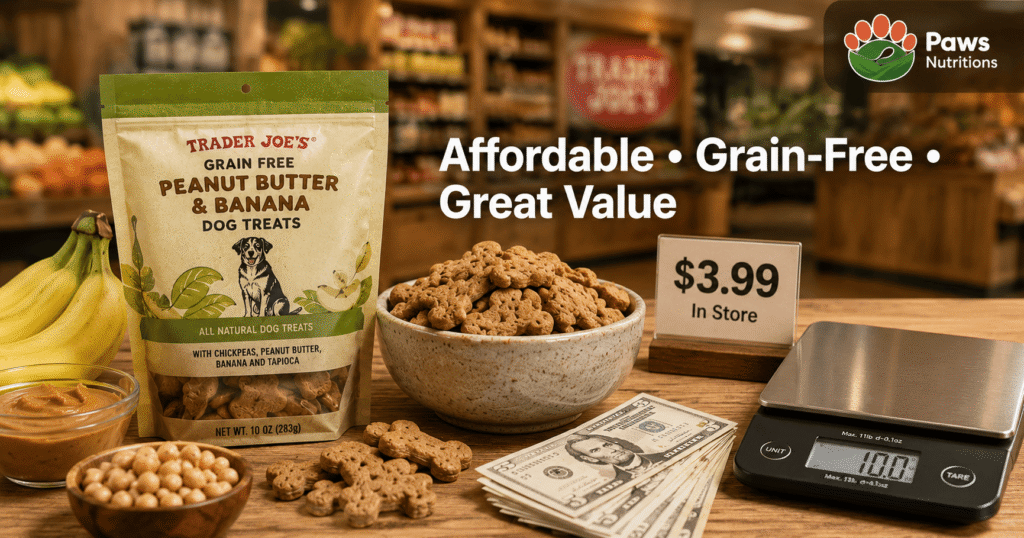
Current Retail Pricing (Trader Joe’s, Amazon, Walmart)
Because Trader Joe’s primarily sells its own private-label products through its physical stores, the lowest prices are usually found in-store.
Typical pricing looks like this:
| Retailer | Estimated Price* |
|---|---|
| Trader Joe’s Store | $2.99–$3.99 |
| Amazon | $9.99–$16.99 |
| Walmart Marketplace | $8.99–$15.99 |
*Prices may vary depending on location, availability, shipping costs, and third-party sellers.
The difference is striking. Online marketplaces often charge two to four times the in-store price because Trader Joe’s doesn’t officially operate an online shopping platform. Instead, independent sellers purchase products in-store and resell them online, adding shipping and handling costs.
If you live near a Trader Joe’s, purchasing directly from the store offers significantly better value.
Price-Per-Pound Comparison Against Other Trader Joe’s Treats
Looking only at the bag price doesn’t tell the whole story. Comparing products by weight gives a much clearer picture of value.
| Trader Joe’s Treat | Approximate Bag Size | Estimated Price | Approximate Cost Per Pound |
|---|---|---|---|
| Peanut Butter & Banana | 10.6 oz | $3.49 | ~$5.28/lb |
| Salmon & Sweet Potato | Similar | Slightly Higher | ~$6–7/lb |
| Beef Recipe Jerky Strips | Smaller | Higher | ~$10–14/lb |
| Natural Peanut Butter for Dogs | Jar | Moderate | Varies by serving |
Among Trader Joe’s pet treats, the Peanut Butter & Banana biscuits rank among the best values on a cost-per-pound basis while still offering recognizable ingredients and a grain-free recipe.
Cost Per Treat and Monthly Budget Estimate by Dog Size
Since each biscuit contains about 13 calories, many owners give only a few treats per day. That means a single bag can last surprisingly long.
Here’s a practical estimate:
| Dog Size | Typical Treats Per Day | Estimated Monthly Bags Needed |
|---|---|---|
| Small Dog | 2–3 | About 1 bag |
| Medium Dog | 4–6 | 1–2 bags |
| Large Dog | 6–10 | 2 bags |
For many households, even feeding treats daily represents a relatively small monthly expense—particularly when purchasing directly from Trader Joe’s.
Is Buying From Amazon Worth the Markup?
For some owners, convenience outweighs cost. If your nearest Trader Joe’s is several hours away, paying extra through Amazon may still be worthwhile.
However, from a value perspective, the markup is difficult to justify.
In many cases, online prices are 200–400% higher than in-store pricing, even though the product itself is exactly the same. You’re primarily paying for:
- Convenience
- Shipping costs
- Limited availability
- Third-party reseller margins
If you have regular access to a Trader Joe’s location, buying directly from the store offers considerably better value. Online purchasing makes more sense only when local availability isn’t an option.
Feeding Guide: How Many Treats by Dog Weight
Even healthy treats should be fed thoughtfully. Dogs have different calorie requirements based on their size, age, activity level, and overall health, so the right number of treats varies from one pet to another.
Because Trader Joe’s Peanut Butter Banana Dog Treats are moderately sized crunchy biscuits, they work best as occasional rewards rather than unlimited snacks. Breaking larger biscuits into smaller pieces is another easy way to reduce calorie intake while keeping training sessions rewarding.
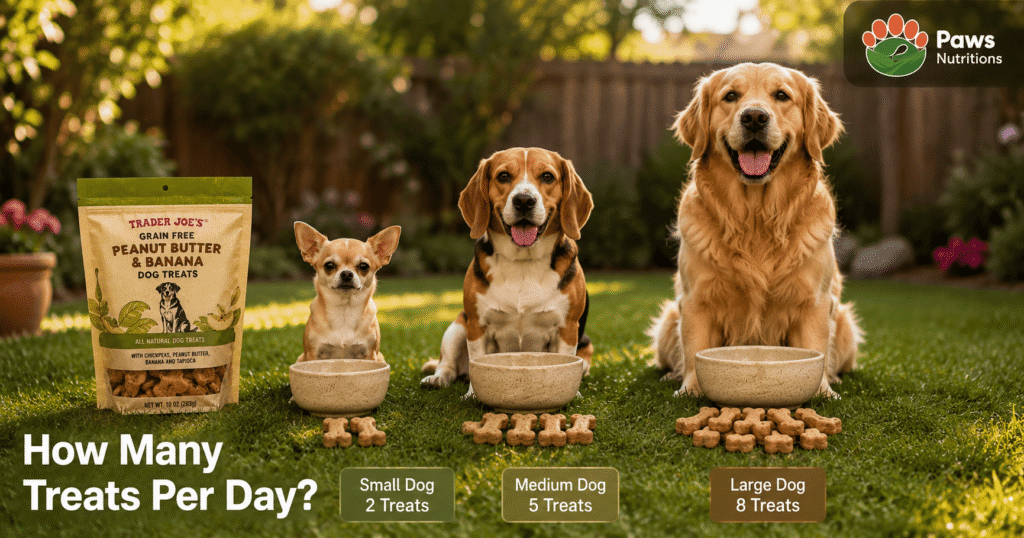
Small Dogs (Under 20 lbs)
Small breeds burn fewer calories, so even one extra treat can represent a noticeable portion of their daily intake.
For dogs under 20 pounds:
- Offer 2–4 treats per day at most.
- Break treats into halves during training.
- Reduce meal portions slightly if treats are given frequently.
Breeds such as Chihuahuas, Yorkshire Terriers, Toy Poodles, and Pomeranians often benefit from smaller treat portions while still feeling rewarded.
Medium Dogs (20–50 lbs)
Medium-sized dogs usually have greater calorie needs and can enjoy slightly more treats without exceeding recommended limits.
A practical guideline is:
- 4–7 treats daily
- Divide treats throughout the day rather than giving them all at once.
- Pair treats with exercise and mental enrichment.
For example, a Border Collie receiving a few biscuits after obedience training or a Beagle rewarded during scent games can enjoy these treats while maintaining a balanced diet.
Large Dogs (50+ lbs)
Large breeds generally require more calories, but that doesn’t mean treats should become unlimited.
Most healthy large dogs can safely enjoy:
- 6–10 treats daily
- Spread throughout the day
- Adjusted according to activity level
Highly active breeds like Labrador Retrievers or German Shepherds often burn significantly more calories than less active dogs, so individual needs will vary.
Regardless of your dog’s size, fresh drinking water should always be available whenever treats are offered.
Who Should (and Shouldn’t) Buy These Treats?
No single dog treat is perfect for every pet. While Trader Joe’s Peanut Butter Banana Dog Treats check many important boxes—simple ingredients, moderate calories, and grain-free formulation—they’re a better fit for some dogs than others.
Understanding whether your dog falls into the ideal target group helps you make a smarter purchasing decision rather than relying solely on marketing claims.
Best for Dogs With Grain Sensitivities
If your dog has been advised by a veterinarian to avoid certain grains, these biscuits may be a practical option.
Because the recipe replaces traditional grains with chickpeas and tapioca starch, many dogs with grain sensitivities tolerate them well. The ingredient list is also relatively short, making it easier to identify potential food triggers.
That said, grain-free doesn’t automatically mean healthier. It simply means the carbohydrate sources are different.
Not Ideal for Dogs With Peanut Allergies
Although peanut allergies are relatively uncommon in dogs, they do occur.
Since peanut butter is one of the primary flavoring ingredients, dogs with confirmed peanut sensitivities should avoid this product entirely. If your dog develops vomiting, diarrhea, excessive scratching, facial swelling, or difficulty breathing after eating peanut-containing treats, discontinue use immediately and contact your veterinarian.
When introducing any new treat, offering a small portion first is always the safest approach.
Are They Good for Training?
These biscuits can work for basic training, but they aren’t necessarily the best choice for high-frequency reward sessions.
Because they’re moderately crunchy and contain around 13 calories each, many owners prefer breaking them into smaller pieces before using them during obedience exercises.
For occasional rewards, recall practice, or enrichment games, they perform well. However, professional trainers often choose much smaller, softer treats that can be delivered quickly without interrupting training flow.
Puppies vs. Adult Dogs vs. Senior Dogs
These treats are generally best suited for adult dogs with fully developed teeth.
For puppies, the crunchy texture may be difficult for very young dogs to chew, so breaking the biscuits into small pieces is recommended.
For senior dogs, suitability depends largely on dental health. Dogs with missing teeth or advanced dental disease may struggle with hard biscuits, making softer treats a more comfortable option.
Healthy adult dogs, however, are likely to enjoy both the texture and familiar peanut butter flavor, making these treats a satisfying everyday reward when fed in moderation.
Is This Treat Good for Dogs With Special Dietary Needs?
Many dog owners don’t buy treats just because their pets enjoy them—they also want treats that fit specific health conditions. Whether your dog has a sensitive stomach, needs to lose weight, or lives with a chronic medical condition, choosing the right snack can make a real difference. While Trader Joe’s Peanut Butter Banana Dog Treats are made with a relatively simple ingredient list, they’re not the perfect choice for every dog.
The key is to look beyond the “grain-free” label and consider your dog’s overall health. Below is a closer look at how these treats may fit different dietary situations.
Dogs With Sensitive Stomachs
Dogs with mild digestive sensitivities often do well on diets that contain fewer ingredients and avoid common fillers. Since these treats are free from wheat, corn, and soy, they may be easier for some dogs to digest than traditional biscuits.
However, every dog responds differently. Ingredients such as chickpeas, tapioca starch, or peanut butter can still cause digestive upset in certain pets. If you’re introducing these treats for the first time, start with one small piece and observe your dog over the next 24 hours.
Signs that the treats agree with your dog include:
- Normal stool consistency
- No vomiting
- No excessive gas
- Normal appetite and energy
If digestive problems appear, discontinue the treats and discuss alternative options with your veterinarian.
Dogs With Pancreatitis
Dogs diagnosed with pancreatitis require extra caution when it comes to dietary fat. Although Trader Joe’s Peanut Butter Banana Dog Treats aren’t considered high-fat compared with many meat-based snacks, they still contain peanut butter and vegetable oils, both of which contribute dietary fat.
For dogs recovering from pancreatitis or those with a history of the condition, even moderate-fat treats may not be appropriate.
Before offering these biscuits to a dog with pancreatic disease, consult your veterinarian. In many cases, specially formulated low-fat dog treats are a safer choice.
Overweight Dogs
Weight management isn’t just about reducing meal portions. Treats often account for more calories than owners realize.
At approximately 13 calories per biscuit, these treats are reasonably moderate, but frequent snacking can still slow weight-loss progress.
If your dog is overweight:
- Break each biscuit into two or three smaller pieces.
- Count treat calories as part of the daily calorie budget.
- Increase physical activity alongside portion control.
- Reserve treats for training or rewarding positive behavior instead of giving them routinely.
Small changes like these allow your dog to enjoy treats without significantly increasing daily calorie intake.
Diabetic Dogs
Managing diabetes requires consistency, especially regarding carbohydrate intake. Because these treats contain chickpeas, tapioca starch, and a small amount of molasses, they do contribute carbohydrates.
That doesn’t automatically mean they’re unsuitable. Many diabetic dogs can still enjoy occasional treats, provided those calories and carbohydrates are included in their overall dietary management plan.
The safest approach is to:
- Feed treats at consistent times.
- Avoid excessive quantities.
- Monitor blood glucose as recommended by your veterinarian.
- Discuss all treats with your veterinary team before making dietary changes.
Consistency is usually more important than complete avoidance.
Dogs With Food Allergies
Food allergies can be frustrating because the symptoms often mimic other skin or digestive conditions. While these treats eliminate some common ingredients, they’re not considered a limited-ingredient dog treat.
Potential allergens include:
- Peanut butter
- Chickpeas
- Certain vegetable oils
- Natural flavors
If your dog has a confirmed food allergy, carefully compare the ingredient list with your veterinarian’s recommended elimination diet before offering these treats.
For dogs without known allergies, the relatively straightforward ingredient panel is generally a positive feature.
How Do They Compare to Other Trader Joe’s Dog Treats?
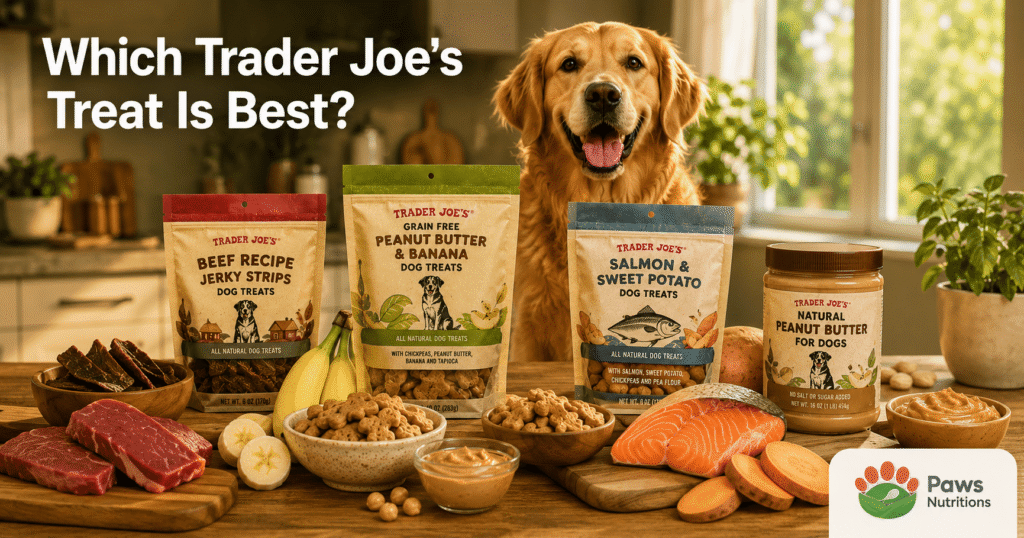
Trader Joe’s offers several dog treats, each designed for slightly different needs. Some focus on meat-based protein, while others highlight fish or simple peanut butter flavors. Understanding how they compare helps you choose the right option rather than buying solely based on packaging.
If your dog enjoys variety, rotating between different treats can also help keep rewards exciting while preventing boredom.
Comparison Table: PB & Banana vs. Natural Peanut Butter Tub vs. Beef Jerky vs. Salmon & Sweet Potato
| Feature | Peanut Butter & Banana | Natural Peanut Butter | Beef Recipe Jerky | Salmon & Sweet Potato |
|---|---|---|---|---|
| Primary Protein | Plant-based | Peanut | Beef | Salmon |
| Texture | Crunchy biscuit | Creamy spread | Soft jerky | Chewy |
| Grain-Free | Yes | Yes | Usually Yes | Yes |
| Calories | Moderate | Higher per serving | Moderate | Moderate |
| Best For | Everyday rewards | Stuffable toys | High-value rewards | Dogs that enjoy fish |
| Training Use | Fair | Limited | Very Good | Good |
Each product serves a different purpose. The Peanut Butter & Banana biscuits offer an affordable everyday snack, while jerky treats often provide stronger motivation during training sessions.
Which Trader Joe’s Treat Is Best for Training vs. Everyday Rewards?
Not every treat works equally well in every situation.
For daily rewards, the Peanut Butter & Banana biscuits are an excellent choice because they’re:
- Crunchy
- Affordable
- Easy to store
- Made with recognizable ingredients
For high-value training, however, many dogs respond more enthusiastically to soft, meat-based treats such as Trader Joe’s Beef Recipe Jerky. Strong aromas typically increase motivation during recall training or learning new commands.
Meanwhile, Natural Peanut Butter for Dogs works especially well inside enrichment toys like food-stuffing puzzles, providing mental stimulation alongside a tasty reward.
Your dog’s preferences ultimately matter most. Some dogs happily work for crunchy biscuits, while others reserve their best effort for soft meat treats.
How Do They Compare to Other Popular Dog Treat Brands?
While comparing products within Trader Joe’s is useful, most shoppers also consider well-known national brands before making a purchase. Looking at ingredient quality, nutritional philosophy, texture, and value provides a broader perspective.
The biggest advantage of Trader Joe’s Peanut Butter Banana Dog Treats is their combination of simple ingredients and budget-friendly pricing. However, other brands excel in areas such as protein content, functional nutrition, or specialized training applications.
Trader Joe’s vs. Milk-Bone
Milk-Bone has been a household name for decades and remains one of the most widely available dog treat brands.
| Category | Trader Joe’s PB & Banana | Milk-Bone Original |
|---|---|---|
| Grain-Free | Yes | No |
| Artificial Colors | None listed | May contain added colors |
| Primary Protein | Plant-based | Mixed ingredients |
| Ingredient Simplicity | Higher | Moderate |
| Price | Similar in-store | Widely affordable |
If you prefer fewer artificial ingredients and a grain-free recipe, Trader Joe’s has the edge. Milk-Bone, however, offers broader availability and more product varieties.
Trader Joe’s vs. Blue Buffalo Bits
Blue Buffalo Bits target pet owners looking for premium training treats with meat-first recipes.
| Category | Trader Joe’s | Blue Buffalo Bits |
|---|---|---|
| Texture | Crunchy | Soft |
| Protein Source | Plant-based | Animal protein |
| Training Suitability | Good | Excellent |
| Calories | Moderate | Lower per small treat |
| Price | Lower | Higher |
Blue Buffalo’s softer texture makes it particularly suitable for repetitive training, while Trader Joe’s offers better value for casual daily rewarding.
Trader Joe’s vs. Zuke’s Mini Naturals
Zuke’s Mini Naturals are among the most popular professional training treats available.
| Category | Trader Joe’s | Zuke’s Mini Naturals |
|---|---|---|
| Treat Size | Medium biscuit | Very small |
| Training Sessions | Moderate | Excellent |
| Protein | Moderate | Higher |
| Calories | About 13 per treat | Around 2–3 per treat |
| Convenience | Requires breaking | Ready to use |
For owners attending obedience classes or agility training, Zuke’s often wins because dozens of treats can be given without significantly increasing calorie intake.
Trader Joe’s vs. Wellness Soft WellBites
Wellness Soft WellBites focus on premium ingredients and functional nutrition.
| Category | Trader Joe’s | Wellness WellBites |
|---|---|---|
| Texture | Crunchy | Soft |
| Functional Ingredients | Minimal | Often includes added nutrients |
| Ingredient Philosophy | Simple | Premium functional nutrition |
| Price | Lower | Higher |
If your priority is affordability and everyday use, Trader Joe’s performs very well. If you’re specifically seeking treats with additional health-focused ingredients, Wellness may justify its higher price.
Quick Comparison Summary
Here’s how the products stack up based on common buying priorities:
| Best For | Recommended Product |
|---|---|
| Best Budget Value | Trader Joe’s Peanut Butter & Banana |
| Best Training Treat | Zuke’s Mini Naturals |
| Best Meat-Based Option | Blue Buffalo Bits |
| Best Functional Nutrition | Wellness Soft WellBites |
| Most Widely Available | Milk-Bone |
Overall, Trader Joe’s Peanut Butter Banana Dog Treats strike an impressive balance between affordability, ingredient quality, and everyday usability. They may not replace specialized training treats or premium functional snacks, but they offer excellent value for pet owners who want a simple, grain-free biscuit made with recognizable ingredients.
Real Owner Reviews and Reactions
Reading the ingredient list is only part of the decision-making process. The real test comes after dogs actually eat the treats. Reviews from pet owners can reveal valuable insights about taste, texture, digestibility, and consistency—things that don’t always appear on the packaging.
Overall, Trader Joe’s Peanut Butter Banana Dog Treats receive largely positive feedback from dog owners. Many appreciate the simple ingredient list, reasonable price, and the fact that even picky dogs seem eager to eat them. That said, no product is perfect, and recurring complaints are worth considering before you buy.

What Owners Say About Palatability and Texture
The most consistent praise revolves around flavor. Dogs appear to love the familiar combination of peanut butter and banana, making these treats an easy reward for many breeds.
Owners frequently mention that their dogs:
- Get excited when the bag is opened.
- Crunch the biscuits enthusiastically.
- Respond well during everyday reward sessions.
- Continue enjoying them over long periods without losing interest.
The crunchy texture is another advantage for many healthy adult dogs. While these biscuits aren’t dental treats, chewing crunchy snacks may provide mild mechanical cleaning by helping reduce soft plaque buildup during chewing.
One owner, for example, described using the treats after every evening walk. Their Labrador quickly learned that returning calmly to the front door meant earning one biscuit—a simple routine that reinforced good behavior while strengthening their daily bond.
Reported Digestive Sensitivities — What to Watch For
Most dogs tolerate these treats well when introduced gradually. However, a small number of owners have reported mild digestive issues after feeding larger quantities.
Occasional concerns include:
- Loose stools
- Mild gas
- Temporary stomach upset
- Reduced appetite after eating too many treats
These reactions don’t necessarily indicate that the treats are unsafe. Instead, they highlight an important principle of pet nutrition: every dog has unique digestive sensitivities.
Introducing any new treat slowly gives your dog’s digestive system time to adjust. Starting with a single biscuit and observing your dog for a day or two is usually the safest approach.
Common Complaints We Found
Although overall satisfaction is high, several concerns appear repeatedly across customer discussions.
1. Ingredient Reformulation
Some long-time buyers noticed slight differences between older and newer ingredient panels. While recipe updates are common in the pet food industry, any formulation change naturally raises questions among loyal customers.
Fortunately, no evidence suggests these adjustments have significantly altered the product’s intended nutritional purpose.
2. Amazon Price Markups
Perhaps the biggest complaint has nothing to do with the treats themselves.
Many online shoppers are surprised to discover that the same bag costing only a few dollars at Trader Joe’s may sell for three or even four times more through third-party online sellers.
This price difference often receives more criticism than the product itself.
3. Limited Availability
Unlike national pet brands, Trader Joe’s products can only be purchased through Trader Joe’s stores or independent online resellers.
For owners living far from the nearest location, keeping a regular supply can be challenging.
4. Biscuit Size
While medium and large dogs usually handle the crunchy biscuits easily, some owners of toy breeds feel the treats are slightly larger than ideal.
Fortunately, they break apart fairly easily, allowing smaller portions for tiny dogs or training sessions.
Our Hands-On Take
After evaluating the ingredient profile, nutritional value, pricing, recall history, and owner experiences, these treats leave a positive overall impression.
They’re not marketed as a premium therapeutic snack packed with supplements or exotic ingredients. Instead, they focus on doing something much simpler—providing a straightforward, affordable reward made with recognizable ingredients.
The product’s biggest strengths include:
- Clean ingredient list
- Grain-free formulation
- Moderate calorie content
- Good overall value
- Strong owner satisfaction
At the same time, the lack of detailed manufacturing transparency and the significant online price markup prevent the product from being truly exceptional.
For most healthy adult dogs, however, these biscuits represent a dependable everyday reward when fed in moderation.
Pros and Cons at a Glance
Every dog treat has strengths and weaknesses. Looking at both sides objectively helps you decide whether a product fits your dog’s specific needs rather than relying solely on marketing claims or customer reviews.
After comparing Trader Joe’s Peanut Butter Banana Dog Treats with competing products, several advantages stand out—but there are also a few limitations worth considering.
Strengths of This Treat
One of the biggest advantages is the relatively simple ingredient list. Instead of relying on numerous artificial additives, the recipe focuses on recognizable ingredients such as chickpeas, peanut butter, and banana.
Other notable strengths include:
- Grain-free recipe suitable for many grain-sensitive dogs.
- No listed artificial colors.
- Moderate calorie content (about 13 calories per treat).
- Crunchy texture that many dogs enjoy.
- Affordable in-store pricing.
- Good everyday reward for healthy adult dogs.
- Positive overall customer feedback.
- No known recall history for this specific product.
For owners seeking an affordable snack without unnecessary complexity, these treats strike an appealing balance between quality and value.
Drawbacks to Consider
No product is perfect, and these treats have several limitations that may matter depending on your dog’s needs.
Potential drawbacks include:
- Limited manufacturing transparency.
- Plant-based protein rather than meat-first nutrition.
- Not ideal for dogs with peanut allergies.
- Online prices can be dramatically higher than in-store.
- Crunchy texture may not suit every puppy or senior dog.
- Few functional ingredients compared with premium wellness treats.
These drawbacks aren’t deal-breakers for most owners, but they’re worth weighing against your dog’s age, health status, and dietary requirements.
Pros & Cons Summary
| Pros | Cons |
|---|---|
| Simple ingredient list | Limited manufacturing transparency |
| Grain-free | Peanut allergy concerns |
| Affordable at Trader Joe’s | Large online markups |
| Moderate calories | Limited functional nutrition |
| Good owner reviews | Hard texture for some dogs |
| No known recall history | Store availability can be limited |
How to Store and Keep These Treats Fresh
Even high-quality treats can lose flavor and texture if they’re stored incorrectly. Exposure to moisture, heat, and air gradually reduces freshness, making treats less appealing and, in some cases, unsafe to feed.
Fortunately, Trader Joe’s Peanut Butter Banana Dog Treats are easy to store with a few simple habits.
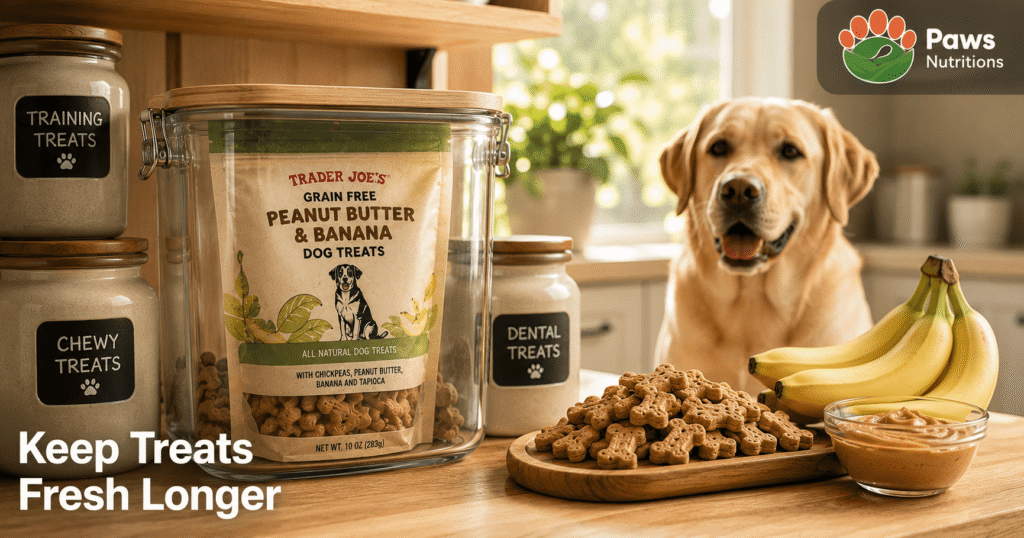
Shelf Life and Resealing Tips
Always begin by checking the best-by date printed on the package.
Once opened, reseal the bag tightly after every use to reduce exposure to air. If the original seal becomes damaged, transferring the biscuits to an airtight food-safe container can help preserve freshness even longer.
For best results:
- Store in a cool, dry place.
- Keep away from direct sunlight.
- Avoid humid areas such as garages or laundry rooms.
- Use clean, dry hands when handling treats.
- Close the package immediately after each use.
When stored properly, the treats should remain fresh until their printed expiration date.
Signs a Bag Has Gone Stale or Rancid
Before feeding any treat, take a quick look and smell the contents.
Discard the product if you notice:
- Mold or visible discoloration.
- A sour, rancid, or unusually strong odor.
- Excess moisture inside the package.
- Softening of biscuits that should remain crunchy.
- Signs of insect contamination.
- Torn or compromised packaging.
Although these issues are uncommon, inspecting every bag helps reduce unnecessary risk.
If your dog refuses treats they normally enjoy, it’s also worth checking the freshness before assuming they’ve simply become picky.
Best Alternatives If These Aren’t Right for Your Dog
Even though Trader Joe’s Peanut Butter Banana Dog Treats offer good value, they won’t be the perfect choice for every dog. Some pets need softer treats, others benefit from higher-protein options, and some owners simply prefer specialized functional nutrition.
Fortunately, there are several excellent alternatives depending on your priorities.
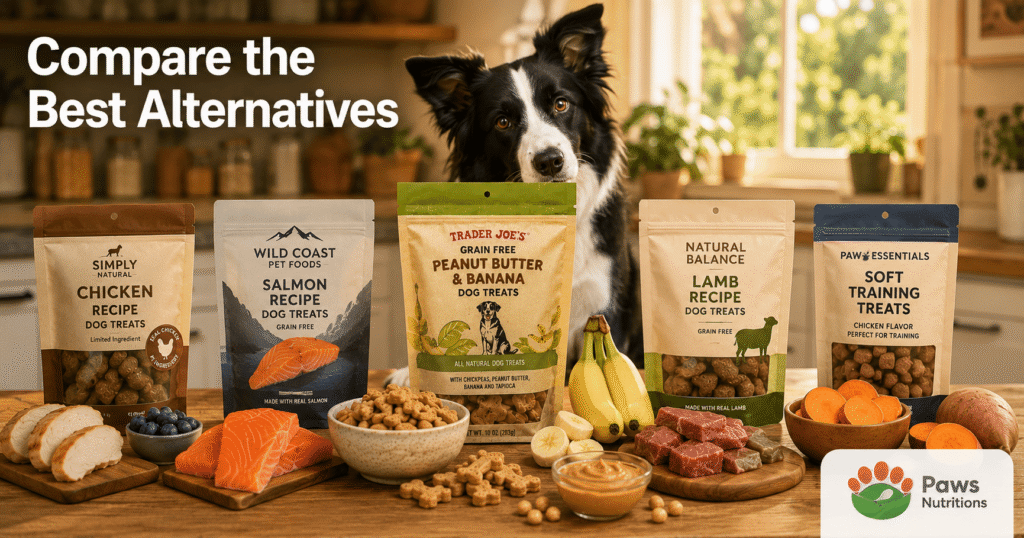
Best Premium Alternative
If ingredient quality is your highest priority, premium treats made with real meat and functional ingredients are worth considering.
Look for products featuring:
- High animal-protein content
- Limited processing
- Added Omega-3 fatty acids
- Natural antioxidants
- Minimal fillers
These options typically cost more but may provide additional nutritional benefits.
Best Budget Alternative
For owners focused primarily on affordability, classic baked biscuits remain a practical option.
Budget-friendly treats generally offer:
- Wide retail availability
- Lower cost per serving
- Reliable consistency
- Everyday usability
While ingredient quality may vary, they often fit well into households with multiple dogs.
Best Limited-Ingredient Alternative
Dogs with food sensitivities often benefit from treats containing only a handful of carefully selected ingredients.
Limited-ingredient treats usually feature:
- One primary protein source
- Minimal carbohydrate sources
- No artificial colors
- No unnecessary fillers
These products simplify ingredient tracking during elimination diets.
Best Training Treat Alternative
Training sessions require small, low-calorie rewards that can be delivered quickly without interrupting learning.
The ideal training treat should be:
- Soft
- Highly palatable
- Easy to chew
- Around 2–4 calories each
- Small enough to feed repeatedly
Because Trader Joe’s biscuits are relatively crunchy and moderately sized, they’re better suited to casual rewarding than intensive obedience or agility training.
Alternative Comparison Table
| Best Need | Recommended Type |
|---|---|
| Premium Nutrition | Meat-first functional treats |
| Budget Option | Traditional baked biscuits |
| Sensitive Stomach | Limited-ingredient treats |
| Training Sessions | Soft, low-calorie training treats |
| Dental Rewards | Veterinary dental chews |
Choosing the right treat ultimately depends on your dog’s individual needs rather than brand popularity alone. For many healthy adult dogs, Trader Joe’s Peanut Butter Banana Dog Treats remain one of the better budget-friendly grain-free options, but it’s always helpful to know which alternatives may be a better fit for specific situations.
Expert Verdict
After examining the ingredients, nutritional profile, safety considerations, pricing, recall history, and real-world owner feedback, Trader Joe’s Peanut Butter Banana Dog Treats prove to be a well-rounded everyday treat rather than a premium functional supplement. They aren’t designed to replace a balanced diet or provide advanced health benefits, but they deliver good value with a relatively simple ingredient list and an appealing flavor that many dogs genuinely enjoy.
If your dog is healthy, enjoys crunchy biscuits, and doesn’t have a peanut allergy or another ingredient sensitivity, these treats can be a sensible addition to your treat rotation. The biggest advantages are their affordable in-store price, grain-free recipe, and moderate calorie content. On the other hand, owners looking for meat-first nutrition, added joint support, or probiotic benefits may find better options among premium treat brands.
Veterinary Nutrition Perspective
From a veterinary nutrition standpoint, these biscuits perform best as an occasional reward rather than a nutritional supplement. The recipe contains recognizable ingredients and avoids several common fillers, but it also relies primarily on plant-based protein rather than animal protein.
The most important consideration is portion control. As long as the treats make up less than 10% of your dog’s daily calorie intake, they can fit comfortably into the diet of most healthy adult dogs. Dogs with pancreatitis, severe food allergies, or medically prescribed diets should only receive these treats after veterinary approval.
Pet Parent Perspective
Looking at the product through the eyes of everyday dog owners, it’s easy to understand why these biscuits have developed a loyal following.
They’re:
- Easy to keep in the pantry.
- Affordable when purchased at Trader Joe’s.
- Made with familiar ingredients.
- Loved by many dogs because of the peanut butter flavor.
- Suitable for everyday rewarding.
The main frustration isn’t the product itself—it’s availability. Since Trader Joe’s doesn’t sell directly online, many owners either stock up during store visits or pay significantly higher prices through third-party marketplaces.
Overall Nutrition Score
Using ingredient quality, nutritional balance, transparency, value, safety history, and owner satisfaction as evaluation criteria, here’s our overall assessment.
| Category | Rating |
|---|---|
| Ingredient Quality | ⭐⭐⭐⭐☆ (4.5/5) |
| Nutritional Value | ⭐⭐⭐⭐☆ (4.0/5) |
| Ingredient Transparency | ⭐⭐⭐☆☆ (3.5/5) |
| Price (In-Store) | ⭐⭐⭐⭐⭐ (5/5) |
| Price (Online) | ⭐⭐☆☆☆ (2/5) |
| Palatability | ⭐⭐⭐⭐⭐ (5/5) |
| Safety Record | ⭐⭐⭐⭐⭐ (5/5) |
| Overall Score | ⭐⭐⭐⭐☆ (4.5/5) |
Quick Verdict
| Best For | Verdict |
|---|---|
| Healthy Adult Dogs | Recommended |
| Grain-Sensitive Dogs | Good Choice |
| Training Sessions | Works when broken into pieces |
| Weight Management | In Moderation |
| Puppies | Break into small pieces |
| Senior Dogs With Dental Problems | Softer treats may be better |
| Dogs With Peanut Allergies | Not Recommended |
Frequently Asked Questions
Are Trader Joe’s Peanut Butter Banana Dog Treats healthy?
Yes. They contain a relatively simple ingredient list with peanut butter, chickpeas, and banana, making them a good occasional reward for most healthy dogs when fed in moderation.
Are Trader Joe’s Peanut Butter Banana Dog Treats made in the USA?
Yes. Available product information indicates these treats are made in the USA using a grain-free recipe with additive-free peanut butter and dehydrated bananas.
How many calories are in one Trader Joe’s Peanut Butter Banana Dog Treat?
Each biscuit contains approximately 13–15 calories, depending on the product information source and manufacturing batch.
Do Trader Joe’s Peanut Butter Banana Dog Treats contain xylitol?
No. The ingredient list does not include xylitol, which is highly toxic to dogs. Even so, it’s always wise to check the label whenever you buy a new bag.
Has Trader Joe’s Peanut Butter Banana Dog Treat ever been recalled?
There are no known official recalls specifically involving Trader Joe’s Grain-Free Peanut Butter & Banana Dog Treats. Previous Trader Joe’s peanut butter recalls were related to separate human food products.
Can puppies eat Trader Joe’s Peanut Butter Banana Dog Treats?
Generally, yes, but the biscuits should be broken into smaller pieces for puppies, and treats should only be given in moderation alongside a complete and balanced puppy diet.
Are Trader Joe’s Peanut Butter Banana Dog Treats worth buying?
For most pet owners, yes. If you can purchase them directly from a Trader Joe’s store, they offer an excellent combination of ingredient quality, affordability, and taste. Buying from third-party online sellers is usually less cost-effective because of the significant price markup.
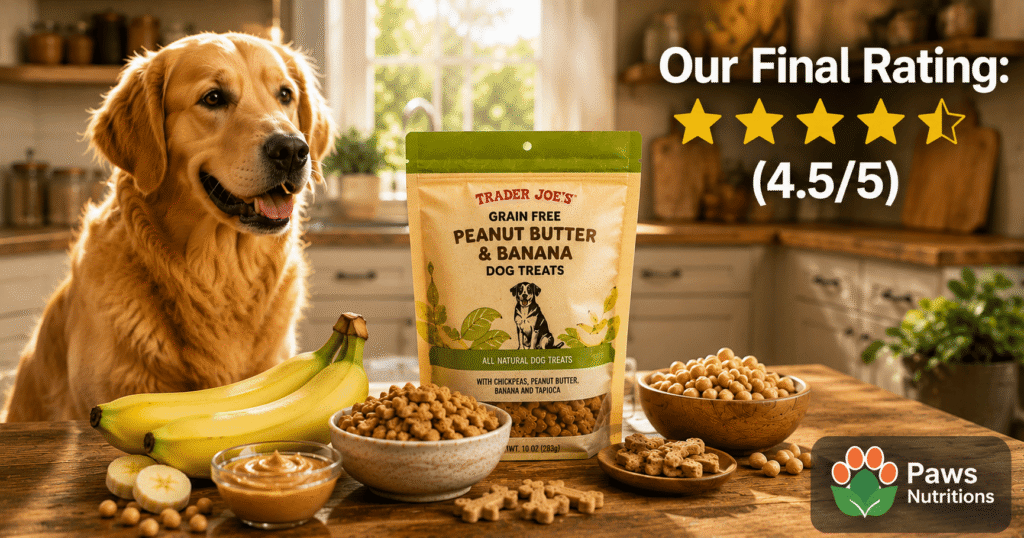
Final Verdict: Should You Buy These for Your Dog?
If you’re looking for a simple, grain-free biscuit made with recognizable ingredients, Trader Joe’s Peanut Butter Banana Dog Treats are an easy product to recommend for most healthy adult dogs. They combine a clean ingredient profile, moderate calorie content, and strong owner satisfaction at an affordable in-store price. While they don’t include premium functional ingredients like probiotics, glucosamine, or omega-3 supplements, they succeed at what they’re intended to be: a tasty everyday reward.
That said, no treat is perfect for every dog. Puppies, senior dogs with dental issues, dogs with peanut allergies, or pets following specialized veterinary diets may benefit from alternative options. Likewise, paying several times the retail price through online marketplaces reduces much of the product’s value.
Bottom line: If you have access to a Trader Joe’s store and want an affordable grain-free dog treat with a straightforward ingredient list, Trader Joe’s Peanut Butter Banana Dog Treats are a solid choice. Feed them in moderation, keep treats under 10% of your dog’s daily calories, and pair them with a complete, balanced diet. Used responsibly, they can be a delicious reward that both you and your dog will feel good about.

A dedicated writer and digital enthusiast committed to creating high-quality, informative, and reader-focused content. Through thoughtful research and clear communication, he aims to deliver valuable insights that help readers navigate the ever-changing digital landscape.