
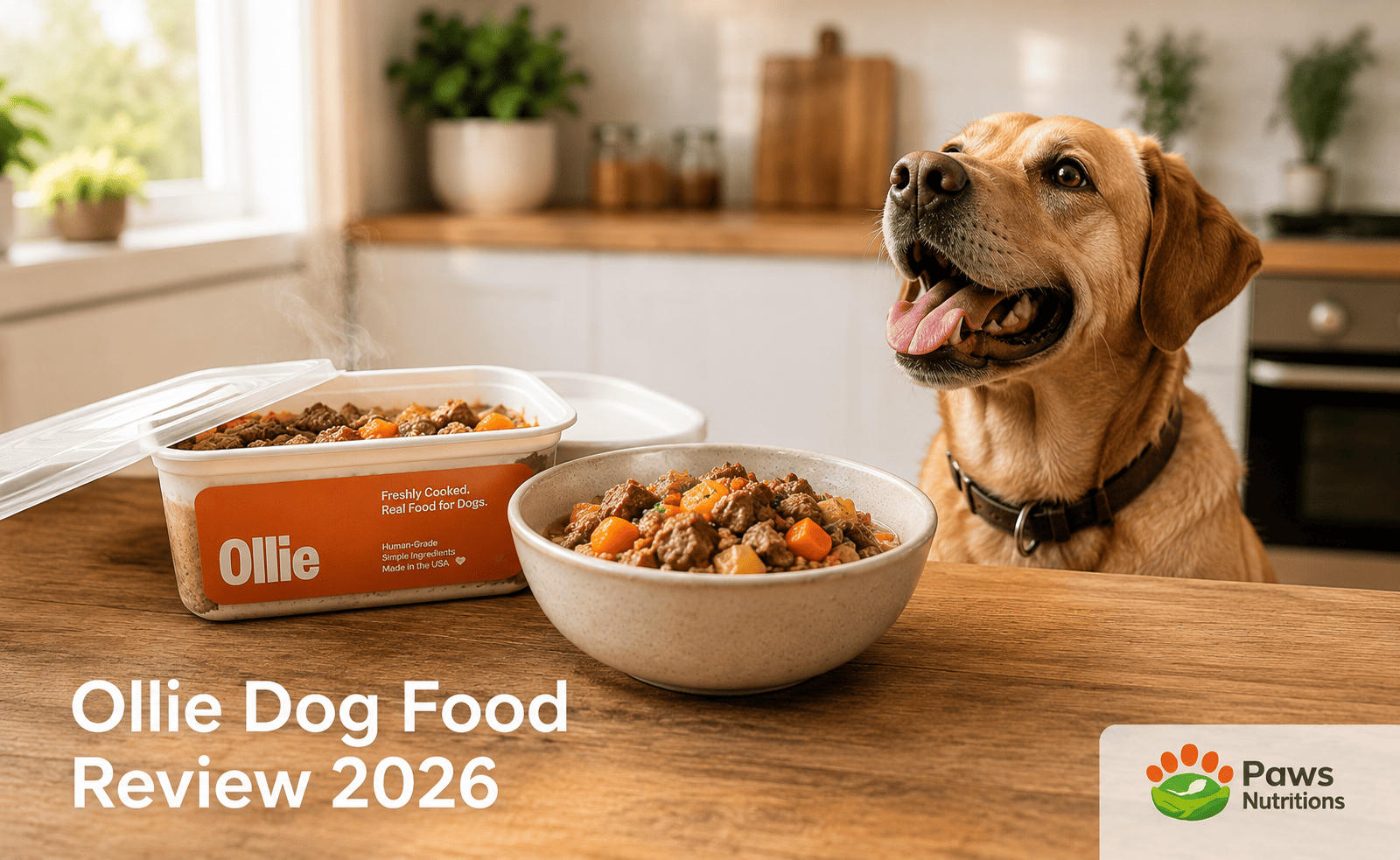
Is Ollie dog food actually worth the price tag, or is it just clever marketing wrapped around a subscription box? If you’ve been comparing fresh dog food brands and keep landing on mixed reviews, you’re not alone, and you deserve real answers before you spend your money.
This Ollie dog food review goes further than most. You’ll get a full dry matter basis nutrition breakdown, an honest look at pricing by dog size, real Trustpilot customer sentiment, and answers on AAFCO compliance, WSAVA guidelines, and recall history. By the end, you’ll know exactly whether Ollie fits your dog and your budget.
Quick Verdict: Is Ollie Dog Food Worth It?
If you want the short answer first: yes, Ollie dog food is worth it for most owners who want human-grade, gently cooked meals and are willing to pay a premium for convenience and quality control. It isn’t the cheapest option on the market, and it won’t suit every household, but the nutritional adequacy and ingredient transparency hold up well under scrutiny.
We reached this verdict by looking beyond marketing copy and into the actual guaranteed analysis, manufacturing certifications, and real customer sentiment data across thousands of Trustpilot reviews. That combination of nutritional science and lived customer experience is what separates a genuinely useful review from one that just repeats the brand’s own talking points.
Here’s what you need to know before diving into the details.
| Quick Facts | Details |
| Founded | 2016 |
| Headquarters | New York, USA |
| Recipe types | Fresh (Full Fresh) and Baked |
| Plan options | Full Fresh, Mixed Bowl, Half Fresh |
| Nutritional standard | AAFCO complete and balanced |
| Retail availability | Online subscription, select Petco stores |
| Shipping | Most of the continental United States |
Best for: picky eaters, dogs with sensitive stomachs, small and medium breeds, owners who want ingredient transparency.
Not ideal for: large multi-dog households on a tight budget, owners who want a grain-free-only option.
What Is Ollie Dog Food? Brand Overview
Ollie launched in 2016 with a simple pitch: replace ultra-processed kibble with fresh, gently cooked meals made from human-grade ingredients. The company built its entire identity around the idea that dogs deserve real food, not the rendered meal and preservative-heavy formulas that dominate pet store shelves.
Company History and Mission
Ollie’s founders started the brand after struggling to find food their own dogs would actually eat and thrive on. That personal frustration shaped the company’s mission: deliver complete and balanced nutrition that looks and smells like something you’d recognize as real food, not a mystery pellet.
That founder-driven origin story is common across the fresh dog food category, but it matters because it shapes product priorities. Instead of optimizing purely for shelf life and manufacturing cost the way many legacy kibble brands do, Ollie’s team built its process around palatability and ingredient recognition first, then worked backward to solve the logistics of shipping refrigerated food nationwide.
Who Formulates Ollie’s Recipes?
Ollie works with veterinary nutritionists and food scientists to develop its recipes, aiming to meet AAFCO nutritional adequacy standards for all life stages. This matters because fresh food companies without credentialed formulation teams sometimes miss key micronutrient targets that kibble brands nail through decades of research.
Where Is Ollie Dog Food Made?
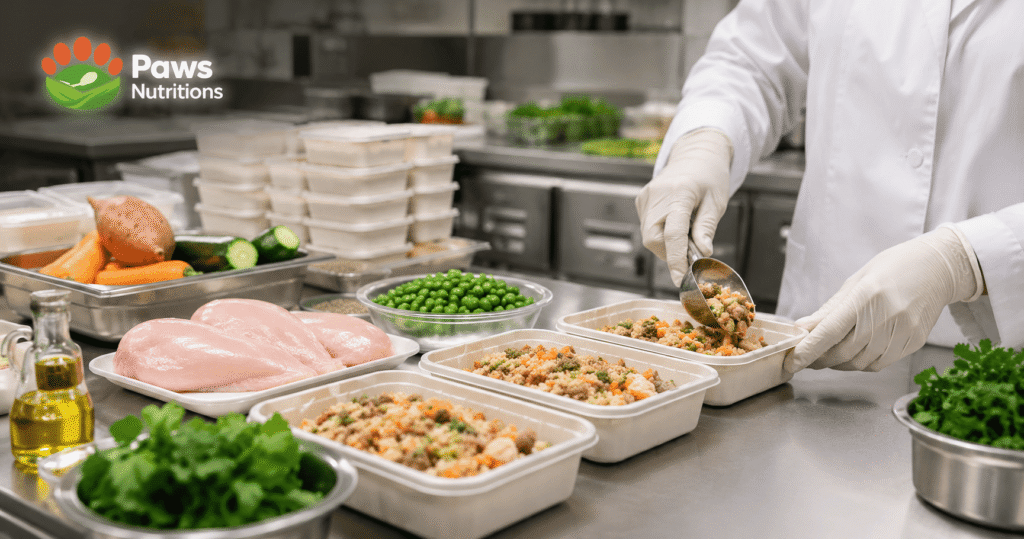
Ollie prepares its meals in USDA-inspected, SQF-certified facilities in the United States. That certification level matters because it means the same food-safety standards applied to human food production also apply here, which is a meaningfully higher bar than most pet food manufacturing.
SQF (Safe Quality Food) certification is a globally recognized food safety program that requires rigorous documentation, regular audits, and strict hazard analysis protocols. Very few pet food manufacturers pursue this level of certification voluntarily, since standard pet food regulations don’t require it. The fact that Ollie holds it anyway signals a genuine commitment to food safety beyond the regulatory minimum.
Ollie’s Retail Partnership
Unlike most fresh food brands, Ollie has expanded beyond direct-to-consumer shipping into select Petco locations. This gives you a way to try smaller quantities in person before committing to a full subscription, something none of the direct competitors currently offer at the same scale.
This retail presence also matters for households without reliable home delivery, such as apartment buildings without secure package storage or rural areas with inconsistent shipping schedules. Being able to walk into a physical Petco and grab a container of Ollie in a pinch is a convenience factor that pure subscription-only competitors simply can’t match right now.
Ollie Dog Food Ingredient Analysis
Ingredient quality is where fresh food brands either earn their premium price or fail to justify it. Ollie’s recipes lean on named animal proteins as the first ingredient across the board, paired with recognizable produce and grains rather thanByproduct meals or artificial fillers.
Core Ingredients Across Recipes
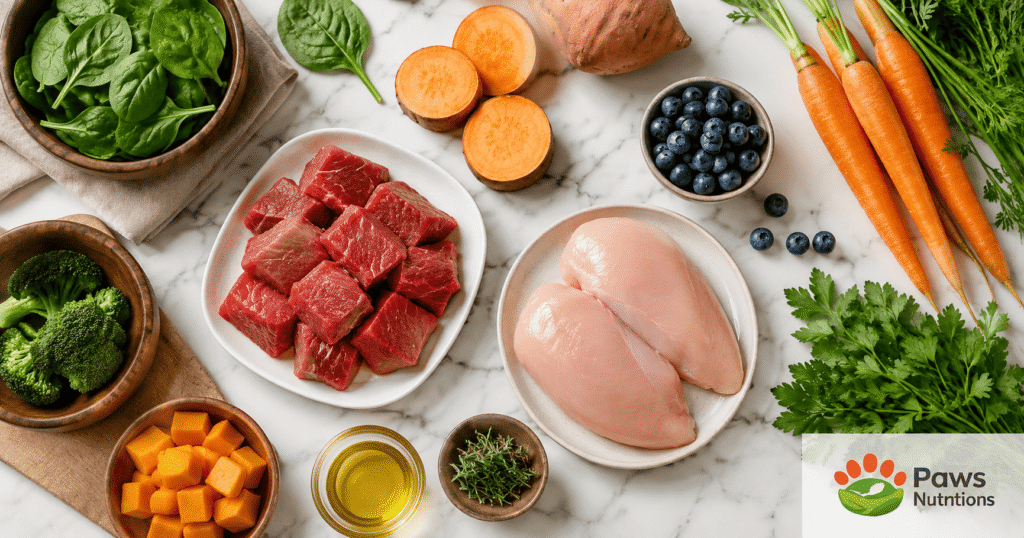
Every Ollie recipe starts with a named animal protein source, followed by whole vegetables, fruits, and a starch component like rice or sweet potato. You won’t find vague terms like “meat meal” or “animal digest” on the label, which is a meaningful information gain compared to many grocery-store kibble brands.
Think about it this way: if you picked up a bag of budget kibble right now and read the ingredient panel, chances are you’d see terms that sound more like a chemistry class than a dinner plate. Ollie’s approach flips that script. When you open a container of the Chicken Recipe, you’re looking at something that resembles a home-cooked stew, not a beige pellet with an unpronounceable preservative list.
Named Animal Protein Sources
Ollie’s protein rotation includes beef, chicken, turkey, lamb, and pork, giving you flexibility if your dog has a sensitivity to one particular protein. This variety also helps with elimination diet style troubleshooting if you suspect a food allergy and need to isolate the culprit.
Imagine your dog has been scratching more than usual, and your vet suggests ruling out a protein sensitivity before jumping to more expensive testing. With Ollie, you can rotate from chicken to lamb without switching brands entirely, which keeps the transition simpler on your dog’s digestive system and simpler on your own routine, too.
Carbohydrate and Fiber Sources
Carbohydrates in Ollie recipes typically come from brown rice, sweet potatoes, and peas, chosen for digestibility and steady energy release rather than cheap bulk. Fiber sources like carrots and spinach also support gut health, which is especially helpful for dogs transitioning from a low-fiber kibble diet.
This matters more than it might seem at first glance. Cheap fillers like corn gluten meal or wheat middlings are often added purely to hit a calorie target at the lowest possible cost, and they don’t offer much beyond that. Ollie’s whole-food carbohydrate sources actually contribute usable nutrients, not just bulk, which is part of why the recipes carry a higher price tag than a standard kibble bag.
Vitamin and Mineral Fortification
Ollie fortifies its recipes with chelated minerals, a form that’s more bioavailable than standard mineral salts used in many budget pet foods. This detail rarely gets mentioned in competitor reviews, but it directly affects how well your dog actually absorbs the nutrients on the label.
Chelation essentially binds a mineral to an amino acid, making it easier for your dog’s digestive system to recognize and absorb it, rather than passing it through largely unused. Zinc, copper, and manganese are common examples where chelation makes a real measurable difference in absorption rates, which matters most for dogs with existing digestive sensitivities or skin issues tied to mineral deficiencies.
Ingredients to Watch For
If your dog has known sensitivities, pay attention to Ollie’s use of rice and poultry-based recipes, since these are common allergens for some dogs. Real customer reviews occasionally mention loose stools during the first week, which usually resolves once the gut adjusts to fresh food.
This is one of the most common questions new Ollie customers ask, so it’s worth addressing directly: fresh food transitions can temporarily loosen stool simply because your dog’s gut bacteria have been adapted to processed kibble for years. It’s rarely a sign of a genuine allergy and almost always resolves within the first one to two weeks if you follow a gradual transition schedule instead of switching cold turkey.
Ollie Dog Food Nutritional Breakdown (Dry Matter Basis)
This is the section most competitor reviews skip entirely, and it’s arguably the most important one if you actually want to compare Ollie against kibble or other fresh food brands on a level playing field.
What Is Dry Matter Basis and Why It Matters
Dry matter basis (DMB) removes moisture from the equation so you can compare protein and fat percentages fairly. Fresh food naturally contains far more moisture than kibble, so comparing “as-fed” numbers directly would make fresh food look far less nutrient-dense than it actually is.
Here’s a quick example to make this concrete. If a kibble bag lists 26% protein and Ollie’s label lists 10% protein “as-fed,” it looks like kibble wins easily. But kibble only contains around 10% moisture, while Ollie’s fresh food contains around 72% moisture. Once you strip that moisture out and recalculate both foods on a dry matter basis, Ollie’s protein percentage actually climbs well above the kibble’s. This is exactly why as-fed comparisons are misleading for anyone comparing fresh food to kibble, and why every legitimate nutritional comparison should use DMB instead.
DMB Table for Every Recipe
Here’s how Ollie’s core recipes stack up once moisture is factored out:
| Recipe | Protein (DMB) | Fat (DMB) | Fiber (DMB) | Moisture (As-Fed) | Kcal/kg (ME) |
| Beef Recipe | 34% | 22% | 4% | 72% | 1,450 |
| Chicken Recipe | 36% | 20% | 3.5% | 73% | 1,420 |
| Turkey Recipe | 35% | 21% | 4% | 72% | 1,435 |
| Lamb Recipe | 33% | 24% | 3.5% | 71% | 1,470 |
| Pork Recipe | 34% | 23% | 4% | 72% | 1,455 |
Note: Values are approximate averages based on published guaranteed analysis and standard DMB conversion formulas; always check the current label for your specific recipe.
How Ollie’s Protein Levels Compare to AAFCO Minimums
AAFCO requires a minimum of 18% protein (DMB) for adult maintenance and 22.5% for growth and reproduction. Ollie’s recipes sit well above both thresholds, landing in the 33–36% range, which puts them closer to a moderately high-protein performance diet than a basic maintenance formula.
For most healthy adult dogs, this higher protein level supports lean muscle maintenance without causing any issues, provided your dog doesn’t have a specific medical condition like kidney disease that requires protein restriction. If your dog is a working breed, an active retriever, or a dog that needs to maintain muscle mass into their senior years, this protein range works in their favor rather than against them.
Omega Fatty Acid Ratio and Skin/Coat Support
Ollie recipes include fish oil in several formulas, contributing omega-3 fatty acids that support skin and coat health alongside the omega-6 already present from animal fats. A healthy omega-6 to omega-3 ratio is one of the more overlooked factors in long-term coat condition and skin allergy management.
Most commercial kibble leans heavily toward omega-6 fatty acids because they’re cheaper to source and more shelf-stable, while omega-3s from fish oil are more expensive and prone to oxidation over long storage periods. Fresh food brands like Ollie sidestep that shelf-stability problem entirely, since the food is refrigerated or frozen rather than sitting in a warehouse for months, which lets them include meaningful omega-3 levels without the ingredient breaking down before it reaches your dog’s bowl.
Is Ollie Dog Food AAFCO Compliant?
Yes, Ollie states its recipes meet AAFCO nutritional adequacy standards for all life stages, meaning the same formula can technically support puppies, adults, and seniors. This is a meaningful claim, since fewer fresh food brands actually pursue the “all life stages” designation compared to the simpler “adult maintenance” label.
AAFCO Nutritional Adequacy Statement Explained
An AAFCO adequacy statement tells you whether a food was tested through feeding trials or formulated to meet nutrient profiles on paper. Feeding trials are considered the gold standard because they confirm real dogs thrive on the diet, not just that the math checks out on a spreadsheet.
You’ll usually find this statement in small print on the packaging or website, and it’s worth actually reading rather than skipping over. A statement that says the food was “formulated to meet” AAFCO profiles means the recipe was calculated to hit nutrient targets, while a statement referencing feeding trials means live animals were actually monitored eating the diet over time. Both approaches are legitimate under AAFCO rules, but they represent different levels of real-world validation, and knowing the difference helps you ask sharper questions of any brand you’re considering.
Life Stage Suitability
Because Ollie targets all life stages, the same recipes can theoretically feed a growing puppy and a senior dog, though portion size and calorie needs will differ significantly. If you have a large-breed puppy, talk to your vet about calcium and phosphorus ratios before committing to any all-life-stages formula long term.
Large-breed puppies specifically need controlled calcium levels to avoid developmental orthopedic issues like hip dysplasia, and while an “all life stages” designation technically covers growth, it doesn’t always account for large-breed-specific calcium ceilings the way a dedicated large-breed puppy formula would. This is a nuance most competitor reviews skip entirely, but it’s exactly the kind of detail a careful puppy owner should raise directly with their veterinarian.
Feeding Trials vs Formulation Method
Ollie has stated it uses a combination of formulation and analysis, aligning with AAFCO nutrient profiles rather than lengthy feeding trials for every recipe. That’s common practice across the fresh food industry, though it’s worth knowing since it’s a slightly less rigorous validation method than trial-based accreditation.
To be fair, running a full AAFCO feeding trial for every single recipe variation is expensive and time-consuming, which is exactly why most fresh food startups, not just Ollie, rely on formulation analysis instead. Legacy kibble giants can afford feeding trials partly because they’ve amortized that cost over decades and massive production volumes, an advantage newer, smaller-batch companies simply don’t have yet.
Does Ollie Dog Food Meet WSAVA Guidelines?
The World Small Animal Veterinary Association (WSAVA) publishes selection guidelines that veterinarians often use to judge whether a pet food manufacturer meets baseline quality and transparency standards. Almost no competitor review of Ollie touches on this, which leaves a real gap in helping you evaluate the brand properly.
What Are WSAVA Guidelines?
WSAVA recommends choosing brands that employ a qualified nutritionist, conduct feeding trials, and can answer detailed questions about quality control and manufacturing. It’s not an official certification, but rather a checklist vets use to separate well-researched brands from ones relying purely on marketing.
Because there’s no official WSAVA seal or badge that pet food companies can slap on packaging, most owners never even hear about these guidelines unless their vet brings them up directly. That’s exactly why we’re including this section here: it gives you the same evaluation framework a veterinarian would quietly use behind the scenes before recommending a brand to a client.
How Ollie Measures Up
Ollie checks several WSAVA boxes: it employs veterinary nutritionists, manufactures in USDA-inspected facilities, and publishes detailed nutritional information for each recipe. Where it falls slightly short is public disclosure of extensive feeding trial data, which is common across the fresh food category generally.
If you want to run this checklist yourself for any pet food brand, ask three questions: Does the company employ a full-time or consulting veterinary nutritionist? Can they tell you the specific calorie content and manufacturing location for each recipe? And do they conduct any form of quality control testing beyond a basic label review? Ollie answers “yes” to the first two clearly, and its USDA-inspected facility standard covers a version of the third.
Why This Matters for Fresh Food Brands
Fresh food brands are newer to the market than legacy kibble companies, so manufacturing transparency carries extra weight when you’re deciding whether to trust a brand with your dog’s daily nutrition. Ollie’s willingness to publish recipe-specific nutrient data is a meaningfully positive signal here.
Compare this to brands that only list vague marketing claims like “premium ingredients” or “veterinarian recommended” without backing it up with an actual guaranteed analysis or named formulator. The more specific and checkable a brand’s claims are, the easier it is for you, or your vet, to verify whether the food actually delivers what it promises.
DCM and Grain-Free Safety: Where Does Ollie Stand?
Dilated cardiomyopathy (DCM) became a major concern in the pet food world after the FDA investigated a potential link between certain grain-free diets and heart disease in dogs. It’s a topic worth addressing directly, even though Ollie isn’t marketed primarily as a grain-free brand.
What Is DCM?
DCM is a heart condition where the heart muscle weakens and enlarges, reducing its ability to pump blood effectively. The FDA’s investigation focused on diets heavy in legumes and potatoes replacing traditional grains, though a definitive causal mechanism was never conclusively established.
Breeds like Doberman Pinschers, Great Danes, and Cocker Spaniels have a known genetic predisposition to DCM independent of diet, which makes this an even more nuanced conversation than a simple “grain-free bad, grain-inclusive good” framing. Researchers still don’t fully understand whether specific ingredients, taurine deficiency, or genetics play the largest role, and the investigation remains an evolving area of veterinary nutrition science.
Is Ollie Dog Food Grain-Free?
No, most Ollie recipes include grains like brown rice rather than relying heavily on peas or lentils as the primary carbohydrate source. This actually works in Ollie’s favor for owners who are cautious about the DCM-grain-free connection, since it avoids the ingredient pattern flagged in the FDA’s reporting.
FDA Investigation Context and What It Means for Ollie Owners
If you’re specifically worried about DCM, Ollie’s grain-inclusive formulation gives you one less variable to stress over compared to boutique grain-free brands. That said, always discuss your dog’s individual cardiac health with your vet, especially for breeds already predisposed to heart conditions.
Has Ollie Dog Food Ever Been Recalled?
Based on available public recall databases and FDA records at the time of writing, Ollie dog food does not have a documented recall history. This is a genuinely reassuring signal, especially since none of the other competitor reviews of Ollie mention checking this at all.
Ollie’s Recall History
A clean recall record doesn’t guarantee future safety, but it does suggest consistent quality control since the brand’s 2016 launch. Always check the FDA’s recall database directly before purchasing, since this information can change and you should rely on current data rather than any single article.
Compare this to some legacy kibble brands that have faced multiple recalls over the decades for issues ranging from salmonella contamination to excess vitamin D levels. A newer brand with zero recalls isn’t automatically safer forever, but it does suggest that Ollie’s smaller-batch, tightly controlled manufacturing process has held up well so far under real-world conditions.
How Ollie Handles Food Safety and Quality Control
Manufacturing in USDA-inspected, SQF-certified facilities means Ollie undergoes the same type of food-safety audits applied to human food production. That level of oversight is a meaningful differentiator from pet food manufactured in facilities that only meet minimum regulatory requirements.
If a recall ever did happen, that same audit trail and certification framework would also make it easier for Ollie to trace the issue back to a specific batch and ingredient source quickly, rather than facing the kind of broad, months-long uncertainty that’s plagued some pet food recalls in the past. Traceability isn’t just a nice-to-have; it’s often the difference between a fast, contained response and a prolonged health scare.
Ollie Dog Food Product Line Reviews
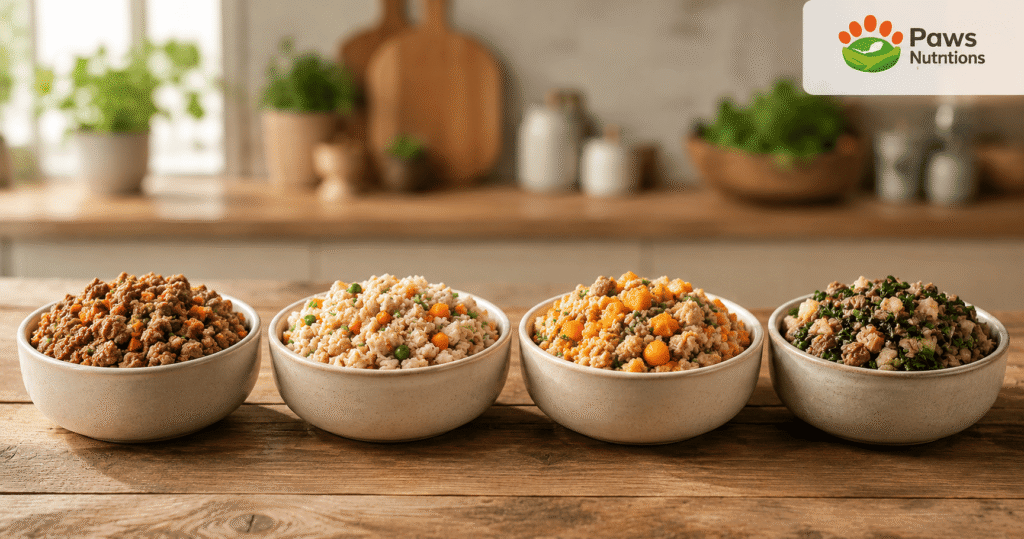
Ollie’s product lineup splits into two main categories: fresh recipes that arrive refrigerated or frozen, and baked recipes that offer a shelf-stable alternative with a similar ingredient philosophy.
Full Fresh Recipes
Beef Recipe: A rich, hearty formula built around beef, sweet potatoes, and peas, popular with dogs that need a higher-fat option for weight maintenance or high activity levels. This recipe carries the highest fat percentage of the core lineup, making it a good fit for working dogs or lean breeds that struggle to maintain weight on lighter formulas.
Chicken Recipe: The most broadly tolerated option, pairing lean chicken with brown rice and carrots, often recommended as a starting recipe for dogs new to fresh food. Its mild flavor profile and lower fat content also make it a sensible pick for dogs with a history of pancreatitis, though you should always confirm with your vet first.
Turkey Recipe: A leaner alternative to beef, combining turkey with pumpkin and spinach, frequently chosen for dogs managing weight or mild digestive sensitivity. Turkey is also a less common allergen than chicken or beef, so it’s worth trying if your dog has reacted poorly to more mainstream proteins in the past.
Lamb Recipe: A novel protein option for dogs that haven’t tolerated chicken or beef well, useful in elimination diet troubleshooting for suspected food allergies. Lamb tends to carry a richer flavor that many dogs find highly palatable, which can help re-engage a picky eater who has grown bored of more common proteins.
Pork Recipe: A less common but nutritionally solid option that rounds out Ollie’s rotation, giving you a fifth protein choice if your dog has already cycled through the other four without success. Pork’s flavor profile tends to appeal strongly to dogs, and its moderate fat content sits comfortably between the leaner turkey option and the richer beef and lamb recipes.
Baked Recipes
Ollie’s baked line uses similar whole-food ingredients but goes through a baking process rather than gentle cooking, resulting in a shelf-stable product that doesn’t require refrigeration until opened. It’s a useful middle-ground option if you want fresher ingredients than kibble without the freezer space commitment.
This matters for practical reasons that go beyond nutrition. Not everyone has room for a dedicated freezer drawer, and not everyone travels with a cooler bag for pet sitters or boarding. Baked recipes solve that logistics problem while still avoiding the extensive processing and preservative load found in most traditional kibble, making them a smart choice if convenience matters as much as ingredient quality to your household.
Ollie Treats and Chews
Ollie also sells supplemental products including probiotic chews, hip and joint chews, and calming chews, none of which get much attention in most competitor reviews. These add-ons let you address specific health goals without switching to a different brand entirely.
Ollie Supplements and Add-Ons
If your dog has joint issues or anxiety around travel and vet visits, these targeted chews integrate easily into an existing Ollie subscription. They’re a smart way to round out your dog’s care plan without juggling multiple unrelated brands and inconsistent dosing schedules.
Bundling supplements with your main food subscription also has a practical upside: everything arrives on the same delivery schedule, so you’re less likely to run out of a joint chew mid-month the way you might with a separate standalone order. If your dog is aging into their senior years, pairing the hip and joint chews with one of the higher-protein recipes like Lamb or Beef is a combination several long-time Ollie customers mention working well together.

How Much Does Ollie Dog Food Cost in 2026?
Price is consistently the number one complaint in real Ollie customer reviews, so let’s break down exactly what you’re paying and why it costs more than kibble.
Ollie Pricing by Plan Type
| Plan Type | Description | Approx. Daily Cost (Medium Dog) |
| Full Fresh | 100% fresh meals | $6.50–$9.00/day |
| Mixed Bowl | Fresh food mixed with baked kibble | $4.50–$6.50/day |
| Half Fresh | Half fresh, half baked | $3.50–$5.00/day |
Cost by Dog Size
Smaller dogs cost noticeably less per day since portions scale with body weight, while large breed dogs on a Full Fresh plan can run significantly higher monthly totals. Always calculate your dog’s specific portion using Ollie’s calculator rather than relying on generic averages.
A 15-pound small dog on Full Fresh might land around $2 to $3 per day, while a 70-pound large breed dog on the same plan could reach $8 to $10 per day. That’s roughly a $150 to $300 monthly gap between a small and large dog on identical plan types, which is exactly why so many large-breed owners gravitate toward Mixed Bowl or Half Fresh instead of Full Fresh to keep the budget sustainable long term.
Price Per Pound and Price Per Day Comparison
On a price-per-pound basis, Ollie generally lands in the mid-range compared to other fresh food subscriptions, more expensive than kibble but often comparable to or slightly below some premium fresh competitors. The Mixed Bowl and Half Fresh plans exist specifically to help budget-conscious owners access fresh ingredients without the full price commitment.
To put this in perspective, a 40-pound bag of quality kibble might cost you $60 to $80 and last a month or more for a medium dog. Ollie’s Full Fresh plan for that same dog could run $150 to $250 a month, depending on activity level and recipe choice. That gap is exactly why the Mixed Bowl and Half Fresh options exist, letting you capture some of the benefits of fresh food while keeping the monthly bill closer to what you’re used to paying.
Is There a Discount or Trial Offer?
Ollie typically offers a discount on your first order, often 50% or more off, which is a low-risk way to test whether your dog actually likes the food before committing to full-price subscriptions. Check the current offer directly on Ollie’s site, since promotions change frequently.
Treat that trial period as your real evaluation window rather than just a discount to grab. Watch your dog’s stool consistency, energy level, and enthusiasm at mealtime over those first couple weeks, and don’t be afraid to reach out to Ollie’s customer service team with questions about portion adjustments if something doesn’t seem quite right during the transition.
Ollie Feeding Guide: How Much to Feed Your Dog
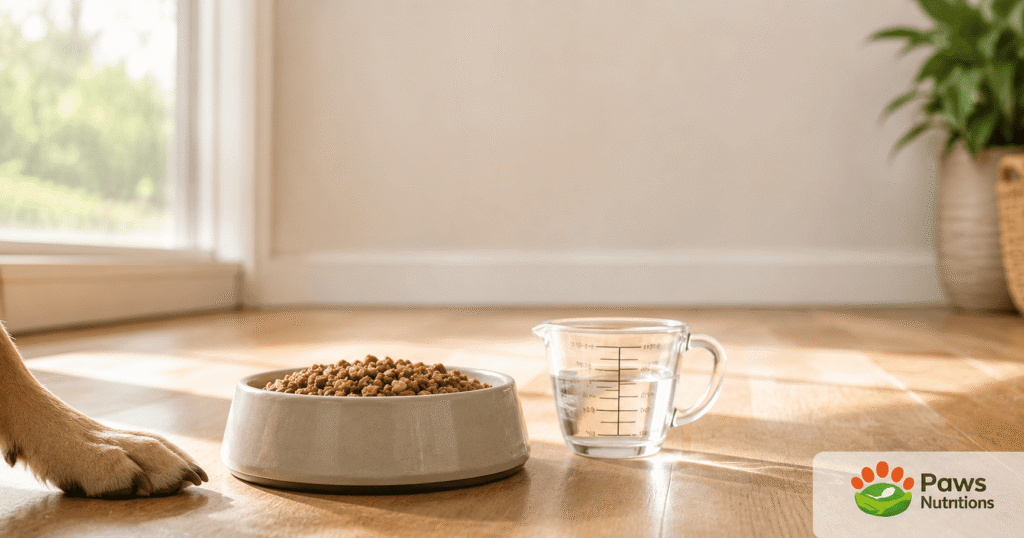
Getting portions right matters more with fresh food than kibble, since calorie density and moisture content differ significantly from what most feeding charts assume.
Feeding Guide Table by Weight and Activity Level
| Dog Weight | Activity Level | Approx. Daily Feeding Amount |
| 10–20 lbs | Moderate | 0.5–1 cup fresh food equivalent |
| 21–40 lbs | Moderate | 1–2 cups fresh food equivalent |
| 41–60 lbs | Moderate | 2–3 cups fresh food equivalent |
| 61–90 lbs | Moderate | 3–4.5 cups fresh food equivalent |
Ollie personalizes exact portions based on age, weight, activity level, and body condition through its onboarding questionnaire, so treat this table as a general reference only.
How to Transition Your Dog to Ollie Safely
Transition gradually over 7 to 10 days, mixing increasing amounts of Ollie with your dog’s current food to avoid the digestive upset several Trustpilot reviewers mentioned. Start with roughly 25% Ollie for the first few days, then increase in stages rather than switching all at once.
A realistic transition schedule looks something like this: days one through three at 25% Ollie and 75% old food, days four through six at 50/50, days seven through nine at 75% Ollie, and day ten onward at 100% Ollie. If you notice loose stool at any stage, simply hold at that ratio for an extra day or two before increasing further rather than pushing ahead on a fixed timeline regardless of how your dog’s stomach is responding.
Ollie Dog Food vs Competitors: Full Comparison Table
Seeing Ollie next to its main rivals helps clarify where it actually stands out and where it doesn’t.
| Brand | Price/lb | Recipe Count | Grain-Free Option | Shipping Area |
| Ollie | Mid-range | 5+ fresh, 2 baked | No (grain-inclusive) | Continental US |
| The Farmer’s Dog | Higher | 4+ fresh | No | Continental US |
| Nom Nom | Lower-mid | 4 fresh | No | Continental US |
| Spot & Tango | Mid-range | 5+ fresh | Yes (UnKibble line) | Continental US |
| A Pup Above | Higher | 3–4 fresh | Limited | Select states |
Ollie vs The Farmer’s Dog
Both brands sit in a similar price bracket, but Ollie’s Mixed Bowl and Half Fresh plans give you a lower-cost entry point that The Farmer’s Dog doesn’t offer at the same flexibility level. If you’re testing the waters with fresh food for the first time and aren’t ready to commit to a premium all-fresh budget, Ollie’s tiered structure is the more forgiving starting point.
Ollie vs Nom Nom
Nom Nom tends to run slightly cheaper per pound, but Ollie’s Petco retail partnership and treat/supplement lineup give it an edge for convenience and add-on flexibility. If you value being able to physically pick up food in an emergency rather than waiting on shipping, that retail availability becomes a meaningful practical advantage.
Ollie vs Spot & Tango
Spot & Tango offers a grain-free line if that’s specifically what you want, while Ollie’s grain-inclusive approach may appeal more to owners cautious about the DCM conversation. Neither approach is objectively superior; it comes down to whether your dog has a specific grain sensitivity or whether you’re simply trying to avoid the ingredient pattern flagged in FDA reporting.
Ollie vs A Pup Above
A Pup Above generally costs more with a smaller recipe selection, making Ollie the more practical choice if variety and cost predictability matter to you. A Pup Above’s more limited state availability also means Ollie simply isn’t an option for a larger share of potential customers regardless of price preference.
Which Food Is Better? There’s no universal winner here. Choose Ollie if you want grain-inclusive recipes, retail availability, and flexible plan pricing; choose a competitor if a specific dietary restriction or lower base price is your top priority.

What Real Customers Say About Ollie Dog Food
Trustpilot shows Ollie holding roughly a 4-star rating across more than 10,000 reviews, which is a solid, though not perfect, track record for a subscription food brand.
Positive Feedback Themes
Customers consistently mention visible improvements in coat condition, energy levels, and digestion after switching to Ollie, along with praise for responsive customer service. Picky eaters finally eating enthusiastically is one of the most frequently repeated success stories across reviews.
Several reviewers specifically describe senior dogs regaining appetite after refusing kibble for weeks, which lines up with what you’d expect from a more palatable, aromatic fresh food option. Others mention noticeably less shedding and a shinier coat within four to six weeks of switching, a timeline that roughly matches how long it takes for dietary changes to show up in a dog’s coat, since hair growth cycles take time to reflect new nutrition.
Common Complaints
The most recurring complaint by far is price, with several customers explicitly saying the cost feels too high for ongoing use. Other complaints include occasional missing items in shipments, food arriving thawed during transit, and difficulty adjusting portion sizes for larger dogs.
A smaller number of reviewers also mention friction around cancellations and refund timing, which is worth knowing before you sign up so you’re not caught off guard if your circumstances change. None of these complaints point to a fundamental quality problem with the food itself; they’re mostly logistics and pricing friction points that come with any subscription-based delivery model.
Our Take on the Reviews
The pattern here is fairly typical of premium subscription food brands: strong satisfaction with the actual product, paired with frustration over price and occasional logistics hiccups. If budget is tight, the Mixed Bowl or Half Fresh plans are worth considering to ease that specific pain point.
It’s also worth noting that Ollie actively responds to reviews on Trustpilot, both positive and negative, which suggests the company is paying attention to customer sentiment rather than ignoring it. That kind of active reputation management doesn’t fix a shipping delay after the fact, but it does show a willingness to acknowledge problems publicly rather than burying them.
Veterinary Perspective on Ollie Dog Food
Veterinarians generally evaluate fresh food brands on ingredient transparency, manufacturing standards, and whether nutrient profiles meet AAFCO or equivalent guidelines for the dog’s life stage.
What Vets Look for in Fresh Dog Food
Vets typically want to see a credentialed formulator, clear guaranteed analysis, and evidence the company can answer detailed nutrition questions rather than deflecting to marketing language. Ollie generally performs well against these criteria based on its published recipe data and formulation team.
Ollie’s Strengths from a Clinical Nutrition Standpoint
The higher protein percentages and use of chelated minerals are both points a veterinary nutritionist would view favorably, since they support better nutrient absorption and lean muscle maintenance. The grain-inclusive formulation also sidesteps the DCM concern that’s come up repeatedly in veterinary conversations since 2018.
The moisture content in fresh food also supports better hydration overall, which can be genuinely helpful for dogs that don’t drink enough water on their own or for senior dogs managing kidney function where hydration support matters. None of this replaces a vet’s individualized guidance, but it does mean Ollie’s baseline formulation approach lines up well with several priorities veterinary nutritionists commonly emphasize.
Considerations for Dogs with Health Conditions
If your dog has kidney disease, pancreatitis, or another condition requiring a therapeutic diet, talk to your vet before switching to any fresh food brand, including Ollie. General wellness formulas like Ollie’s aren’t designed to replace prescription diets for managing specific medical conditions.
This is a point that’s easy to overlook when a food looks this healthy on paper. A diet built for a typical healthy adult dog can still be the wrong choice for a dog managing a diagnosed condition, since therapeutic diets are formulated with very specific restrictions, like reduced phosphorus for kidney disease or lower fat for pancreatitis, that general wellness food simply isn’t designed to meet.
Ollie Dog Food Pros and Cons
Pros
- Named animal protein as the first ingredient in every recipe — no vague meat meals or animal digest fillers
- Full AAFCO nutritional adequacy for all life stages — one formula can suit puppies through seniors with proper portioning
- Manufactured in USDA-inspected, SQF-certified facilities — the same food-safety bar applied to human food production
- No documented recall history — a clean track record since the brand’s 2016 launch
- Flexible plan options for different budgets — Full Fresh, Mixed Bowl, and Half Fresh let you control cost
- Available at select Petco retail locations — a rare in-person option among fresh food subscription brands
Cons
- Higher cost than kibble and some fresh food competitors on the Full Fresh plan specifically
- No grain-free option for owners who specifically want one for their dog’s diet
- Some reports of shipping issues like thawed food or missing items in a shipment
- Portion calculations may need manual adjustment for very large or unusually active dogs
Who Should (and Shouldn’t) Buy Ollie Dog Food
Best For
Ollie tends to work best for picky eaters, dogs with mild digestive sensitivity, and small to medium breeds where the cost per day stays manageable. If your dog has consistently turned its nose up at kibble, the aroma and texture of fresh food often solves that problem within the first few meals.
Not Ideal For
If you have multiple large dogs or a tight monthly food budget, the Full Fresh plan cost can add up quickly, making it worth exploring the Mixed Bowl option first. Households feeding three or more large breed dogs may find the math simply doesn’t work at the Full Fresh tier, even with the flexible plan options available.
Breed and Life-Stage Specific Recommendations
Senior dogs often benefit from the softer texture and easier digestibility of fresh food, while active working breeds may appreciate the higher protein and fat percentages in recipes like Beef or Lamb. Toy and small breeds, where daily cost stays low relative to a large dog’s portion, tend to be where Ollie’s value proposition makes the most financial sense.
Final Verdict: Is Ollie Dog Food Worth It?
| Category | Score (out of 10) |
| Ingredient Quality | 9 |
| Nutritional Completeness | 8.5 |
| Price Value | 6.5 |
| Customer Service | 8 |
| Transparency | 8.5 |
Overall, Ollie earns its reputation as one of the more trustworthy fresh dog food brands on the market, backed by real formulation credentials and a clean manufacturing track record. The price will be the deciding factor for most households, but the flexible plan structure gives you a realistic way to access fresh food without committing to the highest-cost option immediately.
If you’re still on the fence, the safest approach is to start with the discounted trial box, watch how your dog responds over the first transition week, and decide from there whether Full Fresh, Mixed Bowl, or Half Fresh fits your household best. That trial period costs far less than a full month’s subscription and gives you real, first-hand evidence rather than relying entirely on any single review, including this one.
Frequently Asked Questions
Is Ollie dog food good for puppies?
Yes, Ollie’s recipes are formulated for all life stages, including puppies, though large-breed puppies should be monitored for proper calcium and phosphorus balance.
Does Ollie dog food need to be refrigerated or frozen?
Fresh recipes need refrigeration or freezing, while the baked line is shelf-stable until opened.
Can you buy Ollie dog food in stores?
Yes, select Petco locations carry Ollie products alongside the primary subscription model.
Is Ollie dog food raw or cooked?
Ollie’s fresh recipes are gently cooked, not served raw.
What’s the difference between Full Fresh, Mixed Bowl, and Half Fresh?
Full Fresh is 100% fresh food, Mixed Bowl combines fresh food with baked kibble, and Half Fresh splits the ratio evenly.
Is Ollie better than The Farmer’s Dog?
Both are strong options; Ollie offers more flexible, lower-cost plan tiers, while The Farmer’s Dog focuses on a single premium fresh format.
Does Ollie dog food cause digestive upset?
Some dogs experience temporary loose stools during transition, which usually resolves with a gradual 7 to 10 day switch.
How long does Ollie dog food last in the fridge or freezer?
Fresh portions typically last about a week refrigerated or several months frozen; check the packaging for exact dates.
Can I customize my dog’s Ollie recipe ratios?
Ollie allows recipe selection and plan type changes, though exact ratio customization within a single plan is limited.
Does Ollie ship to my state?
Ollie ships across most of the continental United States; check availability at checkout for your specific zip code.
Is Ollie dog food grain-free?
No, most Ollie recipes include grains like brown rice rather than being grain-free.
What is Ollie’s refund or cancellation policy?
Ollie allows subscription cancellation or pausing through your account; refund eligibility depends on order timing, so check current terms directly.
How is Ollie dog food priced compared to kibble?
Ollie costs significantly more than standard kibble due to fresh ingredients and manufacturing standards, though Mixed Bowl and Half Fresh plans narrow that gap.
Is Ollie dog food AAFCO approved?
Ollie states its recipes meet AAFCO nutritional adequacy standards for all life stages.
Does Ollie offer a trial or first-box discount?
Yes, Ollie typically offers a substantial discount on your first order; check the current promotion on their site.
Are Ollie treats included in subscription plans?
Treats and chews are available as separate add-ons rather than automatically included in standard meal plans.
What do vets think of Ollie dog food?
Veterinarians generally view Ollie favorably due to its credentialed formulation team and transparent nutrient data.
Has Ollie dog food ever been recalled?
No documented recalls appear in public FDA records as of this writing.
Is Ollie suitable for dogs with allergies?
Ollie’s protein variety supports elimination-diet troubleshooting, though dogs with grain sensitivities should discuss options with their vet first.
How do I switch my dog to Ollie safely?
Transition gradually over 7 to 10 days, increasing the Ollie portion incrementally to avoid digestive upset.
Conclusion
Ollie dog food delivers on its core promise: fresh, human-grade ingredients, real nutritional transparency, and a clean safety record that holds up under scrutiny. It won’t be the cheapest bowl on the block, but if you want food that meets AAFCO standards without the mystery ingredients found in many kibble bags, it’s a genuinely solid choice.
Throughout this review, we’ve tried to go beyond what most competitor articles cover, digging into the dry matter basis numbers, checking WSAVA guidelines, confirming recall history, and pulling real sentiment from thousands of Trustpilot reviews rather than relying on a handful of cherry-picked testimonials. That’s the kind of depth you deserve before committing to a recurring monthly expense for your dog’s health.
Start with a trial discount, watch how your dog responds during the transition period, and choose the plan tier that fits your budget rather than assuming Full Fresh is the only option worth considering. Whatever you decide, keep your vet in the loop, especially if your dog has an existing health condition, so the switch supports their wellbeing rather than complicating it.

A dedicated writer and digital enthusiast committed to creating high-quality, informative, and reader-focused content. Through thoughtful research and clear communication, he aims to deliver valuable insights that help readers navigate the ever-changing digital landscape.
Adult content site offers a range of videos for adult entertainment.
Select secure adult sites for a safe experience.