
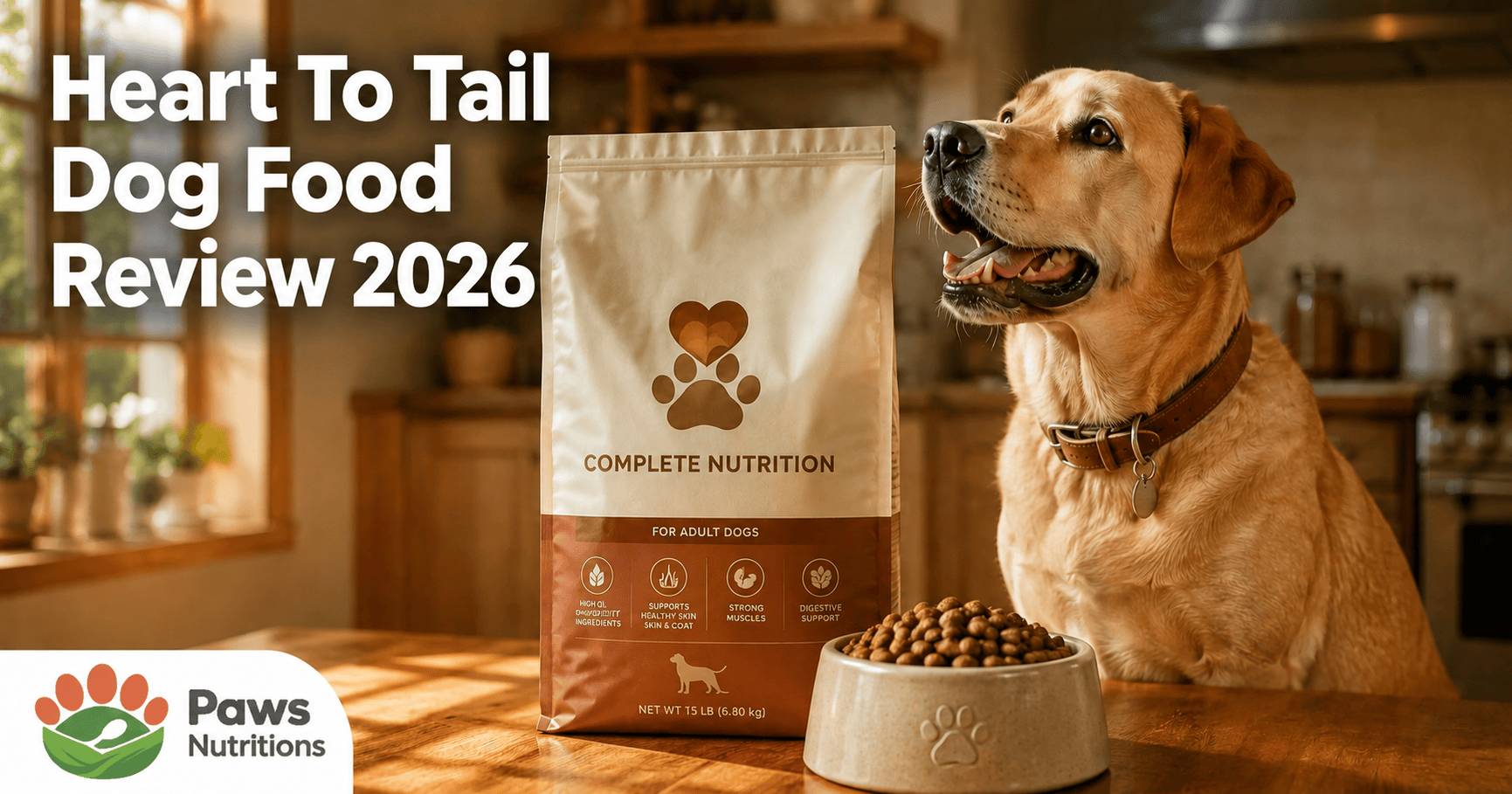
Standing in the Aldi pet aisle, staring at a bag of Heart To Tail dog food, you’ve probably asked yourself one question: is this good enough for your dog, or just cheap for a reason? You’re not alone. Thousands of budget-conscious owners want straight answers about ingredients, nutrition, and safety before trusting any bowl with their best friend’s health.
This Heart To Tail dog food review breaks down everything that matters, from real ingredient quality and nutritional value to recall history and vet opinions. You’ll also see how it compares to Purina, Blue Buffalo, and Kirkland. Keep reading, and you’ll know exactly whether this budget brand deserves a spot in your dog’s bowl.
Quick Verdict: Is Heart To Tail Dog Food Worth Buying?
If you want the short answer, here it is: Heart To Tail dog food is a solid, AAFCO-compliant budget option that works well for healthy adult dogs without special dietary needs, but it doesn’t match the ingredient transparency or premium protein sourcing of higher-end brands.
Our Overall Rating
We rate Heart To Tail 3.6 out of 5 stars. It earns points for affordability and decent nutritional adequacy, but loses some ground on ingredient sourcing transparency and the limited number of specialty formulas available for dogs with health issues.
Best For
Heart To Tail works best for healthy adult dogs, multi-dog households on a tight budget, and owners who shop regularly at Aldi and want a convenient, no-fuss food that meets basic nutritional standards without a premium price tag.
Not Recommended For
This brand isn’t the strongest fit for puppies with sensitive digestion, senior dogs with chronic health conditions, or dogs who need limited-ingredient diets. Owners managing food allergies may also want more ingredient detail than the label provides.
Key Pros and Cons at a Glance
| Pros | Cons |
| Budget-friendly pricing | Limited ingredient sourcing details |
| Meets AAFCO nutrient profiles | Fewer specialty/prescription formulas |
| Available at thousands of Aldi stores | Less premium protein than top-tier brands |
| Multiple formulas (dry, wet, grain-free) | Minimal brand transparency since it’s private-label |
What Is Heart To Tail Dog Food?
Heart To Tail is Aldi’s exclusive, private-label pet food brand sold only in the United States. It covers dry kibble, wet food, and treats, and it was built specifically to give grocery shoppers an affordable alternative to name-brand dog food without making a separate trip to a pet specialty store.
Overview of the Heart To Tail Brand
The brand positions itself as an everyday, AAFCO-compliant dog food line rather than a premium or therapeutic diet. You’ll find it stocked alongside Aldi’s other house brands, which is part of why it’s become a go-to choice for shoppers who already do their weekly groceries there.
Who Owns Heart To Tail?
Heart To Tail is owned by ALDI, the German-founded discount grocery chain. Like most store brands, ALDI doesn’t manufacture the food itself. Instead, it designs the formulas and packaging, then contracts third-party pet food manufacturers to produce it on the company’s behalf.
Where Is Heart To Tail Dog Food Sold?
You can only buy Heart To Tail dog food at ALDI grocery stores, which now number more than 2,000 locations across dozens of U.S. states. It isn’t sold on Amazon, Chewy, or other pet retailers, which is a common source of confusion for first-time buyers searching online.
Why Is Heart To Tail Popular Among Budget-Conscious Dog Owners?
Price is the biggest draw. A large bag often costs noticeably less per pound than mid-tier or premium kibble, while still meeting basic nutritional standards. For multi-dog households or owners feeding large breeds, that price difference adds up fast over a year of feeding.
Who Manufactures Heart To Tail Dog Food?
ALDI doesn’t run its own pet food factories. Heart To Tail is produced by a third-party co-packer, and public recall records confirm that Sunshine Mills, Inc. has manufactured at least some Heart To Tail recipes on ALDI’s behalf.
The Company Behind Heart To Tail Products
Sunshine Mills is a long-running American pet food manufacturer that also produces other budget and mid-tier brands. Working with an established co-packer like this means Heart To Tail benefits from manufacturing experience, even though the final product carries ALDI’s own private-label name instead of the manufacturer’s.
Where Is Heart To Tail Dog Food Made?
Many Heart To Tail recipes appear to be produced in the United States, though ALDI’s packaging doesn’t always list a specific plant location. If sourcing transparency matters to you, this is one area where the brand falls short compared to companies that openly publish their facility details.
Manufacturing Standards and Quality Control
As a co-manufactured product, Heart To Tail is subject to the same federal pet food regulations as any other U.S.-sold dog food, including FDA oversight and state feed control official inspections. ALDI also sets its own private-label quality requirements that suppliers must meet before products reach store shelves.
Does Heart To Tail Meet AAFCO Nutritional Guidelines?
Yes. Heart To Tail formulas are labeled as meeting AAFCO nutrient profiles for the life stage stated on the bag, whether that’s adult maintenance or all life stages. This means the food is formulated to deliver the minimum nutrients dogs need, based on AAFCO’s established standards.
Heart To Tail Dog Food Product Lines Explained
Heart To Tail isn’t a single recipe. It’s a small family of product lines designed to cover different feeding preferences, from everyday dry kibble to grain-free and wet food options.
Heart To Tail Complete Nutrition Dry Dog Food
This is the brand’s core, everyday dry kibble line. It’s formulated for adult dogs and typically includes chicken or beef as the primary protein, paired with grain-based carbohydrates. It’s the most widely stocked and most affordable option in the lineup.
Heart To Tail Pure Being Dog Food
Pure Being is Heart To Tail’s more “natural-style” recipe line, often featuring deboned chicken and brown rice. It’s marketed toward owners who want simpler ingredient lists without paying premium pet-store prices, and it sits a step above Complete Nutrition in positioning.
Heart To Tail Grain-Free Recipes
For owners avoiding grains, Heart To Tail also offers grain-free formulas that swap rice and wheat for ingredients like peas, lentils, or potatoes. These recipes appeal to dogs with suspected grain sensitivities, though true grain allergies in dogs are actually less common than many owners assume.
Heart To Tail Wet Dog Food Options
The wet food lineup includes canned recipes meant to be fed alone or mixed with dry kibble for extra moisture and flavor. Wet food can be especially useful for picky eaters or senior dogs who find dry kibble harder to chew.
Which Heart To Tail Formula Is Best for Your Dog?
For most healthy adult dogs, Complete Nutrition is the practical, budget-friendly default. If you want a slightly more natural ingredient profile, Pure Being is worth the small price bump. Grain-free should be reserved for dogs with a confirmed grain sensitivity rather than chosen by default.
Heart To Tail Dog Food Ingredients Review
Reading a dog food label can feel overwhelming, but the ingredient order tells you a lot. Heart To Tail generally lists a named animal protein first, followed by grains or alternative carbohydrate sources, then fats, vitamins, and minerals.
Primary Protein Sources
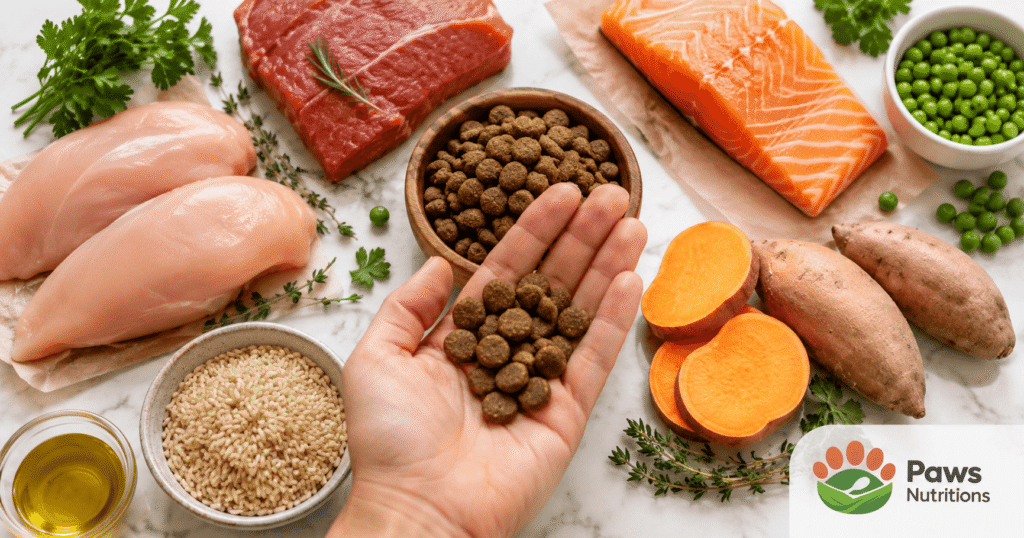
Protein quality is the single biggest factor in how well a dog food supports lean muscle, energy, and overall health. Heart To Tail’s protein sources vary by recipe, but they consistently lead with named animal proteins rather than vague “meat” terms, which is a meaningful quality marker at this price point.
Chicken
Chicken is the most common primary protein across Heart To Tail recipes. It’s a lean, highly digestible protein that most dogs tolerate well, and it’s also one of the most affordable quality proteins available, which helps keep the brand’s pricing low.
Beef
Some recipes use beef as the main or secondary protein. Beef brings a richer flavor profile that many dogs find more palatable than chicken, along with a solid amino acid profile, though it’s generally a fattier protein source overall.
Salmon
Certain formulas, particularly within the Pure Being line, include salmon. Salmon contributes omega-3 fatty acids that support skin and coat health, and it’s a useful alternative protein for dogs who do better avoiding poultry.
Meat Meals and Animal Proteins
You’ll also see ingredients like chicken meal or animal protein blends further down some ingredient lists. Meat meals aren’t a red flag on their own. They’re rendered, concentrated protein sources that actually contain more protein by weight than fresh meat once moisture is removed.
Carbohydrate Sources
Carbohydrates in Heart To Tail recipes provide energy and help bind the kibble during manufacturing. The brand mixes traditional grains with more modern carb sources depending on the formula.
Brown Rice
Brown rice appears frequently, especially in Pure Being recipes. It’s a gentle, easily digestible carbohydrate that rarely triggers sensitivities, and it pairs well with the brand’s chicken-based formulas.
Sweet Potatoes
Sweet potatoes show up in several recipes as a nutrient-dense carb source. They bring fiber and beta-carotene to the mix, supporting digestion while adding natural sweetness that improves palatability.
Peas and Legumes
Grain-free formulas lean on peas and other legumes for carbohydrates and added plant protein. These ingredients have come under scrutiny in recent years due to the FDA’s ongoing review of grain-free diets, which we’ll cover in more detail later in this review.
Healthy Fats and Omega Fatty Acids
Heart To Tail includes fat sources like chicken fat or fish oil, which supply essential fatty acids dogs can’t produce on their own. These fats support healthy skin, a shinier coat, and provide concentrated energy, since fat carries more than double the calories per gram compared to protein or carbohydrates.
Vitamins, Minerals, and Added Nutrients
Like most AAFCO-compliant foods, Heart To Tail includes a standard vitamin and mineral premix covering things like vitamin E, zinc, and calcium. These additions ensure the food delivers complete and balanced nutrition rather than relying solely on whole-food ingredients to meet nutrient targets.
Preservatives, Artificial Colors, and Fillers
Heart To Tail generally avoids artificial colors, which is a positive sign at this price tier. Preservation typically relies on mixed tocopherols (a natural vitamin E-based preservative) rather than synthetic options like BHA or BHT, though it’s always worth double-checking the current label since recipes can change.
Ingredient Quality Score
Based on protein placement, the use of named meat sources, and the avoidance of artificial dyes, we’d score Heart To Tail’s ingredients at 3.5 out of 5. It’s noticeably better than rock-bottom economy brands, but it doesn’t reach the ingredient transparency of boutique or vet-recommended formulas.
Nutritional Analysis of Heart To Tail Dog Food
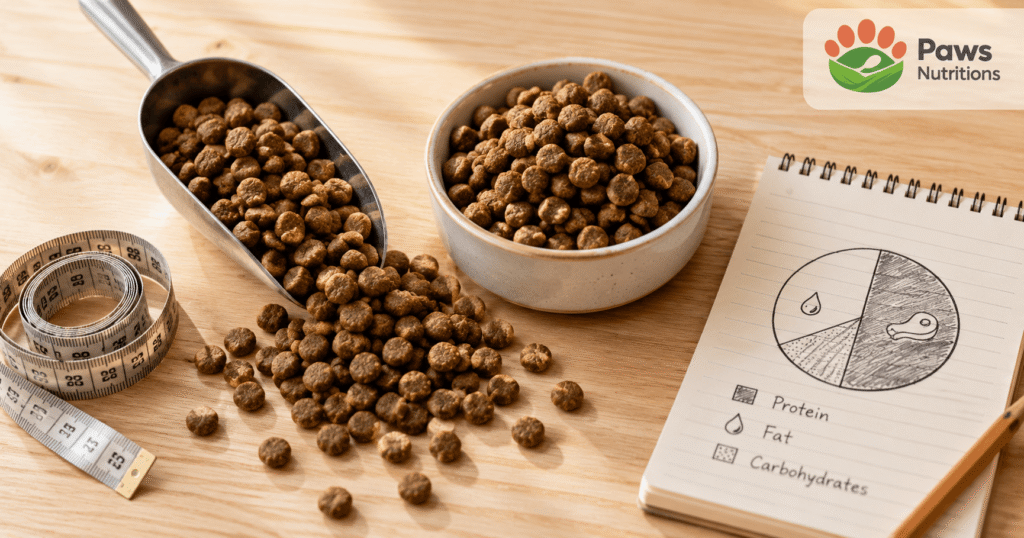
Numbers matter just as much as ingredients when you’re evaluating a dog food. Here’s how Heart To Tail’s typical Guaranteed Analysis breaks down for its standard adult dry formulas.
Crude Protein Content
Many Heart To Tail dry recipes guarantee around 21% crude protein, which falls within AAFCO’s minimum requirement for adult maintenance but sits below the protein levels you’d see in premium or performance-focused brands. It’s adequate for an average, moderately active adult dog.
Fat Content and Energy Levels
Crude fat typically lands around 10%, providing enough energy for everyday activity without pushing calorie density too high. This level suits dogs with normal activity, though working or highly active dogs may need a richer formula elsewhere.
Fiber and Digestive Support
Crude fiber usually sits near 4.5%, which supports normal digestion and stool consistency. This is a fairly standard fiber level for mainstream dry dog food and shouldn’t cause digestive trouble for most healthy dogs.
Moisture Content
Like most dry kibble, Heart To Tail’s dry formulas contain roughly 10% moisture, while the wet food line naturally runs much higher, often above 75%. If your dog doesn’t drink much water, mixing in some wet food can help support hydration.
Calorie Density per Cup
Calorie counts vary by recipe, but most mainstream dry dog foods, Heart To Tail included, fall somewhere between 330 and 380 calories per cup. Always check the current bag for exact numbers, since formulas and calorie counts can shift between production runs.
Dry Matter Basis Analysis Explained
Comparing dog foods fairly means looking at dry matter basis, which removes moisture from the equation. Because dry kibble already has low moisture, its guaranteed analysis numbers are close to dry matter values, while wet food numbers need adjusting upward to compare accurately against kibble.
How Heart To Tail Compares to Premium Dog Foods
Premium brands often guarantee 26% to 32% protein and use a wider variety of named animal proteins. Heart To Tail’s nutritional profile is genuinely adequate for healthy dogs, but it’s built around meeting minimum standards affordably rather than maximizing protein density or ingredient variety.
Is Heart To Tail Dog Food Healthy for Dogs?
For most healthy adult dogs without underlying conditions, yes, Heart To Tail is a reasonably healthy choice. It meets recognized nutritional standards and uses real, named protein sources rather than vague fillers.
Nutritional Benefits for Adult Dogs
The protein and fat levels support normal energy, body condition, and muscle maintenance in dogs with average activity levels. It’s not a specialized formula, but it covers the nutritional basics that most healthy adult dogs need on a daily basis.
Support for Skin and Coat Health
Thanks to added fats and, in some formulas, omega-3-rich salmon, many owners report improved coat shine within a few weeks of switching. Omega fatty acids play a direct role in skin barrier function, which is why this benefit shows up so consistently in feeding feedback.
Digestive Health Benefits
The fiber content and use of gentle carbohydrates like brown rice and sweet potato generally support firm, well-formed stools. Dogs transitioning from very low-quality food often notice better digestion within the first two weeks of the switch.
Muscle Maintenance and Energy Support
With roughly 21% protein, the food supplies enough amino acids to maintain lean muscle in moderately active dogs. It’s not designed for high-performance or working dogs, who typically need a higher protein and fat formula to match their energy output.
Potential Concerns Pet Owners Should Know
The main concerns are limited ingredient transparency and a lack of specialized formulas for dogs with allergies, kidney issues, or other health conditions. If your dog has a diagnosed medical condition, a vet-prescribed therapeutic diet will almost always be the safer choice over a general-purpose budget food.
Heart To Tail Pure Being Review
Pure Being is Heart To Tail’s step-up line, built around a simpler, more “natural” ingredient story. It’s still budget-friendly, but it targets owners willing to pay slightly more for perceived ingredient quality.
Ingredient Breakdown
Pure Being recipes commonly lead with deboned chicken, followed by brown rice and other whole-food ingredients like peas or sweet potato. The shorter, more recognizable ingredient list is the main selling point compared to the standard Complete Nutrition formula.
Protein Quality Assessment
Using deboned chicken as the first ingredient is a meaningful upgrade in marketing terms, since it signals fresh meat rather than meal. In practice, both deboned chicken and chicken meal can deliver solid protein, but deboned chicken often resonates more with label-conscious shoppers.
Grain-Free Formula Analysis
Some Pure Being varieties skip grains entirely, relying on legumes and potatoes instead. As mentioned earlier, grain-free formulas have faced increased scrutiny, so this is worth understanding fully before choosing it as your default, especially for medium and large breed dogs.
Benefits and Drawbacks
Pure Being’s benefits include a cleaner-sounding ingredient list and decent palatability. The drawback is a slightly higher price than Complete Nutrition, plus the grain-free question mark that applies to any grain-free formula on the market right now.
Is Pure Being Better Than Complete Nutrition?
Pure Being is a modest upgrade, not a dramatically different food. If budget is your top priority, Complete Nutrition still does the job. If you want a marginally more premium-feeling option and don’t mind paying a little extra, Pure Being is the better pick.
Feeding Experience and Real-World Results
Numbers on a bag only tell part of the story. How dogs actually respond to the food day after day matters just as much for judging real-world quality.

Palatability and Taste Test Results
Most owner feedback describes Heart To Tail as highly palatable, with dogs eating it readily from the first bowl. Added fats and flavorful proteins like chicken and beef help make the kibble appealing, even to dogs who are typically picky eaters.
How Dogs Respond to Heart To Tail Recipes
Reports generally describe dogs maintaining steady energy levels and stable body condition on the food. As with any diet change, a gradual transition over seven to ten days helps avoid the temporary digestive upset that can come with switching foods too quickly.
Coat Condition Improvements
Owners switching from very low-end kibble often notice a shinier, softer coat within three to four weeks. This lines up with the added fat content and, in some formulas, the omega-3s from salmon supporting healthier skin from the inside out.
Stool Quality and Digestibility
Digestibility feedback is generally positive, with firm, manageable stools reported by most users. A small number of dogs with sensitive stomachs may need a slower transition or a different formula entirely, which is true of nearly any commercial dog food.
Long-Term Feeding Experience
Owners who’ve fed Heart To Tail for a year or longer typically report stable weight, consistent energy, and no major health issues tied directly to the food. As always, regular vet checkups remain the best way to confirm a diet is working long-term for your specific dog.
Heart To Tail Dog Food Recall History
Recall history is one of the most important safety signals for any pet food brand, and it’s a question every responsible owner should ask before switching foods.
Has Heart To Tail Dog Food Ever Been Recalled?
Yes. In July 2021, ALDI voluntarily recalled Heart To Tail Pure Being Natural Dog Food (Deboned Chicken & Brown Rice Recipe) from select stores. The recall was issued in association with manufacturer Sunshine Mills, Inc., due to potentially elevated levels of aflatoxin.
Previous Safety Concerns
Aflatoxin is a naturally occurring toxin produced by certain molds that can contaminate grain ingredients like corn. The 2021 recall was issued as a precaution, and according to public recall records, no illnesses were officially reported in connection with the affected batches.
FDA and Pet Food Safety Monitoring
Pet food sold in the U.S. falls under FDA oversight, alongside state feed control officials who monitor manufacturing and labeling compliance. Voluntary recalls like the 2021 incident typically happen when a manufacturer’s internal testing flags an issue before it becomes a widespread problem.
What Dog Owners Should Watch For
Whenever you buy any pet food, including Heart To Tail, it’s smart to check the lot number and best-by date against current recall notices on the FDA’s website or ALDI’s own recall page. Watching for symptoms like vomiting, lethargy, or appetite loss after a food switch is also good practice.
Safety and Quality Assessment
Beyond recall history, overall safety comes down to sourcing practices, manufacturing oversight, and how a brand handles ingredient-related controversies in the wider pet food industry.
Ingredient Sourcing Transparency
This is Heart To Tail’s weakest area. As a private-label brand, ALDI doesn’t publish detailed sourcing information for specific ingredients, which makes it harder for owners to verify exactly where individual components come from compared to brands with fully public supply chains.
Manufacturing Safety Standards
Production through an established co-packer like Sunshine Mills means the food is made in facilities subject to standard FDA and state inspections. That said, ALDI’s lack of public-facing facility details means owners have to take quality control largely on faith.
Grain-Free Diet Concerns and DCM Discussion
Since 2018, the FDA has investigated a possible link between grain-free diets, particularly those heavy in peas and legumes, and dilated cardiomyopathy (DCM) in dogs not genetically predisposed to the condition. Research is still ongoing, and a direct cause hasn’t been confirmed, but it’s a reason to discuss grain-free feeding with your vet first.
Taurine and Heart Health Considerations
Taurine is an amino acid linked to heart muscle function, and some grain-free, legume-heavy diets have been associated with lower taurine levels in certain dogs. If you choose a grain-free Heart To Tail recipe, periodic vet checkups can help monitor your dog’s heart health over time.
Overall Safety Rating
Factoring in the single 2021 recall, standard manufacturing oversight, and the ongoing grain-free conversation, we’d rate Heart To Tail’s overall safety at 3.8 out of 5. It’s in line with most mainstream commercial dog food brands rather than standing out as unusually risky.
What Veterinarians Think About Heart To Tail Dog Food
Veterinary opinions on budget pet food brands tend to be pragmatic rather than dismissive, focusing on whether a diet meets nutritional standards rather than its price point or marketing.
Veterinary Perspective on Budget Dog Foods
Many veterinarians point out that AAFCO compliance, not price, is the real benchmark for adequacy. A budget brand that meets AAFCO nutrient profiles can be a perfectly reasonable everyday choice for a healthy dog, while an expensive food without proper formulation testing isn’t automatically superior.
Nutritional Adequacy Assessment
Because Heart To Tail formulas are labeled to meet AAFCO standards for the stated life stage, they’re generally considered nutritionally adequate for healthy dogs. Vets typically recommend confirming the label states “complete and balanced,” which Heart To Tail products do.
Common Vet Recommendations
Vets commonly suggest monitoring body condition score and energy levels for the first month after any food switch, regardless of brand. They’ll also usually recommend a gradual transition and watching stool quality as the simplest at-home indicators that a food is agreeing with your dog.
When a Higher-End Formula May Be Better
For dogs with diagnosed conditions like kidney disease, food allergies, or chronic GI issues, vets generally recommend a prescription or specialized therapeutic diet over any general-purpose food, Heart To Tail included. Budget brands work best for healthy dogs without specific medical needs.
Customer Reviews and Consumer Feedback
Real owner feedback adds an important layer to any dog food review, since it reflects how the food actually performs across thousands of different dogs and households.
Most Common Positive Reviews
The most consistent praise centers on affordability, good palatability, and stable energy and coat condition over time. Many shoppers specifically mention appreciating the convenience of picking up dog food during their regular Aldi grocery run.
Most Common Complaints
Common complaints include limited formula variety compared to pet specialty brands and frustration over the lack of detailed sourcing information. A smaller number of owners report individual dogs with sensitive stomachs not tolerating the food well, which can happen with any brand.
What Long-Term Users Say
Long-term feeders often describe Heart To Tail as a reliable “no surprises” food, especially for households with multiple dogs where cost adds up quickly. Many say they’ve stuck with it for years without noticing any negative health changes in their dogs.
Overall Customer Satisfaction Analysis
Taken together, feedback paints Heart To Tail as a dependable, budget-tier food rather than a standout premium product. Satisfaction tends to be highest among owners with healthy adult dogs and lowest among those hoping for boutique-level ingredient transparency at a discount price.
Heart To Tail Dog Food Pros and Cons
Advantages
- Affordable pricing compared to most mid-tier and premium brands
- Widely available at thousands of Aldi stores nationwide
- Multiple formula options, including dry, wet, and grain-free
- Formulated to meet AAFCO nutritional guidelines
Disadvantages
- Limited ingredient sourcing transparency
- Fewer specialty or therapeutic formulas for dogs with health conditions
- Less premium protein sourcing than top-tier brands
- Minimal veterinary brand endorsements compared to clinically-backed brands
Heart To Tail Dog Food Compared to Other Brands
Seeing Heart To Tail side-by-side with well-known competitors makes it easier to judge where it really fits in the broader dog food market.
Heart To Tail vs Purina Pro Plan
| Factor | Heart To Tail | Purina Pro Plan |
| Protein | ~21% | 26-30% (varies by formula) |
| Fat | ~10% | 12-17% |
| Recall History | One recall (2021) | Occasional brand-wide recalls over the years |
| Price | Budget | Mid-to-premium |
| Best For | Healthy adult dogs on a budget | Performance, life stage, and condition-specific needs |
Which Food Is Better? Pro Plan offers more formula variety and higher protein for active or specialized needs, but Heart To Tail is the more practical pick for owners simply wanting an affordable, adequate everyday food.
Heart To Tail vs Diamond Naturals
| Factor | Heart To Tail | Diamond Naturals |
| Protein | ~21% | 24-28% |
| Fat | ~10% | 14-16% |
| Recall History | One recall (2021) | History includes past recalls |
| Price | Budget | Budget-to-mid |
| Best For | Grocery-run convenience | Slightly higher protein at a similar price tier |
Which Food Is Better? Diamond Naturals edges ahead on protein content for a similar price, but Heart To Tail wins on sheer convenience if you already shop at Aldi every week.
Heart To Tail vs Kirkland Signature Dog Food
| Factor | Heart To Tail | Kirkland Signature |
| Protein | ~21% | 21-26% |
| Fat | ~10% | 12-17% |
| Recall History | One recall (2021) | Minimal recall history |
| Price | Budget | Budget (Costco membership required) |
| Best For | Aldi shoppers | Costco members buying in bulk |
Which Food Is Better? These two are remarkably close in value and positioning. The real deciding factor usually comes down to which warehouse club or grocery chain you already shop at regularly.
Heart To Tail vs Blue Buffalo
| Factor | Heart To Tail | Blue Buffalo |
| Protein | ~21% | 24-34% |
| Fat | ~10% | 14-17% |
| Recall History | One recall (2021) | History includes notable past recalls |
| Price | Budget | Premium |
| Best For | Cost-conscious feeding | Owners prioritizing higher protein and specialty diets |
Which Food Is Better? Blue Buffalo offers richer formulas and more specialized options, but at a significantly higher price. Heart To Tail remains the better fit if affordability is your main priority.
Heart To Tail vs Pedigree
| Factor | Heart To Tail | Pedigree |
| Protein | ~21% | 18-21% |
| Fat | ~10% | 8-10% |
| Recall History | One recall (2021) | Minimal major recall history |
| Price | Budget | Economy |
| Best For | Slightly higher quality at a similar price | Lowest-cost everyday feeding |
Which Food Is Better? Heart To Tail generally edges out Pedigree with marginally better ingredient sourcing and named proteins, while sitting at a comparable price point.
Which Dog Food Offers the Best Value?
For pure dollar-per-pound value combined with AAFCO-compliant nutrition, Heart To Tail and Kirkland Signature are the closest competitors. Your best pick ultimately comes down to which store you already visit regularly, since both offer similar nutritional value for the price.
Best Heart To Tail Dog Food Formula for Different Dogs
Choosing the right formula within the Heart To Tail lineup depends largely on your dog’s age, activity level, and digestive sensitivity.
Best Formula for Adult Dogs
Complete Nutrition dry food is the most practical default for healthy adult dogs with average activity levels. It meets AAFCO adult maintenance standards and offers the best overall value in the lineup.
Best Formula for Active Dogs
Active or working dogs benefit most from formulas with slightly higher fat content, so checking the guaranteed analysis on each bag before choosing matters here. Within Heart To Tail’s range, beef-based recipes often run a bit richer in fat than chicken-based ones.
Best Formula for Sensitive Stomachs
Dogs with sensitive digestion often do better on Pure Being, thanks to its shorter ingredient list and gentle carbohydrate sources like brown rice. Always introduce any new formula gradually to minimize stomach upset during the transition.
Best Formula for Budget-Conscious Owners
If price is your absolute top priority, Complete Nutrition dry kibble delivers the lowest cost per pound while still meeting AAFCO standards, making it the clear pick for multi-dog households watching their budget closely.
Best Formula for Grain-Free Feeding
For owners specifically seeking grain-free options, Heart To Tail’s grain-free line swaps grains for peas and potatoes. Discuss this choice with your vet first, given the ongoing FDA review of potential links between grain-free diets and DCM.
Who Should Buy Heart To Tail Dog Food?
Heart To Tail makes the most sense for a specific type of dog owner rather than being a universal fit for every household.
Ideal Dog Breeds and Sizes
The food works well across most breed sizes, from small companion breeds to large dogs, since the core formulas are designed for general adult maintenance rather than breed-specific needs. Owners of giant or working breeds should double-check calorie density against their dog’s energy requirements.
Dogs That May Benefit Most
Healthy adult dogs without diagnosed medical conditions, multi-dog households watching their budget, and owners who already shop regularly at Aldi all stand to benefit most from switching to or staying with Heart To Tail.
Dogs That May Need Alternative Options
Puppies with extra-sensitive digestion, senior dogs managing chronic conditions, and dogs with diagnosed food allergies are generally better served by a vet-recommended or specialty formula rather than a general-purpose budget brand like this one.
Frequently Asked Questions About Heart To Tail Dog Food
Is Heart To Tail Dog Food Good Quality?
Yes, for a budget brand. It uses named animal proteins and meets AAFCO standards, though it falls short of premium brands on ingredient transparency and protein variety.
Who Makes Heart To Tail Dog Food?
ALDI owns the brand, while public recall records confirm Sunshine Mills, Inc. has manufactured at least some Heart To Tail recipes as a third-party co-packer.
Is Heart To Tail Dog Food Made in the USA?
Many recipes appear to be produced domestically, though ALDI doesn’t always publish specific plant locations on its packaging.
Has Heart To Tail Dog Food Been Recalled?
Yes, once. In July 2021, ALDI recalled a Heart To Tail Pure Being recipe over potentially elevated aflatoxin levels, with no confirmed illnesses reported.
Is Heart To Tail Better Than Pedigree?
Generally, yes. Heart To Tail tends to use slightly better-quality named proteins than Pedigree, while sitting at a similar overall price point.
Does Heart To Tail Meet AAFCO Standards?
Yes, Heart To Tail formulas are labeled as meeting AAFCO nutrient profiles for the life stage specified on each bag.
Is Heart To Tail Good for Sensitive Stomachs?
It can work for mildly sensitive dogs, especially the Pure Being line, but dogs with diagnosed digestive conditions should follow a vet-recommended diet instead.
What Is the Difference Between Pure Being and Complete Nutrition?
Pure Being uses a shorter, more “natural-style” ingredient list led by deboned chicken, while Complete Nutrition is the brand’s standard, slightly more affordable everyday formula.
Is Grain-Free Heart To Tail Safe?
It’s generally safe for most dogs, but the FDA continues investigating a possible link between grain-free, legume-heavy diets and DCM, so it’s worth a quick chat with your vet first.
Where Can You Buy Heart To Tail Dog Food?
Heart To Tail is sold exclusively in ALDI grocery stores across the United States and isn’t available through major online pet retailers.
Final Verdict: Is Heart To Tail Dog Food a Good Choice in 2026?
Heart To Tail dog food earns its place as a dependable, no-frills option for budget-conscious owners with healthy adult dogs. It checks the essential boxes: AAFCO compliance, named protein sources, and a manufacturing history free of major repeated recalls.
Overall Performance Score
| Category | Score |
| Ingredient Quality | 3.5 / 5 |
| Nutritional Value | 3.6 / 5 |
| Safety & Recall History | 3.8 / 5 |
| Value for Money | 4.5 / 5 |
| Overall Rating | 3.6 / 5 |
Best Features
Its biggest strengths are affordability, wide availability at Aldi stores, and a formula lineup that covers most everyday feeding needs, from dry kibble to grain-free and wet food.
Biggest Drawbacks
The main weaknesses remain limited ingredient sourcing transparency and a lack of specialty formulas for dogs managing specific health conditions, which puts a ceiling on how far this brand can go for owners with dogs that have special needs.
Our Recommendation for Dog Owners
If your dog is healthy and you’re focused on stretching your pet care budget further, Heart To Tail dog food is a sensible, well-formulated choice worth trying. If your dog has a diagnosed health condition, talk to your vet about a specialized diet before making the switch.

A dedicated writer and digital enthusiast committed to creating high-quality, informative, and reader-focused content. Through thoughtful research and clear communication, he aims to deliver valuable insights that help readers navigate the ever-changing digital landscape.