
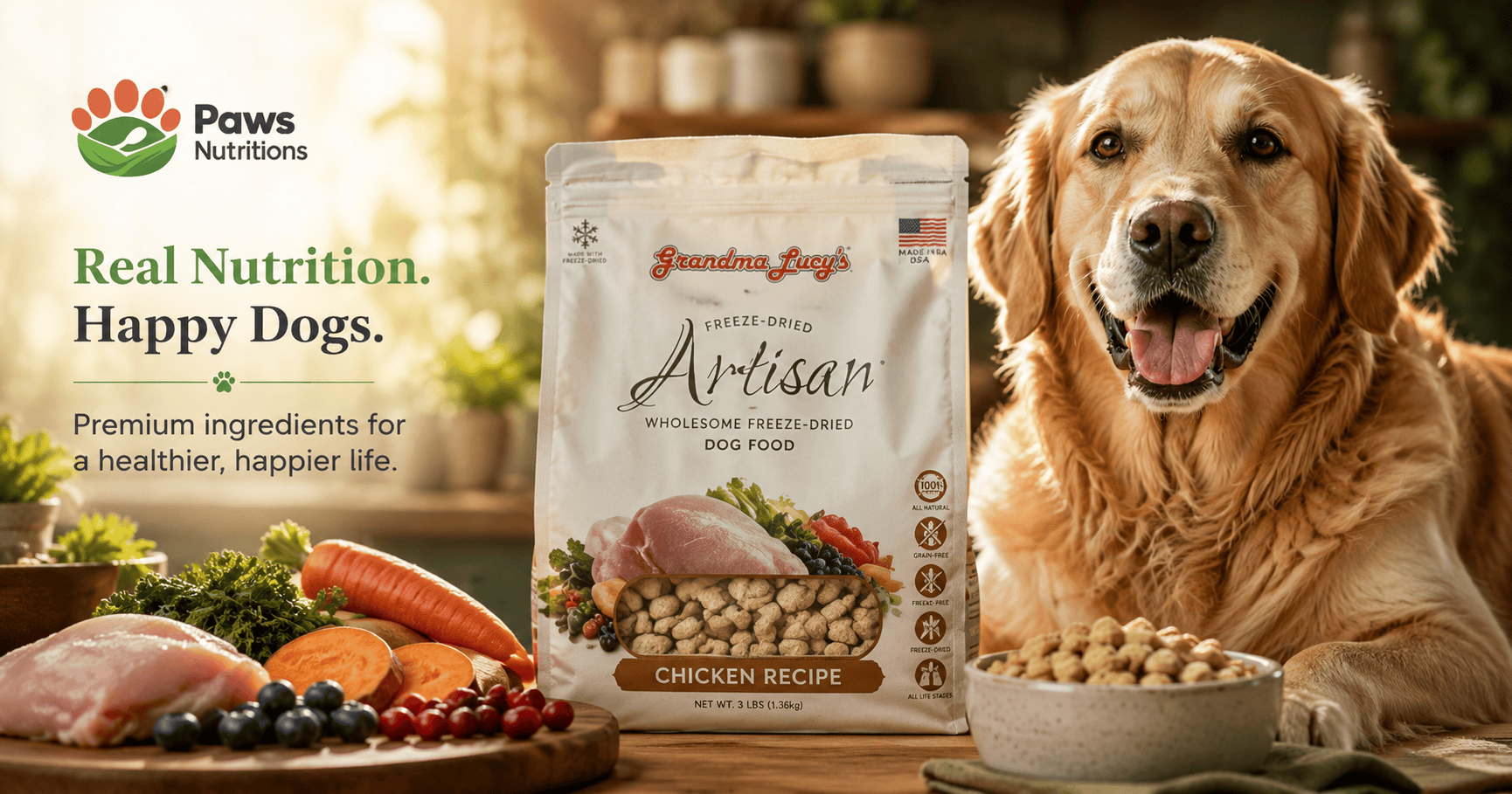
If you’ve been searching for a healthier alternative to traditional kibble, chances are you’ve already come across Grandma Lucy’s dog food. It’s one of those brands that pet owners either swear by — or feel genuinely curious about because the concept sounds almost too good. Freeze-dried, whole-food ingredients, minimal processing, no artificial junk. But does it actually live up to the hype in 2026?
That’s exactly what this review covers. We dug deep into Grandma Lucy’s ingredients, nutritional value, recall history, product lines, real owner experiences, and honest cost analysis. Whether you’re considering switching from kibble or just comparing freeze-dried brands, you’ll find everything you need right here to make a confident, informed decision for your dog.
Why Pet Owners Are Talking About Grandma Lucy’s Dog Food in 2026
What Makes Grandma Lucy’s Different From Traditional Kibble
Most traditional kibble is cooked at extremely high temperatures — a process that kills bacteria but also destroys a significant portion of natural enzymes, vitamins, and nutrients. Grandma Lucy’s takes a completely different approach. Their recipes rely on freeze-drying technology, which removes moisture from whole ingredients without exposing them to high heat. The result? Food that retains far more of its original nutritional profile while still being shelf-stable and convenient.
That’s not something you get with your average bag of dry dog food. And that’s exactly why more pet owners are making the switch.
The Rise of Freeze-Dried Dog Food
Freeze-dried dog food has seen massive growth over the past few years. Pet owners today are more ingredient-conscious than ever. They’re reading labels, comparing protein sources, and asking real questions about where their dog’s food actually comes from. Grandma Lucy’s fits directly into that shift — it’s positioned as a whole-food, minimally processed option that bridges the gap between raw feeding and the everyday convenience most families need.
Who Grandma Lucy’s Dog Food Is Best For
This brand tends to resonate most with owners of picky eaters, dogs with sensitive stomachs, or pets dealing with food allergies and intolerances. It’s also a strong pick for owners who want the benefits of raw or fresh food without the mess, prep time, or refrigeration demands. If you’re someone who reads every ingredient label and prioritizes quality over cutting costs, Grandma Lucy’s is built for you.
Quick Brand Overview & Reputation
Grandma Lucy’s has been around since 1999 and has built a loyal, passionate customer base. The brand operates with a focus on human-grade ingredients, transparent sourcing, and minimal processing. It’s not a massive commercial pet food corporation — it’s a smaller, values-driven company. That tends to show up in both the ingredient quality and the slightly premium price tag.
Grandma Lucy’s Dog Food Ratings at a Glance
| Category | Rating |
| Ingredient Quality | ★★★★★ (5/5) |
| Protein & Nutrition | ★★★★½ (4.5/5) |
| Safety & Recall History | ★★★★★ (5/5) |
| Price & Value | ★★★½ (3.5/5) |
| Palatability | ★★★★★ (5/5) |
| Overall | ★★★★½ (4.5/5) |
Ingredient Quality Rating
Grandma Lucy’s scores exceptionally well on ingredient quality. They use real whole-food proteins, recognizable fruits and vegetables, and avoid the fillers, by-products, and artificial additives that plague many commercial dog food brands. Most of their formulas feature a named meat as the first ingredient — something that matters a lot when you’re evaluating food quality.
Protein & Nutrition Score
Protein levels across Grandma Lucy’s product lines are generally solid, ranging from around 22% to 38% depending on the formula. Their PUREformance and Macanna lines tend to run higher in protein, which is ideal for active dogs. The AAFCO compliance across their complete meal lines confirms nutritional sufficiency for daily feeding.
Safety & Recall History Score
This is one of Grandma Lucy’s strongest areas. As of 2026, the brand has a clean recall record with no major safety incidents reported by the FDA. That’s a significant trust signal — especially in a market where recalls happen with alarming frequency.
Price & Value Rating
There’s no sugarcoating it — Grandma Lucy’s is a premium brand. You’ll pay more per pound than you would for kibble. However, when you factor in the ingredient quality and the fact that you need smaller portions to meet your dog’s caloric needs, the daily cost often works out better than it initially appears.
Palatability and Feeding Experience
Most owners report that their dogs absolutely love Grandma Lucy’s. Even notoriously picky eaters tend to respond well to the rehydrated texture and the rich aroma of real meat ingredients. That’s one of the most consistent themes across thousands of customer reviews.
Overall Verdict Summary
Grandma Lucy’s is a genuinely excellent dog food brand. It’s not perfect for every budget, but if you can afford it, the ingredient quality, safety record, and palatability make it one of the best freeze-dried options available in 2026.
About Grandma Lucy’s Dog Food Company
Where Grandma Lucy’s Dog Food Is Made
Grandma Lucy’s dog food is manufactured in the United States. The company uses a dedicated production facility that adheres to strict quality control standards. American-made pet food tends to follow more rigorous safety protocols compared to overseas manufacturing, and this is a key selling point for many buyers.
Company History and Brand Mission
Founded in 1999, Grandma Lucy’s started with a simple but powerful idea — feed dogs the way you’d feed your own family. The brand was built around the belief that whole-food nutrition is better for dogs than heavily processed commercial food. That mission has stayed consistent over the years, which is why they’ve maintained a strong reputation in the natural pet food community.
Ingredient Sourcing Standards
Grandma Lucy’s is transparent about their ingredient sourcing. They prioritize high-quality, responsibly sourced ingredients and steer clear of anything artificial. Their commitment to using human-grade components in many formulas sets them apart from brands that rely heavily on feed-grade ingredients of questionable origin.
Manufacturing and Food Safety Practices
The brand follows solid food safety protocols throughout their manufacturing process. Freeze-drying itself is an inherently safer preservation method compared to traditional canning or high-heat extrusion because it eliminates the need for chemical preservatives. The facilities are designed to meet the expectations of a premium pet food brand.
Is Grandma Lucy’s Made in the USA?
Yes — Grandma Lucy’s dog food is proudly made in the USA. For many pet owners, this is a non-negotiable requirement, especially after years of recalls linked to overseas manufacturing. Knowing your dog’s food is made domestically, with locally sourced ingredients wherever possible, adds a meaningful layer of trust.
Grandma Lucy’s Dog Food Product Lines Explained
Grandma Lucy’s Artisan Recipes Review
The Artisan line is Grandma Lucy’s flagship product. It features a blend of freeze-dried proteins, vegetables, and whole grains like oats and brown rice. This line is designed to be rehydrated with warm water before serving, turning into a fresh, stew-like meal your dog will likely devour. It’s a great option for dogs that need a more balanced, grain-inclusive formula.
Grandma Lucy’s PUREformance Review
PUREformance is a grain-free, high-protein formula aimed at active dogs or those who simply do better without grains. It focuses heavily on animal protein sources with limited plant-based fillers. The ingredient list is tight and clean, making it one of the brand’s most nutritionally impressive offerings.
Grandma Lucy’s Macanna Grain-Free Review
The Macanna line leans into novel proteins and grain-free formulation. It’s particularly well-suited for dogs dealing with food sensitivities or those who haven’t responded well to chicken-based formulas. Macanna offers variety in protein sources, which can be a real advantage when you’re rotating proteins to prevent sensitivity development.
Grandma Lucy’s Valor Limited Ingredient Line
The Valor line is built around simplicity. Fewer ingredients mean fewer potential triggers for dogs with known allergies. If your dog has been diagnosed with a specific food sensitivity or you’re going through an elimination diet process, Valor is the formula to look at. The limited ingredient diet (LID) approach is a trusted strategy in veterinary nutrition.
Grandma Lucy’s Toppers & Treats
Beyond complete meals, Grandma Lucy’s also offers freeze-dried toppers and treats. These are ideal if you’re not ready to fully transition away from kibble but want to boost the nutritional value of your dog’s existing meals. Even a small amount of a high-quality freeze-dried topper can meaningfully improve palatability and nutrient density.
Which Grandma Lucy’s Formula Is Best?
For most dogs, the Artisan line offers the best overall balance of nutrition, palatability, and digestibility. If your dog is highly active or grain-sensitive, PUREformance is the better pick. Dogs with allergies or sensitivities will do best on the Valor line. There’s genuinely a solid option within the brand for almost every dog’s needs.
Grandma Lucy’s Dog Food Ingredients Breakdown
Real Meat and Protein Sources
Every formula in the Grandma Lucy’s lineup leads with a named animal protein. You’ll see ingredients like freeze-dried chicken, turkey, pork, salmon, and lamb listed first — which is exactly what you want to see. High-quality, species-appropriate protein is the foundation of good dog nutrition, and Grandma Lucy’s delivers on that front consistently.
Fruits, Vegetables & Superfoods Used
Beyond protein, Grandma Lucy’s incorporates a meaningful array of whole fruits and vegetables — think sweet potatoes, blueberries, cranberries, carrots, spinach, and peas. These aren’t just marketing additions. They contribute real antioxidants, vitamins, and minerals that support immune function, digestive health, and overall vitality.
Freeze-Dried Whole Food Ingredients Explained
The freeze-drying process preserves the cellular structure of ingredients in a way that high-heat cooking simply cannot. Enzymes, heat-sensitive vitamins, and natural moisture-bound nutrients remain largely intact. When you rehydrate the food with water, you’re essentially restoring it close to its original whole-food state — which is a genuinely impressive feat of food technology.
Carbohydrate Sources and Digestibility
Depending on the formula, Grandma Lucy’s uses carbohydrate sources like oats, brown rice, and sweet potatoes. These are far more digestible and nutritionally valuable than the corn, wheat, and soy you find in many budget kibbles. Grain-free formulas swap grains for lower-glycemic vegetables, which suits many dogs well.
Vitamins, Minerals & Chelated Nutrients
Grandma Lucy’s supplements their formulas with a well-rounded vitamin and mineral profile, including chelated minerals — a form that’s more bioavailable and easier for dogs to absorb. This attention to nutrient completeness is part of what allows their complete meal lines to carry AAFCO nutritional adequacy statements.
Does Grandma Lucy’s Use Fillers or By-Products?
No — and this is one of the brand’s standout qualities. You won’t find corn syrup, meat by-products, artificial colors, or rendered animal meal of unknown origin in their ingredient lists. What you see is what you get: real, whole ingredients that you’d recognize in your own kitchen.
Artificial Additives, Preservatives & Colors
Grandma Lucy’s uses the freeze-drying process itself as the primary preservation method, which means they don’t need to rely on chemical preservatives like BHA, BHT, or ethoxyquin. No artificial flavors, no synthetic colors. This is a meaningful differentiator from heavily processed commercial pet foods.
Is Grandma Lucy’s Dog Food Healthy? Full Nutritional Analysis
Protein Content Analysis
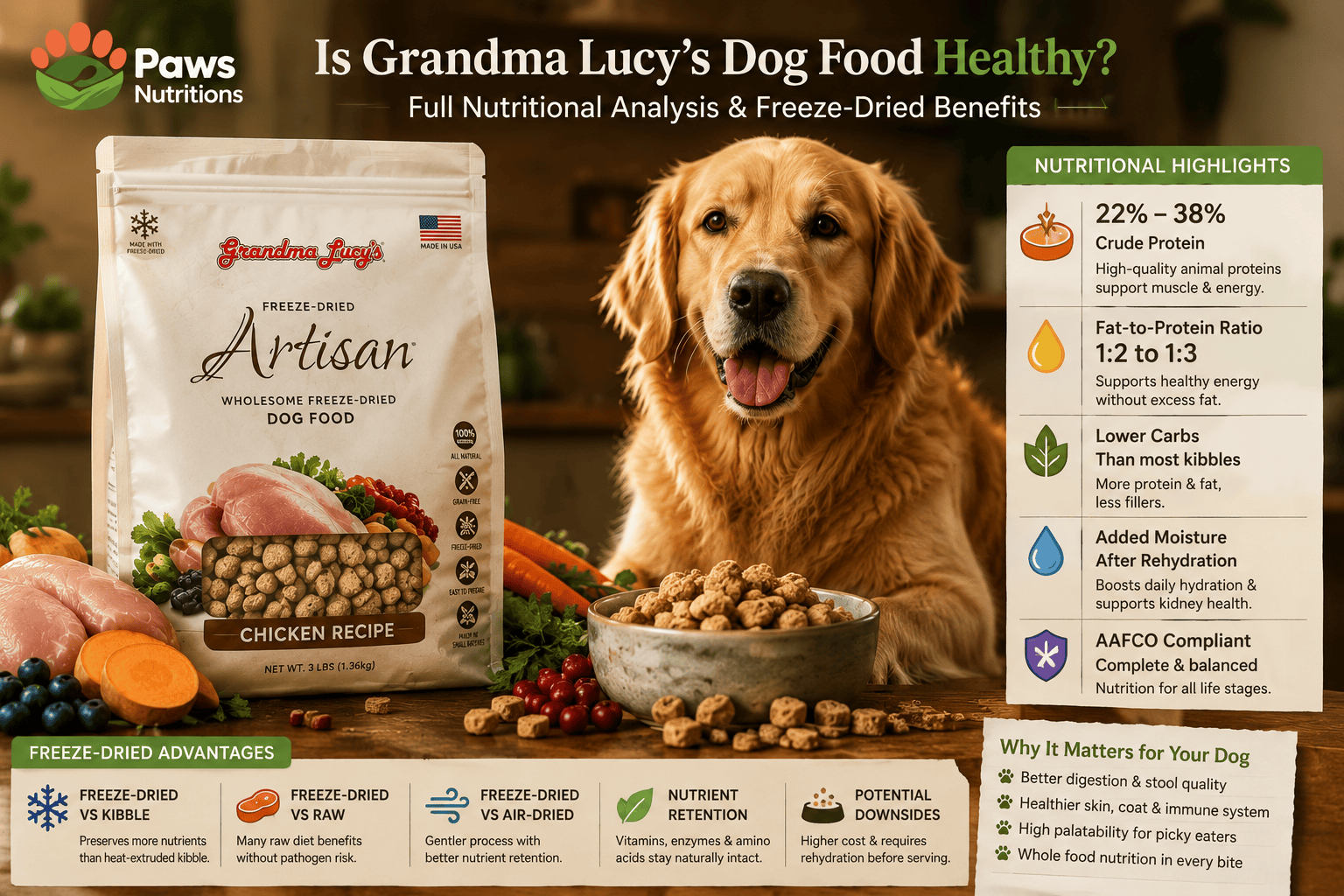
Grandma Lucy’s protein content varies by formula, but most complete meal lines deliver between 22% and 38% crude protein on a dry matter basis. That’s competitive with many high-quality kibbles and raw foods. The protein comes primarily from animal-based sources, which is biologically appropriate for dogs and supports muscle maintenance and energy.
Fat-to-Protein Ratio
A healthy fat-to-protein ratio in dog food generally falls somewhere between 1:2 and 1:3 (fat to protein). Grandma Lucy’s formulas tend to sit within or near that range, supporting healthy energy metabolism without tipping into excessive fat content that could cause weight gain in less active dogs.
Carbohydrate Levels Compared to Other Brands
Compared to most commercial kibbles, Grandma Lucy’s formulas are significantly lower in carbohydrates. Typical kibble can contain 40-60% carbohydrates to hold its shape during extrusion. Grandma Lucy’s, by contrast, focuses on protein and fat as primary energy sources — more in line with a dog’s natural dietary needs.
Calorie Density and Portion Sizes
Because freeze-dried food is calorie-dense and nutrient-rich, you actually feed smaller portions by volume. A small handful of Grandma Lucy’s, once rehydrated, expands considerably and provides a nutritionally complete meal. New owners are sometimes surprised by how little they need to feed — which helps offset the higher price per bag.
Moisture and Hydration Benefits
One of the often-overlooked benefits of rehydrating freeze-dried food is the added moisture. Many dogs don’t drink enough water, which stresses the kidneys over time. Feeding a rehydrated meal adds a meaningful boost of daily hydration, particularly helpful for dogs prone to urinary issues or kidney concerns.
AAFCO Compliance & Complete Nutrition
Grandma Lucy’s complete meal lines carry the AAFCO nutritional adequacy statement, meaning they’ve been formulated to meet established standards for dog nutrition. This is an important box to check — it confirms you’re feeding a diet that covers your dog’s full nutritional requirements, not just a glorified snack.
Is Grandma Lucy’s High in Protein?
Yes — especially the PUREformance and Macanna lines. For active dogs, working breeds, or dogs recovering from illness, higher protein intake supports muscle repair, immune function, and energy levels. For senior or less active dogs, the Artisan line with its slightly more moderate protein levels may be the better long-term fit.
Freeze-Dried Dog Food Explained: Is It Better Than Kibble?
How Freeze-Dried Dog Food Is Made
The freeze-drying process works by freezing the food first, then placing it in a vacuum chamber where the ice converts directly to vapor — a process called sublimation. This removes 98% of the moisture without ever heating the food above a safe temperature. The result is a shelf-stable product that maintains the nutritional integrity of the original ingredients far better than conventional cooking methods.
Freeze-Dried vs Raw Dog Food
Raw dog food and freeze-dried food share a lot of nutritional philosophy — both prioritize whole, minimally processed ingredients. The difference is that freeze-drying eliminates most of the pathogen risk associated with raw feeding by removing the moisture bacteria need to survive. You get many of the benefits of raw without the same level of food safety concern or the need for refrigeration.
Freeze-Dried vs Air-Dried Dog Food
Air-dried dog food uses slow, low-temperature airflow to remove moisture over many hours. It’s similar to freeze-drying in philosophy but operates at slightly higher temperatures, which means marginally more nutrient degradation. Freeze-drying is generally considered the gentler and more nutrient-preserving of the two methods.
Freeze-Dried vs Traditional Kibble
Traditional kibble is cooked at very high temperatures using a process called extrusion. While this makes the food shelf-stable and cost-effective, it significantly degrades heat-sensitive nutrients. Manufacturers compensate by adding synthetic vitamins back in after processing. Freeze-dried food skips that whole cycle — the nutrients stay intact naturally.
Nutrient Retention Benefits
Studies on freeze-drying technology confirm that it preserves vitamins A, C, and B-complex, natural enzymes, and amino acid profiles far better than heat-based processing. For pet owners focused on feeding as close to nature as possible without going fully raw, freeze-dried food is about as good as it realistically gets.
Potential Downsides of Freeze-Dried Meals
The two main downsides are cost and preparation time. Freeze-dried food is significantly more expensive per pound than kibble, and it requires rehydration before serving — which adds a few minutes to mealtime. Neither of these is a dealbreaker, but they’re worth weighing honestly depending on your lifestyle and budget.
Grandma Lucy’s Dog Food Benefits
High-Quality Whole Food Ingredients
Every time you scoop out a serving of Grandma Lucy’s, you know exactly what’s going in your dog’s bowl. Real meat, real vegetables, real fruits — no fillers, no mystery ingredients. That transparency is genuinely reassuring, especially if you’ve ever spent time decoding a kibble ingredient list and felt more confused than informed.
Great for Picky Eaters
If your dog turns their nose up at everything you put in front of them, Grandma Lucy’s is often the solution. The rich aroma and natural flavor of freeze-dried whole ingredients tend to be irresistible even to the most selective dogs. It’s one of the most consistent praises you’ll find in owner reviews.
Easy Digestion for Sensitive Stomachs
The minimal processing and clean ingredients in Grandma Lucy’s make it much gentler on the digestive system than heavily processed kibble. Dogs with sensitive stomachs often show dramatic improvement in stool consistency and digestive comfort within just a few weeks of switching.
Allergy-Friendly Recipe Options
Between the Valor limited ingredient line and the grain-free Macanna and PUREformance formulas, Grandma Lucy’s offers meaningful flexibility for dogs with food allergies or intolerances. Fewer ingredients and cleaner sourcing mean fewer potential allergen triggers in every bowl.
Better Hydration Compared to Dry Kibble
When you rehydrate Grandma Lucy’s with warm water, a typical serving adds roughly half a cup to a full cup of additional fluid to your dog’s daily intake. Over time, this added moisture can support better kidney function, urinary tract health, and overall cellular hydration — especially in dogs that are naturally reluctant drinkers.
Convenient for Travel and Storage
Despite being premium food, Grandma Lucy’s is surprisingly travel-friendly. The freeze-dried format is lightweight, shelf-stable, and compact. You don’t need refrigeration, and portion measuring is straightforward. Many owners keep a bag in their car or travel pack for trips where fresh or raw food isn’t practical.
Supports Skin and Coat Health
Thanks to the omega fatty acids from salmon and other protein sources, along with the antioxidant-rich fruits and vegetables, many owners report visible improvements in coat shine, skin condition, and shedding within the first month of feeding Grandma Lucy’s. A healthy diet really does show up on the outside.
Potential Drawbacks of Grandma Lucy’s Dog Food
Premium Price Compared to Kibble
This is the elephant in the room — Grandma Lucy’s costs significantly more than most commercial kibbles. A mid-sized dog could easily cost you $150 or more per month to feed exclusively on this brand. For many families, that’s a meaningful budget consideration that can’t be ignored.
Preparation Time and Rehydration
While it only takes about 5 minutes to rehydrate, some owners find the extra step inconvenient, especially in busy households. If you need to feed your dog immediately, you’ll need to plan a few minutes ahead. It’s a small thing, but worth factoring into your daily routine.
Not Ideal for Every Budget
Budget is real. If you’re feeding multiple large dogs or working within a tight household budget, Grandma Lucy’s as a complete diet may simply not be financially sustainable. Using it as a topper or partial meal enhancement is a practical middle ground that many owners use successfully.
Grain-Free Concerns Some Owners Discuss
The ongoing conversation around grain-free diets and dilated cardiomyopathy (DCM) in dogs is something prospective buyers bring up. The FDA began investigating a potential link in 2018, though the science remains inconclusive and no definitive causal relationship has been established. If you’re concerned, the Artisan line includes whole grains as an alternative.
Strong Smell or Texture Issues for Certain Dogs
Some dogs — particularly those raised exclusively on kibble — find the smell of freeze-dried food overwhelming at first. The transition period can involve some nose-turning and initial hesitation. In most cases, a gradual transition over 7-10 days resolves any reluctance entirely.
Portion Measuring Can Be Confusing
Because freeze-dried food looks very different from wet or dry food and expands significantly when rehydrated, new owners sometimes struggle with portion sizing initially. The feeding guidelines on the packaging can feel inconsistent with what your dog is used to. Give it a week and it becomes second nature.
Grandma Lucy’s Dog Food Recall History & Safety Concerns
Has Grandma Lucy’s Ever Been Recalled?
As of the time of this writing in 2026, Grandma Lucy’s has no confirmed FDA recalls on record. That’s an impressive safety track record in an industry where recalls, unfortunately, aren’t rare. The brand’s commitment to clean, domestically sourced ingredients and careful manufacturing has kept them out of trouble.
FDA and Safety Record Review
The FDA’s pet food recall database shows no entries for Grandma Lucy’s, which puts them in a select group of premium brands with consistently clean safety histories. This is a major plus for owners who prioritize food safety above almost everything else.
Grain-Free Diet and DCM Discussion
The FDA investigated a potential link between legume-heavy grain-free diets and dilated cardiomyopathy in dogs starting around 2018. The concern is still being studied, and no definitive conclusion has emerged. Grandma Lucy’s grain-free formulas do contain legumes, so if your vet has flagged DCM concerns for your dog specifically, the Artisan line with whole grains is the safer choice to discuss with them.
Is Freeze-Dried Dog Food Safe?
Yes — freeze-dried dog food is considered safe for healthy adult dogs. The drying process significantly reduces pathogen survival rates, making it safer than many raw food preparations. That said, always handle freeze-dried pet food with standard hygiene practices: wash your hands after handling, clean food bowls regularly, and store bags properly.
Food Storage and Handling Tips
Once opened, store Grandma Lucy’s in a cool, dry place with the bag sealed tightly or transferred to an airtight container. Most formulas are shelf-stable for 12-18 months unopened. Once rehydrated, treat the food like fresh food — don’t leave it sitting out for more than 30-60 minutes and refrigerate any leftovers promptly.
Real Feeding Experience: What Dogs and Owners Think
Taste Test and Palatability
The number one feedback from owners is simple: dogs love it. The aroma from freeze-dried whole proteins is dramatically stronger and more appealing than typical kibble. Dogs that previously needed encouragement to finish their meals often start showing enthusiasm at mealtime for the first time. That shift alone is meaningful for owners who’ve been stressing about their dog’s appetite.
Stool Quality and Digestion Changes
Within 2-3 weeks of transitioning to Grandma Lucy’s, most owners report noticeably firmer, smaller, and less odorous stools. This is a reliable sign of better nutrient absorption. When your dog’s body can actually use the nutrients in the food, less waste is produced — both literally and metaphorically.
Energy Level Improvements
Some owners report visible improvements in energy, alertness, and playfulness after switching. This could be attributed to better protein bioavailability, fewer carbohydrates causing blood sugar spikes and crashes, and improved overall nutrient status. Senior dogs especially sometimes seem to regain a bit of their youthful energy.
Coat and Skin Results
Within 4-6 weeks on Grandma Lucy’s, many owners notice a shinier, softer coat and reduced dry, flaky skin. The omega fatty acids and antioxidant-rich plant ingredients are largely responsible for these improvements. It’s one of the most visible and satisfying changes owners observe.
Transitioning From Kibble to Grandma Lucy’s
The key is to go slowly. Start by mixing a small amount of Grandma Lucy’s into your dog’s existing food — about 25% new food, 75% old food — and gradually shift the ratio over 10-14 days. This allows your dog’s digestive microbiome to adjust without causing gas, loose stools, or stomach upset.
Common Feeding Mistakes to Avoid
Don’t skip the rehydration step — serving freeze-dried food dry increases the risk of digestive discomfort and dehydration, especially in dogs that don’t drink enough water on their own. Also, don’t eyeball portions without consulting the feeding guide. Overfeeding a calorie-dense food like this can lead to unintended weight gain faster than you’d expect.
Grandma Lucy’s Dog Food Feeding Guide
How Much Grandma Lucy’s Should You Feed?
Feeding amounts vary by your dog’s weight, age, and activity level. As a general starting point, a 20 lb dog typically needs around 1/2 to 3/4 cup of rehydrated food per day, split across two meals. Always refer to the specific feeding guide on the formula you’re using, as calorie density varies between product lines.
Rehydration Instructions Step-by-Step
- Measure the recommended dry portion into your dog’s bowl
- Add warm (not boiling) water — typically equal parts food to water
- Stir gently and allow to sit for 3-5 minutes
- Serve once the food has fully absorbed the liquid and reached a stew-like consistency
- Discard any uneaten rehydrated food within 30-60 minutes
Feeding Puppies vs Adult Dogs
Puppies have different caloric and nutritional requirements than adult dogs. Grandma Lucy’s Artisan line is formulated for all life stages when prepared according to puppy guidelines, which means larger portions and more frequent meals (typically 3 times per day for young puppies). Always confirm with your vet when transitioning a puppy to a new food.
Feeding Senior Dogs
Senior dogs often benefit enormously from the increased moisture and digestibility that freeze-dried rehydrated food provides. Older dogs with declining kidney function, dental issues, or reduced appetite frequently respond very well to Grandma Lucy’s. The soft texture after rehydration is also much gentler on sensitive or aging teeth.
Adjusting Portions for Active Dogs
If your dog is highly active — working dogs, sport dogs, or dogs that spend hours outside daily — they’ll likely need 15-30% more calories than the baseline feeding guide suggests. Monitor weight regularly and adjust portions based on whether your dog is maintaining, losing, or gaining weight over time.
How Long One Bag Typically Lasts
A 3 lb bag of Grandma Lucy’s Artisan will typically last a 20 lb dog about 10-14 days when fed as a complete diet. Larger dogs will go through bags faster; smaller dogs will stretch them further. For households with multiple dogs, buying in larger quantities (when available) can help reduce per-serving costs slightly.
Is Grandma Lucy’s Good for Dogs With Allergies or Sensitive Stomachs?
Limited Ingredient Benefits
The Valor limited ingredient line is specifically designed for dogs with diagnosed or suspected food allergies. By reducing the total number of ingredients, you reduce the number of potential triggers in every serving. This is the same principle used in veterinary elimination diets and it’s a genuinely effective approach for identifying and managing food sensitivities.
Common Allergens Avoided
Depending on the formula you choose, Grandma Lucy’s can help you avoid common allergens including chicken, beef, dairy, wheat, corn, and soy. Their novel protein options — such as pork, salmon, or turkey — offer proteins your dog may not have been exposed to before, which is key to an effective food sensitivity management strategy.
Best Grandma Lucy’s Recipes for Allergies
- Valor Turkey — limited ingredients, novel protein
- Macanna Pork — grain-free, limited plant ingredients
- Artisan Pork & Apple — whole food with grain inclusion for balance
Digestive Support Ingredients
Several Grandma Lucy’s formulas include ingredients with natural prebiotic and digestive support properties — sweet potatoes, pumpkin, and blueberries all contribute to gut health in measurable ways. A healthy gut microbiome directly impacts stool quality, immune function, and even mood.
Is Grandma Lucy’s Good for Skin Issues?
Yes — many dogs with atopic dermatitis, hot spots, and chronic itching show improvement after switching to Grandma Lucy’s, particularly when the underlying cause is diet-related. Removing processed fillers and artificial additives, while adding high-quality omega fatty acids, can make a visible difference in skin inflammation and coat quality within 4-8 weeks.
Grandma Lucy’s Dog Food Cost & Value Analysis
Cost Per Pound Compared to Premium Brands
Grandma Lucy’s typically runs between $25-$40 per pound of freeze-dried food, depending on the formula and retailer. That sounds expensive until you factor in that freeze-dried food is calorie-dense — a small amount goes much further than the same weight in kibble.
Daily Feeding Cost Breakdown
| Dog Weight | Approx. Daily Cost |
| 10 lbs | $2.50-$4.00/day |
| 25 lbs | $4.00-$6.50/day |
| 50 lbs | $7.00-$10.00/day |
| 75 lbs | $9.00-$13.00/day |
Is Grandma Lucy’s Worth the Price?
For owners who prioritize ingredient quality and have dogs with health challenges, allergies, or picky eating habits — yes, it’s absolutely worth it. For healthy dogs with no specific dietary concerns and owners on a tight budget, a high-quality kibble with Grandma Lucy’s as a topper is a smarter financial approach that still delivers meaningful nutritional benefits.
Best Value Product Line
The Artisan line offers the best overall value within the Grandma Lucy’s range. It delivers excellent ingredient quality, full nutritional completeness, and strong palatability at a slightly more accessible price than the specialized formulas.
Grandma Lucy’s Dog Food Compared to Other Brands
| Brand | Type | Protein Quality | Average Price Range (USA) | Best For |
| Grandma Lucy’s | Freeze-Dried | ★★★★★ | $28–$45 per bag | Whole food nutrition |
| The Honest Kitchen | Dehydrated | ★★★★½ | $32–$85 per box | Gentle digestion |
| Stella & Chewy’s | Freeze-Dried Raw | ★★★★★ | $35–$120 per bag | Raw diet benefits |
| Open Farm | Freeze-Dried | ★★★★ | $35–$75 per bag | Ethical sourcing |
| Primal | Freeze-Dried Raw | ★★★★★ | $35–$70 per bag | High protein |
| Ziwi Peak | Air-Dried | ★★★★★ | $45–$150 per bag | Premium nutrition |
Grandma Lucy’s vs The Honest Kitchen
Both brands focus on whole food, minimally processed ingredients for dogs. The Honest Kitchen uses a dehydration process, while Grandma Lucy’s freeze-dries. Freeze-drying is generally considered superior for nutrient retention. However, The Honest Kitchen tends to be slightly more affordable and widely available. Both are excellent choices.
Grandma Lucy’s vs Stella & Chewy’s
Stella & Chewy’s is a freeze-dried raw brand, meaning it goes a step further toward raw feeding with higher bacterial counts that some consider beneficial. Grandma Lucy’s is more of a whole-food meal approach. Stella & Chewy’s tends to run higher in protein and is better suited for dogs on a raw diet philosophy, while Grandma Lucy’s is a more accessible entry point.
Grandma Lucy’s vs Ziwi Peak
Ziwi Peak is air-dried and comes from New Zealand with exceptional ingredient sourcing — predominantly from free-range, grass-fed, and wild-caught sources. It’s arguably the most premium option in this comparison and the most expensive. For raw ingredient quality, Ziwi Peak is unmatched, but Grandma Lucy’s delivers comparable benefits at a lower price point.
What Veterinarians Say About Grandma Lucy’s Dog Food
Vet Perspective on Freeze-Dried Nutrition
Many veterinarians who are open to integrative nutrition approaches view freeze-dried food positively. The minimal processing, whole-food ingredients, and strong nutrient retention are genuinely appealing from a nutritional standpoint. Vets who specialize in pet nutrition often appreciate that brands like Grandma Lucy’s meet AAFCO standards while doing so with clean, recognizable ingredients.
Is Grandma Lucy’s Nutritionally Balanced?
Yes — the complete meal lines carry an AAFCO nutritional adequacy statement, confirming they provide complete and balanced nutrition for dogs. This isn’t just a marketing claim; it means the formulas have been evaluated against established minimum nutrient requirements for dogs at different life stages.
Veterinary Concerns About Grain-Free Diets
Some veterinarians remain cautious about grain-free diets due to the ongoing DCM investigation. If your vet has expressed concern, the Artisan line with whole grains (oats, brown rice) is a solid grain-inclusive alternative that still delivers Grandma Lucy’s core quality benefits. Always have an open conversation with your vet about your dog’s specific health history.
When Vets May Recommend an Alternative
Vets might recommend a different formula if your dog has specific medical conditions like kidney disease, pancreatitis, or severe obesity that require a therapeutic diet. Grandma Lucy’s is excellent food, but it’s not a therapeutic prescription diet. Dogs with complex medical dietary needs may require something more specifically formulated.
Best Dogs for Grandma Lucy’s Dog Food
Best for Active Dogs
Dogs with high energy demands — working breeds, sporting dogs, and outdoor companions — thrive on the high-protein, nutrient-dense formulas like PUREformance. The bioavailable protein and natural fat sources provide sustained energy without the carbohydrate-heavy fuel of most kibbles.
Best for Small Breeds
Small breeds have faster metabolisms and often prefer smaller, more palatable meals. Grandma Lucy’s rehydrated texture is highly appealing to small dogs, and the calorie density makes portion control straightforward. The Artisan line is a particularly strong match for small breed adults.
Best for Picky Eaters
If your dog has historically been uninterested in mealtime, Grandma Lucy’s is worth trying before you give up on premium nutrition altogether. The freeze-dried aroma and whole-food flavor tend to trigger enthusiasm even in dogs with very selective palates.
Best for Sensitive Stomachs
Dogs with chronic loose stools, gas, or vomiting tied to diet often respond dramatically well to Grandma Lucy’s clean ingredient profile. Removing artificial additives, fillers, and low-quality proteins takes a significant load off an already stressed digestive system.
Dogs That May Need a Different Formula
Very large breeds with joint-specific needs, dogs with diagnosed kidney disease, or dogs requiring low-fat therapeutic diets may be better served by veterinary prescription formulas. Grandma Lucy’s is excellent for healthy dogs across most life stages, but specific medical conditions sometimes require more targeted nutrition.
Customer Reviews & Common Complaints
What Customers Love Most
The most common praise across reviews is palatability — dogs simply love the taste. Close behind that is the visible health improvement owners notice: better coats, improved digestion, higher energy, and less picky eating behavior. Many owners describe Grandma Lucy’s as the food that finally “worked” after trying multiple other premium brands.
Most Common Negative Reviews
The most repeated complaint is cost. It’s not a criticism of quality — most negative reviewers acknowledge the food is excellent — it’s simply a budget concern. A secondary complaint involves portion confusion during the initial transition, which typically resolves with a week’s practice.
Long-Term User Experiences
Owners who’ve been feeding Grandma Lucy’s for a year or more tend to be its most passionate advocates. They report sustained health benefits — consistent coat quality, stable digestion, healthy weight maintenance — and describe it as one of the best dietary investments they’ve made for their dog.
Where to Buy Grandma Lucy’s Dog Food
Online Retailers
Grandma Lucy’s is available on Chewy.com (often the best prices with autoship discounts), Amazon (convenient Prime delivery), PetSmart.com and Petco.com (reliable options with occasional promotions), and GrandmaLucys.com (the official brand website with direct purchasing).
Subscription and Autoship Savings
Chewy’s Autoship program typically offers 5-35% off your first order and recurring discounts on scheduled deliveries. If Grandma Lucy’s fits your budget as a regular purchase, setting up a subscription is the most cost-effective way to buy it consistently.
Final Verdict: Is Grandma Lucy’s Dog Food Worth Buying in 2026?
Who Should Buy Grandma Lucy’s
- Have a picky eater who refuses most dog foods
- Are managing a dog with food allergies or digestive sensitivities
- Want a whole-food, minimally processed alternative to kibble
- Prioritize ingredient transparency and clean sourcing
- Can accommodate a premium food budget
Who Should Avoid It
- Have a very tight budget and multiple large dogs
- Have a dog requiring a veterinary prescription therapeutic diet
- Need a food that doesn’t require any preparation time
Best Formula Overall
For most dogs and most households, the Grandma Lucy’s Artisan line is the top recommendation. It balances whole-food quality with complete nutrition, includes grain options for those avoiding grain-free, and delivers on palatability consistently across different breeds and life stages.
Final Rating and Recommendation
Overall Rating: 4.5 out of 5 stars
Grandma Lucy’s dog food is one of the best freeze-dried dog food options available in 2026. The ingredient quality is outstanding, the safety record is spotless, and the results owners report are genuinely impressive. The only meaningful drawback is cost — and even that becomes more manageable when you use it strategically. If quality nutrition is your priority, Grandma Lucy’s earns a strong, confident recommendation.
Frequently Asked Questions About Grandma Lucy’s Dog Food
Is Grandma Lucy’s dog food human-grade?
Many of Grandma Lucy’s ingredients are sourced to human-grade standards, though not all formulas carry an official human-grade certification. The brand prioritizes high-quality, recognizable ingredients throughout their product lines.
Is Grandma Lucy’s dog food grain-free?
Some formulas are grain-free (PUREformance, Macanna, Valor) and some include whole grains (Artisan). You have the flexibility to choose based on your dog’s dietary needs and your vet’s recommendations.
Is Grandma Lucy’s good for puppies?
Yes — certain formulas are formulated for all life stages, including puppies. Always check the AAFCO statement on the specific product and follow puppy-specific feeding guidelines, which typically call for more frequent and larger meals.
Does Grandma Lucy’s need water before feeding?
Yes — Grandma Lucy’s complete meal formulas are designed to be rehydrated with warm water before serving. This activates the food, improves palatability, and ensures your dog receives adequate moisture with their meal.
Has Grandma Lucy’s ever had a recall?
As of 2026, Grandma Lucy’s has no confirmed FDA recalls on record. They maintain a clean safety history, which is one of the brand’s strongest trust signals.
Is Grandma Lucy’s good for picky eaters?
Absolutely. The rich aroma and whole-food flavors of Grandma Lucy’s are among the most consistently effective solutions for dogs that turn their nose up at other foods. It’s one of the brand’s most celebrated qualities.
How long does Grandma Lucy’s dog food last after opening?
Unopened bags are shelf-stable for 12-18 months. Once opened, use within the timeframe indicated on the packaging — typically a few weeks — and keep the bag sealed tightly in a cool, dry place. Once rehydrated, treat it like fresh food and refrigerate leftovers.
Can Grandma Lucy’s be mixed with kibble?
Yes — many owners use Grandma Lucy’s as a topper or partial meal addition mixed with their dog’s regular kibble. This is a great way to boost nutritional value and palatability without committing to the full cost of feeding it as a complete diet.
Is Grandma Lucy’s worth the money?
For dogs with allergies, picky eating habits, sensitive stomachs, or owners who prioritize whole-food nutrition — yes, it’s worth every penny. For healthy dogs on a limited budget, using it as a topper delivers significant value at a fraction of the complete-diet cost.
Disclaimer: This Grandma Lucy’s dog food review is intended for informational purposes only and reflects general research and owner experiences. It is not a substitute for professional veterinary advice. Every dog is different — always consult your veterinarian before making significant dietary changes, especially if your pet has existing health conditions, allergies, or is on medication.

A dedicated writer and digital enthusiast committed to creating high-quality, informative, and reader-focused content. Through thoughtful research and clear communication, he aims to deliver valuable insights that help readers navigate the ever-changing digital landscape.