
Choosing the right food for your dog can feel overwhelming, especially when brands like Beneful dog food promise balanced nutrition, great taste, and affordable pricing. But is Beneful actually healthy for your dog, or are the colorful ingredients and budget-friendly formulas hiding important concerns? That’s exactly what many pet owners want to know before filling their dog’s bowl.
In this detailed Beneful dog food review, you’ll discover the truth about ingredients, nutrition quality, safety concerns, recalls, feeding performance, and real customer experiences. We’ll break down the pros, drawbacks, vet opinions, and comparisons with other popular brands so you can confidently decide whether Beneful is the right choice for your dog in 2026.
Why Dog Owners Are Questioning Beneful Dog Food
Walk into almost any grocery store in the United States, and you’ll probably see shelves packed with Beneful dog food. It’s colorful, affordable, and widely available. Many dogs seem to love the taste, which is one reason the brand has stayed popular for years. Still, not every pet owner feels confident about what’s actually inside the bag.
The biggest concern usually comes down to ingredients and long-term health. Some dog owners worry about artificial colors, meat by-products, and high amounts of grains like corn and wheat. Others question whether a budget-friendly kibble can truly provide balanced nutrition for active or sensitive dogs.
At the same time, plenty of pet parents report positive experiences with Purina Beneful. Their dogs maintain healthy energy levels, enjoy mealtime, and do well on the food for years without noticeable problems. That mix of positive experiences and ingredient concerns is exactly why the topic creates so much debate online.
Unlike many reviews that focus only on fear-based claims or marketing hype, this guide looks at the bigger picture. You’ll learn about Beneful ingredients, nutritional quality, safety history, real feeding results, veterinary opinions, and how the food compares to competing brands. Most importantly, you’ll understand which types of dogs may do well on Beneful — and which may need something better.
Is Beneful Dog Food Actually Healthy?
The answer isn’t completely black and white. Beneful dog food meets basic AAFCO nutritional standards, meaning it contains the nutrients dogs need for maintenance and daily health. Purina also follows feeding trials and quality-control practices that many smaller brands don’t have.
However, ingredient quality matters too. Some formulas include ingredients that spark controversy among pet owners, including:
- Corn gluten meal
- Soybean meal
- Artificial food dyes
- Meat by-products
- High carbohydrate fillers
For healthy adult dogs with no food sensitivities, these ingredients may not cause obvious issues. In fact, many dogs digest them without trouble. On the other hand, dogs with allergies, sensitive stomachs, skin problems, or low activity levels may struggle more with heavily processed kibble formulas.
That’s why looking only at the ingredient list doesn’t tell the full story. Real-world feeding performance matters just as much.
Why Beneful Remains Popular Among Budget-Conscious Pet Owners
Price plays a major role in dog food decisions, especially for families feeding large breeds or multiple dogs. Premium dog foods can cost well over $80 per bag, while Beneful dry dog food is usually far more affordable.
For many owners, Beneful sits in that middle ground between extremely cheap kibble and expensive premium formulas. It’s easy to find at local stores, often comes in multiple flavor options, and tends to appeal to picky eaters because of its smell, texture, and added flavor coatings.
Some dog owners also appreciate that Purina is a large company with established manufacturing facilities in the USA. Compared to smaller boutique brands, Purina invests heavily in nutrition research, feeding trials, and quality testing.
Still, affordability alone doesn’t automatically make a dog food healthy. A lower price can sometimes mean compromises in ingredient sourcing or recipe quality. That’s why many pet parents continue researching whether Beneful is truly a smart long-term choice.
What This Review Covers Before You Buy
Choosing the right dog food can feel overwhelming because online opinions are often extremely divided. One review says a food is dangerous, while another claims it completely transformed a dog’s health. The truth usually falls somewhere in the middle.
In this detailed Beneful dog food review, you’ll discover:
- A full breakdown of Beneful ingredients
- Nutritional strengths and weaknesses
- Real feeding experiences from dog owners
- Information about recalls and safety concerns
- Veterinary perspectives on Purina products
- The best and worst Beneful formulas
- Comparisons with brands like Purina One, Pedigree, and Blue Buffalo
- Which dogs may benefit from Beneful — and which may not
By the end, you’ll have a much clearer idea of whether Purina Beneful dog food fits your dog’s needs, budget, and overall health goals.
What Is Beneful Dog Food?
Beneful dog food is one of the most recognized dog food brands in the United States. Manufactured by Purina, the brand focuses on affordable dry and wet dog food formulas designed for everyday feeding. You’ll commonly find Beneful in grocery stores, supermarkets, pet shops, and online retailers because it targets mainstream pet owners looking for convenient and budget-friendly nutrition.
The brand became especially popular because of its colorful kibble pieces, wide flavor variety, and strong marketing around “real meat” ingredients. Many dogs enjoy the taste, which has helped Beneful build a loyal customer base over the years.
However, popularity doesn’t automatically mean every formula is ideal for every dog. Some recipes work reasonably well for healthy adult dogs, while others may not suit dogs with allergies, sensitive digestion, or weight issues. That’s why understanding what Beneful actually offers is important before choosing it as your dog’s regular diet.
Overview of the Purina Beneful Brand
Purina Beneful launched as part of the larger Nestlé Purina PetCare company, one of the biggest names in the pet food industry. Purina produces several well-known brands, including:
- Purina Pro Plan
- Purina One
- Fancy Feast
- Friskies
- Dog Chow
Beneful was created to appeal to dog owners who wanted a more visually appealing kibble without paying premium prices. The recipes often feature colorful pieces shaped differently from traditional plain brown kibble, making the food look more appetizing to humans as well.
One thing many competitors overlook is Purina’s research infrastructure. Unlike smaller boutique brands, Purina employs veterinary nutritionists, animal scientists, and food safety specialists. The company also conducts feeding trials and quality testing in company-owned facilities.
That doesn’t mean every Beneful recipe is perfect. Still, the brand benefits from the large-scale manufacturing standards and nutrition research that come with a major pet food company.
Types of Beneful Dog Food Formulas Available
One reason Beneful dog food reviews vary so much is because the brand offers several different product lines. Some recipes focus on weight management, while others target puppies, small breeds, or dogs that prefer wet food textures.
Here are the main Beneful product categories you’ll typically see:
| Beneful Formula | Best For |
| Beneful Originals | Everyday adult maintenance |
| Beneful Healthy Weight | Weight control and less active dogs |
| Beneful Healthy Puppy | Growing puppies |
| Beneful IncrediBites | Small breed dogs |
| Beneful Prepared Meals | Wet food lovers |
| Beneful Medleys | Variety-focused feeding |
The nutritional quality can vary between formulas. For example, some wet recipes may contain higher moisture levels and better palatability, while certain dry formulas rely more heavily on grains and plant-based protein boosters.
As a result, it’s important to evaluate the exact recipe rather than judging the entire brand based on one product.
Beneful Dry Food vs Wet Food
Choosing between Beneful dry dog food and wet food depends largely on your dog’s needs, eating habits, and health condition.
Dry kibble is usually the more affordable option. It’s convenient to store, easier to portion, and works well for owners feeding larger dogs or multiple pets. Many owners also use kibble during training sessions because it’s simple to handle.
Wet food, meanwhile, tends to be more flavorful and hydrating. Dogs that are picky eaters or older dogs with dental problems often prefer softer textures. In some cases, mixing wet and dry food can improve appetite and make meals more enjoyable.
Here’s a quick comparison:
| Feature | Dry Food | Wet Food |
| Cost | Lower | Higher |
| Moisture Content | Low | High |
| Storage Convenience | Easy | Moderate |
| Palatability | Moderate | High |
| Best For | Daily feeding | Picky or senior dogs |
Many dog owners actually combine both. For example, adding a spoonful of wet Beneful to kibble can encourage picky eaters without dramatically increasing feeding costs.
Who Beneful Dog Food Is Designed For
Not every dog food fits every pet, and Beneful dog food is no exception. The brand mainly targets average healthy dogs that need affordable maintenance nutrition rather than specialized therapeutic diets.
Beneful may work best for:
- Healthy adult dogs
- Moderately active dogs
- Picky eaters
- Owners on a tighter budget
- Multi-dog households
On the other hand, dogs with food sensitivities, chronic digestive issues, severe allergies, or obesity may need higher-quality ingredients and more carefully balanced nutrition.
For example, a highly active working dog may benefit from higher meat protein levels than some Beneful formulas provide. Meanwhile, a dog with skin allergies could react poorly to common ingredients like corn, soy, or artificial additives.
This is where many reviews oversimplify the conversation. A food doesn’t have to be “perfect” or “terrible” for every dog. The real question is whether the formula matches your dog’s individual needs, lifestyle, and digestive tolerance.
Beneful Dog Food Ingredients Review
When you read a Beneful dog food review, the ingredient list is usually where the biggest debate begins. Some dog owners see affordable nutrition backed by a major company, while others focus on the use of grains, artificial colors, and processed ingredients.
The truth is more nuanced than most online discussions make it seem. Purina Beneful contains both beneficial nutrients and controversial ingredients, depending on the specific formula you choose. Some recipes include real meat and added vitamins, while others rely heavily on plant-based fillers and flavor enhancers.
That’s why it’s important to look beyond flashy packaging and understand what these ingredients actually do inside your dog’s body.
Where Does Beneful Get Its Protein From?
Protein is one of the most important parts of any dog’s diet because it supports muscle maintenance, energy, skin health, and overall body function. In many Beneful dog food formulas, protein comes from a combination of animal and plant sources.
Common protein ingredients include:
- Chicken
- Beef
- Salmon
- Meat by-products
- Corn gluten meal
- Soybean meal
At first glance, seeing real meat listed on the bag sounds reassuring. However, ingredient quality depends on both the source and the proportion used in the recipe.
For example, some Beneful formulas list chicken as the first ingredient, but they also contain significant amounts of plant proteins like corn gluten meal. This matters because plant proteins can artificially raise the total protein percentage without providing the same amino acid quality as animal-based protein.
A simple way to think about it is this: a dog’s body generally uses meat protein more efficiently than heavily processed plant protein.
Real Meat vs Meat By-Products Explained
One ingredient that often causes confusion in Purina Beneful reviews is meat by-products. The term sounds alarming to many pet owners, but it’s not always as bad as the internet makes it seem.
Meat by-products can include nutrient-rich organ meats such as:
- Liver
- Kidneys
- Lungs
- Spleen
These parts naturally contain vitamins and minerals dogs can benefit from. In fact, wild dogs consume organs regularly.
The problem is consistency and transparency. The label usually doesn’t specify exactly which animal parts are included or how high the ingredient quality is. Lower-grade by-products may vary more in digestibility and nutritional value compared to clearly named meat meals like “chicken meal” or “salmon meal.”
Premium dog food brands often use more clearly identified animal proteins. Meanwhile, budget foods like Beneful tend to rely more heavily on generalized protein sources to keep costs lower.
Corn, Soy, and Wheat Ingredients — Are They Bad for Dogs?
One of the biggest criticisms of Beneful ingredients is the use of grains and plant fillers such as whole grain corn, soybean meal, and wheat.
Despite the online fear around grains, these ingredients are not automatically harmful. In healthy dogs, properly processed grains can provide:
- Energy
- Fiber
- Certain amino acids
- Digestible carbohydrates
The issue usually comes down to quantity and nutritional balance.
For example, dogs are primarily carnivorous animals that thrive on higher-quality animal protein. When grain-heavy ingredients dominate a recipe, the food may become more carbohydrate-dense than some dogs truly need.
Less active dogs can sometimes gain weight more easily on high-carb kibble. Meanwhile, dogs with sensitivities may experience itching, digestive upset, or poor stool quality if they react poorly to certain grains.
That said, many dogs eat grain-inclusive diets for years without obvious problems. Blanket statements like “all grains are bad” simply aren’t accurate.
Artificial Colors and Preservatives in Beneful
This is one area where Beneful dog food receives consistent criticism from pet owners and holistic nutrition advocates.
Several Beneful formulas contain artificial food dyes, including color additives that make the kibble appear more visually appealing to humans. Dogs, however, don’t care whether their food is red, green, or orange.
Artificial coloring doesn’t provide nutritional value. Instead, it’s mainly used for product appearance and branding. Some owners prefer avoiding these additives altogether, especially if their dogs have skin sensitivities or suspected food intolerances.
Preservatives are another common concern. Preservatives help prevent fats from spoiling and extend shelf life, which is important for dry kibble products. The key difference is whether a brand uses natural preservatives or synthetic ones.
Compared to premium dog foods that focus on minimal processing and natural ingredients, Beneful formulas tend to contain more processed components overall.
Does Beneful Contain Fillers?
The word “fillers” gets thrown around constantly in dog food discussions, but many owners don’t fully understand what it means.
In simple terms, fillers are lower-cost ingredients added mainly to increase volume or reduce manufacturing costs. Common examples include:
- Corn
- Wheat middlings
- Soy ingredients
- Excess starches
Not all fillers are completely useless nutritionally. Some provide calories and fiber. The concern is that heavily filler-based foods may offer lower biological value compared to diets rich in high-quality animal protein.
A useful comparison is fast food for humans. You can technically meet calorie needs from highly processed foods, but nutrient quality and ingredient balance still matter for long-term health.
This is where Beneful nutrition tends to divide opinions. Some dogs tolerate these ingredients perfectly well, while others seem to perform better on cleaner, meat-focused diets.
Ingredient Quality Compared to Premium Dog Foods
Compared to premium brands like Orijen, Blue Buffalo, or higher-end Purina lines such as Purina Pro Plan, Beneful generally falls into the budget-to-mid-range category.
Here’s a quick ingredient comparison:
| Feature | Beneful | Premium Dog Foods |
| Animal Protein Quality | Moderate | Higher |
| Artificial Colors | Often included | Usually avoided |
| Grain Content | Higher | Lower or balanced |
| Processing Level | High | Moderate |
| Ingredient Transparency | Moderate | Higher |
| Price | Affordable | Expensive |
This doesn’t necessarily mean Beneful is “dangerous.” Instead, it reflects a balance between affordability and ingredient quality.
For owners feeding multiple dogs or managing tighter budgets, Beneful may still feel practical. However, dogs with allergies, digestive issues, obesity, or sensitive skin may benefit more from higher-quality formulas with cleaner ingredient lists.
Are Beneful Ingredients AAFCO-Compliant?
Yes, most Beneful dog food formulas meet AAFCO nutritional standards for complete and balanced maintenance nutrition. That means the food contains the minimum required nutrients dogs need for everyday health.
Purina also performs feeding trials on many products, which adds another layer of nutritional testing beyond simple formulation standards.
Still, meeting AAFCO requirements doesn’t automatically mean a food uses premium ingredients. Two dog foods can both meet nutritional guidelines while having very different ingredient quality, digestibility, and processing methods.
That’s an important distinction many reviews fail to explain clearly.
A food can technically be nutritionally complete while still relying heavily on processed carbohydrates, flavor enhancers, and lower-cost ingredients. This is why evaluating both nutrient levels and ingredient sourcing gives you a more realistic picture of overall food quality.
Nutritional Value & Feeding Performance
When you look at a Beneful dog food review, ingredients only tell part of the story. What really matters is how the food performs once it’s in your dog’s bowl every single day. That’s where nutritional value and feeding performance become important.
Beneful dog food is designed to provide complete and balanced nutrition for adult dogs, meaning it meets basic AAFCO nutritional standards. However, how that nutrition translates into real-life energy, digestion, and overall well-being can vary from dog to dog. Some dogs thrive on it, while others show subtle signs that the formula isn’t ideal for their system.
Let’s break it down in a practical, real-world way so you can understand what to expect.
Protein and Fat Levels Explained
One of the key parts of Beneful nutrition is its balance of protein and fat. Most formulas provide moderate protein levels, typically coming from a mix of animal sources like chicken or beef and plant-based ingredients such as corn gluten meal or soybean meal.
For many healthy adult dogs, this balance is enough to maintain daily energy needs. You’ll often notice:
- Steady energy throughout the day
- Normal muscle maintenance
- No major weight fluctuations when portioned correctly
However, it’s important to understand that not all protein is equal. Animal-based protein is generally more biologically complete for dogs than plant-based protein. So even if the label shows a decent protein percentage, the quality of that protein still matters.
Fat content in Purina Beneful dog food is usually moderate, which helps support energy without making the food too rich. This works well for average household dogs, especially those with normal activity levels.
Carbohydrate Content and Energy Balance
Here’s where many pet owners start asking questions about Beneful dog food ingredients. Like many budget-friendly kibble brands, Beneful contains a noticeable amount of carbohydrates from ingredients like corn, wheat, and rice.
Carbohydrates aren’t inherently bad. In fact, they provide:
- Quick energy for daily activity
- Fiber for digestion
- Structure for kibble formation
But the balance is what matters. When a diet becomes too carb-heavy, some dogs may store excess energy as fat, especially if they are less active.
For example, a small apartment dog that only gets short walks may gain weight faster on a high-carb kibble compared to a highly active dog that runs daily. That’s why portion control becomes really important with Beneful nutrition.
Is Beneful Good for Active Dogs?
If your dog is naturally energetic—think daily runs, long walks, or outdoor play—Beneful dry dog food can still meet basic needs, but it may not be the most performance-focused option.
Active dogs usually benefit from:
- Higher-quality animal protein
- More nutrient-dense calories
- Cleaner ingredient profiles
Beneful provides enough energy for normal activity levels, but it isn’t specifically formulated as a high-performance or working-dog diet.
For example, a Labrador who enjoys backyard play and daily walks may do fine on Beneful. But a working dog like a search-and-rescue breed might need a more protein-rich formula for optimal endurance and recovery.
Feeding Results Based on Real Dog Owner Experiences
Real-world feeding performance is where opinions about Beneful dog food really start to split. Some dog owners report long-term satisfaction, while others notice subtle issues over time.
Common positive experiences include:
- Dogs eating meals enthusiastically
- Stable weight when portions are controlled
- No major digestive issues in healthy dogs
- Easy transition from other kibble brands
On the other hand, some owners report concerns like:
- Occasional soft stool or inconsistent digestion
- Reduced enthusiasm in picky dogs over time
- Mild skin sensitivity in certain breeds
These differences often come down to individual tolerance. Just like humans react differently to certain foods, dogs also have unique digestive systems and sensitivities.
Coat Health, Energy Levels, and Weight Management
One of the most noticeable signs of how well a dog food is working is your dog’s coat, energy, and body condition. With Beneful dog food, results tend to vary depending on the dog’s metabolism and lifestyle.
Many owners report:
- A normal, healthy-looking coat
- Consistent energy throughout the day
- Stable weight when feeding guidelines are followed
However, dogs with more sensitive systems may show different responses. Some may experience mild dullness in coat shine or slight fluctuations in energy if the formula doesn’t fully match their nutritional needs.
Weight management is usually straightforward with Beneful because calorie levels are fairly moderate. Still, portion control is key. Even a well-balanced food can lead to weight gain if overfed.
Stool Quality and Digestive Performance
Digestion is one of the most important real-world indicators of dog food quality, and it’s something many competitors don’t explain deeply enough.
With Beneful nutrition, many dogs produce normal stools when they tolerate the ingredients well. The fiber content from grains and plant-based sources can help maintain regular bowel movements.
However, digestion isn’t always consistent across all dogs. Some may experience:
- Softer stools during transition periods
- Occasional gas or bloating
- Sensitivity to specific ingredients like corn or soy
A helpful example: if your dog has a sensitive stomach, switching suddenly from a meat-heavy diet to Beneful may cause temporary digestive upset. A slow transition over 7–10 days usually helps reduce these issues.
Is Beneful Good for Picky Eaters?
One area where Purina Beneful dog food often performs surprisingly well is palatability. Many dogs find it appealing due to its:
- Flavor-coated kibble
- Mixed textures in some formulas
- Strong aroma compared to cleaner kibble brands
For picky eaters, this can make a big difference. A dog that refuses plain kibble might happily eat Beneful without hesitation.
For example, a small terrier that ignores dry food might respond better to Beneful’s flavored pieces or even a mix of wet and dry formulas. That said, taste appeal doesn’t always reflect nutritional quality, so it’s still important to evaluate the ingredients alongside feeding performance.
Overall, Beneful dog food nutrition provides a balanced but budget-oriented approach. It works well for many average dogs, especially those without special dietary needs. However, dogs with higher performance demands or sensitive digestion may require a more tailored formula.
Is Beneful Dog Food Safe for Dogs?
When people search for a Beneful dog food review, safety is usually the first concern that comes up. It’s understandable—your dog’s long-term health depends heavily on what goes into their bowl every day. With Purina Beneful dog food, the safety conversation is often mixed, shaped by both regulatory standards and online debates.
The good news is that Beneful dog food is formulated to meet AAFCO nutritional guidelines, meaning it provides complete and balanced nutrition for adult maintenance. Purina also follows strict manufacturing and quality control processes, which is one reason the brand remains widely available across the USA.
Still, safety isn’t just about meeting minimum standards. It’s also about how individual dogs respond to certain ingredients and long-term feeding consistency.
Common Safety Concerns About Beneful
A lot of the discussion around Beneful ingredients comes from pet owners trying to understand whether the food is truly healthy or just affordable. Some concerns are valid, while others are often misunderstood or exaggerated online.
The most commonly mentioned concerns include:
- Use of artificial food dyes
- Inclusion of corn, soy, and wheat ingredients
- Presence of meat by-products
- Highly processed kibble formulation
For example, artificial colors don’t add nutritional value and are mainly used for appearance. Dogs don’t care what color their food is, but some owners prefer to avoid synthetic additives entirely. Similarly, grain-based ingredients are not inherently unsafe, but they may not suit every dog equally.
The key point here is tolerance. Many healthy dogs eat Beneful without issues, while others may show mild sensitivities depending on their digestive system and genetics.
Does Beneful Cause Allergies or Digestive Problems?
One of the biggest worries pet owners have is whether Beneful dog food triggers allergies or stomach issues. The reality is that food-related reactions depend more on the individual dog than the brand itself.
Some dogs can eat Beneful for years with no noticeable issues. Others may develop symptoms like:
- Itching or skin irritation
- Soft stool or inconsistent digestion
- Excess gas or bloating
- Ear infections linked to food sensitivities
These reactions are usually not caused by one single ingredient alone but by how a dog’s immune system responds to certain proteins or grains over time.
For example, a Labrador with a sensitive stomach may struggle with corn or soy-heavy recipes, while another dog in the same household may digest the same food perfectly fine. That’s why observing your dog’s behavior after switching foods is so important.
Artificial Dyes and Their Potential Risks
One of the most debated parts of Beneful dog food ingredients is the use of artificial coloring. These dyes are added to make kibble visually appealing to humans, not dogs.
From a nutritional standpoint, these color additives offer no health benefit. They’re purely cosmetic. While regulatory bodies consider them safe in approved amounts, some pet owners prefer to avoid them as a precautionary choice.
Here’s why this matters to many dog owners:
- Dogs rely on smell, not color, to identify food
- Artificial dyes can be unnecessary in a balanced diet
- Some owners prefer “clean label” feeding approaches
It’s important to note that there is no strong scientific consensus linking Beneful’s dyes to widespread health issues in dogs. However, if you prefer minimal processing and fewer synthetic ingredients, this is a factor you’ll likely consider.
Understanding Purina’s Quality Control Standards
One reason Purina Beneful dog food continues to remain widely trusted is because of the company’s large-scale safety and quality systems. Purina is one of the few pet food manufacturers with dedicated research facilities and veterinary nutrition teams.
Their quality control process typically includes:
- Ingredient testing before production
- Batch-level safety checks during manufacturing
- Nutritional verification against AAFCO standards
- Regular internal feeding trials
This level of oversight is more structured than many smaller boutique brands. However, it doesn’t eliminate the importance of ingredient quality or individual dog response.
Think of it like fast food chains vs small local restaurants. Both can meet safety standards, but the ingredient philosophy and nutritional goals may differ significantly.
FDA Complaints and Online Controversies Explained
Over the years, Beneful dog food has faced online criticism and FDA-related discussions, mostly driven by consumer complaints. These concerns often spread quickly on forums and social media, which can make the issue feel larger than it is.
It’s important to separate verified regulatory findings from anecdotal reports. Many complaints involve individual dogs experiencing health issues after switching foods, but correlation does not always mean causation.
At the same time, large brands like Purina naturally receive more visibility simply because they sell more products. More customers mean more feedback—both positive and negative.
So while these discussions shouldn’t be ignored, they should be viewed in context rather than as definitive proof of widespread safety problems.
Is Beneful Safe for Long-Term Feeding?
For most healthy adult dogs, Beneful dog food can be safely used as a long-term feeding option when portioned correctly and matched to the dog’s needs. It provides complete nutrition and is widely consumed across the USA without major reported issues in the general population of dogs.
However, long-term suitability depends on individual factors such as:
- Your dog’s activity level
- Sensitivity to grains or additives
- Weight management needs
- Overall digestive health
For example, a moderately active family dog may do perfectly fine on Beneful for years. On the other hand, a dog with chronic skin issues or food sensitivities may benefit from a higher-quality, limited-ingredient diet.
The key takeaway is balance. Beneful safety isn’t a simple yes-or-no answer—it’s about whether the formula aligns with your dog’s biology, lifestyle, and long-term health needs.
Beneful Dog Food Recall History
When evaluating a Beneful dog food review, recall history is one of the first things many pet owners check. It gives you a clearer picture of how a brand has handled past safety concerns and whether improvements have been made over time.
With Purina Beneful dog food, recall discussions have circulated online for years, but the situation is often misunderstood. Some claims come from verified regulatory actions, while others are based on broader consumer complaints that were never officially confirmed as product recalls.
What matters most is not just whether recalls happened, but how the company responded, improved, and strengthened its quality systems afterward.
Full Beneful Recall Timeline
Over the years, Beneful dog food has had limited recall activity compared to some smaller brands, but it has still faced scrutiny. Most documented concerns in the pet food industry typically relate to contamination risks, labeling issues, or isolated batch problems.
In Beneful’s case, any past recalls or market withdrawals were handled under Purina’s broader safety protocols. These are typically precautionary actions rather than widespread product failures.
For example, large manufacturers like Purina often act quickly when there is even a small potential risk, removing affected batches before they reach a wider consumer base. This is part of their internal safety system rather than a sign of ongoing danger.
The important takeaway here is that recall history should always be viewed alongside scale. A brand selling millions of bags annually will naturally face more visibility and scrutiny than smaller niche brands.
Past Controversies and Consumer Complaints
Much of the discussion around Beneful ingredients and safety comes from consumer complaints shared online rather than official recall data. These stories often involve dogs experiencing illness after switching foods, which understandably raises concern for pet owners.
However, it’s important to approach these cases carefully. Not every reported issue is directly caused by the food itself. Dogs can develop health problems for many reasons, including:
- Sudden diet changes
- Pre-existing health conditions
- Food sensitivities or allergies
- Environmental factors
For example, if a dog develops digestive issues after switching to Purina Beneful, it may be related to the transition process rather than the formula itself. Rapid diet changes are a common cause of temporary stomach upset.
At the same time, repeated complaints across different households do highlight the importance of individual tolerance. Some dogs simply don’t do well on certain ingredient profiles, especially grain-heavy or highly processed diets.
Has Beneful Improved Its Safety Standards?
Over time, Purina Beneful dog food has benefited from broader improvements within Purina’s manufacturing and safety systems. As one of the largest pet food companies in the USA, Purina invests heavily in research, ingredient testing, and production quality control.
Modern safety measures typically include:
- Rigorous ingredient sourcing checks
- Batch testing during production
- Nutritional validation against AAFCO standards
- Ongoing internal feeding trials
- Updated quality assurance protocols
These systems are designed to reduce risks and ensure consistency across large-scale production.
For you as a pet owner, this means the food you buy today is backed by stricter quality systems than older formulations may have been. While no pet food brand can guarantee zero risk, large manufacturers like Purina generally operate with more structured safety oversight than smaller companies.
What Dog Owners Should Learn From Previous Recalls
The biggest lesson from Beneful recall history is not fear—it’s awareness. Every dog food brand, regardless of price or reputation, operates within complex manufacturing systems where occasional issues can happen.
Instead of focusing only on recall headlines, it helps to think about patterns and response quality:
- Did the company act quickly?
- Were affected products removed promptly?
- Were safety systems improved afterward?
- Is the issue ongoing or isolated?
In Beneful’s case, most concerns have not evolved into widespread or ongoing safety crises. Instead, they highlight the importance of monitoring your own dog’s response to any food, regardless of brand.
At the end of the day, your dog’s health history and individual tolerance matter more than general recall discussions online.
Vet Opinions on Beneful Dog Food
When it comes to Beneful dog food reviews, veterinary opinions are often more balanced than online debates. Instead of labeling the food as “good” or “bad,” most vets focus on whether it meets nutritional standards and suits the individual dog.
Since Purina Beneful dog food is formulated to meet AAFCO guidelines, many veterinarians consider it an acceptable option for healthy adult dogs. However, they also emphasize that nutritional adequacy doesn’t always equal optimal quality for every dog.
In simple terms, vets tend to view Beneful as a functional diet rather than a premium one.
Why Some Veterinarians Recommend Purina Beneful
Some veterinarians recommend Purina Beneful dog food because it provides complete and balanced nutrition at an affordable price point. This makes it accessible for a wide range of pet owners, especially those managing multiple dogs or tighter budgets.
Another key reason is Purina’s involvement in veterinary nutrition research. The company employs nutritionists and conducts feeding trials, which adds a layer of scientific backing that some boutique brands lack.
In practice, vets may suggest Beneful for:
- Healthy adult dogs with no dietary issues
- Owners needing cost-effective daily feeding
- Dogs that tolerate grain-inclusive diets well
For example, a vet might recommend Beneful for a healthy mixed-breed dog with stable weight and no history of allergies, simply because it meets basic nutritional requirements reliably.
Why Holistic Pet Experts Criticize Beneful
On the other side, holistic or natural-focused pet nutrition experts often raise concerns about Beneful ingredients. Their criticism usually centers on ingredient quality rather than nutritional completeness.
Common concerns include:
- Use of corn, soy, and wheat-based fillers
- Inclusion of artificial food dyes
- Reliance on meat by-products instead of named meats
- Highly processed kibble production methods
For example, a holistic nutritionist may prefer diets that use fewer processed ingredients and more clearly defined meat sources like “chicken meal” or “salmon meal.”
These experts often prioritize long-term inflammation reduction, digestive health, and ingredient transparency over affordability or shelf stability.
It’s less about saying Beneful is unsafe and more about believing there are cleaner, more biologically appropriate options available.
WSAVA Guidelines and Purina’s Reputation
One important factor often missed in Beneful dog food discussions is alignment with WSAVA (World Small Animal Veterinary Association) guidelines. These guidelines are used by many veterinarians to evaluate pet food quality based on research, feeding trials, and manufacturing standards.
Purina is one of the companies that generally aligns closely with WSAVA recommendations due to:
- Extensive nutritional research teams
- Regular feeding trials
- Strong quality control systems
- Transparent manufacturing practices
This doesn’t automatically make Beneful a premium diet, but it does place Purina in a more scientifically structured category compared to many smaller brands that rely mainly on marketing claims.
So while opinions differ, the veterinary community often separates scientific formulation standards from ingredient preference debates.
What Nutrition Experts Say About Budget Dog Foods
Most nutrition experts agree on one thing: budget-friendly dog foods like Beneful can be nutritionally adequate, but they may not be optimal for every dog long term.
The key difference lies in ingredient density and biological value. Higher-end diets often contain:
- More named animal proteins
- Fewer fillers or starch-heavy ingredients
- Higher digestibility rates
- More targeted formulations for specific needs
Meanwhile, Beneful dog food nutrition focuses on affordability and accessibility while still meeting essential nutrient requirements.
For many dogs, especially healthy and moderately active ones, this balance works just fine. But for dogs with sensitive digestion, allergies, or performance needs, nutrition experts often suggest exploring higher-protein or limited-ingredient alternatives.
In the end, veterinary and nutrition opinions don’t always agree completely—but both perspectives help you make a more informed decision based on your dog’s individual needs.
Pros and Cons of Beneful Dog Food
Choosing the right dog food isn’t always simple, especially when opinions online are so divided. Some owners swear by Beneful dog food because their dogs love the taste and stay active on it. Others raise concerns about ingredient quality and long-term nutrition.
The truth usually falls somewhere in the middle. Purina Beneful dog food offers convenience, affordability, and balanced nutrition for many dogs, but it also comes with limitations you should understand before buying.
Looking at both the strengths and weaknesses helps you decide whether Beneful truly fits your dog’s needs.
Biggest Benefits of Feeding Beneful
One of the biggest reasons pet owners choose Beneful dog food is affordability. Feeding a large dog every day can become expensive fast, so budget-friendly food that still meets AAFCO nutritional standards is attractive for many households.
Another major advantage is palatability. Many dogs genuinely enjoy the flavor and texture variety in Beneful formulas. Picky eaters often respond well to the softer pieces and stronger aroma.
Some additional benefits include:
- Widely available in stores across the USA
- Multiple formulas for puppies, adults, and small breeds
- Easy transition for many healthy dogs
- Balanced vitamins and minerals for daily maintenance
For example, a family with two active adult dogs may find Beneful practical because it keeps feeding costs manageable while still supporting healthy weight and energy levels.
Common Drawbacks Dog Owners Mention
Despite its popularity, Beneful dog food ingredients are also one of the biggest sources of criticism. Many pet owners and holistic nutrition advocates feel the formulas rely too heavily on fillers and processed ingredients.
The most common concerns include:
- Use of corn, wheat, and soy
- Artificial food coloring
- Lower meat content compared to premium brands
- Potential digestive issues in sensitive dogs
For example, dogs with grain sensitivities may experience itching, loose stool, or gas after eating certain Beneful recipes. Meanwhile, highly active dogs sometimes require more protein-dense diets than Beneful provides.
Another concern is ingredient transparency. Some owners prefer clearly named protein sources and fewer processed additives in their dog’s food.
Which Dogs May Do Well on Beneful
Not every dog needs an ultra-premium diet. In fact, many healthy dogs can do perfectly fine on Purina Beneful dog food, especially if they have no allergies or digestive sensitivities.
Dogs that often do well on Beneful include:
- Healthy adult dogs
- Moderately active breeds
- Picky eaters needing flavorful kibble
- Multi-dog households on a budget
For instance, a calm indoor Labrador with normal digestion may maintain healthy energy, weight, and coat condition on Beneful for years without issues.
The key is monitoring your dog’s individual response rather than relying only on internet opinions.
Which Dogs Should Avoid Beneful
While Beneful works for some dogs, others may benefit from a cleaner or more specialized diet. Dogs with recurring sensitivities often struggle more with grain-heavy or highly processed foods.
You may want to avoid Beneful dog food if your dog has:
- Food allergies or chronic itching
- Sensitive digestion
- Frequent diarrhea or gas
- Protein-specific dietary needs
- High athletic or working energy demands
For example, a Border Collie with intense daily activity may require a higher-protein formula with fewer carbohydrate fillers for better muscle recovery and sustained energy.
Similarly, dogs with skin irritation linked to grains or additives often improve when switched to limited-ingredient or premium protein-focused diets.
Best Beneful Dog Food Formulas Reviewed
One thing many people overlook in a Beneful dog food review is that not every formula performs the same way. Some recipes focus on weight management, while others are designed for puppies, small breeds, or dogs needing softer textures.
That’s why choosing the right Beneful formula matters just as much as choosing the brand itself.
Below is a closer look at the most popular Purina Beneful dog food formulas, including what they do well, where they fall short, and which dogs they suit best.
Beneful Originals Review
Beneful Originals is one of the brand’s most recognizable dry dog food lines. It’s designed for healthy adult dogs and includes a mix of protein sources, grains, vegetables, and added vitamins.
Many owners like this formula because dogs usually find it highly palatable. The kibble includes different textures and flavors, which can help picky eaters stay interested in mealtime.
However, the formula also contains:
- Corn and wheat ingredients
- Artificial coloring
- Moderate protein levels rather than high protein
For example, a moderately active family dog may do perfectly fine on Beneful Originals, but highly athletic breeds may require more protein-focused nutrition.
Beneful Healthy Weight Review
If your dog gains weight easily, Beneful Healthy Weight is one of the more practical options within the lineup. This formula reduces calorie density while still maintaining enough protein and fiber to help dogs feel full.
Many owners choose it for:
- Indoor dogs with lower activity levels
- Overweight adult dogs
- Senior dogs needing calorie control
For example, a middle-aged Beagle that spends most of its time indoors may maintain a healthier body condition on this formula compared to standard Beneful recipes.
The added fiber can also help with portion satisfaction, although ingredient quality remains similar to other Beneful products.
Beneful Healthy Puppy Review
Beneful Healthy Puppy is formulated specifically for growing puppies that need extra nutrients during development. It contains additional protein, fats, calcium, and DHA to support growth and brain development.
This formula may work well for:
- Medium and large breed puppies
- Puppies transitioning from wet food to kibble
- Owners seeking affordable puppy nutrition
For example, a young Labrador puppy with healthy digestion may adjust smoothly to Beneful Healthy Puppy when introduced gradually.
However, sensitive puppies may still react to grain-heavy ingredients, so monitoring digestion is important during the transition period.
Beneful IncrediBites Review
Beneful IncrediBites is designed for small breed dogs. The kibble size is smaller and easier to chew, which helps tiny dogs eat more comfortably.
Small dog owners often appreciate:
- Bite-sized kibble pieces
- Strong flavor appeal
- Easier chewing for toy breeds
For example, a Chihuahua or Yorkie that struggles with larger kibble may eat IncrediBites more consistently.
On the downside, ingredient quality remains similar to standard Beneful formulas, meaning it still contains grains and artificial coloring.
Beneful Wet Dog Food Review
The Beneful wet dog food line is often used as a topper or occasional meal enhancer rather than a full-time diet. Many dogs enjoy the softer texture and stronger aroma compared to dry kibble.
Benefits include:
- Increased moisture intake
- Better palatability for picky eaters
- Easier chewing for senior dogs
For instance, adding a spoonful of Beneful wet food over dry kibble can encourage older dogs with reduced appetite to finish meals more consistently.
However, wet formulas are generally more expensive per serving and may not suit dogs with highly sensitive stomachs.
Best Beneful Formula for Senior Dogs
Beneful doesn’t offer a dedicated senior line in the same way some premium brands do, but many owners use Beneful Healthy Weight for older dogs because it contains lower fat levels and moderate calorie density.
Senior dogs often benefit from:
- Easier weight management
- Controlled calorie intake
- Softer food combinations with wet toppers
For example, an older indoor dog with reduced activity may maintain a healthier weight on Healthy Weight compared to richer adult formulas.
Still, dogs with joint issues or advanced aging concerns may benefit more from senior-specific diets containing glucosamine and enhanced joint support nutrients.
Which Beneful Recipe Has the Best Ingredients?
Among the different formulas, many owners consider Beneful Healthy Puppy and some protein-focused Originals recipes slightly better choices because they provide somewhat stronger nutrient profiles.
When evaluating Beneful dog food ingredients, the best option is usually the recipe with:
- Named animal protein near the top
- Fewer artificial additives
- Balanced fat and protein levels
- Appropriate calorie content for your dog’s lifestyle
That said, even the best Beneful formulas still prioritize affordability over premium ingredient purity.
If ingredient quality is your highest priority, you may eventually prefer mid-range brands like Purina One or more meat-focused alternatives.
Beneful Dog Food vs Other Popular Dog Food Brands
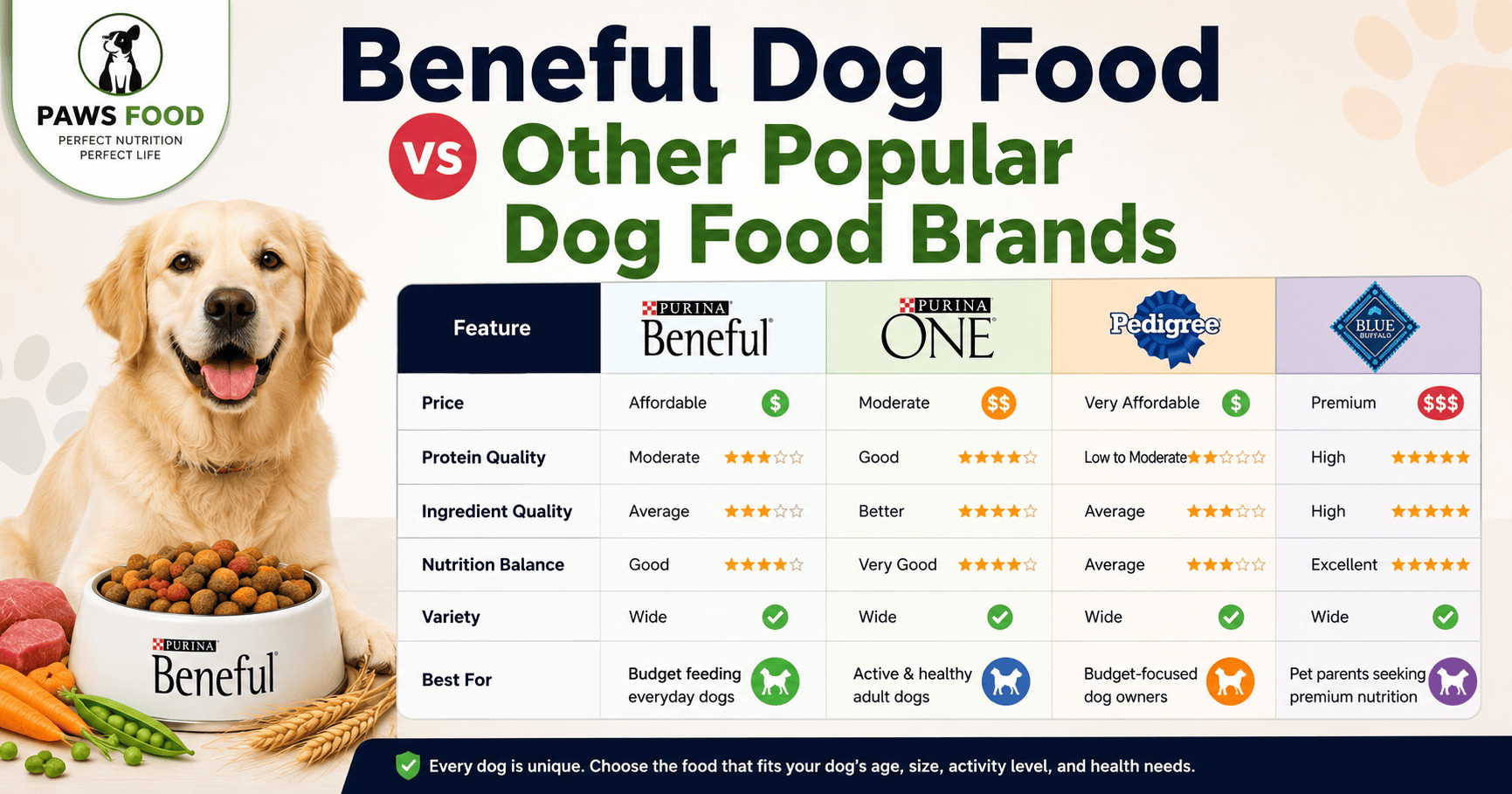
When you’re researching a Beneful dog food review, comparisons matter just as much as ingredients. You don’t choose dog food in isolation—you compare it with what else is available in your budget, your dog’s needs, and your expectations.
Beneful dog food sits in the affordable mainstream category, so it naturally gets compared with other widely available brands. Some focus on similar pricing, while others are positioned as slightly higher-quality alternatives.
Let’s break down how Beneful stacks up in real-world terms.
Beneful vs Purina One
Both Beneful dog food and Purina One come from the same parent company, but they are positioned differently in terms of nutrition philosophy.
Purina One generally focuses more on meat-based nutrition and slightly higher ingredient quality, while Beneful leans toward affordability and flavor variety.
| Feature | Beneful | Purina One |
| Price | Lower | Slightly higher |
| Protein Quality | Moderate | Higher |
| Ingredient Focus | Mixed (meat + grains) | More meat-forward |
| Digestibility | Varies by dog | More consistent |
| Best For | Budget feeding | Balanced everyday nutrition |
For example, if your dog does well on Beneful but you want a small upgrade in ingredient quality without jumping to premium brands, Purina One is often the next step up.
Beneful vs Pedigree
The Beneful vs Pedigree comparison is one of the most common among budget dog food buyers. Both brands are affordable and widely available, but there are subtle differences in formulation.
Beneful typically offers more variety in textures and recipes, while Pedigree focuses on simple, traditional kibble formulas.
In terms of nutrition:
- Both use grain-inclusive recipes
- Both rely on processed ingredients for affordability
- Beneful often includes more visually diverse kibble pieces
- Pedigree tends to be more straightforward but less varied
For example, a picky eater might prefer Beneful due to its flavor-coated pieces, while a dog with no preference might do equally well on either brand.
Beneful vs Kibbles ’n Bits
When comparing Beneful dog food nutrition with Kibbles ’n Bits, the similarities are obvious—they both sit in the budget-friendly category.
However, Beneful is generally considered slightly more structured in formulation and quality control due to Purina’s larger research and manufacturing systems.
Key differences include:
- Beneful usually has more consistent quality standards
- Kibbles ’n Bits tends to use more flavor-driven formulations
- Both rely heavily on grains and carbohydrate sources
- Both are designed for affordability over premium nutrition
In real-world feeding scenarios, both foods may work for healthy dogs, but neither is typically recommended for dogs needing high-protein or limited-ingredient diets.
Beneful vs Blue Buffalo
This is where the comparison becomes more noticeable. Blue Buffalo is positioned as a more natural, premium-style brand, while Beneful dog food remains a budget-oriented option.
Blue Buffalo typically emphasizes:
- Higher meat content
- Fewer artificial additives
- Grain-free or limited grain options (depending on formula)
- More “natural” branding
Beneful, on the other hand, focuses on affordability, availability, and taste appeal.
For example, a dog with mild food sensitivities might do better on Blue Buffalo, while a healthy family dog with no issues might do perfectly fine on Beneful if budget is a priority.
The trade-off is simple: higher ingredient quality vs lower cost and broader accessibility.
Which Dog Food Offers Better Value for Money?
Value isn’t just about price—it’s about what your dog actually gets out of the food. Beneful dog food offers strong value for owners who need affordable, widely available nutrition that meets basic standards.
Here’s how to think about value:
- If your dog is healthy and has no sensitivities, Beneful can be a practical long-term option
- If you want better ingredient quality and more meat-based nutrition, mid-range brands like Purina One may offer better balance
- If you prioritize premium nutrition and cleaner ingredients, brands like Blue Buffalo may justify the higher cost
In simple terms, Beneful wins on affordability and convenience, while competitors often win on ingredient quality and specialization.
Real Customer Reviews & Feeding Experiences
One of the most insightful parts of any Beneful dog food review comes from real dog owners. Ingredient labels tell one story, but everyday feeding experiences reveal how the food actually performs in homes across the USA.
With Purina Beneful dog food, experiences vary widely. Some dogs thrive on it for years, while others show clear signs that it’s not the best fit. That variation is exactly why it’s important to look at real-world feedback, not just marketing claims.
Positive Beneful Dog Food Reviews
Many dog owners report positive experiences with Beneful dog food nutrition, especially when feeding healthy adult dogs with no special dietary needs.
Common positive feedback includes:
- Dogs eat it eagerly without hesitation
- Easy transition from other kibble brands
- Stable energy levels in everyday activity
- Affordable feeding for large or multiple dogs
For example, a family with two medium-sized dogs might find Beneful ideal because it keeps feeding costs manageable while still keeping both dogs satisfied at mealtime.
Some owners also appreciate that their dogs maintain normal weight and activity levels when portions are properly controlled.
Common Complaints From Dog Owners
On the other hand, not all experiences with Beneful ingredients are positive. Some owners notice issues that make them reconsider long-term use.
Common concerns include:
- Occasional soft stool or inconsistent digestion
- Pickier dogs losing interest over time
- Mild skin irritation in sensitive breeds
- Concerns about artificial additives or grains
For example, a small breed dog with a sensitive stomach may struggle with corn-heavy formulas, leading the owner to switch to a simpler ingredient diet.
These complaints don’t apply to every dog, but they highlight the importance of individual tolerance.
Transitioning Dogs to Beneful Successfully
Switching to Purina Beneful dog food should always be done gradually. A sudden change can upset your dog’s stomach, even if the food itself is suitable.
A simple transition plan usually looks like this:
- Days 1–3: 25% Beneful + 75% old food
- Days 4–6: 50% Beneful + 50% old food
- Days 7–9: 75% Beneful + 25% old food
- Day 10: 100% Beneful
This slow transition helps your dog’s digestive system adjust to new proteins, grains, and fiber sources.
For example, a dog moving from a high-protein diet may need extra time to adjust to Beneful’s more balanced, grain-inclusive formula.
Dogs That Thrived on Beneful
Many healthy dogs do well on Beneful dog food nutrition, especially when their lifestyle matches the formula’s design.
Dogs that often do well include:
- Moderately active adult dogs
- Dogs without food allergies
- Picky eaters who prefer flavored kibble
- Dogs in multi-pet households on a budget
For instance, a relaxed indoor dog that enjoys daily walks and playtime may maintain steady health and energy on Beneful without issues.
In these cases, owners often stick with the brand for years simply because it fits their dog’s routine and budget.
Cases Where Beneful Didn’t Work Well
Just as some dogs thrive, others don’t respond well to Beneful dog food ingredients. These cases are important because they show that no single diet works for every dog.
Common examples include:
- Dogs with grain sensitivities reacting poorly
- Chronic digestive issues like loose stool or gas
- Skin flare-ups in allergic breeds
- Low-energy response in highly active dogs
For example, a high-energy working dog may not get enough nutrient density from Beneful compared to a higher-protein formula designed for performance.
These cases don’t necessarily mean the food is unsafe—they simply highlight the importance of matching diet to individual needs.
Is Beneful Good for Different Types of Dogs?
One of the biggest mistakes dog owners make is assuming the same food works for every dog. In reality, age, size, activity level, and digestive sensitivity all influence how a dog responds to a formula. That’s why opinions about Beneful dog food can vary so much from one household to another.
For some dogs, Purina Beneful dog food provides affordable, balanced daily nutrition with no problems at all. For others, the ingredient profile may not be the best long-term match. Understanding which dogs are more likely to do well on Beneful can help you make a smarter feeding decision.
Puppies
Growing puppies need higher levels of protein, fat, calcium, and DHA to support healthy development. Beneful Healthy Puppy is specifically designed to meet those needs while remaining budget-friendly for owners raising fast-growing dogs.
Many puppies adjust well to this formula because the kibble size and flavor are easy to accept during early feeding stages. For example, a Labrador puppy transitioning from breeder food may adapt smoothly when introduced gradually over 7–10 days.
However, puppies with highly sensitive digestion may struggle with grain-heavy ingredients or artificial additives. Monitoring stool quality, energy, and skin condition during the first few weeks is especially important.
Adult Dogs
Healthy adult dogs are usually the group most likely to do well on Beneful dog food nutrition. The formulas are designed primarily for maintenance feeding, meaning they focus on supporting normal energy levels, stable weight, and everyday health.
For example, a moderately active family dog that enjoys daily walks and playtime may maintain healthy body condition on Beneful for years without obvious issues.
Adult dogs that typically respond well include:
- Dogs without allergies
- Dogs with normal digestion
- Average-energy household pets
- Picky eaters that enjoy flavorful kibble
If your adult dog already has digestive or skin sensitivities, though, ingredient-heavy formulas may become more challenging over time.
Senior Dogs
Older dogs often have changing nutritional needs. They usually require fewer calories, easier digestion, and better weight management support compared to younger adults.
While Purina Beneful dog food doesn’t have a dedicated senior line, many owners use Beneful Healthy Weight for aging dogs because it contains lower fat and controlled calorie levels.
For example, an older indoor Golden Retriever with reduced activity may maintain a healthier weight on a lighter Beneful formula than on standard adult recipes.
That said, some senior dogs benefit more from diets containing:
- Joint-support ingredients
- Glucosamine and chondroitin
- Higher-quality protein sources
- Easier-to-digest ingredients
If your senior dog has arthritis, chronic stomach issues, or kidney concerns, a specialized senior formula from another brand may be a better fit.
Small Breeds
Small dogs often need smaller kibble pieces and calorie-dense nutrition because of their faster metabolism. That’s where Beneful IncrediBites is designed to help.
The smaller kibble size makes chewing easier for toy breeds like:
- Chihuahuas
- Yorkies
- Shih Tzus
- Pomeranians
Many small breed owners also notice that picky eaters enjoy the stronger flavor profile found in Beneful formulas.
For example, a picky Maltese that ignores plain kibble may eat IncrediBites more enthusiastically due to the softer texture and aroma-enhanced pieces.
However, portion control becomes extremely important for small dogs because even slight overfeeding can lead to weight gain surprisingly fast.
Large Breeds
Large breeds can eat Beneful dog food, but their nutritional demands are often different from smaller dogs. Bigger breeds usually benefit from stronger joint support, higher-quality protein, and controlled calorie intake to protect bones and mobility.
For example, a calm adult Labrador may do reasonably well on Beneful Originals, especially if activity levels are moderate and body weight stays healthy.
On the other hand, giant or highly athletic breeds may require:
- Higher protein density
- Better muscle-support nutrition
- More advanced joint-support ingredients
Dogs like German Shepherds or working Huskies may eventually perform better on more protein-focused formulas designed for endurance and mobility support.
Dogs With Sensitive Stomachs
This is where Beneful dog food ingredients can become more controversial. Dogs with sensitive digestion often react more strongly to grain-heavy or processed formulas.
Some sensitive dogs may experience:
- Loose stool
- Gas
- Mild vomiting
- Itchy skin linked to food sensitivities
For example, a dog that already struggles with corn or wheat intolerance may not tolerate standard Beneful recipes well.
If your dog has a history of digestive upset, you’ll want to transition slowly and monitor symptoms carefully. In many cases, limited-ingredient or easily digestible diets may provide better long-term comfort.
Overweight or Less Active Dogs
Dogs that spend most of their day indoors usually need fewer calories than active pets. Feeding rich or high-calorie formulas to low-energy dogs often leads to gradual weight gain.
That’s why Beneful Healthy Weight can be a practical option for:
- Indoor dogs
- Senior dogs with lower activity
- Dogs recovering from obesity
- Pets needing portion-controlled feeding
For example, a middle-aged Bulldog that prefers naps over long walks may maintain healthier body condition on a lighter formula with moderate calorie density.
Still, portion size matters just as much as the food itself. Even balanced dog food can contribute to obesity if feeding amounts aren’t adjusted properly.
How Much Does Beneful Dog Food Cost?
When people compare Beneful dog food vs other brands, price is usually one of the biggest deciding factors. One of the main reasons Purina Beneful dog food is so widely used across the USA is because it sits comfortably in the budget-friendly category without sacrificing basic nutritional completeness.
In simple terms, you’re paying for accessibility and convenience. Beneful is available in almost every major grocery store, Walmart, and pet retailer, which makes it easy to grab without planning ahead or ordering specialty food online.
However, cost isn’t just about the price tag on the bag—it’s also about how far that food actually goes.
Average Price Per Bag
The price of Beneful dog food can vary depending on the formula, bag size, and store location, but most standard dry kibble bags fall into a fairly consistent range.
Typical pricing looks like this:
- Small bags (4–15 lbs): Budget-friendly entry price
- Medium bags (15–25 lbs): Moderate daily feeding cost
- Large bags (25–40+ lbs): Better value per pound
For example, a 30–40 lb bag of Beneful Originals is often significantly cheaper than premium brands like Blue Buffalo or grain-free boutique diets. This makes it especially attractive for households with large dogs or multiple pets.
The key takeaway is simple: Beneful is designed to keep daily feeding costs low while still meeting basic nutritional requirements.
Cost Per Feeding Compared to Competitors
When you break it down into daily feeding costs, the value of Beneful dog food nutrition becomes clearer. Even if a bag seems slightly more expensive than ultra-budget brands, the cost per meal is still relatively low.
Here’s a general comparison:
| Brand | Estimated Daily Cost | Positioning |
| Beneful | Low | Budget-friendly mainstream |
| Pedigree | Very low | Ultra-budget option |
| Purina One | Medium | Mid-range nutrition |
| Blue Buffalo | High | Premium natural diet |
For example, feeding a medium-sized dog Beneful might cost only a few dollars per day, while switching to premium brands can easily double or triple that expense over time.
That difference becomes significant if you’re feeding multiple dogs or managing a long-term budget.
Is Beneful Worth the Price?
The real question most pet owners ask is not just “Is it cheap?” but “Is Beneful dog food worth it for my dog?” And the answer depends on what you expect from your dog’s diet.
Beneful offers strong value if you’re looking for:
- Affordable everyday feeding
- Basic complete and balanced nutrition
- Easy availability in local stores
- Palatable food for picky eaters
However, if your goal is ingredient purity, high meat content, or specialized nutrition, you may find better value in mid-to-premium brands—even if they cost more upfront.
For example, a healthy adult dog with no dietary issues may do perfectly fine on Beneful long-term. But a dog with allergies or digestive sensitivities might benefit more from a slightly higher-cost, limited-ingredient formula.
In short, Beneful is more about practicality than premium nutrition.
Budget-Friendly Alternatives to Beneful
If you’re considering switching but still want to stay within a similar price range, there are a few alternatives to Purina Beneful dog food that may offer slightly different benefits.
Some common options include:
- Purina One – Better meat focus with moderate pricing
- Pedigree – Lower cost but similar ingredient philosophy
- Iams – Slightly higher quality protein balance
- Store-brand dog foods – Lowest cost, but variable quality
Each option comes with trade-offs. For instance, Purina One may offer improved ingredient quality, while Pedigree may save you more money but use similar grain-heavy formulas.
Choosing the right alternative depends on your dog’s tolerance, energy level, and long-term health needs.
How to Choose the Right Beneful Formula
Not all Beneful dog food formulas are the same, and this is where many pet owners make mistakes. Picking the right recipe isn’t just about flavor—it’s about matching nutrition to your dog’s age, activity level, and sensitivity.
Purina Beneful dog food offers multiple lines, each designed for slightly different needs. Understanding these differences helps you avoid digestive issues and ensures your dog actually benefits from the food.
Let’s break it down in a simple, practical way.
Ingredients to Prioritize
When selecting a Beneful dog food formula, the ingredient list should always be your first checkpoint. Even within the same brand, recipes can vary in protein quality, grain content, and additives.
Look for formulas that include:
- Named animal proteins like chicken or beef
- Balanced fat sources for energy
- Digestible carbohydrates for steady energy
- Added vitamins and minerals for immune support
For example, if chicken appears near the top of the ingredient list, that’s generally a better sign than formulas that rely heavily on corn or soybean meal as primary ingredients.
The goal is simple: make sure your dog is getting enough real protein, not just filler-based calories.
Choosing Based on Your Dog’s Age
Age plays a huge role in how your dog responds to Beneful nutrition. Puppies, adults, and seniors all have different nutritional needs, even if they eat the same brand.
Here’s a simple breakdown:
- Puppies: Need higher protein and calorie density for growth
- Adult dogs: Do well on balanced maintenance formulas
- Senior dogs: Benefit from lower fat and easier digestion
For example, Beneful Healthy Puppy is designed to support development, while adult formulas focus more on maintaining stable energy and weight.
Choosing the wrong life-stage formula can lead to either underfeeding nutrients or unnecessary weight gain.
Choosing Based on Activity Level
Your dog’s daily energy output should heavily influence your choice of Purina Beneful dog food formula.
- Low activity dogs: benefit from weight management formulas
- Moderate activity dogs: do well on standard Beneful recipes
- Highly active dogs: may need higher-protein alternatives
For instance, a couch-loving bulldog will not need the same calorie intake as a Labrador that plays fetch for an hour daily.
If you match food intake to activity level, you reduce risks like weight gain, fatigue, or poor digestion.
Red Flags to Watch Before Buying
Even though Beneful dog food ingredients meet basic standards, it’s still important to know what to watch for before choosing a specific formula.
Be cautious if:
- Your dog has known sensitivities to corn, soy, or wheat
- You prefer grain-free or limited-ingredient diets
- Your dog has recurring digestive or skin issues
- You’re aiming for high-performance nutrition
For example, if your dog consistently reacts poorly to grain-heavy diets, Beneful may not be the best long-term fit—even if it’s affordable.
The key is not just choosing a popular formula, but choosing one that matches your dog’s individual biology.
Frequently Asked Questions About Beneful Dog Food
When researching a Beneful dog food review, most pet owners end up with similar questions. These FAQs address the real concerns people have before choosing Purina Beneful dog food for their pets.
· What is Beneful dry dog food?
Beneful dry dog food is a kibble-based dog food line made for adult dogs and puppies, offering balanced nutrition, flavored recipes, and affordable everyday feeding options.
· Who makes Beneful dog food?
Beneful dog food is manufactured by Nestlé Purina PetCare, one of the largest pet food companies in the USA.
· What is Purina Beneful dog food?
Purina Beneful dog food is a popular dog food brand that combines protein sources, grains, vitamins, and minerals to provide complete and balanced nutrition for dogs.
· What makes Beneful a good dog food?
Many pet owners choose Beneful dog food because it’s affordable, widely available, highly palatable for picky eaters, and meets AAFCO nutritional standards for balanced daily nutrition.
Final Verdict — Is Beneful Dog Food Worth Buying in 2026?
After reviewing the ingredients, nutrition profile, recall history, customer experiences, and feeding performance, one thing becomes clear: Beneful dog food isn’t the best dog food on the market, but it also isn’t the disaster some online discussions make it seem.
For many healthy dogs, Purina Beneful dog food can provide acceptable everyday nutrition at a budget-friendly price. It’s widely available, easy to feed, and highly appealing to picky eaters. However, ingredient quality still falls behind more premium brands that use cleaner protein sources and fewer processed additives.
The most important factor is your individual dog. Some dogs thrive on Beneful for years, while others may develop digestive issues, allergies, or weight problems that require a better-quality formula.
Who Should Buy Beneful
Beneful may be a reasonable choice if you’re looking for affordable daily nutrition for a generally healthy dog without major sensitivities.
This food tends to work best for:
- Healthy adult dogs
- Moderately active household pets
- Multi-dog families needing budget-friendly feeding
- Picky eaters that prefer flavorful kibble
- Owners wanting a widely available dog food brand
For example, a healthy indoor Labrador with normal digestion may maintain good energy levels and stable weight on Beneful Originals without noticeable problems.
It can also be practical for owners who need consistent grocery-store availability instead of specialty pet store formulas.
Who Should Consider Better Alternatives
Not every dog responds well to grain-heavy or processed diets. If your dog has recurring skin irritation, chronic digestive issues, or higher nutritional demands, you may want to consider foods with cleaner ingredient profiles.
You should probably look at alternatives if your dog has:
- Food allergies or sensitivities
- Chronic itching or ear infections
- Sensitive digestion
- High activity or athletic needs
- Obesity-related concerns
- Senior joint-support requirements
For example, active working breeds often perform better on higher-protein diets with fewer carbohydrate fillers and more advanced nutrient support.
Similarly, dogs with sensitive stomachs may benefit from limited-ingredient or easily digestible formulas rather than standard Beneful dog food ingredients.
Final Rating for Ingredients, Safety, Nutrition & Value
Here’s a balanced breakdown of how Beneful dog food performs across the areas most dog owners care about.
| Category | Rating | Quick Verdict |
| Ingredients Quality | 6/10 | Acceptable but heavily processed |
| Nutritional Balance | 7/10 | Meets basic daily nutrition needs |
| Safety & Manufacturing | 7.5/10 | Backed by Purina quality control |
| Palatability | 8.5/10 | Most dogs enjoy the taste |
| Value for Money | 8/10 | Affordable and widely accessible |
| Sensitive Stomach Suitability | 5/10 | May not work well for all dogs |
| Overall Rating | 7/10 | Solid budget-friendly option |
While the formulas aren’t considered premium, they still meet AAFCO standards for complete and balanced nutrition.
Our Honest Recommendation for Most Dog Owners
If your dog is healthy, active, and tolerates grains well, Beneful dog food can be a decent budget-conscious option for everyday feeding. Many dogs eat it happily and maintain normal health, especially when portions are controlled properly.
However, if ingredient quality is your top priority, there are stronger options available. Foods with higher meat content, fewer artificial additives, and cleaner ingredient lists usually provide better long-term nutritional value.
A smart approach is to watch your dog closely after switching foods. Healthy stool, steady energy, normal itching levels, and a shiny coat often tell you more than marketing claims ever will.
At the end of the day, the best dog food is the one that fits your dog’s health needs, digestion, activity level, and your realistic budget.

A dedicated writer and digital enthusiast committed to creating high-quality, informative, and reader-focused content. Through thoughtful research and clear communication, he aims to deliver valuable insights that help readers navigate the ever-changing digital landscape.