
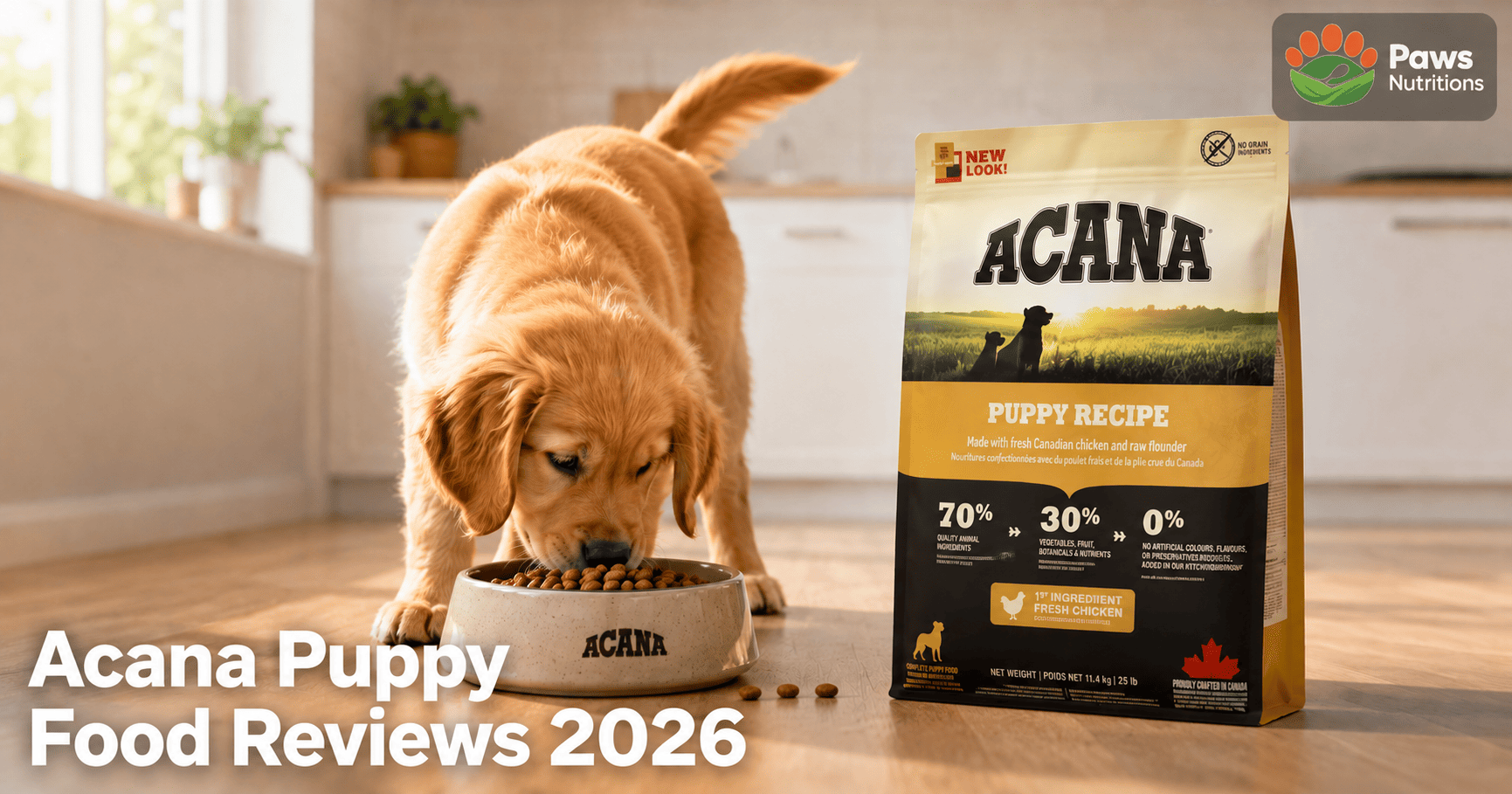
Choosing the right puppy food isn’t easy, especially when every brand claims to offer the best nutrition. If you’ve been searching for honest Acana puppy food reviews, you’re probably wondering whether this premium dog food is truly worth the price. After all, your puppy’s growth, energy levels, digestion, and long-term health depend heavily on what goes into their bowl every day.
In this in-depth review, you’ll discover everything you need to know about Acana Puppy Food, including its ingredients, nutritional value, safety record, feeding experience, recalls, veterinary opinions, and real customer feedback. We’ll also compare Acana to leading competitors, uncover potential drawbacks, and help you decide whether this popular formula is the right choice for your growing puppy.
Acana Puppy Food at a Glance
Choosing a puppy food isn’t just about reading the label. You need a formula that supports healthy growth, strong muscles, brain development, and digestive health. Acana positions itself as a premium brand focused on protein-rich nutrition and carefully selected ingredients.
| Category | Rating |
|---|---|
| Ingredient Quality | 9.5/10 |
| Protein Content | 9.5/10 |
| Nutritional Balance | 9/10 |
| Digestibility | 8.5/10 |
| Value for Money | 8/10 |
| Overall Rating | 9/10 |
Quick Rating Summary
One of the first things that stands out about Acana is its commitment to using fresh or raw animal ingredients. Unlike many puppy foods that rely heavily on fillers, Acana prioritizes animal protein, whole prey ingredients, and nutrient-dense recipes. This approach creates a food that closely mirrors what dogs naturally evolved to eat.
Pros and Cons Snapshot
Acana offers several advantages, including high protein levels, quality ingredients, and recipes tailored to different puppy needs. However, it isn’t perfect. The premium price can be difficult for some owners to justify, and certain puppies may require a slower transition due to the richness of the formulas.
Pros:
- High-quality animal proteins
- Rich in naturally occurring nutrients
- Multiple puppy-specific formulas
- No artificial preservatives
- Supports healthy growth and development
Cons:
- More expensive than average puppy foods
- Rich formulas may not suit sensitive puppies
- Some recipes contain legumes
Best Puppies for Acana Puppy Food
Acana tends to work exceptionally well for active puppies, working breeds, sporting dogs, and puppies with higher energy needs. Breeds such as Labrador Retrievers, German Shepherds, Border Collies, Australian Shepherds, and Golden Retrievers often thrive on protein-rich diets like Acana.
Puppies That May Need an Alternative
Not every puppy has the same nutritional requirements. Puppies with specific veterinary dietary needs, severe food sensitivities, or owners working within a strict budget may find alternative brands more suitable. In some cases, a veterinarian-recommended prescription diet may be the better option.
Our Overall Verdict
Acana remains one of the strongest premium puppy food options available today. Its focus on high-protein nutrition, carefully sourced ingredients, and biologically appropriate recipes makes it a compelling choice for owners seeking quality nutrition during their puppy’s critical growth stage.
About Acana Puppy Food
Understanding the company behind the food can tell you a lot about product quality. Acana isn’t a newcomer to the pet food industry. The brand has spent years developing recipes focused on protein-rich nutrition and ingredient transparency.
Who Makes Acana Dog Food?
Acana is produced by Champion Petfoods, a company known for manufacturing premium pet foods. Champion Petfoods has built its reputation around creating recipes that emphasize quality animal ingredients rather than relying heavily on inexpensive fillers or artificial additives.
The History of Champion Petfoods
Champion Petfoods began with a mission to create biologically appropriate pet nutrition. Over the years, the company has expanded globally while maintaining its focus on fresh regional ingredients. Acana quickly became one of its flagship brands, gaining popularity among pet owners looking for higher-quality alternatives to traditional kibble.
Where Is Acana Puppy Food Made?
Acana foods are primarily manufactured in modern facilities located in North America. The company sources many ingredients from trusted suppliers and regional farms, helping maintain quality control throughout the production process.
For puppy owners, manufacturing transparency matters. Knowing where food is produced provides additional confidence in ingredient sourcing and safety standards.
Acana’s WholePrey Philosophy Explained
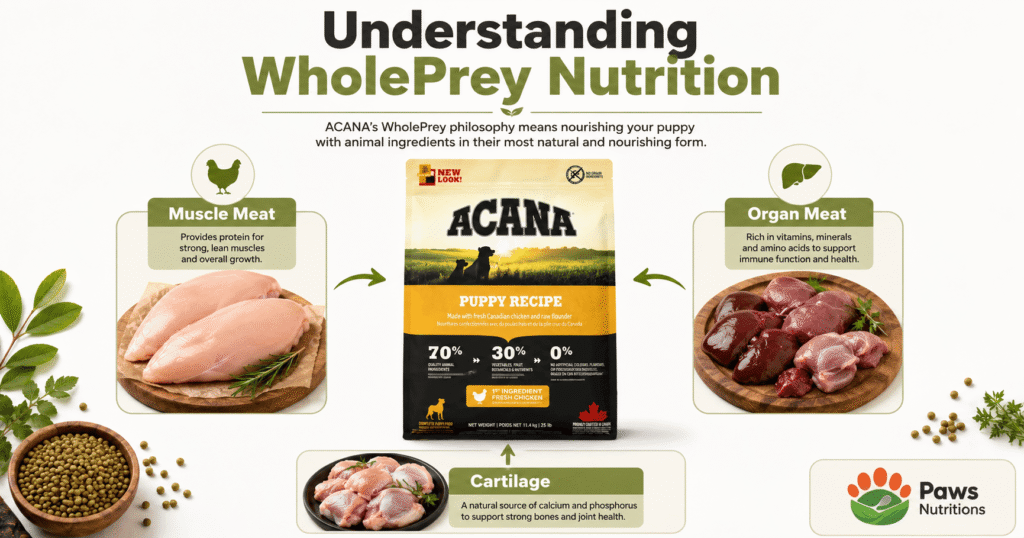
One of Acana’s defining features is its WholePrey philosophy. Instead of relying heavily on synthetic supplements, Acana incorporates various animal parts, including meat, organs, and cartilage.
This approach aims to replicate the nutrient profile dogs would naturally consume in the wild. Organ meats, for example, naturally provide vitamins, minerals, and amino acids that support healthy development.
Ingredient Sourcing and Quality Standards
Ingredient quality plays a major role in any puppy food evaluation. Acana emphasizes fresh poultry, fish, eggs, and regionally sourced ingredients whenever possible. Many ingredients arrive fresh or raw before being incorporated into recipes.
The company also avoids artificial colors, artificial flavors, and unnecessary preservatives, which appeals to owners looking for cleaner ingredient panels.
Acana’s Reputation Among Dog Owners
Among dog owners, Acana enjoys a largely positive reputation. Many customers report improved coat quality, better muscle development, healthy digestion, and increased enthusiasm at mealtime.
Like any premium dog food, experiences vary. However, Acana consistently ranks among the most frequently recommended premium puppy food brands in nutrition-focused communities.
Acana Puppy Food Product Line Overview
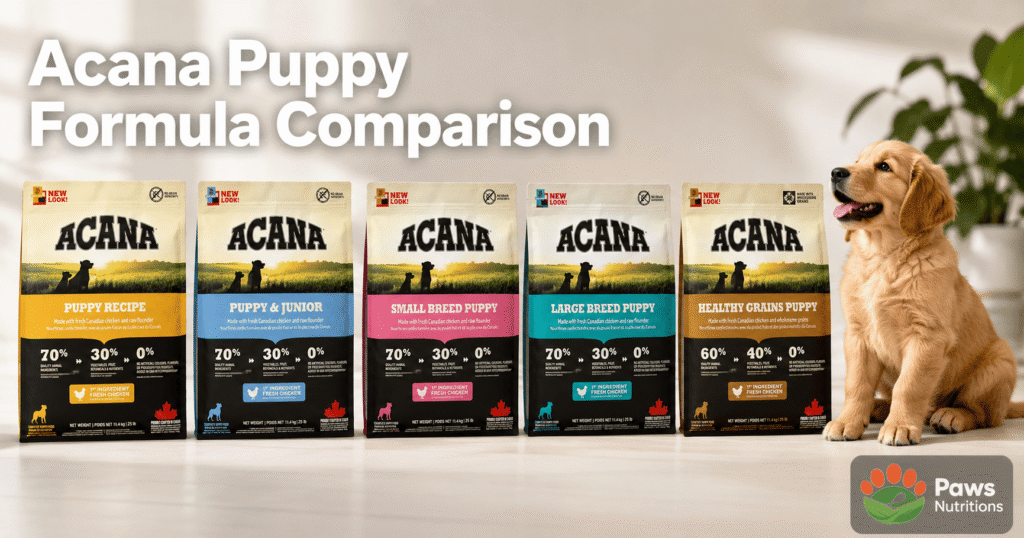
One reason Acana appeals to such a broad audience is its diverse product lineup. Different puppies have different nutritional needs, and Acana offers several options to accommodate varying sizes, activity levels, and dietary preferences.
Acana Puppy Recipe
The standard Puppy Recipe is designed for medium-sized breeds expected to reach adult weights between 20 and 70 pounds. It features a blend of poultry, fish, and eggs to support healthy growth while delivering balanced nutrition throughout puppyhood.
Acana Puppy & Junior Recipe
This formula targets larger puppies that require extended growth support. Large breeds often mature more slowly than smaller dogs, making proper nutrient balance particularly important during development.
The Puppy & Junior recipe provides elevated protein levels while maintaining appropriate mineral ratios to support healthy skeletal growth.
Acana Healthy Grains Puppy Recipe
Not every puppy owner wants a grain-free diet. Acana’s Healthy Grains Puppy Recipe includes carefully selected grains such as oats and sorghum while maintaining the brand’s focus on quality animal proteins.
This option appeals to owners seeking a balance between premium ingredients and grain-inclusive nutrition.
Acana Small Breed Puppy Recipe
Small breed puppies have unique nutritional needs. Their fast metabolisms require calorie-dense foods that support energy levels without overwhelming their smaller digestive systems.
Acana’s Small Breed Puppy Recipe features appropriately sized kibble and concentrated nutrition designed specifically for smaller dogs.
Acana Large Breed Puppy Recipe
Large breed puppies require careful nutritional management. Excess calories or improper mineral balance can contribute to growth-related issues.
The Large Breed Puppy Recipe focuses on controlled growth, providing sufficient protein while carefully managing calcium and phosphorus levels.
Acana Limited Ingredient Puppy Options
Although limited ingredient options are more commonly associated with adult dogs, some Acana formulas offer simplified ingredient lists that may benefit puppies with mild food sensitivities.
These recipes reduce ingredient complexity while still providing complete and balanced nutrition.
Which Acana Puppy Formula Is Best?
The best formula depends entirely on your puppy’s size, activity level, and individual needs. Small breeds often perform best on Small Breed Puppy Recipe, while large breeds benefit from Large Breed Puppy Recipe. For most average-sized puppies, the standard Puppy Recipe offers an excellent balance of nutrition and value.
Acana Puppy Food Ingredients Review
Ingredients often reveal more about food quality than marketing claims ever could. Acana’s ingredient lists consistently emphasize animal-based nutrition, helping distinguish the brand from many mainstream competitors.
First 10 Ingredients Analysis
The first ten ingredients in a dog food recipe carry significant importance because they typically represent the largest portion of the formula.
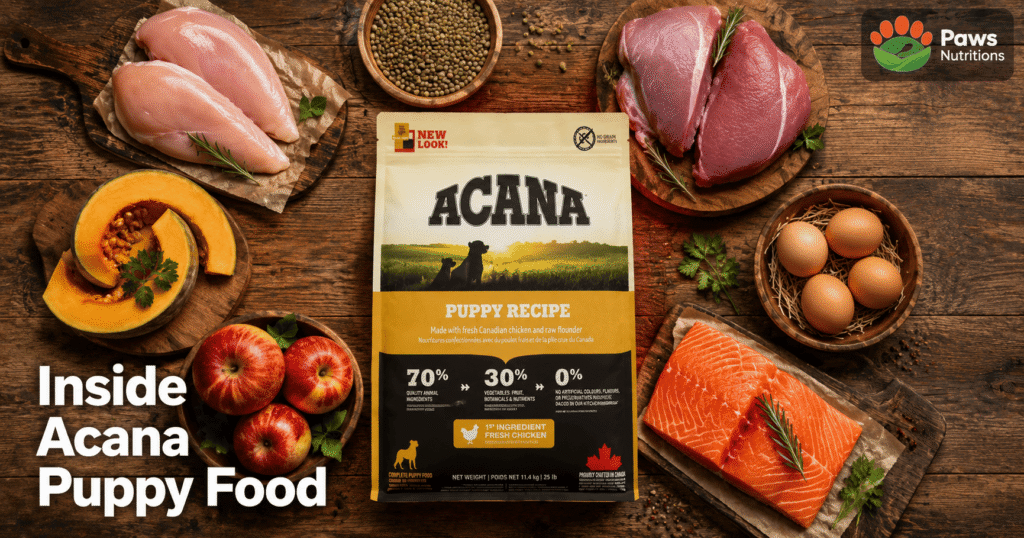
Acana recipes often begin with fresh chicken, turkey, fish, eggs, or meat meals. This immediately signals a strong focus on animal protein rather than plant-based fillers.
Fresh Animal Protein Sources
High-quality animal protein serves as the foundation of healthy puppy development. Acana commonly includes fresh chicken, turkey, herring, mackerel, and other protein-rich ingredients.
Protein supports muscle growth, tissue repair, immune function, and overall development during puppyhood.
Chicken, Turkey, Fish, and Egg Ingredients
A variety of protein sources can provide a broader range of amino acids. Acana incorporates poultry, fish, and eggs to create diverse nutrient profiles while helping support balanced growth.
Fish ingredients also contribute valuable Omega-3 fatty acids, which play a role in cognitive development and skin health.
Organ Meats and WholePrey Ingredients
Many dog foods avoid organ meats entirely. Acana embraces them.
Ingredients such as liver, heart, and kidney naturally provide essential vitamins and minerals. These nutrient-rich components align closely with the brand’s WholePrey nutrition philosophy and help reduce dependence on synthetic supplementation.
Fruits and Vegetables Included
Acana includes ingredients such as pumpkin, squash, apples, pears, greens, and berries. These additions contribute fiber, antioxidants, and naturally occurring micronutrients.
For example, pumpkin may help support healthy digestion, while blueberries provide antioxidant compounds that contribute to overall wellness.
Lentils, Peas, and Chickpeas Explained
Legumes often generate discussion among dog owners. Acana uses ingredients such as lentils, peas, and chickpeas as sources of fiber, carbohydrates, and plant-based nutrients.
While these ingredients provide nutritional value, some owners prefer grain-inclusive formulas due to ongoing discussions surrounding grain-free diets.
Added Vitamins and Minerals
Because many nutrients naturally occur in Acana’s animal ingredients, the company typically requires fewer synthetic supplements than lower-quality foods.
This reflects the goal of obtaining nutrition directly from ingredients whenever possible.
Natural Flavor and Preservatives
Acana avoids artificial preservatives and synthetic flavor enhancers. Instead, the recipes rely on ingredient quality and natural preservation methods to maintain freshness.
For many pet owners, this cleaner approach is a major advantage.
Are There Any Controversial Ingredients?
The primary area of debate involves the use of legumes in some recipes. While many dogs tolerate these ingredients well, discussions surrounding grain-free diets have led some owners to prefer grain-inclusive alternatives.
Outside of legumes, Acana generally avoids ingredients commonly criticized in lower-quality dog foods.
Ingredient Quality Compared to Other Premium Brands
Compared with many premium competitors, Acana performs exceptionally well in ingredient quality. The brand often includes a higher percentage of animal ingredients and fewer low-value fillers.
This focus on biologically appropriate nutrition, fresh proteins, and nutrient-dense ingredients remains one of Acana’s biggest strengths.
Nutritional Analysis of Acana Puppy Food
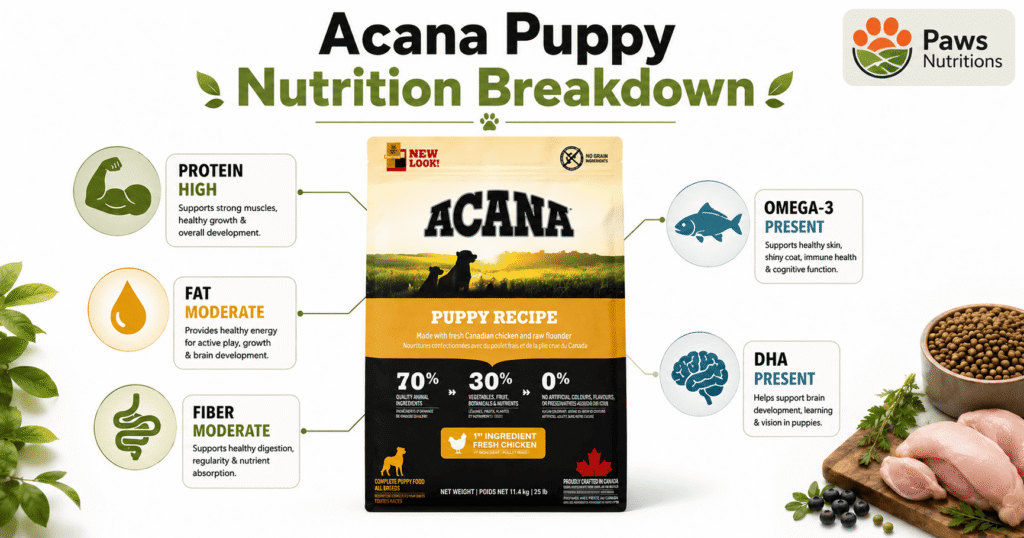
Great ingredients are important, but nutritional balance ultimately determines how well a puppy food performs. Acana’s formulas are designed to support healthy growth while delivering substantial amounts of protein and healthy fats.
Crude Protein Content
Acana puppy formulas typically contain significantly more protein than many traditional puppy foods. High protein levels help support muscle growth, tissue development, and overall physical health during the rapid growth stages of puppyhood.
Crude Fat Content
Healthy fats provide concentrated energy while supporting skin, coat, and brain development. Acana includes animal fats and fish oils that contribute beneficial fatty acids essential for growing puppies.
Fiber Levels
Balanced fiber supports healthy digestion without unnecessarily diluting calorie density. Acana’s combination of vegetables, fruits, and legumes contributes moderate fiber levels that help maintain digestive regularity.
Carbohydrate Estimate
Although Acana emphasizes protein, carbohydrates still play a role in the recipe. Compared to many grocery-store brands, however, Acana generally contains lower carbohydrate levels and higher protein concentrations.
Calorie Density
Growing puppies require substantial energy. Acana’s calorie-dense formulas help meet those needs while reducing the amount of food necessary per meal.
This can be particularly beneficial for active breeds with higher daily energy demands.
Omega-3 and Omega-6 Fatty Acids
The inclusion of fish ingredients provides valuable Omega-3 fatty acids, while poultry and other ingredients contribute Omega-6 fatty acids.
Together, these nutrients help support skin health, coat quality, immune function, and overall development.
DHA for Brain Development
DHA is especially important during puppyhood. This fatty acid supports cognitive development and learning capacity, making it a valuable nutrient during the early stages of growth.
Acana’s fish-based ingredients naturally contribute DHA to many recipes.
Calcium and Phosphorus Balance
Proper calcium and phosphorus ratios are essential for healthy bone development. This is especially critical for large breed puppies, which can experience growth-related challenges if mineral levels become unbalanced.
Acana carefully formulates its recipes to support controlled growth.
Glucosamine and Chondroitin Content
Joint support ingredients such as glucosamine and chondroitin can provide additional benefits for developing puppies, particularly larger breeds that place more stress on growing joints.
Probiotics and Digestive Support
Digestive health affects nutrient absorption, stool quality, and overall well-being. Acana incorporates ingredients and nutritional components designed to support a healthy digestive system throughout puppyhood.
Is Acana Puppy Food AAFCO Approved?
Acana puppy formulas are formulated to meet the nutritional levels established by AAFCO for growth and development. This means the food provides complete and balanced nutrition appropriate for growing puppies when fed according to guidelines.
Why Many Puppy Owners Choose Acana
When you look beyond the marketing and focus on the actual nutrition, it’s easy to understand why Acana has become a favorite among puppy owners. The brand focuses on quality animal ingredients, balanced nutrition, and biologically appropriate recipes that support healthy development during a puppy’s most important growth stages.
High Animal Protein Content
Protein is the building block of growth, and Acana delivers plenty of it. Most formulas contain a high percentage of animal-based ingredients, helping puppies develop strong muscles, healthy organs, and a robust immune system. Unlike foods that rely heavily on plant proteins, Acana emphasizes ingredients like chicken, turkey, fish, and eggs to provide complete amino acid profiles.
Limited Use of Fillers
One of Acana’s biggest strengths is what it leaves out. You won’t find large amounts of inexpensive fillers commonly used to bulk up lower-quality foods. Instead, the recipes focus on nutrient-dense ingredients that contribute meaningful nutrition. As a result, puppies often receive more nutritional value from each serving.
Nutrient-Dense Formulation
Growing puppies need concentrated nutrition because their bodies are developing rapidly. Acana packs significant amounts of protein, healthy fats, vitamins, minerals, and naturally occurring nutrients into every meal. This nutrient density can be especially beneficial for active puppies that burn a lot of energy throughout the day.
Supports Healthy Growth
Balanced nutrition plays a critical role in healthy development. Acana’s carefully formulated recipes support muscle growth, bone development, and overall physical health. For example, large breed puppies benefit from controlled mineral levels that help promote steady, healthy growth without encouraging excessive weight gain.
Skin and Coat Benefits
Many puppy owners notice improvements in coat appearance after switching to Acana. The combination of Omega-3 fatty acids, Omega-6 fatty acids, and high-quality animal proteins helps support healthy skin and a soft, shiny coat. In addition, fish ingredients provide nutrients that contribute to skin health from the inside out.
Immune System Support
A strong immune system helps puppies handle environmental challenges during their early months. Acana includes antioxidant-rich fruits, vegetables, and quality proteins that support immune function. Ingredients like pumpkin, apples, and berries provide naturally occurring compounds that contribute to overall wellness.
Muscle Development Benefits
Active puppies need adequate protein to build and maintain lean muscle mass. Acana’s protein-rich formulas provide the amino acids necessary for healthy muscle development. This is particularly important for sporting breeds, working dogs, and highly energetic puppies.
Digestive Health Advantages
Digestive comfort can significantly affect a puppy’s quality of life. Acana includes fiber-rich ingredients, quality proteins, and carefully selected nutrients that help support healthy digestion. Many owners report firmer stools and improved digestive consistency after transitioning to Acana.
Potential Drawbacks of Acana Puppy Food
No puppy food is perfect. While Acana offers many benefits, it’s important to understand potential drawbacks so you can determine whether it’s the best fit for your puppy’s specific needs.
Premium Price Point
Quality ingredients come at a cost. Acana typically costs more than mainstream puppy foods, making it a significant investment for some families. However, many owners feel the ingredient quality and nutritional value justify the higher price.
Rich Formula May Not Suit Every Puppy
Acana’s high-protein recipes can be too rich for certain puppies, particularly those with sensitive digestive systems. Some puppies may experience loose stools during the transition period if changes are made too quickly.
Legume Content Concerns
Several Acana formulas contain lentils, peas, and chickpeas. While these ingredients provide fiber and nutrients, some pet owners remain cautious due to ongoing discussions about grain-free diets and heart health research.
Grain-Free Debate
The debate surrounding grain-free dog foods continues to generate questions among pet owners. Although no direct cause-and-effect relationship has been definitively established for most dogs, some owners prefer grain-inclusive formulas for added peace of mind.
Limited Availability in Some Areas
Acana is widely available online and through many pet retailers, but availability can vary by location. Smaller communities may have fewer purchasing options compared to major metropolitan areas.
Transition Issues Reported by Some Owners
Switching foods too quickly can cause digestive upset regardless of the brand. Because Acana is rich in protein and nutrients, puppies often benefit from a gradual transition lasting seven to ten days.
Common Customer Complaints
Most complaints involve digestive adjustment periods, formula changes, or pricing concerns. However, these issues are relatively common among premium pet foods and don’t necessarily indicate poor product quality.
Acana Puppy Food Feeding Experience
The day-to-day feeding experience matters just as much as ingredient quality. Even the most nutritious food won’t work if your puppy refuses to eat it or struggles to digest it comfortably.
Palatability and Taste Test Results
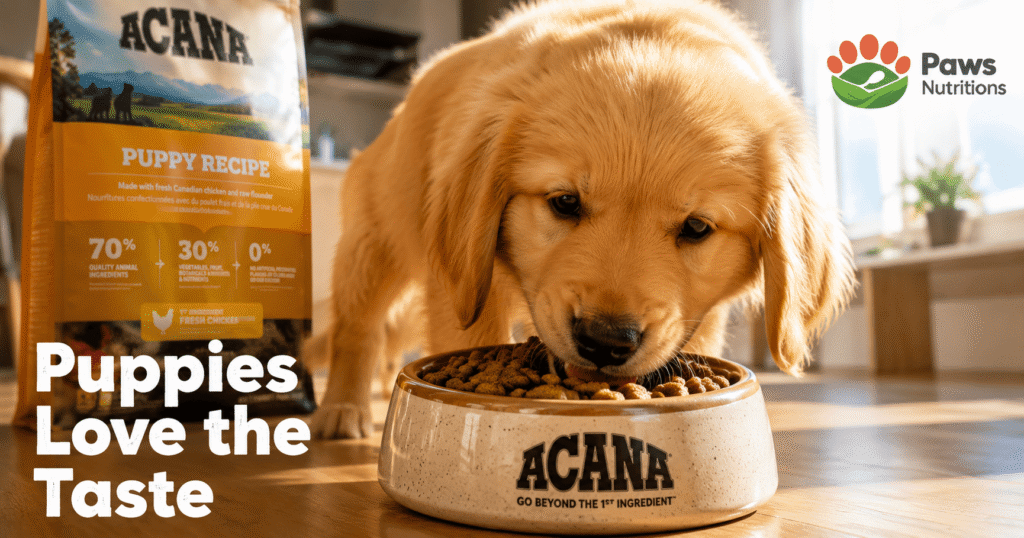
Many puppies seem eager to eat Acana. The combination of fresh animal ingredients, organ meats, and natural flavors creates recipes that appeal to even selective eaters. Owners frequently describe enthusiastic meal times after making the switch.
Kibble Size and Texture
Acana designs its puppy formulas with appropriate kibble sizes for different breeds and life stages. Smaller kibble pieces are easier for young puppies to chew, while larger formulas provide sizes better suited to bigger breeds.
Feeding Guidelines by Age
Younger puppies generally require more frequent meals throughout the day. As puppies mature, feeding schedules can gradually shift from three or four meals daily to two larger meals. Following the feeding chart while monitoring body condition helps maintain healthy growth.
Feeding Guidelines by Weight
Weight-based feeding recommendations provide a useful starting point. However, every puppy is different. Highly active puppies may need additional calories, while less active puppies may require slightly smaller portions to maintain an ideal body condition.
How to Transition to Acana Puppy Food
A gradual transition helps minimize digestive upset. Start by mixing approximately 25% Acana with 75% of your puppy’s current food. Slowly increase the proportion of Acana over seven to ten days until the transition is complete.
Common Feeding Mistakes to Avoid
One common mistake is overfeeding. Premium foods like Acana are calorie dense, so feeding excessive amounts can lead to unwanted weight gain. Another mistake is changing foods abruptly, which may trigger digestive discomfort.
Real-World Feeding Experiences
Many owners report noticeable improvements after switching to Acana. Common observations include increased energy, improved stool quality, healthier coats, and better overall body condition. While individual results vary, positive experiences are frequently reported.
Acana Puppy Food Recall History
Safety remains one of the most important factors when evaluating any puppy food. Understanding a brand’s recall history provides valuable insight into manufacturing standards and quality control processes.
Has Acana Ever Been Recalled?
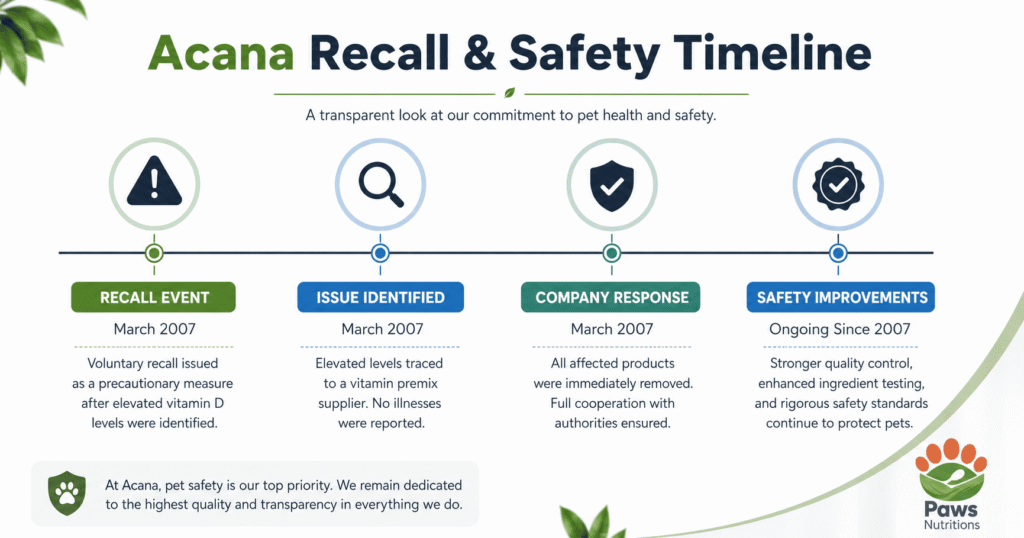
Yes, Acana has experienced recalls during its history. However, compared to many large pet food manufacturers, the number of recalls remains relatively limited. Most issues were addressed promptly, and corrective actions were implemented.
Complete Recall Timeline
Acana’s recall history is not extensive, but transparency is important. Reviewing past recalls helps pet owners understand how the company responds to quality concerns and what improvements have been made over time.
Why Previous Recalls Happened
Like many pet food companies, recalls have involved concerns related to ingredient quality, contamination risks, or regulatory compliance. Importantly, recalls often reflect a company’s willingness to act proactively when potential issues arise.
What Acana Changed After Recalls
Following recall events, Champion Petfoods implemented additional quality assurance measures, supplier reviews, and manufacturing safeguards. These actions demonstrate a commitment to maintaining product safety and consumer trust.
Current Safety Standards
Today, Acana follows extensive quality-control procedures throughout ingredient sourcing, production, and packaging. These standards help reduce risks while supporting product consistency and safety.
Is Acana Puppy Food Safe Today?
For most healthy puppies, Acana is considered a safe and nutritionally complete food when fed appropriately. As with any diet, individual puppies may have unique needs, but overall safety standards remain strong.
FDA Investigation and DCM Concerns Explained
Few topics have generated more discussion in the pet food world than the connection between certain diets and canine heart health. Understanding the facts can help you make informed decisions.
What Is Canine Dilated Cardiomyopathy (DCM)?
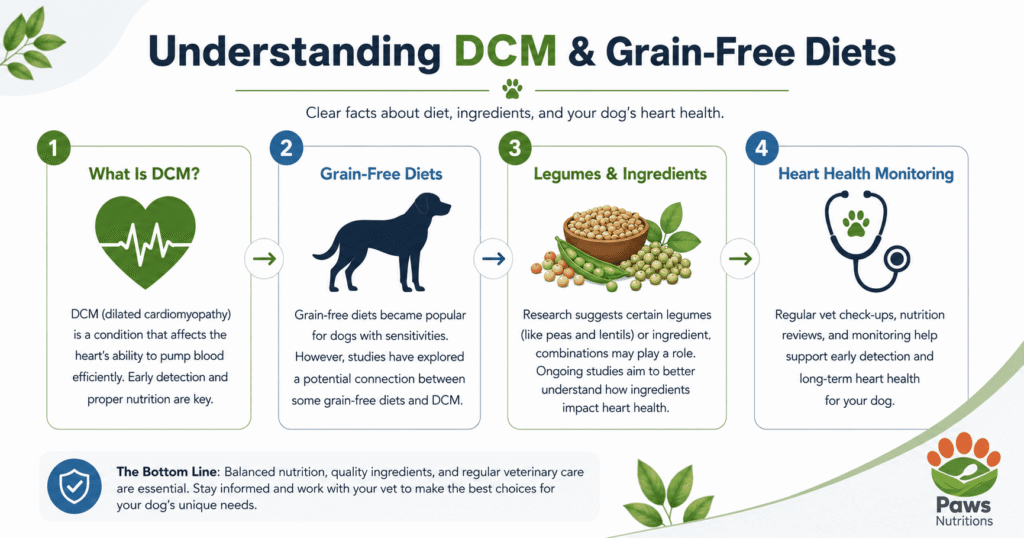
Dilated Cardiomyopathy (DCM) is a serious heart condition that affects a dog’s ability to pump blood effectively. While genetics play a significant role in some breeds, nutrition has also been investigated as a possible contributing factor in certain cases.
Why Grain-Free Dog Foods Were Investigated
The FDA began investigating reports involving dogs diagnosed with DCM while consuming certain grain-free diets. Many of these diets contained high levels of legumes such as peas, lentils, and chickpeas.
Was Acana Included in the FDA Reports?
Acana was among several brands mentioned during the FDA’s investigation. However, being included in a report does not establish direct causation. The investigation highlighted associations rather than definitive conclusions.
What Research Says Today
Current research remains ongoing. Scientists continue studying the relationship between diet composition, nutrient absorption, genetics, and heart health. As a result, there is still no universal agreement regarding the exact causes involved.
Should Puppy Owners Be Concerned?
Most healthy puppies consuming balanced diets show no signs of DCM-related issues. However, owners who remain concerned can consider Acana’s grain-inclusive options or discuss nutritional choices with their veterinarian.
Grain-Free vs Healthy Grains Acana Formulas
Acana now offers both grain-free and grain-inclusive recipes. This flexibility allows owners to choose a formula that aligns with their preferences while still benefiting from Acana’s focus on quality animal ingredients.
Acana Puppy Food Customer Reviews Analysis
Customer feedback provides valuable real-world insight that nutritional labels alone cannot reveal. Looking at recurring patterns helps identify both strengths and potential concerns.
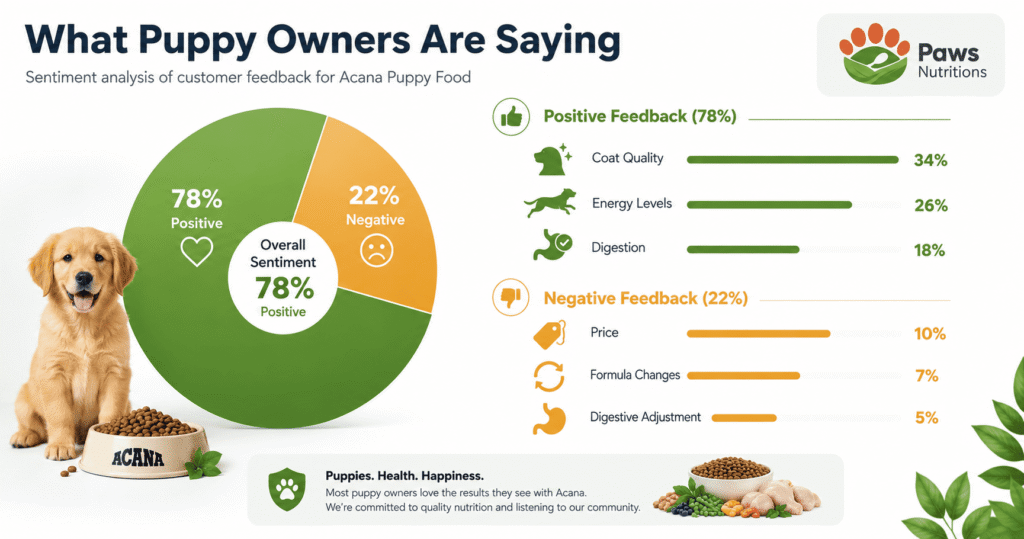
What Owners Love Most
Many owners praise Acana for ingredient quality, visible improvements in coat condition, and increased enthusiasm at mealtime. Puppies often appear energetic, healthy, and eager to eat the food.
Common Positive Feedback
Positive reviews frequently mention:
- Improved coat shine
- Better muscle tone
- Healthy digestion
- Increased energy levels
- Excellent ingredient quality
These recurring themes suggest that many puppies respond well to Acana’s nutrient-dense formulas.
Most Frequent Complaints
The most common complaints involve cost, occasional digestive adjustments, and formula changes. These concerns appear relatively minor compared to the overall volume of positive feedback.
Digestive Issues Reported by Some Owners
A small percentage of owners report loose stools or mild digestive upset, especially during the transition period. In many cases, slowing the transition process helps resolve these issues.
Formula Change Concerns
Some long-term customers have expressed concerns when recipe formulations changed. Ingredient adjustments can affect individual dogs differently, making gradual monitoring important after any formula update.
Overall Customer Satisfaction Trends
Overall satisfaction remains high. Acana consistently receives positive feedback from owners who prioritize premium ingredients and protein-rich nutrition for their puppies.
What Veterinarians Think About Acana Puppy Food
Veterinary perspectives often provide valuable context when evaluating pet foods. While opinions can vary, many veterinarians recognize both the strengths and considerations associated with Acana.
Vet Opinions on High-Protein Puppy Diets
Many veterinarians support high-quality protein sources for growing puppies. Protein supports muscle development, immune function, and healthy growth. However, balance remains just as important as protein quantity.
Veterinary Pros of Acana
Veterinarians often appreciate Acana’s emphasis on animal proteins, nutrient density, and ingredient quality. The brand’s use of diverse protein sources can provide broad nutritional benefits for healthy puppies.
Veterinary Concerns and Considerations
Some veterinarians encourage owners to carefully evaluate grain-free diets, particularly in light of ongoing DCM discussions. Individual health conditions may also influence dietary recommendations.
Is Acana Recommended for Large Breed Puppies?
Many veterinarians consider Acana’s Large Breed Puppy Recipe an appropriate option because it provides controlled mineral levels that support steady growth and joint development.
Is Acana Good for Sensitive Stomachs?
Some puppies with mild sensitivities do well on Acana, while others may require simplified or veterinary-recommended diets. Monitoring stool quality and digestive comfort remains essential after any food change.
When Vets May Recommend Alternatives
Veterinarians may suggest alternatives when puppies have specific medical conditions, severe allergies, digestive disorders, or unique nutritional requirements that call for specialized diets.
Acana Puppy Food Price Analysis
Premium puppy food is an investment, and most owners want to know whether they’re getting real value for their money. Acana sits in the premium-to-super-premium category, meaning it costs more than many grocery store brands. However, price alone doesn’t tell the whole story.
Current Acana Puppy Food Pricing
Acana Puppy Food prices vary depending on the formula, bag size, and retailer. Smaller bags typically cost more per pound, while larger bags offer better long-term value. On average, Acana costs noticeably more than mainstream puppy foods but remains slightly more affordable than some ultra-premium competitors.
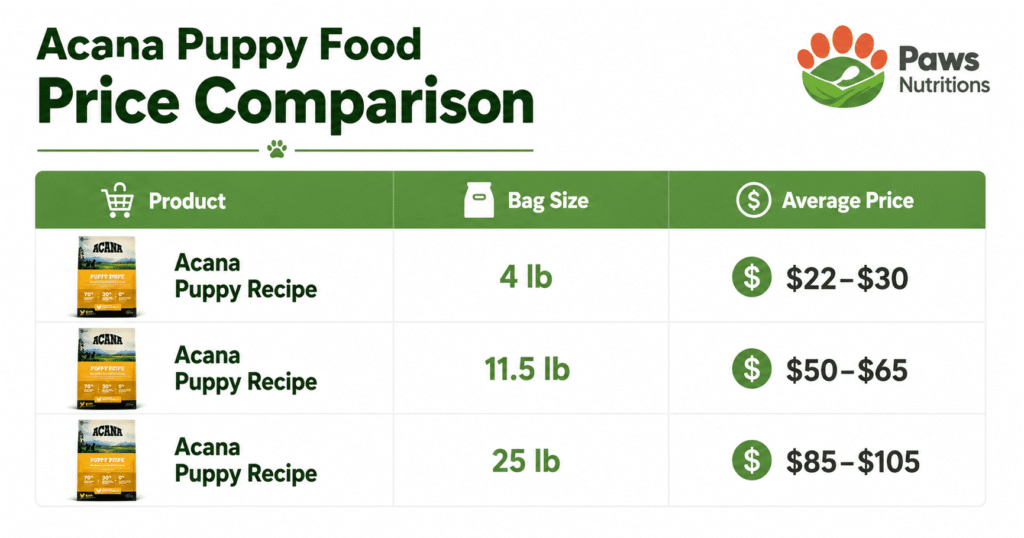
Cost Per Pound Breakdown
Looking at cost per pound helps provide a fair comparison between brands.
| Product | Average Price | Cost Per Pound |
|---|---|---|
| Acana Puppy Recipe 4 lb | $22-$30 | $5.50-$7.50 |
| Acana Puppy Recipe 11.5 lb | $50-$65 | $4.30-$5.65 |
| Acana Puppy Recipe 25 lb | $85-$105 | $3.40-$4.20 |
Larger bags generally offer significantly better value if your puppy tolerates the food well.
Cost Per Day Analysis
A medium-sized puppy eating around 2 to 3 cups daily may cost approximately $1.75 to $3.50 per day depending on the formula and bag size purchased. While that’s higher than many budget foods, the improved ingredient quality may justify the added expense for some owners.
Cost Compared to Premium Competitors
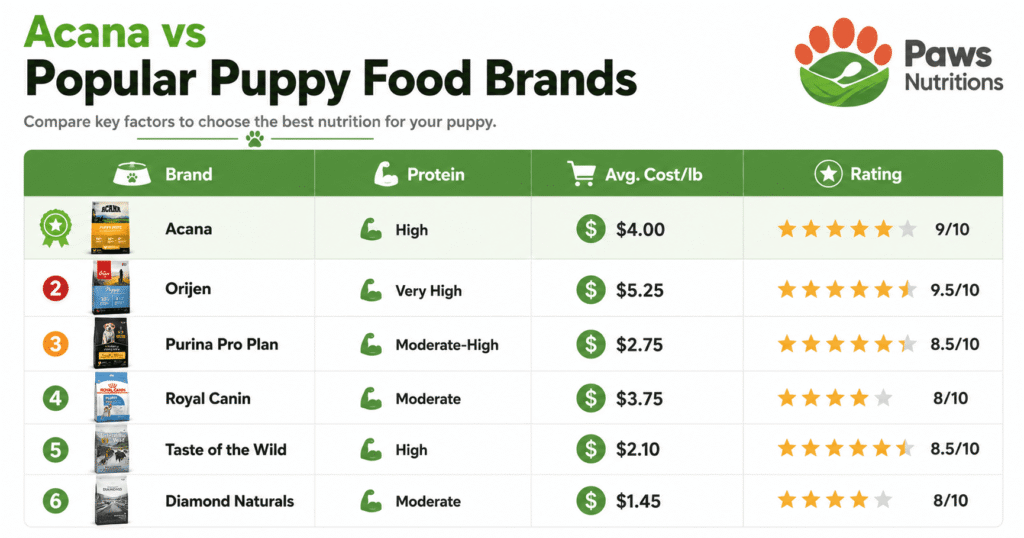
Here’s how Acana generally compares with other popular premium puppy food brands:
| Brand | Price Level |
|---|---|
| Acana | $4.00/lb |
| Orijen | $5.25/lb |
| Purina Pro Plan | $2.75/lb |
| Royal Canin | $3.75/lb |
| Taste of the Wild | $2.10/lb |
| Diamond Naturals | $1.45/lb |
Acana often lands in the middle of the premium market, offering strong ingredient quality without reaching the highest price tier.
Is Acana Worth the Money?
For many owners, the answer is yes. If you value high-quality animal protein, premium ingredients, and nutrient-dense nutrition, Acana provides strong value. However, if your primary concern is affordability, there are less expensive options that still meet basic nutritional requirements.
Best Places to Buy Acana Puppy Food
Acana is available through many online retailers, specialty pet stores, and large pet supply chains. Shopping online often provides the widest selection, while subscription programs can help reduce ongoing costs.
Acana Puppy Food Compared to Other Popular Puppy Foods
Comparisons help put Acana into perspective. While Acana performs well on its own, understanding how it stacks up against competitors can make your buying decision much easier.
Acana Puppy Food vs Orijen Puppy
Acana and Orijen are often compared because both brands come from the same parent company and share a focus on premium nutrition.
Ingredients Comparison
Orijen generally contains an even higher percentage of animal ingredients than Acana. However, Acana still provides excellent ingredient quality while remaining slightly more affordable.
Nutrition Comparison
Both brands offer high protein levels, but Orijen typically pushes protein content higher. Acana often strikes a balance between premium nutrition and practicality.
Price Comparison
Orijen usually costs more than Acana. For many owners, Acana offers a better balance between nutrition and affordability.
Which Is Better?
If budget isn’t a concern and you want maximum protein content, Orijen may have a slight edge. However, Acana delivers outstanding quality and often represents the better overall value.
Acana Puppy Food vs Purina Pro Plan Puppy
Purina Pro Plan remains one of the most popular veterinarian-recommended puppy foods in America.
Key Differences
Acana emphasizes fresh animal ingredients and biologically appropriate nutrition. Purina Pro Plan focuses heavily on research-backed formulations and specialized nutrition programs.
Pros and Cons
| Category | Acana | Purina Pro Plan |
|---|---|---|
| Protein Quality | Excellent | Very Good |
| Research Support | Moderate | Excellent |
| Ingredient Quality | Excellent | Good |
| Price | Higher | Moderate |
| Availability | Good | Excellent |
Both are strong choices, but they appeal to different types of pet owners.
Acana Puppy Food vs Diamond Naturals Puppy
Diamond Naturals often attracts owners seeking better ingredients at a lower price point.
Value for Money Analysis
Diamond Naturals provides impressive value and respectable nutrition. However, Acana generally uses higher-quality animal ingredients and offers greater protein density. Owners seeking maximum ingredient quality may prefer Acana despite the higher cost.
Acana Puppy Food vs Taste of the Wild Puppy
Taste of the Wild has built a strong reputation among owners looking for grain-free options.
Ingredient and Protein Comparison
Both brands emphasize protein-rich recipes, but Acana typically includes a greater variety of fresh animal ingredients. Taste of the Wild remains a solid alternative for owners seeking a slightly lower price point.
Acana Puppy Food vs Blue Buffalo Puppy
Blue Buffalo is a familiar name in pet food aisles across the country.
Which Brand Offers Better Nutrition?
Acana generally delivers higher animal protein levels and less reliance on plant-based ingredients. Blue Buffalo offers numerous formulas, but ingredient quality often favors Acana in direct comparisons.
Acana Puppy Food vs Royal Canin Puppy
Royal Canin takes a very different approach to pet nutrition.
Which Is Better for Growth and Development?
Royal Canin focuses heavily on breed-specific nutrition and scientific formulation. Acana focuses on ingredient quality and biologically appropriate nutrition. Both approaches can support healthy development, but owner preferences often determine which philosophy feels more appealing.
Is Acana Puppy Food Right for Your Puppy?
Even excellent puppy food isn’t ideal for every dog. The best choice depends on your puppy’s breed, activity level, health status, and nutritional needs.

Best for Active Puppies
Highly active puppies often thrive on Acana’s protein-rich formulas. The elevated protein and healthy fat levels provide fuel for growth, play, training, and daily adventures.
Best for Working Breeds
Working breeds such as German Shepherds, Belgian Malinois, and Border Collies frequently benefit from nutrient-dense diets. Acana’s focus on animal protein aligns well with their higher energy demands.
Best for Sporting Breeds
Sporting breeds require nutrition that supports muscle development and endurance. Acana’s balanced protein and fat profile helps support these active lifestyles during puppyhood.
Best for Small Breed Puppies
Small breeds often benefit from Acana’s Small Breed Puppy Recipe. The kibble size and calorie density are designed specifically for smaller mouths and faster metabolisms.
Best for Large Breed Puppies
Large breed puppies need carefully controlled growth. Acana’s Large Breed Puppy Recipe helps support proper skeletal development while providing the protein required for healthy growth.
Not Ideal for Every Puppy
Some puppies may do better on grain-inclusive diets, veterinary therapeutic diets, or formulas designed specifically for food sensitivities. Individual needs always matter more than brand popularity.
Signs Your Puppy Is Thriving on Acana
Healthy signs often include:
- Consistent energy levels
- Firm stools
- Healthy weight gain
- Shiny coat
- Good muscle tone
- Enthusiastic eating habits
These indicators suggest your puppy is responding positively to the diet.
Who Should Avoid Acana Puppy Food?
Although Acana works well for many puppies, there are situations where another food may be a better fit.
Puppies with Certain Food Sensitivities
Puppies with complex allergies may require highly specialized diets with limited ingredients or prescription formulations recommended by a veterinarian.
Budget-Conscious Owners
Acana’s premium pricing can strain some budgets. If affordability is a major concern, other foods may provide acceptable nutrition at a lower cost.
Puppies Requiring Prescription Diets
Certain medical conditions require carefully controlled nutrition. In these situations, veterinary therapeutic diets often take priority over premium commercial foods.
Situations Where Alternatives May Be Better
Every puppy is unique. If your puppy experiences ongoing digestive issues, poor stool quality, or food intolerance, another formula may prove more suitable.
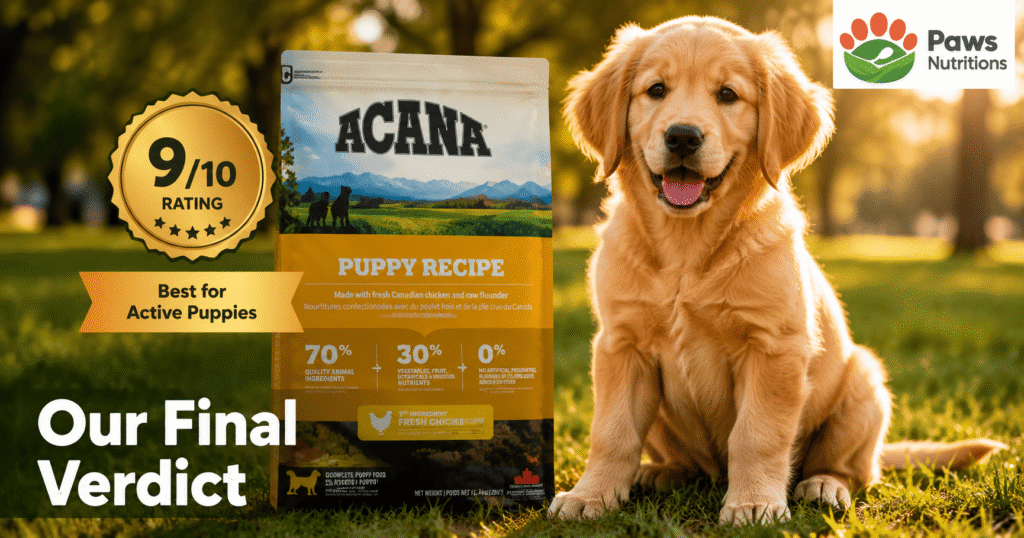
Our Final Verdict on Acana Puppy Food Reviews
After examining ingredients, nutrition, safety, customer feedback, and overall value, Acana remains one of the strongest premium puppy food options available today.
What We Like Most
Acana excels in ingredient quality, protein content, and biologically appropriate nutrition. The inclusion of fresh animal ingredients and nutrient-rich organ meats helps distinguish it from many competitors.
What Could Be Improved
The biggest drawbacks remain pricing and ongoing concerns some owners have regarding grain-free formulas. Improved affordability would make Acana accessible to more families.
Best Acana Puppy Formula Overall
For most puppies, the standard Acana Puppy Recipe offers the best combination of nutrition, ingredient quality, and value.
Best Value Formula
Large bag sizes generally provide the best long-term value while maintaining the same nutritional benefits.
Final Rating and Recommendation
Overall Rating: 9/10
If you’re looking for a premium puppy food with excellent ingredients, strong nutritional foundations, and a proven reputation among dog owners, Acana deserves serious consideration.
Frequently Asked Questions About Acana Puppy Food
Is Acana Puppy Food Good for Puppies?
Yes. Acana provides complete and balanced nutrition with high-quality protein sources that support healthy growth and development.
Is Acana Puppy Food AAFCO Approved?
Acana puppy formulas meet AAFCO nutritional standards for growth and development.
Is Acana Better Than Purina Pro Plan Puppy?
Neither is universally better. Acana emphasizes ingredient quality, while Purina Pro Plan focuses heavily on research-backed nutrition.
Is Acana Better Than Orijen Puppy?
Orijen contains more animal ingredients, but Acana often offers better overall value for the price.
Does Acana Puppy Food Contain Grain?
Some formulas are grain-free, while others include healthy grains such as oats and sorghum.
Is Grain-Free Acana Safe for Puppies?
Most healthy puppies can eat grain-free Acana, but owners with concerns should discuss options with their veterinarian.
Has Acana Puppy Food Ever Been Recalled?
Yes, Acana has had recalls in the past, though they have been relatively limited compared to many large pet food brands.
Is Acana Puppy Food Made in the USA?
Acana products are manufactured primarily in North American facilities operated by Champion Petfoods.
Who Owns Acana Dog Food?
Acana is produced by Champion Petfoods.
Why Is Acana Puppy Food So Expensive?
The higher cost reflects premium ingredients, extensive quality control, and a strong focus on animal-based nutrition.
Is Acana Puppy Food Good for Large Breed Puppies?
Yes. Acana offers a dedicated Large Breed Puppy Recipe designed to support controlled growth.
Is Acana Puppy Food Good for Small Breeds?
Yes. The Small Breed Puppy Recipe is formulated specifically for smaller dogs.
Can Acana Cause Digestive Issues?
Some puppies may experience temporary digestive upset during transitions, especially if changes are made too quickly.
How Much Acana Should I Feed My Puppy?
Follow the feeding guide on the packaging and adjust portions based on your puppy’s weight, age, and activity level.
When Should I Switch from Puppy Food to Adult Food?
Most puppies transition between 12 and 18 months, depending on breed size and development.
Does Acana Contain Taurine?
Yes. Acana recipes contain naturally occurring taurine from animal ingredients.
Is Acana WSAVA Compliant?
Acana meets many nutritional standards, but owners concerned about WSAVA guidelines should review the latest company information.
What Is the Best Acana Puppy Formula?
The standard Puppy Recipe is often considered the best all-around option for most growing puppies.
Where Can I Buy Acana Puppy Food?
Acana is available online, through specialty pet stores, and at many major pet retailers.
Is Acana Puppy Food Worth the Price?
For owners prioritizing ingredient quality and premium nutrition, Acana often provides excellent value despite its higher cost.
Conclusion
Choosing the right puppy food is one of the most important decisions you’ll make during your dog’s early life. A quality diet supports healthy growth, strong muscles, brain development, digestive health, and long-term wellness. After thoroughly evaluating ingredients, nutritional value, feeding experience, safety history, customer feedback, and veterinary perspectives, Acana continues to stand out as a premium option worth considering.
Its emphasis on high-quality animal protein, WholePrey nutrition, Omega fatty acids, and carefully balanced recipes provides meaningful benefits for many growing puppies. While the price may be higher than average, many owners find the investment worthwhile because of the ingredient quality and nutritional depth. If you’re searching for a food that prioritizes biologically appropriate nutrition and supports healthy development, Acana remains one of the strongest choices in the premium puppy food market.
Disclaimer:This review is for informational purposes only and is not a substitute for personalized veterinary advice. Always consult your veterinarian before changing your dog’s diet, especially if your dog has an existing health condition.

A dedicated writer and digital enthusiast committed to creating high-quality, informative, and reader-focused content. Through thoughtful research and clear communication, he aims to deliver valuable insights that help readers navigate the ever-changing digital landscape.